
What Is Gegenpressing? The Soccer Tactic Explained
On this page8
- 01What Gegenpressing Actually Means
- 02The Origins: From Sacchi to Rangnick to Klopp
- 03How Gegenpressing Works on the Pitch
- 04Gegenpressing vs High Press vs Low Block
- 05What Gegenpressing Demands From Players
- 06Strengths and Weaknesses of Gegenpressing
- 07Beating Gegenpressing
- 08Why Gegenpressing Still Matters in Modern Football
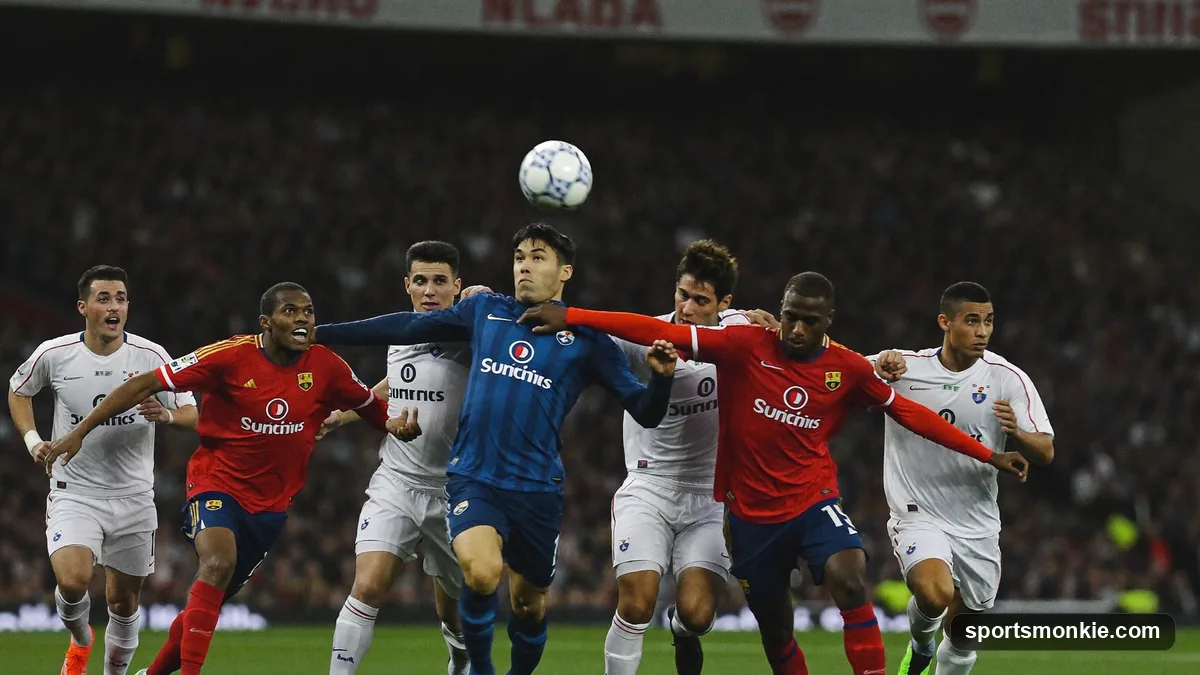
Gegenpressing is a soccer tactic where a team immediately swarms the opponent to win the ball back the moment possession is lost, usually within 5-10 seconds, rather than retreating into a defensive shape. German for “counter-pressing,” it turns the seconds right after a turnover into an attacking weapon: the opponent is scattered and out of position, so regaining the ball there often creates a better scoring chance than a slow, patient buildup ever could. It is one of the pillar concepts inside modern soccer tactical systems, and it sits alongside the hub of everything else in the sport at Football & Soccer.
What Gegenpressing Actually Means
Break the word down and it explains itself. “Gegen” is German for “against” or “counter,” and “pressing” is, well, pressing. Put together, gegenpressing literally means pressing against the team that has just won the ball. The tactic is built on a simple insight: the moment right after a turnover is the most vulnerable moment in soccer. The team that just won possession is still mentally set up to defend, its passing lanes haven’t opened, and its shape is often stretched from whatever attacking move it was just running.
Instead of retreating into a defensive block, a gegenpressing team uses that split-second window to hunt the ball down close to where it was lost, frequently in the middle or attacking third of the pitch. Win it back there and a team is instantly closer to goal than the opponent, who now has to defend without having reorganized.
The Origins: From Sacchi to Rangnick to Klopp
Aggressive, coordinated pressing has roots going back to Arrigo Sacchi’s AC Milan side of the late 1980s, which pressed as a unit and squeezed space with a famously compact back line. But the specific term “gegenpressing” and its systematic coaching framework are most closely tied to German football.
Ralf Rangnick is widely regarded as the tactic’s main theorist. Working at clubs including SSV Ulm, Hoffenheim, and later the Red Bull-owned RB Salzburg and RB Leipzig, Rangnick built counter-pressing into a repeatable coaching model, one that gave smaller-budget clubs a way to compete with wealthier, more possession-dominant rivals by winning the ball in dangerous areas rather than trying to out-pass them.
Jurgen Klopp is the manager who took gegenpressing global. At Borussia Dortmund from 2008 to 2015, he built a team around relentless counter-pressing, winning the Bundesliga in 2010-11 and 2011-12 and reaching the 2013 Champions League final. Klopp famously described gegenpressing as “the best playmaker,” arguing that no pass a team could design was as good a chance-creator as winning the ball 20 yards from the opponent’s goal. He carried the same philosophy to Liverpool, where it became central to their 2018-19 Champions League and 2019-20 Premier League title runs.
How Gegenpressing Works on the Pitch
A gegenpressing system generally rests on a few coordinated principles rather than just “run at whoever has the ball”:
- Immediate reaction from the nearest players. The player who lost the ball, plus the two or three teammates closest to it, close down instantly instead of jogging back.
- Compactness. The team stays tight vertically and horizontally so the opponent has few short passing options once pressed.
- Hunting in packs, not alone. Pressing is coordinated, cutting off passing lanes as a unit so the ball carrier is forced into a rushed decision or a mistake.
- Rest-defence. While the front players attack and press, the players furthest from the ball hold a defensive screen, so a lost press doesn’t turn into an open counter-attack against the pressing team.
- A time limit. If the ball isn’t won back inside roughly 5-10 seconds, most coaching models tell the team to stop chasing and drop into its normal defensive shape instead of getting dragged out of position.
Gegenpressing vs High Press vs Low Block
Gegenpressing is often lumped in with other pressing terms, but it isn’t the same thing as a high press, and it sits at the opposite end of the spectrum from a low block.
| Tactic | Trigger | Where it happens | Goal |
|---|---|---|---|
| Gegenpressing | Losing the ball | Anywhere on the pitch, often high or central | Win the ball back in seconds before the opponent organizes |
| High press | Opponent has the ball, usually the goalkeeper or back line | High up the pitch, near the opponent’s box | Disrupt build-up play before it starts |
| Low block | Opponent has the ball | Deep, near the pressing team’s own box | Deny space and force the opponent into low-quality shots |
The key distinction: a high press is proactive and positional, set up regardless of how possession changed hands, while gegenpressing is reactive, triggered specifically by a turnover. A team can run a high press without ever using gegenpressing, and vice versa, though many elite sides, including Klopp’s Liverpool, combine both. For the deep dive on the proactive version of pressing, see our guide to the high press in soccer.
What Gegenpressing Demands From Players
Gegenpressing is not a system a squad can fake for 90 minutes. It requires:
- Elite fitness and repeat sprint ability. Players need to press hard, recover, and press again within the same passage of play, not just once per half.
- Tactical discipline. Every player must know their pressing trigger and zone; one player pressing on their own instead of as part of the pack opens a gap the opponent can exploit.
- Clear defensive triggers. Coaches drill specific cues (a heavy touch, a backward pass, a misplaced ball into a certain zone) that tell the team when to spring the press.
- Squad depth. Because intensity typically fades after 60-70 minutes of full-throttle pressing, rotation and a strong bench matter more in a gegenpressing system than in a slower, possession-first one.
Strengths and Weaknesses of Gegenpressing
Strengths:
- Creates scoring chances from a disorganized opponent rather than from a set defensive shape.
- Forces mistakes under pressure, especially against teams uncomfortable playing out from the back.
- Has a psychological effect: opponents know they cannot relax for a single second after winning the ball.
Weaknesses:
- Physically unsustainable at full intensity for a whole match; effectiveness commonly drops in the final third of games.
- Leaves space behind the press if the opponent breaks through it, since committed players are out of their defensive positions.
- Struggles against calm, technically excellent possession teams, most notably Pep Guardiola’s Manchester City, who are comfortable moving the ball quickly enough to escape the press before it sets.
Beating Gegenpressing
Opponents neutralize gegenpressing mainly by refusing to give it a target. Quick, one-touch passing out of the pressed zone, a goalkeeper comfortable playing under pressure, and forwards who can hold the ball up and buy time all reduce the number of clean turnovers a gegenpressing team can pounce on. Some sides also deliberately play longer, more direct balls to bypass the press entirely rather than risk a turnover in a dangerous area. As with most pressing systems, patience and composure on the ball are the most reliable counters.
Why Gegenpressing Still Matters in Modern Football
Pure, 90-minute gegenpressing has become rarer at the very top level as coaches blend it with possession principles, similar to how tiki-taka evolved from a standalone system into one tool among several. But the core idea, that the seconds after losing the ball are a genuine attacking opportunity rather than just a defensive emergency, has reshaped how almost every top club coaches transitions. Understanding gegenpressing is essential background for grasping the rest of modern soccer tactical systems, from the high press to the low block.
Frequently asked questions
What is gegenpressing in soccer?+
Gegenpressing is a German term meaning 'counter-pressing.' It describes a tactic where, the instant a team loses the ball, its nearest players immediately swarm the opponent to win possession back, usually within 5-10 seconds, rather than retreating to a defensive shape first.
Who invented gegenpressing?+
No single person invented it, but Ralf Rangnick is widely credited as its main theorist, systematizing counter-pressing principles at German clubs in the 1990s and 2000s. Arrigo Sacchi's AC Milan in the late 1980s used similar aggressive-pressing ideas, and Jurgen Klopp popularized the modern version worldwide.
Why is Jurgen Klopp associated with gegenpressing?+
Klopp used gegenpressing as his signature tactic at Borussia Dortmund (2008-2015), winning the 2010-11 and 2011-12 Bundesliga titles and reaching the 2013 Champions League final. He called it 'the best playmaker,' since winning the ball high up the pitch creates instant scoring chances, and he carried the approach to Liverpool, where it underpinned their 2019 Champions League and 2020 Premier League triumphs.
What is the difference between gegenpressing and a high press?+
A high press is a proactive tactic where a team positions itself high up the pitch to disrupt the opponent's build-up from the goalkeeper and back line, regardless of who has the ball. Gegenpressing is reactive and can happen anywhere on the pitch: it is specifically triggered by the loss of possession, not by the opponent's positioning. See our guide to the high press in soccer for the full breakdown.
How many seconds do teams have to win the ball back in gegenpressing?+
Most coaching models describe a 5-to-10-second window. If the ball is not regained in that time, the pressing team typically drops off and resets into its defensive shape rather than continuing to chase, since the opponent has had time to organize and the risk of being exposed rises sharply.
Why is gegenpressing physically demanding?+
It requires every outfield player, especially forwards and midfielders, to sprint and press repeatedly rather than jog back into shape after losing the ball. Analysts widely note that gegenpressing intensity drops off after the 60-70 minute mark as fatigue sets in, which is why squads that run it need deep rotation and elite conditioning.
Can gegenpressing be beaten?+
Yes. Teams with calm, technically secure passers who keep the ball moving quickly can play through or around the press before it sets. Patient possession sides, like Pep Guardiola's Manchester City, are often cited as the toughest opponents for a pure gegenpressing team, because they rarely give the ball away in dangerous areas that trigger the press.
Which teams use gegenpressing today?+
Liverpool (under Klopp and his successors), RB Leipzig, and other clubs built on the Red Bull coaching model remain closely associated with gegenpressing. Many elite teams now blend it with possession-based principles rather than running it as a standalone system for 90 minutes.
Sources
Play & tools
Free browser games and tools — no account, no download.
- Play 38-0 — Sign a 4-4-2 of all-time football legends and chase a perfect 38-0 league season — perfect, not just unbeaten.
- Explore all our games →
Related football guides
View all →
High Press in Soccer: What It Is and How It Works
High press in soccer explained: how teams trap opponents deep, key triggers, man vs zonal systems, and why Klopp, Guardiola and Bielsa built careers on it.
Soccer Tactics Explained: Football Tactical Systems, Formations & Styles
Soccer tactics explained: how formations, pressing, possession, and defensive systems shape football tactical systems, from 4-4-2 to tiki-taka and gegenpressing.
Counter-Attacking Football Explained: How the Break Works
Counter attacking football is a rapid defense-to-attack transition that exploits disorganized opponents. Learn the principles, roles, and famous examples.
Tiki-Taka Explained: What the Soccer Tactic Really Means
Tiki-taka is a soccer tactic built on short passing, constant movement, and possession control. Learn its history, principles, and why it faded.
9v9 Soccer Formations: Best Youth Shapes for U11/U12 Explained
The best 9v9 soccer formations for youth teams are 3-3-2, 3-2-3, 2-4-2, 3-4-1, and 2-3-3 — here's how each one lines up and which fits your squad.
Inverted Fullback Explained: What It Means in Soccer Tactics
What is an inverted fullback in soccer? Learn how the role works, why Pep Guardiola popularized it, and which players do it best.