
High Press in Soccer: What It Is and How It Works
On this page6
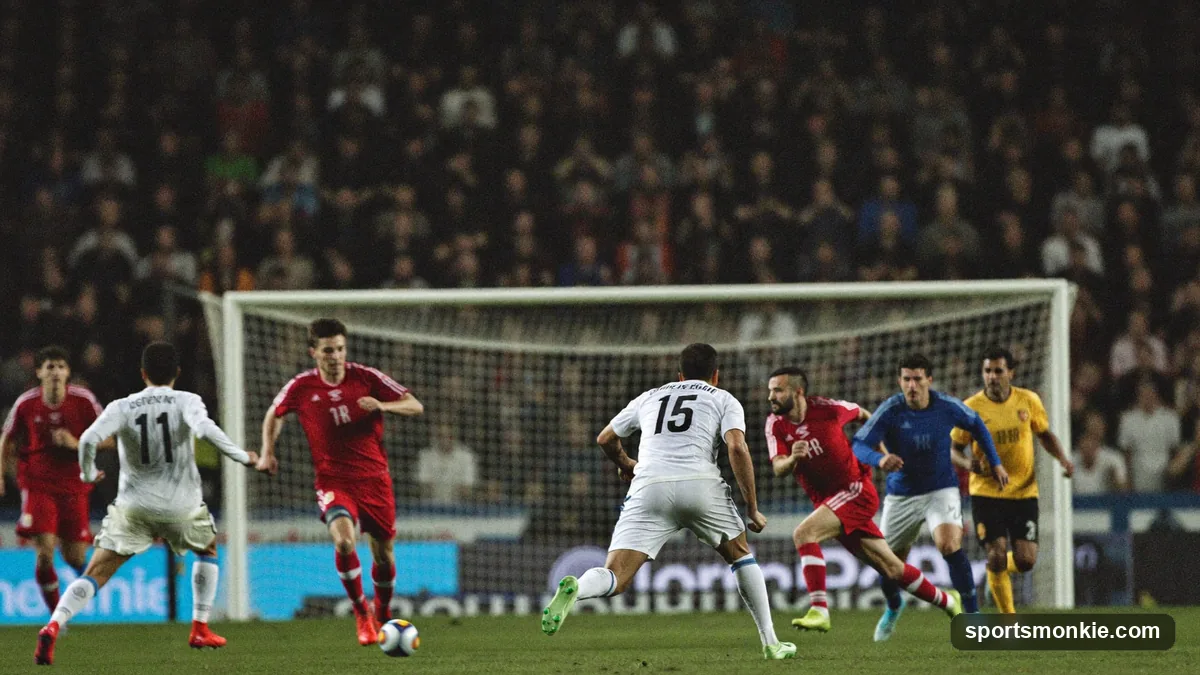
A high press in soccer is a defensive structure where the pressing team pushes its back line and midfield far up the field, hunting the ball in the opponent’s own defensive third instead of retreating to defend deeper. Rather than waiting for the opposition to come forward, the team confronts them immediately after a goal kick, throw-in, or back pass, aiming to force a mistake close to the opposing goal and punish it before the opponent can reset.
How a High Press Actually Works
A high press is built around cutting off the easy passing options a defender or goalkeeper normally relies on. The front line — usually two or three attackers — angles its run to block the central passing lane while herding the ball wide, where the touchline acts as an extra defender. Midfielders step up simultaneously to close down the next pass, and the back line pushes to the halfway line or beyond to compress the space between the lines. If timed well, the opponent has nowhere safe to play and is forced into a rushed pass, a heavy touch, or a hopeful long ball that the pressing team can win back.
This only works as a coordinated, 10-outfield-player structure. If one presser goes early and the rest of the team doesn’t move up with him, gaps open between the lines that a good passing side will exploit instantly. That’s why elite pressing teams drill pressing as a unit in training almost as much as they drill set pieces.
Pressing Triggers: When the Press Is Switched On
Coaches don’t ask players to press constantly — that would be exhausting and chaotic. Instead, teams press off specific triggers, cues that signal the moment is right to spring the trap.
| Trigger | Why it invites pressure |
|---|---|
| Back pass to the goalkeeper | Limits the ball-carrier’s forward options |
| Pass into a fullback | Fullback has fewer central passing lanes and the touchline to work against |
| Heavy or bouncing touch | Opponent’s next pass is rushed and less accurate |
| Receiving with back to goal | Player can’t see the full picture before deciding |
| Sideways or backward pass | Signals the buildup has stalled and can be squeezed |
Once a trigger fires, the nearest player presses the ball while teammates simultaneously close passing lanes rather than chasing the ball themselves — this is often called using a “cover shadow.” Recognizing triggers as a team, not just individually, separates elite pressing sides from teams that merely run a lot.
Zonal, Man-Oriented, and Hybrid Pressing Systems
Not all high presses look the same. There are three broad structures:
- Man-oriented pressing assigns each presser a direct opponent to follow, even out of position. It’s aggressive and can suffocate a team, but it’s physically demanding and can be pulled apart by clever rotations.
- Zonal pressing asks players to press whoever enters their designated area of the pitch, prioritizing shape over marking a specific man. It’s more sustainable over 90 minutes but slightly slower to spring the trap.
- Hybrid pressing, used by most top-level teams today, holds a zonal shape in general play and switches to man-oriented pressure once the ball enters a pre-agreed trigger zone, combining the discipline of zonal defending with the intensity of man-marking when it matters most.
Famous High-Pressing Teams and Managers
The modern high press traces its systemized roots to Germany in the 2000s, where Ralf Rangnick — often called the “godfather of pressing” — built Hoffenheim and later RB Leipzig around coordinated high pressing and quick vertical transitions, directly influencing a generation of German coaches. Jurgen Klopp took those ideas to Borussia Dortmund and then Liverpool, pairing a relentless high press with the counter-pressing principle now known as gegenpressing. Pep Guardiola, first at Barcelona and later Bayern Munich and Manchester City, combined a positional possession game with an aggressive press triggered the instant the ball was lost, famously demanding his team win it back within five or six seconds. Marcelo Bielsa, whose ideas influenced both Guardiola and Klopp, built his Athletic Bilbao and Leeds United sides around a highly aggressive man-oriented press applied across the entire pitch. Germany’s 2014 World Cup-winning squad under Joachim Löw also leaned heavily on coordinated pressing in the final third.
The Weaknesses of a High Press
A high press is a high-risk, high-reward tactic, and every team that commits to it accepts real trade-offs.
- Space behind the defense. Pushing the back line up shrinks the distance between defense and midfield, but it also opens a large gap between the last defender and the goalkeeper. One accurate long ball or a fast forward’s run can turn that space into a one-on-one against the keeper.
- Fitness demands. Pressing high for 90 minutes is exhausting. Teams that don’t rotate their press or manage energy well often collapse physically after the hour mark, at which point the press that once suffocated the opponent starts leaving gaps everywhere.
- Goalkeeper and ball-playing demands. Beating a high press usually starts with a goalkeeper or center-back comfortable passing under pressure. Teams without technically composed defenders can be pressed into repeated turnovers and concede directly from the press.
- Vulnerability to a low block. Ironically, a team that refuses to engage — sitting deep like Diego Simeone’s Atletico Madrid teams often did — can neutralize a high press simply by not giving it a target to press, then breaking quickly once the pressing team overcommits numbers forward.
High Press vs. Related Tactics
The high press sits inside a wider family of pressing and defensive-block concepts that are easy to blur together. It is not the same as gegenpressing, which specifically refers to counter-pressing the instant possession is lost, rather than the general height of a team’s defensive structure. It is also the direct opposite of a low block in soccer, where a team defends deep and cedes the ball willingly to protect its own goal. Understanding where the high press fits among the sport’s core defensive and attacking frameworks is easier with the full picture laid out in our soccer tactical systems explainer, the pillar guide for this cluster on SportsMonkie’s football and soccer hub.
Frequently Asked Questions
What is a high press in soccer? A high press is a defensive tactic where a team pushes its back line and midfield high up the pitch to win the ball in the opponent’s defensive third, rather than dropping into a deeper block.
Why do teams press high? Because a turnover near the opposing goal creates a faster, higher-percentage route to a shot than building an attack from deep, while also disrupting the opponent’s rhythm and confidence.
What’s the main risk of a high press? The space it leaves behind the defensive line, which a well-timed long ball or through ball can exploit for a clear chance on goal.
Frequently asked questions
What is a high press in soccer?+
A high press is a defensive tactic where a team pushes its entire defensive line and midfield high up the pitch, aiming to win the ball back in the opponent's defensive third or middle third rather than retreating into their own half. It trades defensive depth for the chance to attack immediately after a turnover.
Why do teams use a high press?+
Because winning the ball 20-30 yards from the opposing goal creates a much faster route to a shot than building an attack from your own box. It also disrupts the opponent's rhythm, forces rushed passes, and can be a psychological weapon that tires and rattles a defense over 90 minutes.
What is the difference between high press and gegenpressing?+
High press describes where a team defends (high up the pitch, as an overall structure). Gegenpressing describes when a team presses (the moment right after losing the ball, before the opponent can reorganize). A team can run a high press throughout a match and also gegenpress specifically in transition; they overlap but are not the same concept.
What triggers a high press?+
Common pressing triggers include a back pass to the goalkeeper, a slow or heavy touch, a player receiving the ball with their back to goal, a misdirected pass, or the ball being played into a fullback who has limited passing options. Coaches drill players to recognize these moments and press as a coordinated unit rather than individually.
What is the weakness of a high press?+
The biggest risk is the space left behind the high defensive line. A single accurate long ball or a quick one-two through the press can put an attacker through on goal with only the goalkeeper to beat. High pressing also demands elite fitness, and a team that presses without recovering shape becomes exposed once it tires, typically after the 60th minute.
Which teams and managers are famous for high pressing?+
Jurgen Klopp's Borussia Dortmund and Liverpool, Pep Guardiola's Barcelona and Manchester City, Marcelo Bielsa's Athletic Bilbao and Leeds United, and Ralf Rangnick's RB Leipzig are the reference points most coaches study. Rangnick in particular is widely credited as the tactician who systematized modern pressing theory in Germany during the 2000s.
Is high pressing the same as man-marking?+
No. High pressing can be executed man-to-man, where each presser tracks a specific opponent, or zonally, where players press whoever enters their assigned area. Most elite teams use a hybrid: zonal shape in general play with man-oriented pressing triggered once the ball enters a dangerous zone.
How do teams beat a high press?+
The most reliable counters are playing early long balls over the press to a target forward, using a goalkeeper comfortable passing under pressure to bypass the first line, and rotating midfielders into pockets the press leaves open. Teams that sit in a low block, like Diego Simeone's Atletico Madrid, often invite the press and then break at speed into the space it vacates.
Sources
Play & tools
Free browser games and tools — no account, no download.
- Play 38-0 — Sign a 4-4-2 of all-time football legends and chase a perfect 38-0 league season — perfect, not just unbeaten.
- Explore all our games →
Related football guides
View all →
Counter-Attacking Football Explained: How the Break Works
Counter attacking football is a rapid defense-to-attack transition that exploits disorganized opponents. Learn the principles, roles, and famous examples.
What Is Gegenpressing? The Soccer Tactic Explained
Gegenpressing is the German counter-pressing tactic where a team hunts the ball back within seconds of losing it. Origins, rules, and examples explained.
9v9 Soccer Formations: Best Youth Shapes for U11/U12 Explained
The best 9v9 soccer formations for youth teams are 3-3-2, 3-2-3, 2-4-2, 3-4-1, and 2-3-3 — here's how each one lines up and which fits your squad.
Inverted Fullback Explained: What It Means in Soccer Tactics
What is an inverted fullback in soccer? Learn how the role works, why Pep Guardiola popularized it, and which players do it best.
Soccer Tactics Explained: Football Tactical Systems, Formations & Styles
Soccer tactics explained: how formations, pressing, possession, and defensive systems shape football tactical systems, from 4-4-2 to tiki-taka and gegenpressing.
Tiki-Taka Explained: What the Soccer Tactic Really Means
Tiki-taka is a soccer tactic built on short passing, constant movement, and possession control. Learn its history, principles, and why it faded.