
Counter-Attacking Football Explained: How the Break Works
On this page6
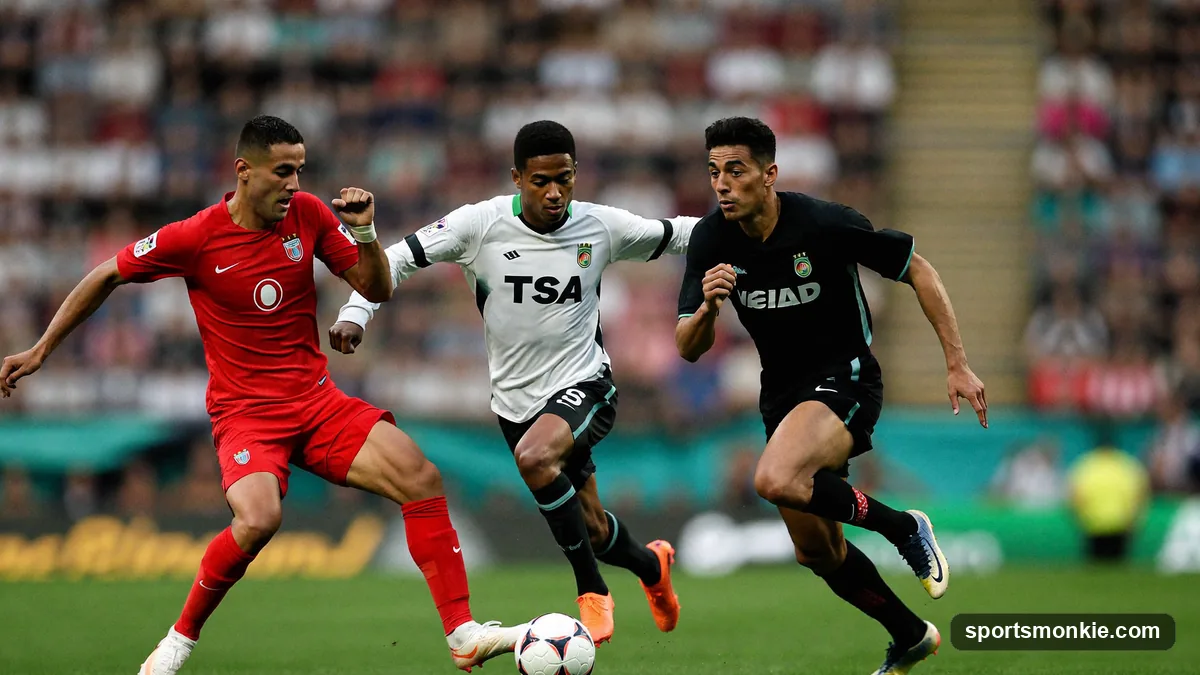
Counter-attacking football is a tactic where a team deliberately absorbs pressure, wins the ball back, often deep in its own half, and attacks with maximum speed and directness before the opponent can reorganize defensively. Rather than building attacks through patient possession, counter-attacking teams treat the moment of turnover itself as the primary attacking weapon, exploiting the seconds when an opponent’s defensive line is still advanced, spread out, and facing the wrong way.
It’s one of the oldest tactical ideas in the sport, but it has never gone out of fashion. From Helenio Herrera’s catenaccio in the 1960s to Jose Mourinho’s Inter Milan and Claudio Ranieri’s Leicester City, counter-attacking has repeatedly proven that a team doesn’t need the ball to win the game, it just needs to use the ball better in the moments that matter.
The core principle: transition over possession
Every soccer match cycles through four phases: attacking, defending, and the two transitions between them (attack-to-defense and defense-to-attack). Possession-based systems like tiki-taka try to dominate the ball and minimize transitions altogether. Counter-attacking football does the opposite: it treats the defense-to-attack transition as the moment where games are actually won, because that’s when an opponent is most vulnerable.
When a team is attacking, its fullbacks push forward, its center-backs step up, and its midfield commits numbers into the final third. If possession is lost at that instant, huge spaces open up behind the defensive line. A counter-attacking team is organized specifically to exploit that half-second window before the opponent can recover its shape, which is why speed of thought and speed of execution matter more than technical possession skill.
The five ingredients of an effective counter-attack
- Winning the ball facing the right way. The best counter-attacks start with an interception or tackle that already faces the opponent’s goal, rather than a loose ball that has to be turned first.
- An immediate forward pass. Elite counter-attacking teams get the ball forward within one or two touches of regaining it; hesitation gives defenders time to recover.
- Runners attacking space, not the ball. Strikers and wide players sprint into the channels the moment possession changes, rather than waiting to receive it to feet.
- Numbers in support. The best transitions create overloads, three or four attackers against two or three retreating defenders, so the ball carrier always has an option.
- A composed finish. Because counter-attacks produce fewer total chances than possession play, converting them is non-negotiable; wasteful finishing is the most common reason counter-attacking teams underperform their underlying stats.
Counter-attacking vs. other defensive-first systems
Counter-attacking is often confused with, or paired alongside, other defense-oriented tactics. The table below separates the ideas.
| Tactic | What it describes | How it relates to counter-attacking |
|---|---|---|
| Counter-attacking | The rapid attacking transition after winning the ball | The attacking payoff these defensive setups exist to create |
| Low block | A deep, compact defensive shape near the team’s own box | Most counter-attacking teams defend from a low block to draw the opponent in |
| Parking the bus | An extreme, ultra-defensive low block with minimal attacking intent | An exaggerated version of a counter-attacking setup, often with fewer resources committed forward |
| Gegenpressing | Pressing immediately and aggressively to win the ball back high up the pitch | A high-line alternative route into the same transition moment; Klopp’s Liverpool combined both |
Understanding where counter-attacking sits within the broader family of soccer tactical systems helps explain why two teams that both “sit deep” can look completely different once they win the ball.
Famous counter-attacking teams and matches
Leicester City, 2015-16. The most improbable title in Premier League history was built on Jamie Vardy’s pace in behind and Riyad Mahrez’s directness on the counter, layered over N’Golo Kante’s ball-winning in midfield. Leicester ranked among the league’s lowest for possession share that season yet scored freely by hitting teams on the break.
Jose Mourinho’s Inter Milan, 2009-10. Inter’s treble-winning run is the tactical purist’s reference point. In the Champions League semi-final, Inter beat Barcelona having conceded the majority of the ball across both legs, absorbing pressure with a disciplined block and striking through Wesley Sneijder and Diego Milito on the counter.
Real Madrid’s “BBC” era. Gareth Bale, Karim Benzema, and Cristiano Ronaldo turned counter-attacking into a highlight reel, most famously Bale’s solo sprint to score in the 2014 Copa del Rey final against Barcelona, a textbook example of pace exploiting a defense caught upfield.
Bayern Munich, 2012-13. Jupp Heynckes’ treble winners paired positional possession with devastating wide counter-attacks through Arjen Robben and Franck Ribery, showing that counter-attacking principles can be blended into an otherwise possession-dominant system.
Defending against the counter-attack
Because counter-attacking is so effective, opponents have developed specific countermeasures. Counter-pressing (gegenpressing), swarming the ball carrier in the five seconds after losing possession, is the most common answer, since it denies the counter-attacking team the clean forward pass it needs. Coordinated offside traps compress the space in behind the last defender, tactical fouls buy time for the defense to reset, and keeping a spare covering center-back or holding midfielder limits the numbers-up scenarios that make transitions so dangerous.
Why counter-attacking still works at every level
Counter-attacking football endures because it’s an equalizer. It lets a technically outmatched team compete against a stronger, more possession-dominant opponent by taking fewer but higher-value chances rather than trying to out-pass them. That’s true from a Sunday league side sitting deep against a better team to a Champions League underdog absorbing pressure for 90 minutes. As long as soccer rewards the team that scores more goals rather than the team that touches the ball more, counter-attacking will remain one of the sport’s most reliable routes to an upset, and a cornerstone of how coaches think about football/soccer tactics at every level.
Frequently asked questions
What is counter attacking football?+
Counter attacking football is a tactical approach built around winning the ball, usually deep in a team's own half, and immediately springing forward at pace to attack the space behind an opponent's advancing defensive line before it can reset into a compact shape. Teams that counter-attack typically sacrifice possession share in exchange for higher-quality, higher-speed chances.
How is counter-attacking different from a fast break?+
The terms are largely interchangeable in soccer, borrowed loosely from basketball's 'fast break.' Both describe rapid transition play. Coaches sometimes distinguish 'counter-attack' as a broader tactical identity (a team's whole game plan) from 'transition' as the specific phase of play, the seconds right after regaining possession, that makes counter-attacking possible.
What makes a counter-attack successful?+
Five factors matter most: winning the ball in a position that already faces the opponent's goal, a first pass forward within one or two touches, runners who sprint into space rather than waiting for the ball, numbers up front (attackers outnumbering defenders), and a finisher composed enough to convert a low-possession chance. Compact defensive shape before the turnover is also essential, since it shortens the distance the ball must travel.
Which teams are famous for counter-attacking football?+
Leicester City's 2015-16 Premier League title, built on Jamie Vardy's pace and Riyad Mahrez's directness, is the most cited modern example. Jose Mourinho's 2010 Inter Milan side, which beat Barcelona in the Champions League semi-final while conceding the majority of possession, is the tactical purist's reference point. Real Madrid's Bale-Benzema-Ronaldo trio and Bayern Munich's 2012-13 treble-winning side under Jupp Heynckes are also frequently cited.
Is counter-attacking the same as a low block?+
No, but they're closely related. A low block describes where a team defends, deep and compact, near its own box. Counter-attacking describes what a team does once it wins the ball back. Most low-block teams are set up specifically to counter-attack, but a team can also press high and still counter-attack (Klopp's Liverpool did both), so the two ideas aren't identical.
Why do coaches use counter-attacking instead of possession football?+
Counter-attacking lets a technically or physically overmatched team compete against stronger opposition by taking fewer, higher-value chances rather than trying to out-pass a superior side. It also suits squads with explosive pace up front, since defenders are easier to beat when they're already turned and running forward, exposing the space in behind.
What is the best defense against a counter-attack?+
Counter-pressing (gegenpressing), swarming the ball immediately after losing it, before the opponent can look up and play forward, is the primary countermeasure. Teams also use tactical fouls to stop transitions, keep a spare center-back or holding midfielder as cover, and maintain a coordinated offside trap to shrink the space in behind the last defender.
How many passes does a typical counter-attack take?+
Data from elite match analysis consistently shows most counter-attacking goals are scored within five passes or fewer of winning possession, often in under ten seconds. The emphasis is on speed and directness over patient buildup, which is exactly what separates counter-attacking from possession-based tactical systems.
Sources
Play & tools
Free browser games and tools — no account, no download.
- Play 38-0 — Sign a 4-4-2 of all-time football legends and chase a perfect 38-0 league season — perfect, not just unbeaten.
- Explore all our games →
Related football guides
View all →
High Press in Soccer: What It Is and How It Works
High press in soccer explained: how teams trap opponents deep, key triggers, man vs zonal systems, and why Klopp, Guardiola and Bielsa built careers on it.
What Does "Park the Bus" Mean in Soccer? Origin, Examples & How to Beat It
Park the bus in soccer means stacking every outfield player behind the ball to shut out an opponent. Origin, tactics, and famous examples explained.
What Is Gegenpressing? The Soccer Tactic Explained
Gegenpressing is the German counter-pressing tactic where a team hunts the ball back within seconds of losing it. Origins, rules, and examples explained.
Soccer Tactics Explained: Football Tactical Systems, Formations & Styles
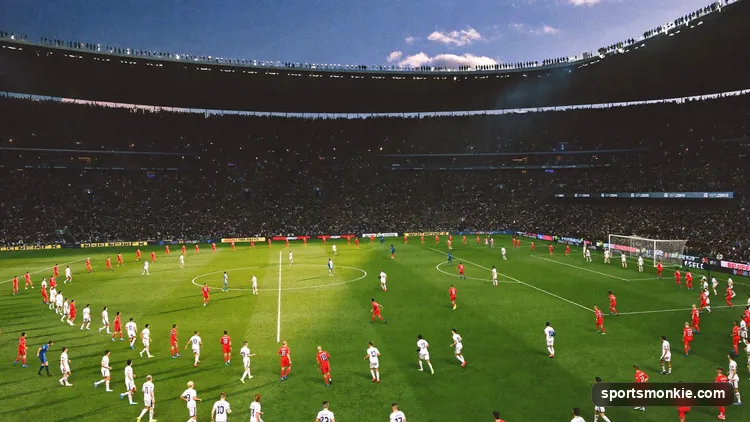
Soccer tactics explained: how formations, pressing, possession, and defensive systems shape football tactical systems, from 4-4-2 to tiki-taka and gegenpressing.
Total Football Explained: Meaning, Origins, and Tactics
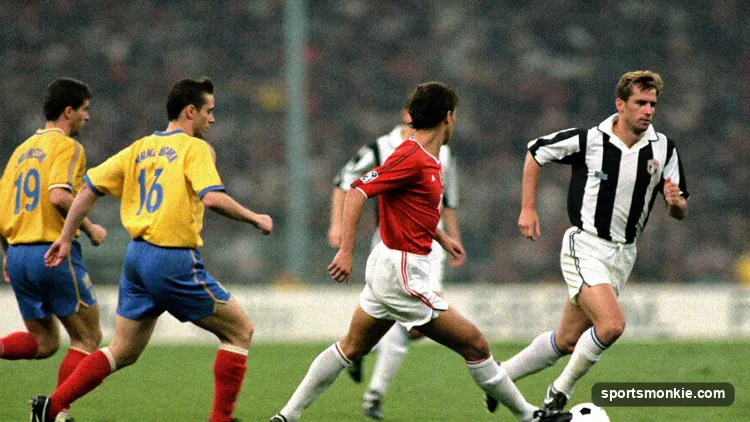
Total football is a system where outfield players interchange positions freely. Learn its Ajax-Cruyff origins, principles, and modern legacy.
What Is a False Nine in Football?
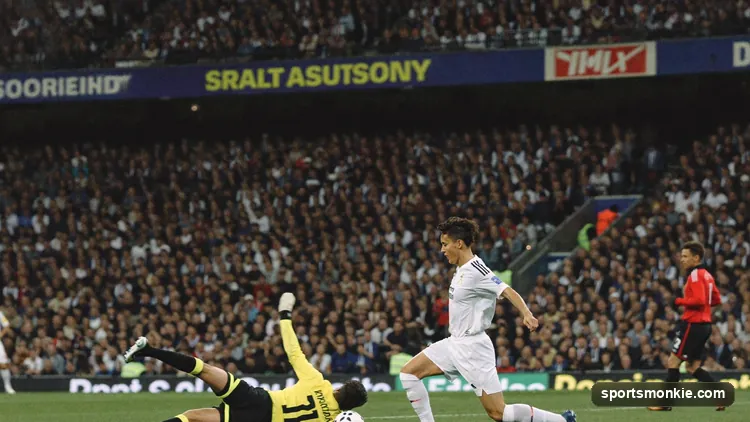
A false nine starts as a central striker but drops into midfield, pulling defenders out and opening lanes for teammates.