
3-5-2 Formation Explained: Roles, Strengths and Weaknesses
On this page6
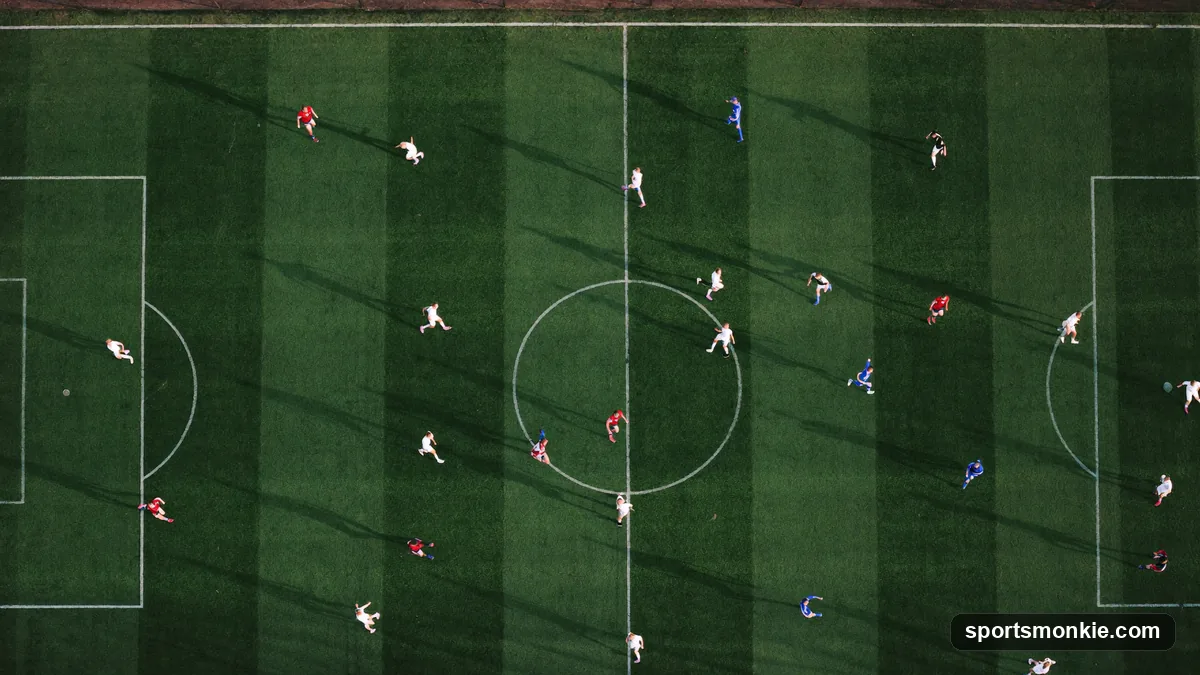
The 3-5-2 formation lines up three center-backs, two wing-backs who cover the full width of the pitch, three central midfielders, and two strikers. It gives up dedicated wide forwards for extra numbers through the center, producing a compact defensive block and a crowded midfield — at the cost of asking two players to defend and attack an entire flank on their own.
Where a back-four system like the 4-3-3 shares width duties between a winger and a full-back, the 3-5-2 puts all of it on one player per side. That single decision defines almost everything else about how the formation plays.
How the 3-5-2 lines up
Picture the pitch in four bands from back to front:
- Back three. Two center-backs sit either side of a central “stopper,” covering the width of the box between them. The wide two of the back three are often comfortable stepping into midfield with the ball, since the extra central body behind them provides cover.
- Wing-backs. One on each flank, these players occupy the space a full-back and a winger would normally share. In possession they push high and wide to provide the team’s only natural width; out of possession they drop level with the back three, turning the shape into a defensive back five.
- Midfield three. Set up centrally, this trio is arranged in different ways depending on the coach — a flat line of three, a double pivot behind one advanced playmaker, or a lone defensive midfielder screening two box-to-box runners. Whatever the split, three central midfielders against a rival’s two is an immediate numbers advantage in the middle of the pitch.
- Front two. Two strikers pair up rather than spreading wide. They press opposition center-backs together, combine in tight central areas, and both look to occupy the box when crosses come in from the wing-backs.
Strengths of the 3-5-2
Central solidity. Three center-backs plus three central midfielders means six players committed to the middle of the pitch, making it very difficult for opponents to build or break through centrally. Teams that like to play through the middle struggle to find space against a well-drilled 3-5-2.
Wing-back overloads. Because the wing-backs are the formation’s only source of width, a good pair of them can repeatedly beat a single opposing full-back on the overlap, delivering crosses into a box that already has two strikers plus late-arriving midfielders.
Two-striker threat. Playing forwards in a pair rather than isolating a lone striker gives a team combination play in the box — one dropping to link play, one staying high on the shoulder of the last defender — and two focal points for crosses rather than one.
Flexibility between phases. The formation can morph from an attacking 3-4-1-2 or 3-4-3 shape in possession to a defensively sound 5-3-2 out of possession simply by dropping the wing-backs, without changing personnel. Our 5-3-2 formation guide covers that defensive posture in detail.
Weaknesses of the 3-5-2
Enormous ground to cover. Wing-backs are asked to defend and attack an entire flank alone, with no winger or full-back to share the load. Over 90 minutes, that is one of the most physically demanding jobs in football, and fatigue late in games often shows up first in the wing-back positions.
Vulnerable wide areas. If a wing-back is caught upfield when possession turns over, the space behind them becomes a straight foot race for a center-back who is used to defending centrally, not in wide isolation. Opponents who commit both a winger and an attacking full-back down one side can create a two-vs-one that the 3-5-2 structurally cannot match without a midfielder tucking across to help.
Personnel-dependent. The system leans heavily on finding wing-backs with both the engine and the technical range to do a full-back’s defensive job and a winger’s attacking job. Without that profile of player, the formation either loses its width in attack or its cover in defense.
3-5-2 vs other formations
| Formation | Width source | Central numbers | Best used against |
|---|---|---|---|
| 3-5-2 | Two wing-backs | High (3 CBs + 3 CMs) | Teams that build through the middle |
| 3-4-3 | Wing-backs + wide forwards | Medium | Teams that sit deep and narrow |
| 5-3-2 | Limited (wing-backs sit deep) | High, but more defensive | Stronger opponents; protecting a lead |
| Flat back-four (e.g. 4-3-3) | Full-backs + wingers | Medium | Teams relying on a lone wide outlet |
The comparison shows the trade-off clearly: the 3-5-2 buys central control by spending its width budget on just two players, while a back-four system spreads that job across four.
Teams and managers who use it
Argentine coach Carlos Bilardo is widely credited with popularizing the modern back-three system, using it to win the 1986 World Cup. In the modern game, Antonio Conte has been the formation’s most persistent advocate, running variations of the 3-5-2 or 3-4-3 at Juventus, Chelsea, Inter Milan, Napoli and Tottenham Hotspur, typically winning titles wherever he installs it. Thomas Tuchel and Graham Potter have both used closely related back-three systems at Chelsea, and the shape remains a common choice whenever a manager wants defensive solidity without giving up central attacking numbers.
How to beat a 3-5-2
Because the formation has no natural width beyond its wing-backs, the standard counter is to attack exactly there. A back-four system with committed attacking full-backs — a 4-2-3-1 or a 4-3-3 — can push a winger and a full-back against a single wing-back, forcing an immediate two-vs-one out wide. Quick switches of play from one flank to the other are especially punishing, since recovering wing-backs cannot get across the pitch as fast as a back four can shift. For a broader look at how this shape stacks up against other systems, see our guide to soccer tactical systems.
The 3-5-2 remains one of the clearest examples of a formation defined by trade-offs: dominate the center of the pitch, and accept that two players now carry the entire burden of width. For the full picture of how every major shape compares, read our guide to soccer formations explained, and for more tactical breakdowns and match coverage visit football/soccer on SportsMonkie.
Frequently asked questions
What is the 3-5-2 formation in soccer?+
The 3-5-2 is a formation built around three central defenders, two wing-backs who cover the width on both flanks, three central midfielders, and two strikers playing as a front pair. It sacrifices dedicated wide forwards for a numbers advantage through the middle of the pitch.
What is the difference between 3-5-2 and 5-3-2?+
They are the same 11 players in different defensive postures. In the 3-5-2, the wing-backs push forward and the shape reads as a back three; in the 5-3-2, those same wing-backs drop into the defensive line, turning it into a back five with three midfielders ahead. See the full breakdown on our 5-3-2 formation page.
Why do teams use wing-backs in a 3-5-2?+
Wing-backs are the only source of natural width in a 3-5-2, since there are no traditional wingers or full-backs. They provide the attacking overlap down the flanks in possession and drop back to form a five-man defense out of possession, which is why the position demands elite stamina and both defensive and attacking ability.
What are the main weaknesses of the 3-5-2 formation?+
The biggest weakness is the physical and tactical burden on the wing-backs, who must cover an entire flank alone. If they push too far forward, the space behind them is exposed to a 1-vs-1 situation for a center-back, and opponents who overload the wide areas — especially with attacking full-backs — can isolate and exploit that space quickly.
Which teams and managers have used the 3-5-2 formation?+
Carlos Bilardo popularized the formation with Argentina's 1986 World Cup-winning side. Antonio Conte has used variations of it at Juventus, Chelsea, Inter Milan, Napoli, and Tottenham Hotspur, while managers including Thomas Tuchel and Graham Potter have also deployed 3-5-2 or closely related back-three systems.
How do you beat a 3-5-2 formation?+
The most common counter is attacking the flanks the wing-backs are supposed to cover — a 4-2-3-1 or 4-3-3 with committed attacking full-backs and wide forwards can create two-vs-one overloads out wide, since the back three has no natural width to help. Quick switches of play and direct running in behind the wing-backs are especially effective.
Is the 3-5-2 an attacking or defensive formation?+
It can be either, depending on how a coach sets the wing-backs and midfield three. With aggressive wing-backs and two strikers pressing high, it plays as an attacking system built to overload midfield and the box; with the wing-backs holding deeper, it compresses into a cautious back-five shape.
Sources
Play & tools
Free browser games and tools — no account, no download.
- Play 38-0 — Sign a 4-4-2 of all-time football legends and chase a perfect 38-0 league season — perfect, not just unbeaten.
- Explore all our games →
Related football guides
View all →
3-4-3 Formation Explained: Roles, Strengths & Weaknesses
The 3-4-3 formation explained: how the back three, midfield four, and front three line up, plus its strengths, weaknesses, and top managers.
4-1-4-1 Formation Explained: Structure, Roles, Strengths & Weaknesses
The 4-1-4-1 formation explained: a lone holding midfielder screens the back four behind a midfield band of four and one striker. Roles, pros, cons.
4-2-3-1 Formation Explained: Roles, Strengths & Weaknesses
The 4-2-3-1 formation explained: double pivot, attacking-midfield trio, lone striker, key strengths, weaknesses, and the managers who made it famous.
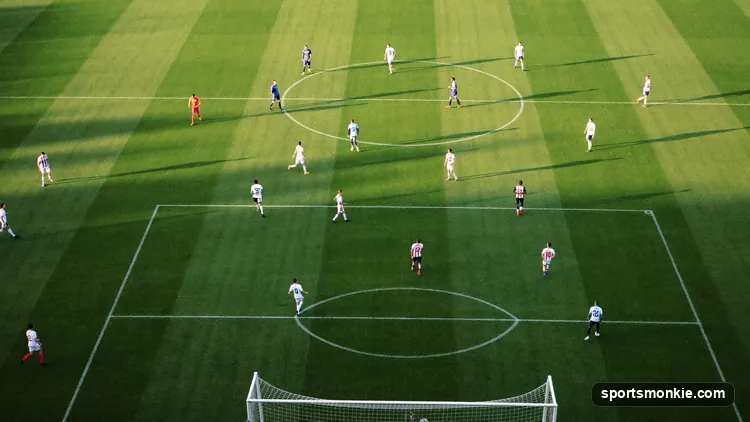
4-4-2 Formation Explained: Roles, Strengths and Weaknesses
The 4-4-2 formation lines up two banks of four plus two strikers. Learn the roles, strengths, weaknesses, and famous teams who made it work.
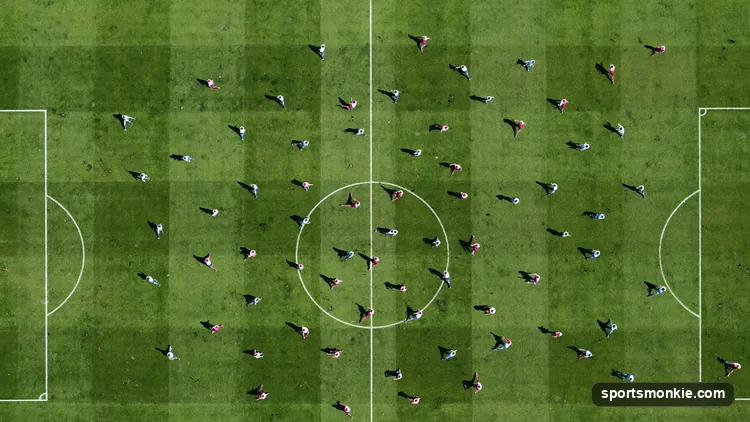
4-2-2-2 Formation Explained: The 'Magic Box' Football Tactic
The 4-2-2-2 formation explained: how the 'magic box' double pivot and two number 10s create central overloads, plus its strengths, weaknesses and famous users.
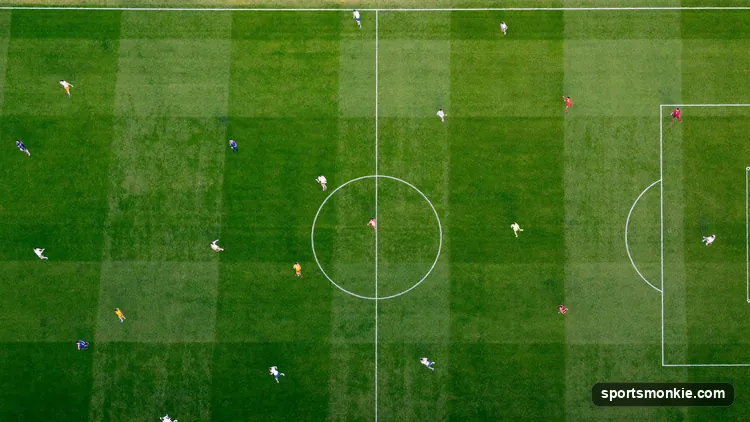
4-3-3 Formation Explained: Roles, Strengths & Weaknesses
The 4-3-3 formation explained: back four, midfield three, front three roles, why it works, its weaknesses, and the managers who made it famous.