
4-4-2 Formation Explained: Roles, Strengths and Weaknesses
On this page6
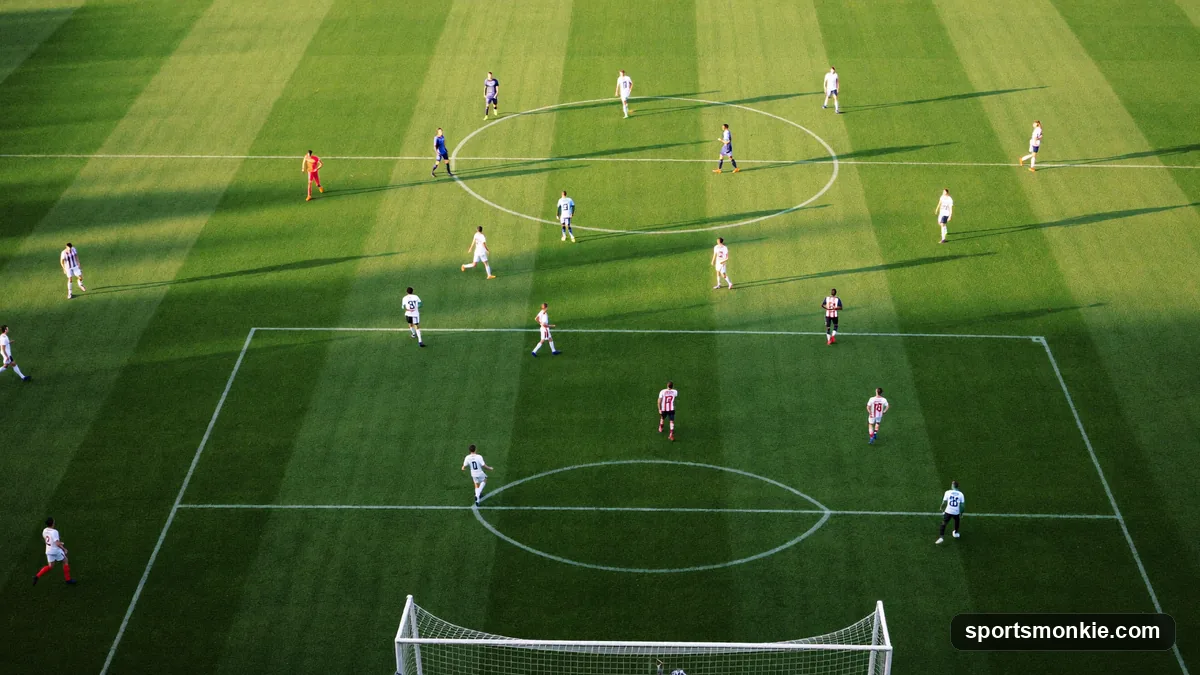
The 4-4-2 formation is a soccer lineup built around four defenders, four midfielders, and two strikers, arranged as two flat banks of four with a strike partnership up front. It is one of the oldest and most recognizable shapes in the sport, prized for its balance, its natural width, and how easy it is to coach at every level from grassroots to the Premier League.
Unlike the possession-heavy 4-3-3, the 4-4-2 doesn’t try to overload central midfield. It trades a spare midfielder for a second striker, betting that two forwards working together will do more damage than a third central passer. That trade-off defines everything about how the formation attacks, defends, and gets exploited.
How the 4-4-2 Lines Up
Picture the team split into three straight lines across the pitch.
- Defense (four players): Two center-backs sit in the middle, organizing the last line and winning aerial duels. On either side, a right-back and left-back mark the wide areas defensively and push forward to support attacks when possession is won.
- Midfield (four players): Two central midfielders occupy the middle of the park — typically one leans defensive, screening the back four, while the other gets forward to support the strikers. Out wide, two wingers (or wide midfielders) hug the touchlines, stretching the opposition and delivering crosses into the box.
- Attack (two players): Two strikers play as a partnership. One often plays as a target man, holding the ball up with his back to goal and winning knockdowns; the other plays off him, looking to run into space in behind the defense.
The result is a shape that looks almost symmetrical on a tactics board: two banks of four stacked in front of the goalkeeper, with the front two operating just ahead of the second bank. That’s why coaches often describe defending in a 4-4-2 as “shifting as two banks of four” — the back line and midfield line move together, left to right, to stay compact.
Strengths of the 4-4-2
The 4-4-2’s reputation as a reliable, balanced system comes down to a handful of clear advantages.
- Defensive solidity. Two flat, compact lines of four are simple to organize and hard to break down through the middle, since both banks can shift and cover for each other.
- Natural width. With a winger and an overlapping full-back on each flank, the 4-4-2 stretches the opposition and creates space for crosses without needing a specialist wide forward.
- A genuine strike partnership. Two strikers working in tandem — one holding the ball, one running beyond — are difficult for defenses that only play two center-backs, since one striker can drag a defender out of position for the other.
- Simplicity. Roles are clearly defined, which makes the 4-4-2 quick to coach and easy for young or inexperienced players to understand, and it lends itself to fast, direct counter-attacking football.
Weaknesses of the 4-4-2
The same trade-off that gives the 4-4-2 its strengths also creates its most obvious vulnerability.
- Outnumbered in central midfield. With only two central midfielders, the 4-4-2 is regularly overrun by three-man midfields in formations like the 4-3-3 or 4-2-3-1, which can dominate possession and pass around the two-man pivot.
- Physically demanding. The two central midfielders have to cover enormous ground, tracking back to defend and then supporting the attack, which can wear a team down over 90 minutes.
- Limited creativity through the middle. Without a dedicated attacking midfielder threading passes between the lines, the 4-4-2 can become predictable and overly reliant on width and crosses.
- Exposed by modern pressing systems. Fluid, position-less attacking play that overloads the space between a 4-4-2’s lines can pull the shape out of order, since the formation is built on rigid, straight lines rather than rotations.
Famous Teams and Managers Who Used the 4-4-2
The 4-4-2 has a legitimate trophy case behind it. Sir Alex Ferguson’s Manchester United ran a classic 4-4-2 for much of his reign, most famously in the 1998-99 treble-winning season, with Dwight Yorke and Andy Cole forming one of the Premier League’s great strike partnerships and David Beckham and Ryan Giggs supplying width from the flanks. Claudio Ranieri’s Leicester City used a disciplined, counter-attacking 4-4-2 to win the 2015-16 Premier League title, one of the most famous underdog stories in football history. Arrigo Sacchi’s AC Milan side of the late 1980s and early 1990s also built its high-pressing, zonal football on a 4-4-2 base. More recently, Diego Simeone has made a compact, aggressive 4-4-2 the identity of his Atletico Madrid teams, prioritizing defensive organization and quick transitions over sustained possession.
When Should a Coach Play the 4-4-2?
The 4-4-2 tends to work best in a few specific situations: when a team has two strikers who complement each other’s strengths, when the opponent defends with only two center-backs and can be stretched by a strike partnership, or when a coach values a direct, physical, counter-attacking style over patient possession play. It’s also a strong choice for developing teams, since the clearly defined roles make it one of the easiest systems to teach.
4-4-2 vs Other Common Formations
| Formation | Central midfielders | Strikers | Best for |
|---|---|---|---|
| 4-4-2 | 2 | 2 | Direct play, strike partnerships, simple coaching |
| 4-3-3 | 3 | 1 | Possession control, pressing triggers, wide forwards |
| 4-2-3-1 | 2 (+1 attacking mid) | 1 | Balance between defense and a creative No. 10 |
For a broader look at how these systems compare across the sport, see our guide to soccer formations explained and the wider soccer tactical systems that have shaped how teams set up. For more explainers and coverage, visit the football section.
The 4-4-2 will never disappear from football. It’s too simple, too balanced, and too proven at every level of the game — from Sunday league sidelines to Premier League title runs — to fall out of use, even as fashion in the sport shifts toward three-man midfields and false nines.
Frequently asked questions
What is the 4-4-2 formation in soccer?+
The 4-4-2 formation is a soccer lineup with four defenders, four midfielders, and two strikers. The defenders and midfielders form two flat banks of four across the pitch, while the two forwards play as a strike partnership up top.
What are the positions in a 4-4-2 formation?+
From back to front: two center-backs and two full-backs across the defense, two central midfielders and two wide midfielders (wingers) across midfield, and two strikers who split target-man and poacher duties up front.
What are the strengths of the 4-4-2 formation?+
Its main strengths are defensive balance from two compact banks of four, natural width from wingers and overlapping full-backs, a strike partnership that stresses two-center-back defenses, and simplicity that makes it easy to coach and quick to execute in transition.
What is the biggest weakness of the 4-4-2 formation?+
The biggest weakness is a lack of central midfield numbers. Two central midfielders can be outnumbered and bypassed by three-man midfields in formations like the 4-3-3 or 4-2-3-1, which can dominate possession through the middle.
Which teams and managers are known for the 4-4-2 formation?+
Sir Alex Ferguson's Manchester United, most famously the 1998-99 treble winners with Dwight Yorke and Andy Cole up front, ran a classic 4-4-2. Claudio Ranieri's Leicester City used it to win the 2015-16 Premier League, and Diego Simeone has built much of Atletico Madrid's identity around a compact, counter-attacking version of it.
Is the 4-4-2 formation still used in modern football?+
Yes, though less often at the very top level than in the 1990s and 2000s. It remains common in lower divisions, youth and grassroots football, and as a counter-attacking option for teams like Atletico Madrid, largely because it is straightforward to teach and defend with.
How is the 4-4-2 different from the 4-2-3-1 or 4-3-3?+
The 4-4-2 plays two strikers and only two central midfielders, while the 4-2-3-1 and 4-3-3 both field three central midfield players and one central striker. That extra midfielder gives the 4-2-3-1 and 4-3-3 more control of central areas, at the cost of the 4-4-2's second striker and its simpler, more direct shape.
When should a coach choose the 4-4-2 formation?+
The 4-4-2 suits teams that want a direct, physical approach, have two strong strikers who play well together, or are facing an opponent with only two center-backs. It also works well for developing players because the roles are clearly defined and easy to coach.
Sources
Play & tools
Free browser games and tools — no account, no download.
- Play 38-0 — Sign a 4-4-2 of all-time football legends and chase a perfect 38-0 league season — perfect, not just unbeaten.
- Explore all our games →
Related football guides
View all →
3-5-2 Formation Explained: Roles, Strengths and Weaknesses
The 3-5-2 formation uses three center-backs, two attacking wing-backs, a midfield three and two strikers for a compact, wide-covering shape.
4-1-4-1 Formation Explained: Structure, Roles, Strengths & Weaknesses
The 4-1-4-1 formation explained: a lone holding midfielder screens the back four behind a midfield band of four and one striker. Roles, pros, cons.
4-2-3-1 Formation Explained: Roles, Strengths & Weaknesses
The 4-2-3-1 formation explained: double pivot, attacking-midfield trio, lone striker, key strengths, weaknesses, and the managers who made it famous.
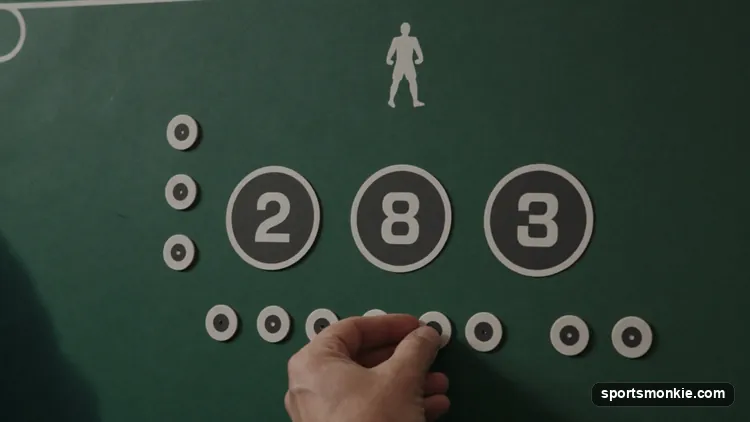
Formation in Soccer Explained: How to Read Every Shape
A formation in soccer is the numeric shorthand for how a team's outfield players line up by line: defenders, midfielders, forwards.
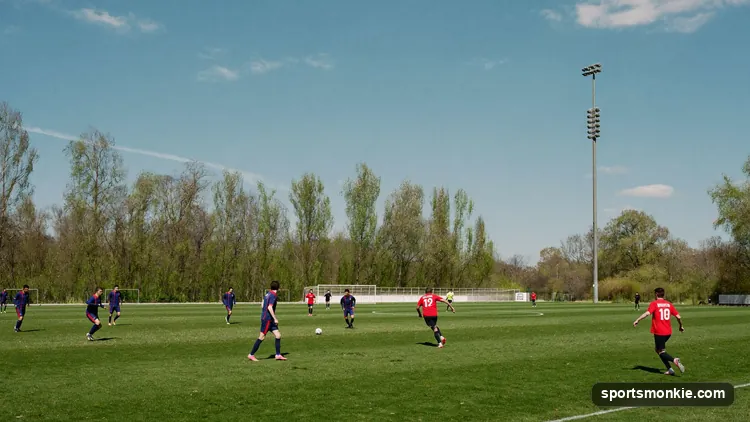
11v11 Soccer Formations: The Full-Sided Guide to Every Shape
11v11 soccer formations explained: how full-sided lineups work, the most common shapes (4-4-2, 4-3-3, 4-2-3-1, 3-5-2, 5-3-2), and how to pick one.
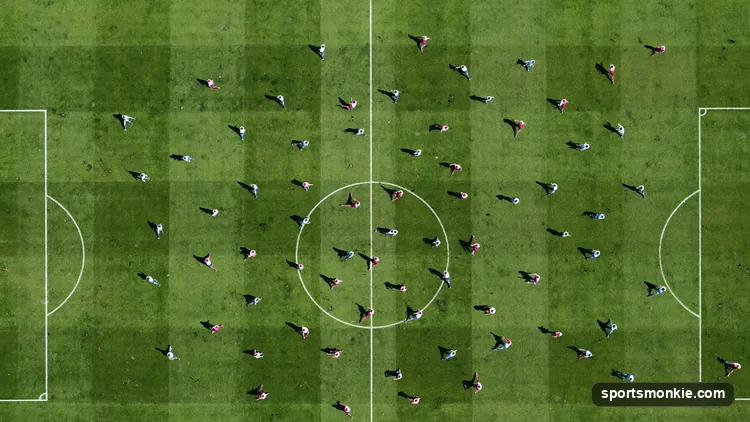
4-2-2-2 Formation Explained: The 'Magic Box' Football Tactic
The 4-2-2-2 formation explained: how the 'magic box' double pivot and two number 10s create central overloads, plus its strengths, weaknesses and famous users.