
5-3-2 Formation Explained: Roles, Strengths & Weaknesses
On this page7
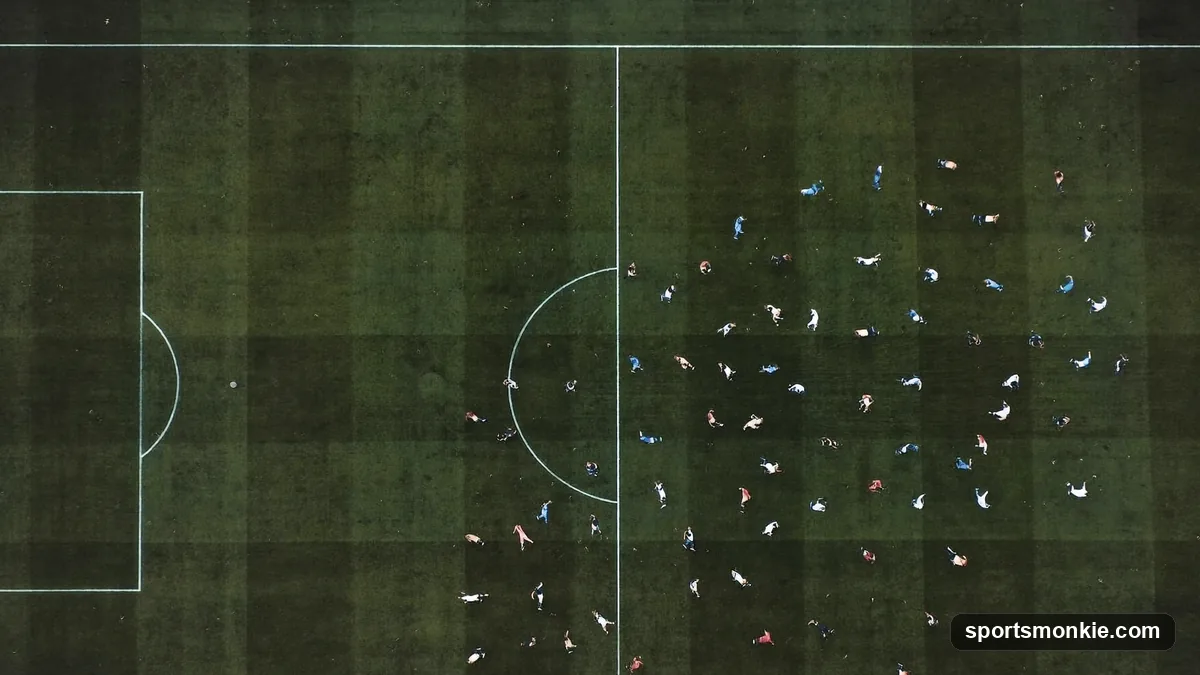
The 5-3-2 formation lines up five defenders (three center-backs and two wing-backs), a midfield three, and two strikers, prioritizing defensive compactness and counter-attacking speed over possession and width. It’s one of the most disciplined shapes in the sport - a system built to make a team hard to break down before it looks to hurt opponents on the break. Coaches reach for it against stronger sides, when protecting a lead, or when squad depth up front is thin.
This guide breaks down how the 5-3-2 lines up, the job of every position, its real strengths and weaknesses, and the teams that have made it work at the highest level. For the bigger picture of how formations fit together, see our complete guide to soccer formations explained and the broader soccer tactical systems explained breakdown.
How the 5-3-2 lines up
Picture the back five first. Three central defenders sit across the middle of the box - a central “sweeper” type flanked by two more aggressive stoppers who can step out to challenge attackers. On either side of them, two wing-backs occupy the width the back three can’t cover, tucking in alongside the center-backs when defending to complete a genuine five-man line.
In midfield, three players form a tight, central triangle. Most commonly this is a single holding midfielder (the No. 6) shielding the back line, flanked by two box-to-box midfielders who shuttle forward to support attacks and drop back to help defend. Up top, two strikers work as a pair - often one target-man who holds the ball and brings others into play, paired with a quicker runner who attacks space in behind.
Unlike a 4-4-2, which spreads four defenders and two wide midfielders across the width of the pitch, the 5-3-2 concentrates its numbers centrally and asks the wing-backs to cover the flanks alone in both boxes.
Player roles by position
| Position | Core responsibility |
|---|---|
| Goalkeeper | Organizes the back five, sweeps behind the defensive line |
| Center-backs (3) | Central defender directs play; two outer center-backs step out to press or cover wing-back space |
| Wing-backs (2) | Provide the team’s only natural width; track opposing wingers, overlap in attack |
| Holding midfielder | Shields the back three, screens central passing lanes, starts build-up |
| Box-to-box midfielders (2) | Support attacks centrally, cover wide zones when wing-backs push on, win second balls |
| Strikers (2) | One holds up play and occupies center-backs; the other runs in behind or drops to link midfield |
Strengths of the 5-3-2
The formation’s defining strength is defensive solidity. Five defenders plus a midfield three crowd the central third of the pitch, making it extremely difficult for opponents to combine through the middle or overload the box. Because the back five already outnumbers most two- or three-striker attacks, defenders can afford to press aggressively without leaving gaps behind them.
It’s also an efficient platform for counter-attacking. With so many bodies behind the ball, winning possession back often means the 5-3-2 team has numbers and space to break forward quickly, especially when the front two are well matched - one holding the ball, the other sprinting into space.
Central control is another advantage: three central midfielders against a rival’s midfield two or three typically wins the battle for second balls and territory, letting the team dictate tempo even without dominating possession.
Weaknesses of the 5-3-2
The formation’s biggest vulnerability is a lack of natural attacking width. Both flanks depend entirely on the wing-backs, and if they push forward to support the strikers, the space behind them becomes exposed to fast transitions - a problem for teams that lean on pacey wide attackers, as our broader soccer tactical systems explained guide covers.
It also asks a huge amount of the wing-backs physically. They must defend as auxiliary full-backs and attack as auxiliary wingers over 90 minutes, and a tired or injured wing-back can collapse the whole structure.
Offensively, two strikers limited attacking numbers can leave a team short of ideas against a well-organized low block. And if used too rigidly, the 5-3-2 tips from “compact and disciplined” into simply passive - inviting sustained pressure that eventually finds a crack, since the team is surrendering both possession and territory by design.
5-3-2 vs 3-5-2: what’s the real difference
These two shapes are usually the same players, described in different phases of play. In 3-5-2, the wing-backs push high, giving the team a back three out of possession transitioning into a five-man midfield in attack. In 5-3-2, those same wing-backs sit deeper, turning the same eleven into a defensive back five with a tighter midfield three. Most modern tactics boards treat 3-5-2 and 5-3-2 as one fluid system rather than two distinct formations - the label just depends on how far up the pitch the wing-backs are positioned at a given moment.
Real teams that have used the 5-3-2
Brazil won the 2002 World Cup with a version of this shape under Luiz Felipe Scolari, using attacking wing-backs Cafu and Roberto Carlos to provide width while three center-backs held the defensive line. In club soccer, Antonio Conte and later Simone Inzaghi built Inter Milan sides around back-three/back-five systems that shifted into a 5-3-2 or 3-5-2 depending on the phase of play. Ronald Koeman also had success with a similar structure at Feyenoord, and Diego Simeone used it at Atletico Madrid during a stretch of striker injuries, showing how the formation can be a practical solution as much as a philosophical one.
When a team should choose the 5-3-2
The 5-3-2 suits teams facing a technically superior opponent, sides protecting a lead late in a match, or squads short on attacking depth but strong at the back. It also rewards teams with genuinely two-way wing-backs and two strikers who complement rather than duplicate each other’s game. For a broader look at how this fits alongside other systems in the football / soccer category, explore our full formations library.
The trade-off is always the same: the 5-3-2 buys defensive security by spending attacking width and possession. Coaches who accept that trade and build their team around it get one of the hardest shapes in the sport to break down.
Frequently asked questions
What is the 5-3-2 formation in soccer?+
The 5-3-2 formation uses five defenders (three central defenders plus two wing-backs), three central midfielders, and two strikers. It is one of the most defensively compact systems in modern soccer, built to control the center of the pitch and hit teams on the counter-attack.
What is the difference between 5-3-2 and 3-5-2?+
They are the same eleven players in different defensive and attacking phases. In 3-5-2, the wing-backs push high and the team plays with a back three; in 5-3-2, those same wing-backs drop into the defensive line, turning it into a back five. Most modern coaches treat 3-5-2 and 5-3-2 as one fluid system rather than two separate formations.
What are the strengths of the 5-3-2 formation?+
Its biggest strengths are defensive compactness through the middle, numerical superiority against most attacking shapes, a stable platform for counter-attacks, and reduced vulnerability to being overloaded centrally, since three center-backs and three central midfielders crowd the middle of the pitch.
What are the weaknesses of the 5-3-2 formation?+
The 5-3-2's main weaknesses are a lack of natural width in attack, heavy reliance on wing-back fitness and quality, limited attacking numbers with only two strikers, and a tendency to become too passive, inviting sustained pressure it cannot relieve without the ball.
Which teams and managers have used the 5-3-2 formation?+
Brazil won the 2002 World Cup playing a version of this shape under Luiz Felipe Scolari, with wing-backs Cafu and Roberto Carlos driving the attack. Antonio Conte and Simone Inzaghi both built title-winning Inter Milan sides around back-three/back-five systems, Ronald Koeman had success with it at Feyenoord, and Diego Simeone used it at Atletico Madrid during a run of striker injuries.
Is the 5-3-2 a defensive or attacking formation?+
The 5-3-2 is primarily a defensive formation. It is built to keep bodies behind the ball and control central areas, then attack in transition through quick combinations and direct running rather than sustained buildup possession.
What positions make up the 5-3-2 formation?+
From back to front: a goalkeeper, two wing-backs and three center-backs forming the back five, three central midfielders (often a holding midfielder plus two box-to-box players), and two strikers up top.
When should a team use the 5-3-2 formation?+
Teams choose the 5-3-2 when facing a stronger opponent, protecting a lead, missing attacking personnel, or wanting to dominate central midfield battles. It suits squads with disciplined, fit wing-backs and at least two strikers who complement each other well.
Sources
Play & tools
Free browser games and tools — no account, no download.
- Play 38-0 — Sign a 4-4-2 of all-time football legends and chase a perfect 38-0 league season — perfect, not just unbeaten.
- Explore all our games →
Related football guides
View all →
What Is a False Nine in Football? The Role Explained
A false nine is a centre-forward who drops deep into midfield instead of staying up front, dragging defenders out of position and creating space for teammates.
3-4-3 Formation Explained: Roles, Strengths & Weaknesses
The 3-4-3 formation explained: how the back three, midfield four, and front three line up, plus its strengths, weaknesses, and top managers.
3-5-2 Formation Explained: Roles, Strengths and Weaknesses
The 3-5-2 formation uses three center-backs, two attacking wing-backs, a midfield three and two strikers for a compact, wide-covering shape.
4-1-4-1 Formation Explained: Structure, Roles, Strengths & Weaknesses
The 4-1-4-1 formation explained: a lone holding midfielder screens the back four behind a midfield band of four and one striker. Roles, pros, cons.
4-2-3-1 Formation Explained: Roles, Strengths & Weaknesses
The 4-2-3-1 formation explained: double pivot, attacking-midfield trio, lone striker, key strengths, weaknesses, and the managers who made it famous.
4-3-3 Formation Explained: Roles, Strengths & Weaknesses
The 4-3-3 formation explained: back four, midfield three, front three roles, why it works, its weaknesses, and the managers who made it famous.