
4-2-3-1 Formation Explained: Roles, Strengths & Weaknesses
On this page6
The 4-2-3-1 formation lines up four defenders, two holding midfielders known as the double pivot, three attacking midfielders spread across the pitch, and one central striker. It is one of the most common base shapes in modern soccer because it protects the center of the pitch while still giving a team width, creativity, and multiple passing options going forward.
How the 4-2-3-1 lines up
Picture the team in four horizontal bands, back to front:
- Back four — two center-backs flanked by two full-backs, holding a flat or slightly staggered defensive line.
- Double pivot — two central midfielders sitting directly in front of the back four, screening the space between the lines and starting attacks.
- Attacking three — one central No. 10 playing between the opposition’s midfield and defense, with two wide attacking midfielders positioned closer to the touchlines on either side.
- Lone striker — a single center-forward who leads the line, holds up play, and looks to get in behind the last defender.
This differs from a flatter midfield three: unlike the 4-3-3, which usually spreads its central midfielders more evenly across defensive, box-to-box, and attacking duties, the 4-2-3-1 deliberately splits its midfield into a deep pair and an advanced trio. For a broader look at how this shape compares to every other structure a team can run, see our soccer formations explained guide.
The double pivot, explained
The double pivot is the defining feature of the 4-2-3-1. Rather than one holding midfielder, the formation uses two, and they typically split responsibilities:
- One pivot leans defensive, screening passing lanes into the No. 10 and covering if a full-back steps out of the back line.
- The other pivot is more progressive, dropping to receive the ball from the center-backs and playing forward passes into the attacking three.
Coordinating this pair is essential. If both midfielders push forward to support an attack at the same time, or both drop too deep, the team loses its central protection — one of the formation’s clearest structural risks. Managed well, the double pivot lets a team dominate central midfield numerically against systems that only field one holding player, which is part of why the shape spread so widely through the 2000s and 2010s as pressing tactics took hold.
The attacking-midfield band of three
Ahead of the pivot sits the trio that gives the 4-2-3-1 its creative identity. The central No. 10 operates in the pocket between the opposition’s midfield and defensive lines, looking to receive on the turn and pick passes into the striker or the wide players. The two wide attacking midfielders can either hug the touchline to stretch the defense and supply crosses, or cut inside onto their stronger foot — a common setup when a left-footed player lines up on the right, and vice versa — while the full-backs behind them overlap to provide width instead.
This trio is what makes the formation adaptable in-game. Push a wide attacking midfielder further forward and level with the striker, and the shape becomes closer to a 4-3-3. Drop both wide players back level with the No. 10, and the team can flex into a defensive 4-4-1-1 or a 4-4-2 without a full personnel change.
Strengths of the 4-2-3-1
| Strength | Why it matters |
|---|---|
| Central defensive solidity | The double pivot screens the most dangerous zone in front of the back four, making it hard to break through the middle. |
| Attacking flexibility | The band of three can combine in triangles, rotate positions, and create overloads against a back four. |
| In-game adaptability | Can morph into a 4-3-3 or a 4-4-2 without a substitution, simply by adjusting the wide players’ positioning. |
| Balanced full-back support | Full-backs can push on for width knowing two pivots remain behind to cover. |
| Player development | Clear, well-defined roles for each of the ten outfield positions make it a popular teaching formation at youth and academy level. |
Weaknesses of the 4-2-3-1
The formation’s best-known flaw is the isolation of the lone striker. With only one central forward, that player is almost always outnumbered by the opposition’s two or three center-backs, which can make it difficult to hold up possession or win aerial duels without support arriving late from the No. 10 or wide players.
The second major weakness sits with the double pivot itself. If both holding midfielders push up together to join an attack, the space they were screening opens up directly in front of the back four — exactly the kind of gap a counter-attacking opponent wants to exploit. The formation can also be outnumbered centrally by any system that fields three central midfielders, since two pivots plus one No. 10 can be stretched thin against three connected opposition midfielders working together.
Modern usage and notable managers
The 4-2-3-1 became one of the sport’s dominant systems through the 2000s and 2010s, as pressing-based football made a disciplined double pivot increasingly valuable. Mauricio Pochettino built his Tottenham Hotspur sides around it, pairing a penetrative Dele Alli in the No. 10 role with Harry Kane leading the line. Hansi Flick’s Bayern Munich used a 4-2-3-1 during their treble-winning 2019/20 Champions League campaign. Pep Guardiola has deployed 4-2-3-1 variants at Manchester City, at times using a full-back like João Cancelo tucked inside as an auxiliary pivot. Gareth Southgate’s England sides have also used double-pivot pairings, including Declan Rice and Kalvin Phillips, within a broadly 4-2-3-1 or 4-3-3 hybrid shape.
For teams looking for even more attacking central presence without sacrificing a double pivot, some coaches instead reach for a 4-2-2-2, which keeps two holding midfielders but pairs two strikers up top instead of one. Explore how these systems fit into a club’s overall approach in our broader soccer tactical systems explained guide, or browse more football coverage on SportsMonkie.
Frequently asked questions
What is the 4-2-3-1 formation in soccer?+
The 4-2-3-1 is a soccer formation with four defenders, two holding midfielders (the double pivot), three attacking midfielders spread across the width of the pitch, and one central striker. It is one of the most widely used shapes in modern football because it balances defensive cover with attacking width and creativity.
What is a double pivot in the 4-2-3-1?+
The double pivot is the pair of central midfielders who sit just in front of the back four. One typically screens the defense and wins the ball back, while the other helps circulate possession and start attacks. Together they protect the space between the defense and the attacking midfield trio.
What are the strengths of the 4-2-3-1 formation?+
Its main strengths are defensive solidity through the double pivot, a compact central block that is hard to play through, and a flexible attacking-midfield trio that can create overloads and combine in tight spaces. It also converts easily into a 4-3-3 or 4-4-2 mid-match.
What are the weaknesses of the 4-2-3-1 formation?+
The lone striker can become isolated when outnumbered by two or three center-backs, and if both pivots push too far forward at once, dangerous gaps open in front of the back line. The formation can also be outnumbered centrally by systems using three central midfielders.
Which teams and managers use the 4-2-3-1?+
Mauricio Pochettino ran a 4-2-3-1 at Tottenham Hotspur built around Harry Kane and Dele Alli. Hansi Flick used it to win the treble with Bayern Munich in 2019/20. Pep Guardiola has deployed 4-2-3-1 variants at Manchester City, and Gareth Southgate used double pivots of Declan Rice and Kalvin Phillips with England.
How is the 4-2-3-1 different from the 4-3-3?+
The 4-2-3-1 splits its midfield three into two holding players plus one attacking No. 10, while the 4-3-3 usually spreads three central midfielders more evenly across defensive, box-to-box, and attacking roles. The 4-2-3-1 gives extra defensive cover centrally; the 4-3-3 usually offers more natural width from wide forwards.
Can the 4-2-3-1 change into other formations during a match?+
Yes. It is one of the most flexible base shapes in football. Pushing a wide attacking midfielder forward can turn it into a 4-3-3, while dropping the two wide players level with the striker can create a 4-4-2 in defensive phases.
What positions make up the attacking three in a 4-2-3-1?+
The attacking three consists of a central No. 10 who operates between the lines, and two wide attacking midfielders who stay closer to the touchline or cut inside onto their stronger foot, depending on whether they are playing on their natural or opposite side.
Sources
Play & tools
Free browser games and tools — no account, no download.
- Play 38-0 — Sign a 4-4-2 of all-time football legends and chase a perfect 38-0 league season — perfect, not just unbeaten.
- Explore all our games →
Related football guides
View all →
3-5-2 Formation Explained: Roles, Strengths and Weaknesses
The 3-5-2 formation uses three center-backs, two attacking wing-backs, a midfield three and two strikers for a compact, wide-covering shape.
4-1-4-1 Formation Explained: Structure, Roles, Strengths & Weaknesses
The 4-1-4-1 formation explained: a lone holding midfielder screens the back four behind a midfield band of four and one striker. Roles, pros, cons.
4-2-2-2 Formation Explained: The 'Magic Box' Football Tactic
The 4-2-2-2 formation explained: how the 'magic box' double pivot and two number 10s create central overloads, plus its strengths, weaknesses and famous users.
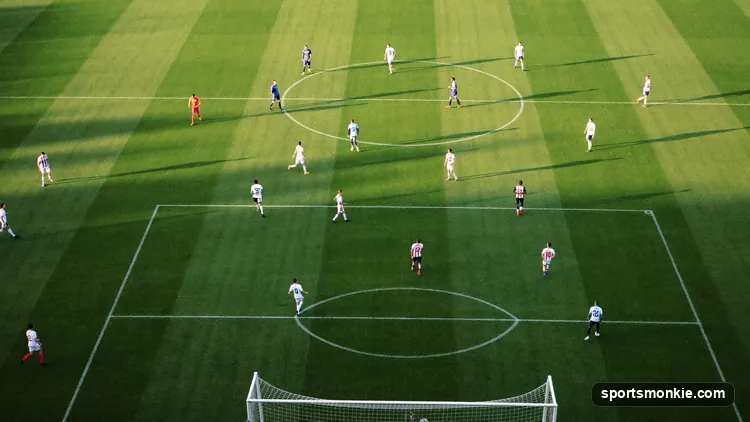
4-4-2 Formation Explained: Roles, Strengths and Weaknesses
The 4-4-2 formation lines up two banks of four plus two strikers. Learn the roles, strengths, weaknesses, and famous teams who made it work.
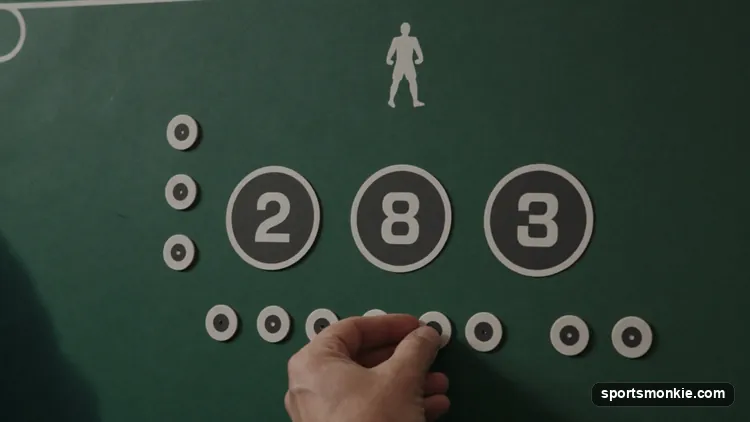
Formation in Soccer Explained: How to Read Every Shape
A formation in soccer is the numeric shorthand for how a team's outfield players line up by line: defenders, midfielders, forwards.
11v11 Soccer Formations: The Full-Sided Guide to Every Shape
11v11 soccer formations explained: how full-sided lineups work, the most common shapes (4-4-2, 4-3-3, 4-2-3-1, 3-5-2, 5-3-2), and how to pick one.