
Formation in Soccer Explained: How to Read Every Shape
On this page7
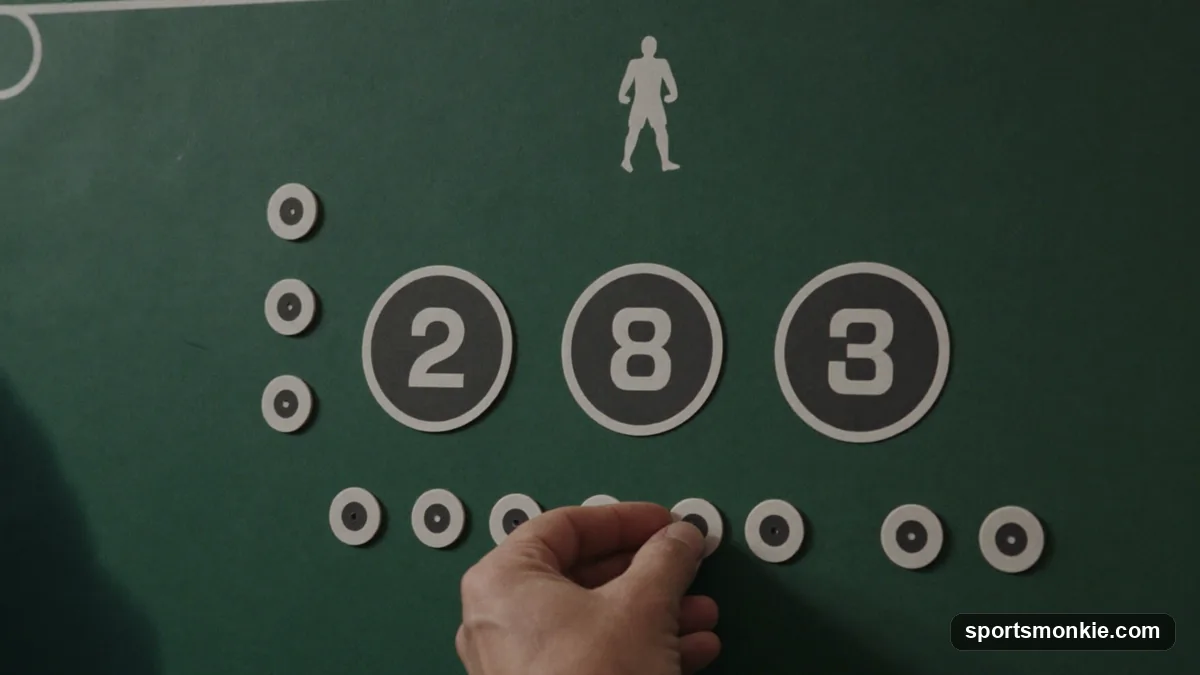
A formation in soccer is the numeric shorthand, like 4-3-3 or 4-2-3-1, that describes how a team’s 10 outfield players are arranged in lines from defense to attack, with the goalkeeper never included in the count. Read left to right, the numbers go defenders, then midfielders, then forwards, so a 4-3-3 fields four defenders, three midfielders, and three attackers. Formations aren’t just diagrams on a whiteboard; they set up everything from how a team defends its box to how it tries to break one down. This guide is the hub for SportsMonkie’s soccer tactics coverage, the overview that ties every individual formation breakdown together.
How to Read Formation Numbers
Every formation number sequence starts from the goalkeeper and works outward. Take 4-2-3-1:
- 4 - back-line defenders (two center-backs, two full-backs)
- 2 - defensive midfielders sitting in front of the back line
- 3 - attacking midfielders across the width of the pitch
- 1 - a lone central striker
Add those digits and you get 10, which is exactly right: the goalkeeper is a constant in every formation, so leaving them out of the number keeps the shorthand focused on the tactical variables a coach actually manipulates. This is also why formations can be written with more or fewer number groups: 4-4-2 has three groups, while 4-2-3-1 or 4-1-2-1-2 split the midfield into sub-lines to show more tactical detail. For the deeper mechanics of how these shapes actually function during a match, pressing triggers, buildup patterns, transitions, see our companion piece on soccer tactical systems.
Why Formations Matter
A formation is a starting template, not a cage. But the template still shapes a huge amount of what a team can and can’t do well:
- Defensive coverage. More defenders (a back five) means more bodies protecting the box; fewer defenders (a back three used aggressively) means more players committed forward but more space to defend in behind.
- Central control vs. width. Formations stacked with central midfielders, like a diamond, dominate the middle of the pitch but rely on full-backs for width. Formations with natural wide midfielders or wingers stretch the pitch horizontally but can leave gaps centrally.
- Pressing structure. A front three or front two changes how a team presses the opposition’s build-up: three forwards can cover the back line and both passing lanes to full-backs, while two often need midfield support to press effectively.
- Buildup and directness. Some shapes, like a 4-4-2, lend themselves to quicker, more direct play with two out-and-out strikers as targets. Others, like a 4-3-3 or 4-2-3-1, are built for patient possession through midfield triangles.
None of this is fixed by the numbers alone; player instructions, fitness, and quality change everything, but the formation sets the baseline geometry every other decision works within.
The Core Trade-Offs
Every formation choice is really a series of trade-offs a manager accepts:
| Trade-off | Favors width & directness | Favors control & compactness |
|---|---|---|
| Defensive line | Back four, flat and disciplined | Back three/five with cover |
| Midfield shape | Flat bank of four | Layered (2-3-1, diamond) |
| Forward line | Two strikers, quick transitions | One striker, more attacking midfielders |
| Best against | Teams that sit deep | Teams that press high |
| Weakness | Can be overrun centrally | Can lack a direct outlet |
There’s no “best” formation in isolation, only the shape that best fits the players available and the opponent in front of them. A back four with a flat midfield four, the classic 4-4-2, sacrifices central numbers for simplicity and width. A team packing central midfield with three or four players, like the 4-3-3 or 4-2-3-1, usually trades some directness for control of possession.
How It Lines Up: Positions by Line
Regardless of the exact numbers, every formation is built from the same position groups:
- Center-backs anchor the defense centrally, dealing with crosses and central strikers.
- Full-backs / wing-backs patrol the flanks; in back-four systems they defend first and support attacks second, while in back-three systems (wing-backs) they’re expected to bomb forward and provide most of the team’s width.
- Defensive midfielders shield the back line, break up opposition attacks, and start buildup play.
- Central/attacking midfielders link defense to attack, control tempo, and create chances.
- Wide midfielders or wingers stretch the play, take on full-backs, and supply crosses or cutbacks.
- Strikers finish moves; in a two-striker system one often drops deeper to link play while the other stays on the shoulder of the last defender, whereas a lone striker in systems like the 4-1-4-1 usually holds the ball up and waits for support from attacking midfielders.
Common Formations Compared
| Formation | Defenders | Midfielders | Forwards | Known for | Notable users |
|---|---|---|---|---|---|
| 4-4-2 | 4 | 4 | 2 | Simplicity, directness, counter-attacks | Atletico Madrid (Simeone), Manchester United (Ferguson) |
| 4-3-3 | 4 | 3 | 3 | Balance, pressing, possession | Liverpool (Klopp), Manchester City & Barcelona (Guardiola) |
| 4-2-3-1 | 4 | 5 (2+3) | 1 | Defensive stability with attacking creativity | Spain (Del Bosque), Bayern Munich (Flick, Nagelsmann) |
| 3-5-2 | 3 | 5 | 2 | Wing-back flexibility, central overload | Juventus & Inter Milan / Chelsea (Conte, Tuchel) |
| 3-4-3 | 3 | 4 | 3 | Wide overloads, high pressing | Barcelona (Cruyff), Juventus (Conte) |
| 4-1-4-1 | 4 | 5 (1+4) | 1 | Compact defensive shield, midfield control | Common at club and international level for balanced pressing |
| 5-3-2 | 5 | 3 | 2 | Defensive solidity, low-block resilience | Frequently used by underdog sides in cup competitions |
| 4-2-2-2 | 4 | 4 (2+2) | 2 | Central overloads, box-to-box balance | Popular in Brazilian and South American club football |
Each of these has its own dedicated breakdown with roles, strengths, weaknesses, and full tactical context: this table is the map, not the whole territory.
Formations Change with the Number of Players
Everything above assumes a full 11-a-side game, but formation logic scales down for smaller-sided formats too, which is common in youth and grassroots soccer. The same defenders-midfielders-forwards logic applies, just compressed: see our guides to 7v7 soccer formations, 9v9 soccer formations, and the full 11v11 soccer formations breakdown for how shape recommendations shift as the pitch and squad size grow.
The Bottom Line
A formation is the skeleton, not the whole body: it tells you where players start and roughly how many occupy each third of the pitch, but the actual soccer is played through pressing triggers, passing patterns, and player quality layered on top of that skeleton. Learning to read the numbers quickly, defenders, midfielders, forwards, goalkeeper always excluded, is the fastest way to understand what a coach is trying to do before a ball is even kicked. From here, dig into any individual shape linked above for the full tactical breakdown of how it actually plays out on the pitch.
Frequently asked questions
What does a formation in soccer mean?+
It's a numeric description of how a team's 10 outfield players are grouped into lines: defenders first, then midfielders, then forwards, read from the goalkeeper outward. A 4-3-3 means four defenders, three midfielders, and three forwards.
What is the most common soccer formation?+
The 4-3-3 and 4-2-3-1 are the most widely used shapes in professional soccer today because they balance defensive coverage with attacking width and central control, though the 4-4-2 remains popular at lower levels for its simplicity.
Why doesn't the goalkeeper count in the formation number?+
The goalkeeper's position never changes relative to the formation, so including them would add nothing useful. Formation numbers only describe the 10 outfield players, which is why a 4-3-3 adds up to 10, not 11.
Can a formation change during a match?+
Yes. Teams routinely shift shape in and out of possession: a back four might become a back three when a full-back pushes forward, and managers make in-game substitutions specifically to switch formations.
What's the difference between a formation and a system of play?+
A formation is the static shape on paper; the system (or style) is how a team actually plays within that shape: how high it presses, how much width it uses, and how it moves the ball. Two teams can use the same formation and look completely different.
Is a back three or a back four better?+
Neither is universally better. A back four offers balanced width and cover with simpler roles, while a back three (often becoming a back five out of possession) adds an extra central defender and frees wing-backs to attack, at the cost of needing very fit, versatile wide players.
How do I know which formation a team is using?+
Watch the shape without the ball first: count the deepest line of defenders, then the front line of forwards, and the rest is midfield. In-possession shapes often look different from out-of-possession shapes, so check both.
Sources
Play & tools
Free browser games and tools — no account, no download.
- Play 38-0 — Sign a 4-4-2 of all-time football legends and chase a perfect 38-0 league season — perfect, not just unbeaten.
- Explore all our games →
Related football guides
View all →
11v11 Soccer Formations: The Full-Sided Guide to Every Shape
11v11 soccer formations explained: how full-sided lineups work, the most common shapes (4-4-2, 4-3-3, 4-2-3-1, 3-5-2, 5-3-2), and how to pick one.
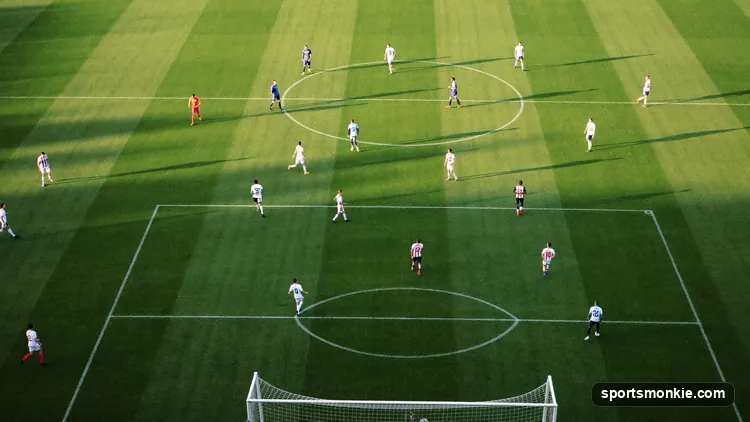
4-4-2 Formation Explained: Roles, Strengths and Weaknesses
The 4-4-2 formation lines up two banks of four plus two strikers. Learn the roles, strengths, weaknesses, and famous teams who made it work.
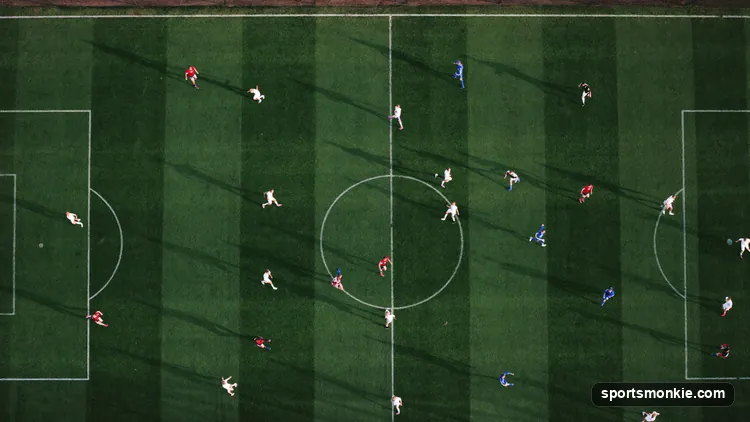
3-5-2 Formation Explained: Roles, Strengths and Weaknesses
The 3-5-2 formation uses three center-backs, two attacking wing-backs, a midfield three and two strikers for a compact, wide-covering shape.
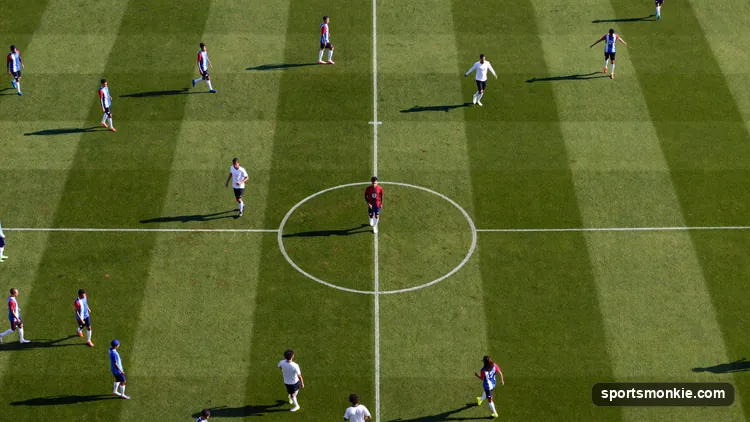
4-1-4-1 Formation Explained: Structure, Roles, Strengths & Weaknesses
The 4-1-4-1 formation explained: a lone holding midfielder screens the back four behind a midfield band of four and one striker. Roles, pros, cons.
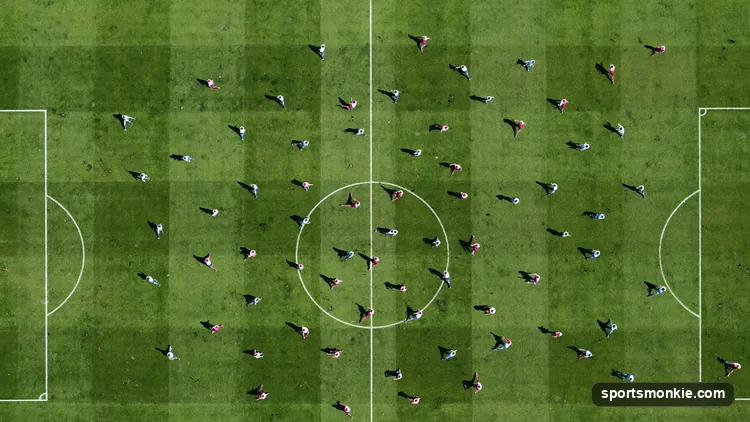
4-2-2-2 Formation Explained: The 'Magic Box' Football Tactic
The 4-2-2-2 formation explained: how the 'magic box' double pivot and two number 10s create central overloads, plus its strengths, weaknesses and famous users.
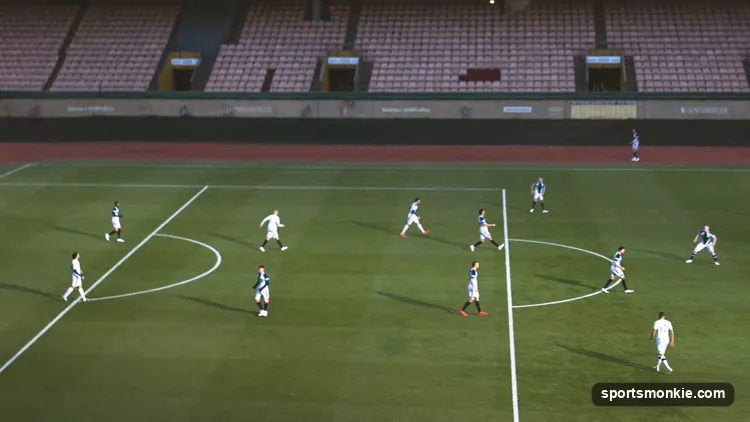
4-2-3-1 Formation Explained: Roles, Strengths & Weaknesses
The 4-2-3-1 formation explained: double pivot, attacking-midfield trio, lone striker, key strengths, weaknesses, and the managers who made it famous.