
Promotion and Relegation Explained

On this page5
Promotion and relegation is the system that connects the divisions of a league into a pyramid: each season the best teams in a lower division move up, and the worst teams in the division above move down. Standard across world soccer and rare in North America, it keeps competition open — any club can, in principle, rise from the bottom to the top.
How the system works
At the end of every season, a set number of clubs swap places between adjacent divisions. The top of the lower league is promoted; the bottom of the higher league is relegated. That exchange turns separate divisions into one linked ladder, so a club’s level is earned on the pitch rather than fixed.
Promotion: automatic and playoff
| Route | Example (England’s Championship) |
|---|---|
| Automatic | Top 2 go up directly |
| Playoff | Teams 3rd–6th contest a mini-tournament for the final spot |
That playoff final is often called the richest game in football, because promotion to the Premier League can be worth well over £100 million in future revenue.
Why both ends of the table matter
Because promotion and relegation reward the best and punish the worst, there is something to play for almost everywhere in the table. A mid-table club may be chasing a playoff place while others scrap to avoid a relegation battle — the whole division stays alive to the final day.
The open vs. closed divide
North American leagues reject this model. The NFL, NBA, MLB and NHL are closed, adding clubs only through expansion and shielding owners from relegation’s financial shock, using drafts and caps for balance instead. The clash between the two philosophies flared in 2021 with the breakaway European Super League proposal.
The trade-off
An open pyramid is meritocratic and dramatic but financially volatile — a relegated club can lose a huge slice of income at once, a tension at the heart of debates over Financial Fair Play. The closed model is stable and lucrative for owners but shuts out clubs that earn their place on merit. Explore the world’s divisions in our football-league guides.
Frequently asked questions
What is promotion and relegation?+
It is a system where teams move between connected divisions based on results. The top finishers in a lower division are promoted to the division above, while the bottom finishers in that higher division are relegated down to replace them. This swap happens every season and turns a set of separate leagues into one linked pyramid, so a club's level is decided by how it performs.
How does promotion work in soccer?+
The best-placed teams in a division at season's end earn promotion to the tier above. In England's Championship, the top two are promoted automatically and a third comes through a playoff among the teams finishing third to sixth. The exact format varies by country, but promotion always rewards the strongest lower-division clubs with a move up a level for the next season.
Which countries use promotion and relegation?+
Almost every soccer nation uses it — England, Spain, Germany, Italy, France and far beyond — as do many other sports around the world. The major exception is North America, where the NFL, NBA, MLB and NHL run closed leagues with fixed membership. Promotion and relegation is one of the defining features of the global, pyramid-style model of sport.
What is a promotion playoff?+
A promotion playoff is a mini-tournament among teams that finished just below the automatic promotion places, deciding the final promotion spot. In England's Championship, the clubs in third through sixth play semi-finals and a final, with the winner promoted. It is one of the highest-stakes matches in the sport, often called the richest single game in football because of the revenue promotion brings.
Why don't US sports have promotion and relegation?+
North American leagues are built as closed businesses with a fixed set of franchise owners who share revenue and add teams only through [expansion](/what-is-an-expansion-team/). Owners are protected from the financial shock of [relegation](/what-is-relegation-in-soccer/), and the model relies on drafts and salary caps for competitive balance instead. It is a fundamentally different philosophy from the open European pyramid.
What are the benefits of promotion and relegation?+
It keeps leagues open and meritocratic: any club can climb from the lowest tiers to the top, and none is guaranteed to stay up. It also makes more games matter, since teams are fighting for promotion or against relegation deep into the season. The downside is financial volatility — a relegated club can lose a large share of its income overnight.
How is it different from the American closed-league model?+
In an open pyramid, membership of a division is earned on the pitch and changes yearly through promotion and relegation. In the closed American model, membership is a permanent franchise right, and the league grows only when owners vote to add an [expansion team](/what-is-an-expansion-team/). One rewards sporting performance with movement; the other treats a place in the league as a fixed asset.
Sources
Play & tools
Free browser games and tools — no account, no download.
- Play 38-0 — Sign a 4-4-2 of all-time football legends and chase a perfect 38-0 league season — perfect, not just unbeaten.
- Explore all our games →
Related football guides
View all →
What Is Relegation in Soccer? Meaning Explained
Relegation is when the worst-performing teams in a league are demoted to the division below at the end of a season, swapped for the best teams coming up.
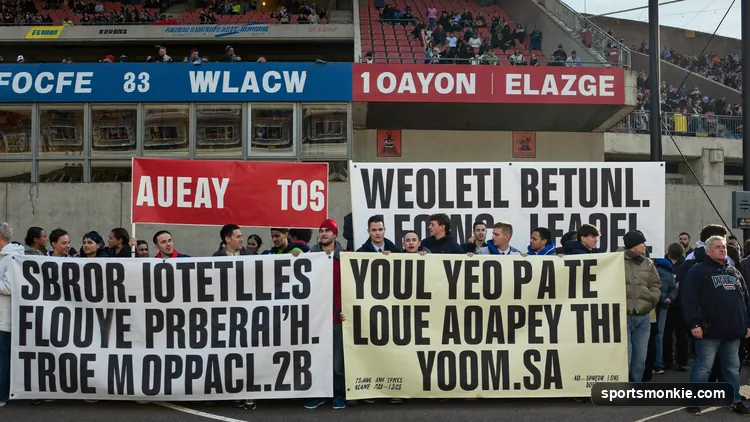
What Is a Super League in Soccer?
A super league is a proposed breakaway competition of elite clubs with largely guaranteed places — a closed model that clashes with soccer's open pyramid.

What Is a Relegation Battle?
A relegation battle is the end-of-season fight between the bottom clubs to avoid the drop to a lower division — often decided on the final day.
5-3-2 Formation Explained: Roles, Strengths & Weaknesses
The 5-3-2 formation explained: five defenders, a midfield three, two strikers - how it lines up, why teams pick it, and its key strengths and weaknesses.

How Do Soccer Transfers Work?
A soccer transfer moves a player between clubs during a transfer window, usually for a fee paid to the selling club, plus wages agreed with the player.

How Does an Expansion Draft Work?
An expansion draft stocks a new team by letting it pick players that existing clubs leave unprotected, under league rules limiting how many each team can shield.