
Pickleball Strategy for Beginners: 5 Habits That Win Points
On this page6
As a beginner, you win pickleball points mostly by not losing them. Keep the ball in play, serve and return deep, get to the kitchen line, dink with patience, and aim at the middle. Most beginner rallies end on an unforced error — a ball in the net or sailing out — so the player who simply keeps the ball in and lets the other side crack first wins the majority of points. Learn these five habits before any advanced tactic; they are the foundation everything else is built on.
This primer complements our fuller pickleball doubles strategy guide, which goes deeper on positioning and shot selection. Start here, then graduate there. If the rules themselves still feel new, keep the pickleball rules for beginners open alongside this.
1. Keep the ball in play
This is the whole game at the beginner level. Points are lost far more often than they are won, so the single most valuable skill is making your opponent hit one more shot. Every extra ball you keep in is a fresh chance for them to miss. Before you worry about placement or pace, worry about consistency — a boring, in-play ball beats an ambitious one in the net.
2. Serve and return deep
Depth does quiet, unglamorous work. A deep serve pushes the returner back; a deep return pins the serving team at the baseline and buys your side the time to move forward. Neither needs power — aim for the back third of the box and let depth, not speed, do the job. A short ball invites your opponent to step in and take control.
3. Get to the kitchen line — together
The team standing at the kitchen line controls the point; the team stuck at the baseline is defending. So after the serve and return, move forward whenever a ball lets you, ideally behind a soft third shot that lands in the opponents’ kitchen and cannot be attacked. Advance a few steps at a time, and get both partners to the line together — a lone player up while the other lingers back leaves a gap.
4. Dink with patience
Once you are at the line, resist the urge to end the point fast. A dink — a soft ball that arcs into the kitchen and dies too low to attack — keeps the rally neutral and safe. Trade dinks and wait. The moment your opponent pops one up above net height, that is your ball to attack. Beginners lose piles of points by trying to speed up a ball that was too low; patience is the fix, and it is a skill you drill, not a mood.
5. Aim at the middle
When in doubt, hit the middle. It does three things at once: it causes confusion in doubles about who takes the ball, it removes the sharp angles a wide shot would give your opponents, and it travels over the lowest part of the net for extra margin. Sideline winners feel bold and produce errors. Middle and deep is the safe, effective default.
Beginner habits at a glance
| Habit | Why it wins | Common mistake it fixes |
|---|---|---|
| Keep the ball in play | Opponents miss first | Going for risky winners |
| Serve and return deep | Buys time, pins opponents back | Short balls that get attacked |
| Get to the kitchen line | Net team controls the point | Camping at the baseline |
| Dink with patience | Forces the error, avoids yours | Speeding up a low ball |
| Aim at the middle | Confusion, no angles, more margin | Chasing the sidelines |
Master these five and you will beat most players at your level without a single fancy shot. When you are ready to add technique, our pickleball drills guide turns each habit into a practice routine, and the doubles strategy guide layers on the positioning that wins tighter games. Consistency first, tactics second — that order is what actually moves a beginner up the ladder.
Frequently asked questions
What is the best strategy for a beginner in pickleball?+
Keep the ball in play and make your opponent hit one more shot. At the beginner level most points end on errors, not winners, so consistency wins. Serve deep, return deep, get to the kitchen line, and dink patiently rather than swinging for a winner. The player who reduces their own mistakes beats the player chasing spectacular shots almost every time.
Should beginners try to smash the ball?+
Rarely. Hard swings feel satisfying but produce far more errors than points at the beginner level, and pickleball's soft game rewards control over power. Smash only a clear high ball above net height near the net. The rest of the time, aim for depth and placement, not speed — a ball kept in play beats a hard one hit out.
How do beginners get to the kitchen line?+
After the serve and return, move forward toward the non-volley-zone line whenever the ball lets you, ideally behind a soft third shot that lands in the opponents' kitchen. Do not sprint in blindly — advance a few steps each time you hit a ball that cannot be attacked. Both partners should reach the line together, then hold it.
Why do beginners lose so many points?+
Unforced errors — serves into the net, returns hit out, and attacking balls that were too low to attack. Beginners also tend to stay back at the baseline instead of moving to the net, which cedes control. Fixing those two things, error count and net position, improves a beginner's results faster than any advanced tactic.
Where should beginners aim their shots?+
Deep and down the middle. Deep shots push opponents back and buy you time; middle shots reduce the angles opponents can hit back and cause confusion about who takes the ball in doubles. Aiming for the sidelines feels aggressive but produces errors and gives opponents sharp angles. Middle and deep is the safe, effective default.
How is beginner strategy different from advanced play?+
Beginners win by consistency and positioning — keep the ball in, get to the net, dink patiently. Advanced players add disguise, spin, speed-ups, stacking and precise targeting on top of that base. The fundamentals never stop mattering; advanced tactics are refinements layered over them, not replacements. Master the five beginner habits first and the advanced game has something to stand on.
Sources
Play & tools
Free browser games and tools — no account, no download.
- Play today's Sports Connections — Today's Sports Connections — daily hints, answers, and play the grid.
- Play Guess the NFL Player — A new mystery NFL player every day. Eight guesses, with a clue on each — plus free unlimited mode.
- Explore all our games →
Related racket sports guides
View all →
Pickleball Doubles Strategy: The Core Habits That Win
Winning pickleball doubles comes down to four habits: get to the net, move as a pair, target the middle, and out-patience the dink. Here's how.
How to Play Pickleball Singles: Strategy and Court Coverage
Pickleball singles strategy: where to serve, how to cover the court, when to attack, and why it rewards fitness and placement over doubles touch.
How to Hold a Pickleball Paddle: Grips and Grip Pressure
How to hold a pickleball paddle: the continental and eastern grips, the neutral ready grip, and how much grip pressure to use for control.
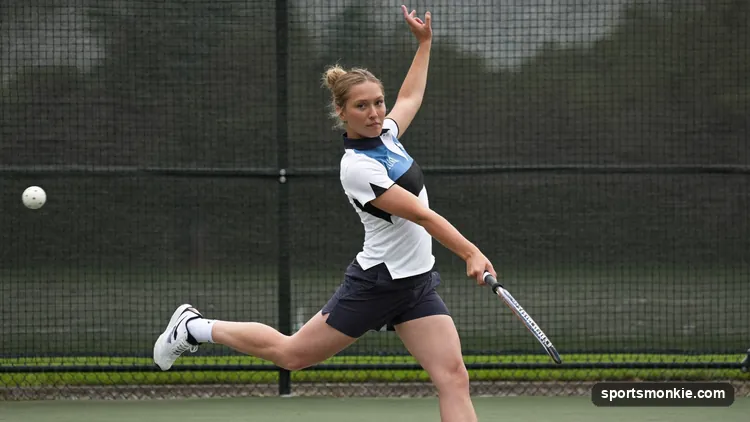
How to Serve in Pickleball: Technique for a Consistent Serve
A step-by-step pickleball serve technique: grip, ball drop or toss, contact point below the waist, and follow-through for a deep, reliable serve.
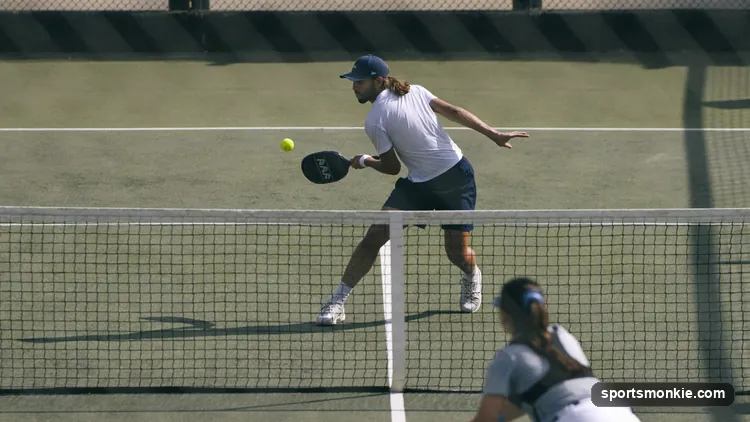
Pickleball Lob Shot: When to Use It and How to Defend One
The pickleball lob explained: offensive vs defensive lobs, when to use each, how to hit one over the net players, and how to defend a lob.
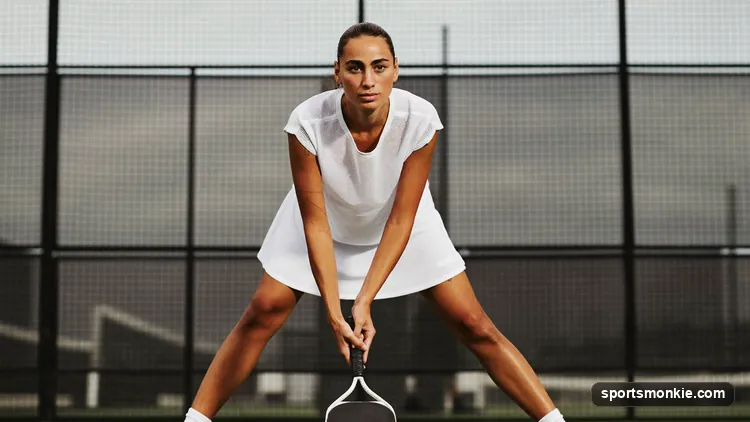
Pickleball Ready Position: Paddle Up, Balanced, Prepared
The pickleball ready position: paddle up in front, knees bent, weight forward. Why paddle height matters and how it speeds up your reactions.