
Pickleball Doubles Strategy: The Core Habits That Win
On this page5
Winning pickleball doubles comes down to four habits: get to the kitchen line quickly, move as a connected pair, aim at the middle, and out-patience the dink game. None of them are about power. Control of the non-volley-zone line decides most doubles points, and the team that reaches it together and stays disciplined usually takes the match.
Here is each habit and how to build it, roughly in the order it happens in a point.
Get to the kitchen line
The single biggest predictor of who wins a doubles point is who controls the kitchen line. The team at the net can take balls early, hit down into the court, and pressure with dinks; the team stuck at the baseline is defending from a worse position. So the whole first phase of every point is a race to get both partners forward, safely.
You cannot just sprint in, though — the two-bounce rule keeps the serving team back until the return bounces. That is why the serving side usually advances behind a third-shot drop: a soft ball into the opponents’ kitchen that buys the time to walk up to the line. Get there, and you have flipped the point.
Move as a connected pair
Think of you and your partner as tied together by a short rope, maybe a couple of metres long. When one of you moves up, sideways, or back, the other mirrors it so the rope never stretches tight.
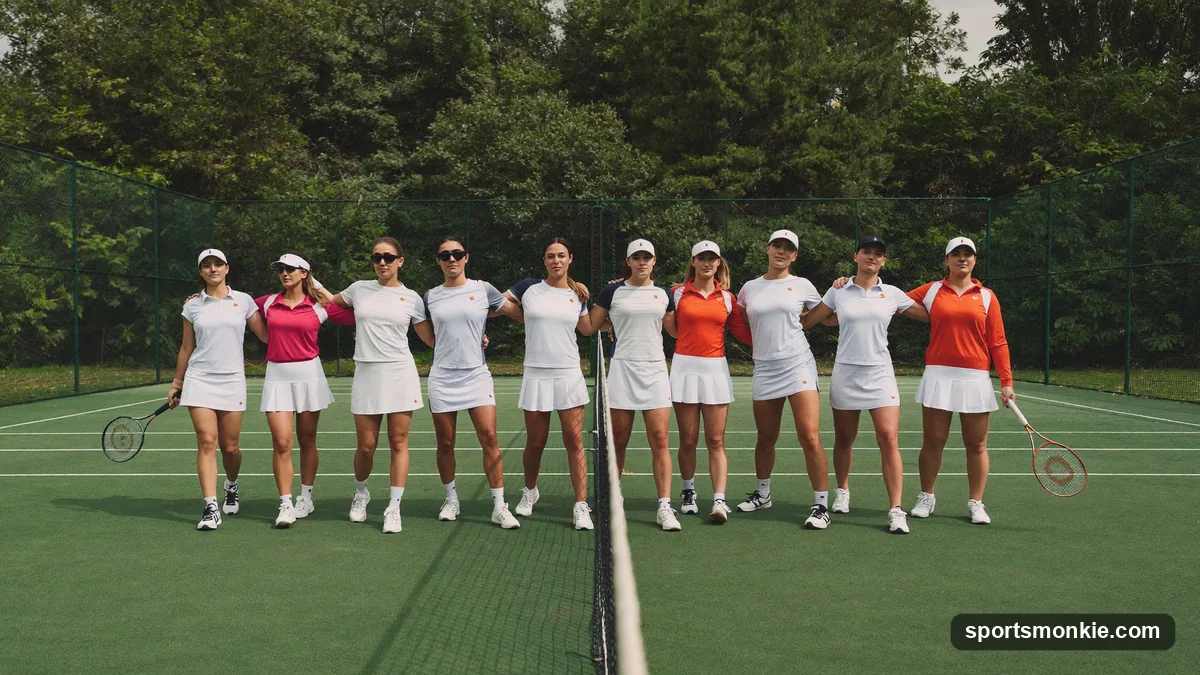
The reason is simple geometry: the gaps to attack are between you and beside you. If one partner charges the net while the other lingers mid-court, a diagonal seam opens that good opponents will find instantly. Stay level, shift together toward the ball, and you cover the court as one wall instead of two islands.
Target the middle
When you are not sure where to hit, hit the middle. Three reasons stack up:
- Confusion. A ball splitting two players invites hesitation — each thinks the other has it — and creates poached or missed balls.
- No angles. A ball down the middle gives your opponents no wide angle to counter with; a ball to the sideline hands them one.
- Lower net. The net sags lowest in the centre, so a middle ball clears with the most margin.
“Down the middle solves the riddle” is a cliché because it is right. Sideline winners feel good and lose more points than they win.
Out-patience the dink
Most doubles points are lost, not won. They end on a forced error when someone attacks a ball that was too low to attack. The discipline that separates good teams is the willingness to keep dinking — soft, unattackable balls into the kitchen — until the opponent finally pops one up above net height. That is your ball to speed up.
Patience is a skill you train, not a personality trait. Trade twenty dinks if you have to. The moment a ball floats high, drive it — ideally at the middle or at the feet of the closer opponent. Until then, reset and wait.
Putting it together
The four habits reinforce each other: you dink patiently to earn the chance to get to the net, you move as a pair to hold the net, and you target the middle to end the point once you are there. Advanced tactics layer on top — stacking to keep a stronger player on a preferred side, and poaching to steal a ball your partner would have taken — but they only pay off once the four fundamentals are automatic.
New to doubles positioning entirely? Start with the pickleball rules for beginners so the serve, the bounce rules and the kitchen are second nature before you worry about tactics. Strategy is a lot easier when the rules are not still taking up space in your head.
Win the race to the line, stay tied to your partner, hit the middle, and wait for the ball that deserves your attack. That is doubles.
Frequently asked questions
What is the most important thing in pickleball doubles?+
Getting both players to the kitchen line and controlling it. The team at the net dictates the point — they can hit down, take balls early and dink with the advantage — while the team stuck back is on defence. Almost every other doubles habit exists to help you reach the line safely and hold it once you are there.
Why do you aim for the middle in pickleball doubles?+
A ball down the middle causes hesitation — both partners may think it is the other's ball — and it removes the sharp angles a wide shot gives your opponents to counter with. Middle balls also travel over the lowest part of the net. Hitting the gap between two players is safer and more effective than going for the sideline.
Should both players move together in doubles?+
Yes. Partners should move as if connected by a short rope — up together, side to side together, back together. If one advances and the other stays, a gap opens between and beside you that good opponents will exploit immediately. Staying level and connected closes those seams and keeps your court coverage even.
Is it better to be aggressive or patient in pickleball doubles?+
Patient, until the ball gives you a real reason to attack. Most points are lost on forced errors from low-percentage speed-ups, not won on winners. Dink and reset until your opponent pops a ball up above net height, then attack that. Patience at the kitchen line beats aggression far more often than beginners expect.
Where should the serving team stand in doubles?+
The server stays back at the baseline until the return bounces, because the two-bounce rule forbids volleying the return. After the return, the serving team's goal is to move forward to the kitchen line as a pair, usually behind a third-shot drop. The receiving team already starts with one player at the line, which is their early advantage.
How do you defend when you are stuck at the back?+
Reset the ball softly into the opponents' kitchen rather than trading drives you will lose, and use that soft ball to buy time to advance. A good third-shot drop or a defensive reset takes pace off the rally and lets you move up to level with your partner. Trying to blast your way out from the baseline usually just feeds the net team.
Sources
Play & tools
Free browser games and tools — no account, no download.
- Play today's Sports Connections — Today's Sports Connections — daily hints, answers, and play the grid.
- Play Guess the NFL Player — A new mystery NFL player every day. Eight guesses, with a clue on each — plus free unlimited mode.
- Explore all our games →
Related racket sports guides
View all →
Pickleball Transition Zone: How to Cross No-Man's Land
The transition zone is the mid-court between baseline and kitchen — the most dangerous place to stand. Here's how to move through it and reset.
Poaching in Pickleball: When to Cross and Steal the Ball
Poaching means crossing to intercept a ball meant for your partner. Done at the right moment it wins points fast. Here's when to poach and when not to.
Stacking in Pickleball: What It Is and How to Do It
Stacking is a legal doubles tactic where partners line up on the same side, then switch after the serve to keep each player on their stronger side.
Pickleball Return of Serve: Hit Deep and Get to the Net
How to return serve in pickleball: hit deep to pin the server back, follow your return to the kitchen line, and target the backhand for control.
Pickleball Strategy for Beginners: 5 Habits That Win Points
A beginner pickleball strategy primer: serve deep, get to the kitchen, dink with patience, aim the middle, and keep the ball in play to win more points.
Around the Post Shot in Pickleball (ATP): Legal and Deadly
The around-the-post shot is legal in pickleball — you hit the ball around the outside of the net post, and it can travel below net height. Here's how.