
Around the Post Shot in Pickleball (ATP): Legal and Deadly
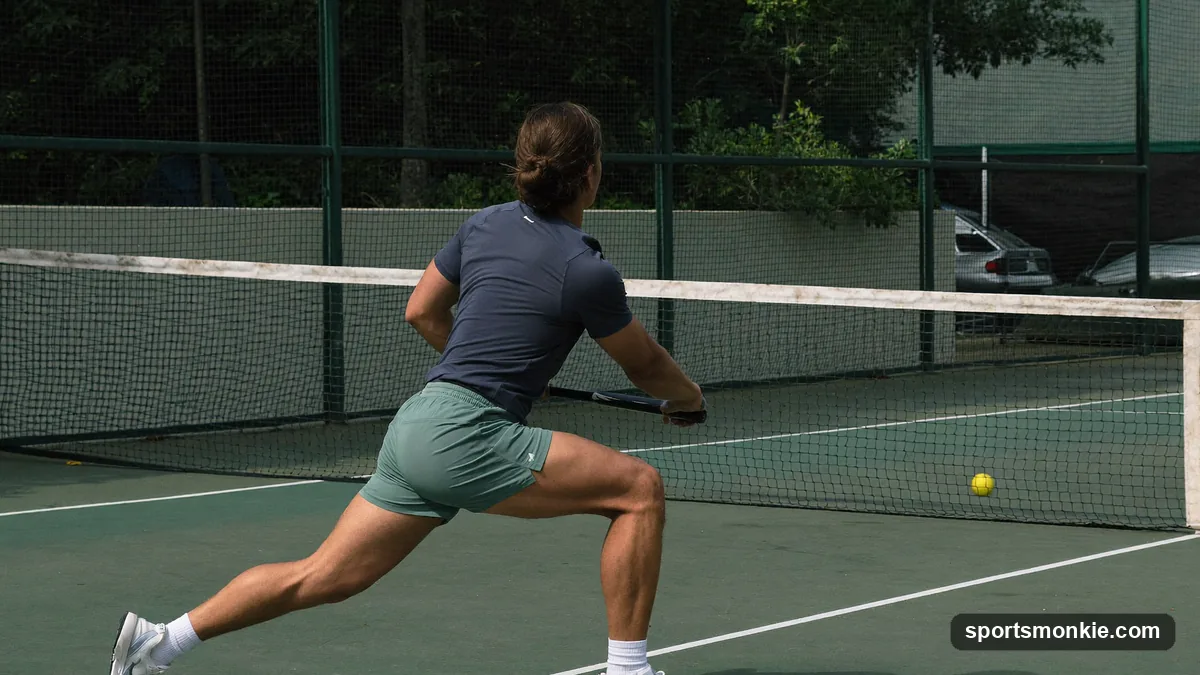
An around-the-post shot (ATP) in pickleball is a legal shot hit around the outside of the net post rather than over the net. Because the ball never crosses over the net, it can legally travel below net height and still count — as long as it lands in the opponent’s court. The rulebook names it explicitly, so it is not a loophole or a lucky accident.
It is also one of the best-looking winners in the sport. Here is why it is legal, when it appears, and how to actually pull it off.
Why the ATP is legal
The rule that makes the ATP work is simple: the ball must land in the opponent’s court, but nothing says it has to pass over the net. Go around the outside of the net post and you have satisfied the rule. USA Pickleball lists the around-the-post shot as a legal shot, so there is no argument to be had at your local court — it counts.
Two consequences follow from that, and the second surprises people:
- The ball can be lower than the net and still be good, because it never has to clear the tape.
- If the ball touches the net post, it is a fault, exactly like hitting the net.
That low trajectory is the whole weapon. A clean ATP can skim past well below net height and land sharply inside the sideline, giving the opponent almost nothing to reach.
When the shot is on
The ATP only exists when the ball is pulled wide — far enough outside the sideline that you can make contact beyond the line of the net post and swing the ball back into the court around it. The classic setups:
- A sharp cross-court dink that keeps angling wider and drags you off the side of the court.
- A wide-angled drive or return that lands near the sideline and kicks out.
- Any ball your opponent over-angles, sending it beyond the post on your side.
If the ball is not wide enough, the post physically blocks your line and the ATP is off — you have to go over the net like a normal shot. Reading whether the angle is there is most of the skill.
How to hit it
Once you recognise a wide ball, three things matter:
- Move out and past the ball. Get your body outside the flight so you can swing around the post, not into it. Chasing it flat-footed kills the angle.
- Contact low and drive across. You are aiming around the outside of the post and into the open court. Because you can go under net height, a low, flat swipe is fine and often best.
- Aim for space, not power. The angle already does the damage. A controlled ball that clears the post and lands in beats a big swing that catches the post for a fault.
The margin is thin — miss the post-side line and you either clip the post or send it wide — so it rewards players who practise the wide-ball footwork rather than hoping the chance appears.
Where it fits in your game
The ATP is not a shot you plan; it is one you recognise. It grows naturally out of the cross-court dinking game, which is why players who are patient at the kitchen line and comfortable trading wide dinks get far more chances at it. Sharpen your dink angles and the around-the-post opportunities start appearing on their own.
If you want more of the attacking shots that come from good kitchen positioning, our guide to the erne covers the other spectacular legal move made at the edge of the non-volley zone, and the third-shot drop is the patient setup shot that gets you to the net where these chances live.
Keep the rule in your head next time a ball drags you wide: you do not have to go over the net — go around the post, stay off it, and land it in.
Frequently asked questions
Is the around-the-post shot legal in pickleball?+
Yes, it is fully legal and named in the rules. There is no requirement that the ball pass over the net — only that it lands in the opponent's court. So a shot hit around the outside of the net post is a legitimate winner. It is one of the most satisfying legal shots in the game precisely because it looks like it should not count.
Can the ball go below the net on an ATP?+
Yes. Because the around-the-post ball travels outside the post and never crosses over the net, there is no minimum height it must reach. It can pass well below the top of the net — even skim near ground level — and still be good, provided it lands in bounds. That low, sharp trajectory is what makes it almost impossible to return.
When can you hit an around-the-post shot?+
When the ball is pulled wide enough of the sideline that you can contact it outside the line of the net post and angle it back into the court around the post. Usually it follows a sharp cross-court dink or a wide angle that drags you off the court. If the ball is not wide enough, the post is in your way and the ATP is not on.
Does the ball have to clear the net on an ATP?+
No. The ball must land in the opponent's court, but it does not have to go over the net — going around the outside of the post is explicitly allowed. This is the key rule that makes the shot possible and the reason it can be hit lower than the net. Clip the post or the net, though, and it is a fault.
What happens if the ATP hits the net post?+
If the ball strikes the net post it is a fault, the same as hitting the net. The whole point of the ATP is to send the ball cleanly around the outside of the post without touching it. A ball that catches the post ends the rally against you, so the shot rewards precision under pressure.
Is an ATP easier in singles or doubles?+
The opportunity is more common in doubles, because sharp cross-court dinks and wide angles pull players off the court more often, setting up the wide ball you need. In singles you cover more ground alone, so wide balls happen too, but the tight cross-court exchanges that create clean ATP angles are a doubles staple.
Sources
Play & tools
Free browser games and tools — no account, no download.
- Play today's Sports Connections — Today's Sports Connections — daily hints, answers, and play the grid.
- Play Guess the NFL Player — A new mystery NFL player every day. Eight guesses, with a clue on each — plus free unlimited mode.
- Explore all our games →
Related racket sports guides
View all →
Third-Shot Drop in Pickleball: Why It Wins Points
The third-shot drop is a soft arc from the baseline into the opponent's kitchen that lets the serving team advance to the net. Here's how to hit it.

Pickleball Doubles Strategy: The Core Habits That Win
Winning pickleball doubles comes down to four habits: get to the net, move as a pair, target the middle, and out-patience the dink. Here's how.
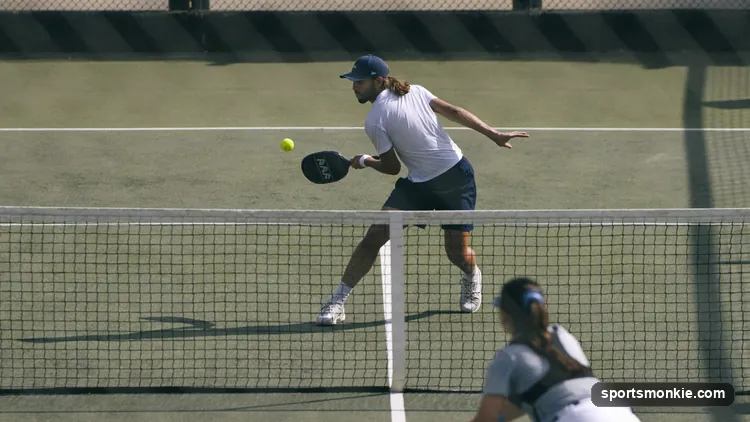
Pickleball Lob Shot: When to Use It and How to Defend One
The pickleball lob explained: offensive vs defensive lobs, when to use each, how to hit one over the net players, and how to defend a lob.
Pickleball Transition Zone: How to Cross No-Man's Land
The transition zone is the mid-court between baseline and kitchen — the most dangerous place to stand. Here's how to move through it and reset.
Poaching in Pickleball: When to Cross and Steal the Ball
Poaching means crossing to intercept a ball meant for your partner. Done at the right moment it wins points fast. Here's when to poach and when not to.

Stacking in Pickleball: What It Is and How to Do It
Stacking is a legal doubles tactic where partners line up on the same side, then switch after the serve to keep each player on their stronger side.