
Badminton Scoring Rules, Explained

On this page5
Badminton is scored to 21 points per game, best of three games, using rally scoring — meaning a point is won on every rally regardless of who served. You must win a game by two clear points, with a hard cap at 30, and the first side to win two games takes the match.
Those few rules cover the vast majority of what you need to follow a match, but the details around serving, the win-by-two margin and the 30-point cap trip up a lot of newcomers. Here is how badminton scoring works under the Badminton World Federation (BWF) laws, and what to watch for at the tense end of a close game.
The basic structure
Every competitive badminton match uses the same framework:
- Best of three games. The first player or pair to win two games wins the match.
- 21 points per game. Each game is played to 21 points.
- Rally scoring. A point is awarded on every rally, whether or not the winning side served.
- Win by two. You must lead by two points to close out a game, up to a maximum of 30.
Rally scoring is the key modern feature. Under the old “service scoring” system used before 2006, only the serving side could win a point, which made games long and hard to follow. Switching to rally scoring, where every rally counts, made the sport faster and far easier for spectators — the same logic that governs points in many racket sports, as our explainer on how tennis scoring works shows for a related game.
Serving and winning the point
In rally scoring, the side that wins a rally does two things: it scores the point, and it earns the right to serve the next rally. There is no separate “serve to score” step — winning the rally is the point.
The serve itself has rules of its own. It must be hit from below the server’s waist, travel diagonally across the net, and land in the opposite service court. In singles the server’s position (right or left service court) is determined by whether their score is even or odd; in doubles the serving rotation is a little more involved, but the 21-point rally framework is identical.
What happens at 20-all
The margin rule is where close games get dramatic. Because you must win by two points, reaching 20 first does not necessarily win the game.
| Situation | What happens |
|---|---|
| A side reaches 21 with a two-point lead | That side wins the game (e.g. 21-19) |
| Score is 20-all | Play continues until one side leads by two |
| Score reaches 22-20, 24-22, etc. | The leading side wins by that two-point margin |
| Score reaches 29-all | The next point wins — first to 30 takes it 30-29 |
So at 20-20 the game keeps going: you might see 22-20, 25-23 or beyond. The only escape hatch is the cap at 30. Once the score hits 29-all, the win-by-two rule is suspended and the very next rally decides the game, guaranteeing it cannot drag on forever.
The “15 or 21 points” confusion
A common question is whether badminton is played to 15 or 21. The answer is 21 today. The 15-point figure comes from the pre-2006 service-scoring era, when men’s singles and doubles were played to 15 (and women’s singles to 11). The BWF’s move to 21-point rally scoring standardised every discipline, so any current match — singles or doubles, men’s or women’s — is played to 21.
The BWF has periodically trialled shorter formats in exhibition events, but none has replaced the 21-point rally system, which remains the official worldwide standard.
Why the system works
The 21-point rally format strikes a balance: long enough to reward the better player over a game, short enough to keep every rally meaningful. Combined with the best-of-three structure, it produces the swings and comebacks that make badminton such a compelling watch, and it puts a premium on the fitness and shot-making that define the sport’s greatest players.
If you enjoy comparing how different racket sports handle scoring and serving, our guide to racquetball rules covers a game with a very different points system on an enclosed court, a useful contrast to badminton’s open, net-divided layout.
The short version: badminton is scored to 21 points per game, best of three, using rally scoring where every rally is a point. You must win by two, at 20-all play continues, and a cap at 30 means whoever reaches 30 first wins even by a single point.
Frequently asked questions
What are 5 rules in badminton?+
Five core rules are: (1) a match is the best of three games; (2) each game is played to 21 points using rally scoring, so every rally scores a point; (3) you must win a game by two points, up to a cap of 30; (4) the side that wins a rally scores the point and serves the next rally; and (5) the shuttle must land inside the boundary lines, and a serve must be hit below the server's waist and travel diagonally into the opposite service court.
Is badminton 15 or 21 points?+
Modern badminton is played to 21 points. The old system used 15 points for men's singles and doubles (and 11 for women's singles) under 'service scoring,' where only the serving side could score. In 2006 the BWF switched to 21-point rally scoring across all disciplines, so today every game — singles or doubles, men's or women's — is played to 21.
What happens if the score reaches 20-all in a badminton game?+
At 20-all the game is not over, because you must win by two clear points. Play continues until one side leads by two — for example 22-20 or 24-22. The only exception is the cap: if the score reaches 29-all, the very next point decides the game, so whoever reaches 30 first wins 30-29. That 30-point ceiling stops games from running on indefinitely.
What is the scoring system in badminton called?+
It is called rally scoring, or the 21-point rally-point system. Under rally scoring a point is awarded on every single rally, whether or not the winning side served. This replaced the older 'service scoring' system, in which only the serving side could win a point, and it made games faster and easier for spectators to follow. The BWF has trialled alternative formats over the years, but the 21-point rally system remains the official standard.
Sources
Play & tools
Free browser games and tools — no account, no download.
- Play today's Sports Connections — Today's Sports Connections — daily hints, answers, and play the grid.
- Play Guess the NFL Player — A new mystery NFL player every day. Eight guesses, with a clue on each — plus free unlimited mode.
- Explore all our games →
Related racket sports guides
View all →
Rally Scoring in Pickleball: How It Works vs Side-Out
In rally scoring every rally is a point, so games move faster — usually to 15 or 21. Here's how it differs from traditional side-out scoring.
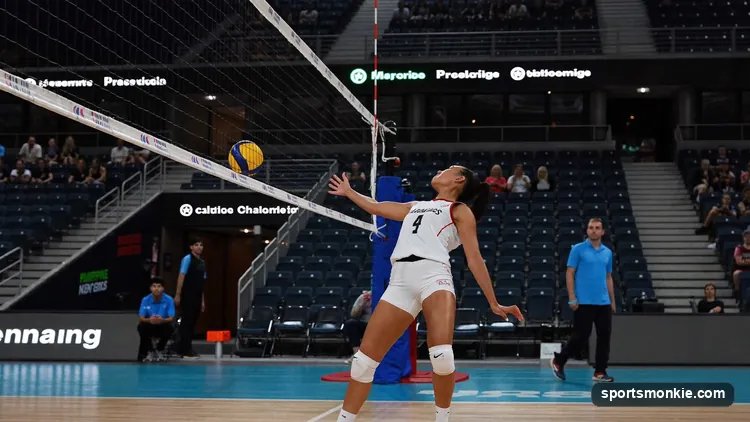
How Volleyball Scoring Works: Rally Scoring Explained
Volleyball uses rally scoring: a point on every rally, sets to 25, a fifth set to 15, win by two. How points, sets and matches are counted, with a table.

Volleyball Rules Explained: The Full Ruleset
Volleyball rules in one place: six players a side, three hits per rally, rally scoring to 25, clockwise rotation and the common faults that lose points.

Pickleball Scoring Explained: How Points Actually Work
Only the serving side scores in traditional pickleball. Games go to 11, win by 2. Here's how side-out scoring works and how to call the score.

Racquetball Rules: Serving, Scoring, Hinders
Racquetball rules made simple: how to serve legally, sideout scoring to 15, the tiebreaker to 11, and the difference between dead-ball and penalty hinders.

What Is a Smash in Badminton? Power, Angle, and Defense
A badminton smash is a fast attacking shot hit steeply downward to pressure the opponent and create a weak reply.