
Rally Scoring in Pickleball: How It Works vs Side-Out

On this page4
In rally scoring, every rally is worth a point — whoever wins the rally scores, whether they served or received. Games finish faster and on a more predictable clock, usually played to 15 or 21 instead of 11. It is the opposite of pickleball’s traditional side-out scoring, where only the serving side can score, and side-out is still the USA Pickleball standard.
Both systems are worth knowing, because which one you play depends entirely on where you play. Here is the difference and when each shows up.
Side-out vs rally scoring, side by side
The whole distinction is who is allowed to score.
| Side-out (standard) | Rally scoring | |
|---|---|---|
| Who can score | Serving side only | Whoever wins the rally |
| Typical target | 11, win by 2 | 15 or 21, win by 2 |
| Game length | Variable, can run long | Faster, predictable |
| Where it’s used | USA Pickleball tournaments, most rec play | Many leagues, timed events, some pro formats |
| Learning curve | Steeper (server rotation) | Simple (winner scores) |
Under side-out scoring, a rally your team loses on your serve costs you nothing but the serve — no point changes hands. Under rally scoring, that same lost rally is a point for the other side, immediately. Every ball matters, which is exactly why the scoreboard moves so much quicker.
Why leagues use rally scoring
The appeal is time. Because a point lands on every single rally, a rally-scored game finishes in a tight, reliable window — you can schedule courts, run a round-robin, or fit a broadcast slot without a game to 11 dragging out through endless side-outs. Timed leagues and events love it for that reason.
It is also easier for newcomers and spectators to follow. There is no three-number call to track and no “wait, who’s serving now” — the winner of the rally scores, the way nearly every other racket and net sport works. For a casual social night, that simplicity is a genuine plus.
The case for side-out staying standard
Rally scoring’s speed is also its criticism: it can compress the game and reduce the strategic value of holding serve and grinding out long side-out battles. The traditional format rewards patience and the ability to win rallies on your own serve repeatedly, which many players feel is central to what pickleball is.
That is a big part of why USA Pickleball tournament play still defaults to side-out. If you are learning to keep score with any intention of playing sanctioned events, learn side-out — it carries the server rotation, the second-server rule and the three-number call that rally scoring often strips out.
Which one should you learn?
Learn side-out first, then rally scoring almost teaches itself. Side-out is the harder system — it demands you track who is serving and call three numbers — so once you own it, picking up “winner scores, play to 15” takes one game. Do it the other way round and you will be relearning the standard format the first time you enter a bracket.
One caution: there is no single universal rally-scoring rulebook. Leagues differ on the target score, the winning margin cap, and whether both partners still serve. Ask before your first serve rather than assume. If you are still nailing the fundamentals, our pickleball rules for beginners guide builds the standard side-out picture from scratch, and the full scoring explainer drills the three-number call you will need for tournaments.
Bottom line: rally scoring is the fast, clock-friendly variant you will meet in leagues; side-out is the standard you should own first.
Frequently asked questions
What is rally scoring in pickleball?+
Rally scoring means every rally is worth a point, and whoever wins the rally scores — serving or receiving. It works exactly like tennis, badminton or volleyball scoring. Because points land on every rally, games reach the target quickly and on a fairly predictable timeline, which is why it is used where courts need to turn over on a schedule.
Is rally scoring official in pickleball?+
It is used, but it is not the traditional standard. USA Pickleball tournament play still defaults to side-out scoring, where only the serving side scores. Rally scoring appears in many rec leagues, timed events and some professional formats, and the governing body has trialled it, but side-out remains the default you should learn for sanctioned play.
What score does rally scoring go to?+
Rally-scored games are usually played to 15 or 21, win by 2, rather than the 11 that side-out games use. The higher target exists because points come far more often in rally scoring, so a game to 11 would end too quickly. Always check your league's posted format, since some cap the winning margin.
Is rally scoring faster than side-out scoring?+
Yes, and more predictably timed. Because a point lands on every rally instead of only on the serving side's rallies, the scoreboard moves steadily and games finish in a tighter, more reliable window. That predictability is the main reason leagues on a clock and TV formats favour it — you know roughly when a match will end.
Can you still serve from both sides in rally scoring?+
Formats vary. Some rally-scoring systems keep the two-server doubles rotation, while others simplify to a single server per side to avoid confusion, since the scoring logic already differs from tradition. Because there is no single universal rally-scoring rulebook, check exactly which variant your league runs before the first serve.
Should a beginner learn rally or side-out scoring first?+
Learn side-out first if you plan to play sanctioned tournaments, because it is the standard and it teaches the three-number call and server rotation. Rally scoring is easier to follow — winner of the rally scores — so you will pick it up in minutes once you need it. Master the harder, standard system first.
Sources
Play & tools
Free browser games and tools — no account, no download.
- Play today's Sports Connections — Today's Sports Connections — daily hints, answers, and play the grid.
- Play Guess the NFL Player — A new mystery NFL player every day. Eight guesses, with a clue on each — plus free unlimited mode.
- Explore all our games →
Related racket sports guides
View all →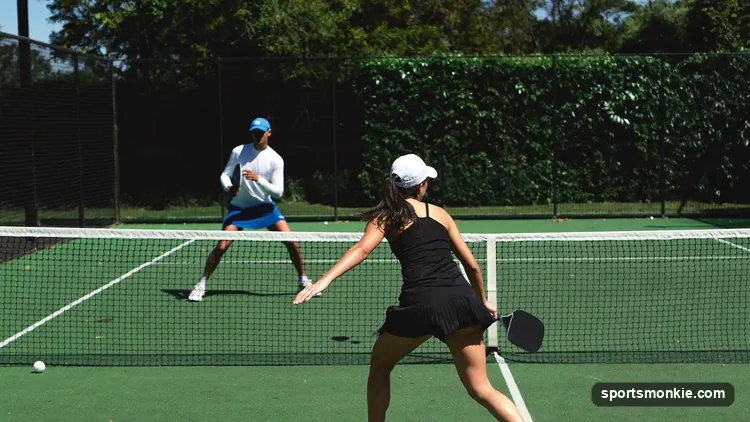
Pickleball Scoring Explained: How Points Actually Work
Only the serving side scores in traditional pickleball. Games go to 11, win by 2. Here's how side-out scoring works and how to call the score.
Pickleball Line Call Rules: What's In, What's Out, Who Calls
Every line is in except the kitchen line on a serve. Players call their own end and give the benefit of the doubt. Here's how line calls work.
The Double-Bounce Rule in Pickleball, Explained Simply
The double-bounce (two-bounce) rule means the ball must bounce once on each side before anyone can volley. Here's why it exists and the faults it causes.
Is There a Let in Pickleball? No — the Net Serve Is Live
There is no let serve in pickleball. Since 2021 a serve that clips the net and lands in is live and played on. Here's what changed and why.
Non-Volley Zone Rules in Pickleball: The Complete Reference
The full non-volley zone rulebook: what's allowed, every common kitchen fault, the momentum rule, and the edge cases players argue about most.
Pickleball Faults Explained: The Full List of Common Faults
A fault ends the rally in pickleball. Here's the full list — kitchen volleys, serve faults, out of bounds, two-bounce violations and net touches.