
Non-Volley Zone Rules in Pickleball: The Complete Reference

On this page5
The non-volley zone (NVZ) — the kitchen — is the 7-foot area on each side of the net where you may not volley. You fault if you volley while touching the zone or its line, or if the momentum of a volley carries you in, even after the ball is dead. You may enter the zone freely to play a ball that has bounced. This page is the complete rules reference, not the beginner overview.
If you want the plain-English introduction to what the kitchen is and why it exists, start with what the kitchen is in pickleball. What follows is the full rulebook picture — every legal and illegal case, laid out so you can settle any court argument.
Legal vs fault: the complete table
The whole zone reduces to one principle — no volleying while connected to the kitchen — but it plays out across a lot of situations. Here is the reference grid.
| Action | Legal or fault? |
|---|---|
| Standing in the kitchen | Legal |
| Standing in the kitchen to hit a ball that has bounced | Legal |
| Volleying with a foot in the kitchen | Fault |
| Volleying with a foot on the kitchen line | Fault |
| Volleying, then momentum carries you in (ball already dead) | Fault |
| Paddle or body leaning over the kitchen while volleying, feet outside | Legal |
| Reaching over the net to volley (feet outside kitchen) | Fault (net-plane violation, separate rule) |
| Partner holds you to stop you falling in after a volley | Fault if either of you touches the zone |
| Hat, glasses or paddle drop into the kitchen during the volley | Fault |
| Airborne volley: take off outside, land outside, touch nothing inside | Legal |
| Airborne volley that lands in the kitchen | Fault |
The one rule, stated precisely
A volley is hitting the ball out of the air before it bounces. It is a fault to volley the ball if you are touching the non-volley zone or its line at the moment of the volley — or if, in the act of volleying, your momentum causes you (or anything you are wearing or carrying) to touch the zone.
Read that twice, because both halves matter. The first half is about where you are standing when you strike. The second half — momentum — is where the point is usually lost.
The momentum rule
This is the fault players commit most and understand least. It is not enough to be outside the kitchen when you hit the volley. Your momentum from that volley must not carry you into the zone afterward — and crucially, it is still a fault even if the ball is already dead when your foot lands on the line. Winning the rally does not save you; if your own follow-through tips you into the kitchen, you lose the point you just “won.”
Two practical consequences:
- You must fully re-establish both feet outside the zone before you may volley again. A foot still drifting in from the last volley makes the next one illegal.
- Your partner cannot rescue you by grabbing you — if either of you touches the zone as a result, it is a fault.
The fix is footwork: hit volleys from a balanced, planted base rather than lunging forward into them.
The edge cases players argue about
A few situations come up repeatedly at the net:
- Paddle over the kitchen. Legal. Your paddle and body may extend over the zone; only your feet (and anything you drop) are restricted. Reaching in to volley a ball above the kitchen is fine as long as you stand outside.
- Dropped items. A hat, sunglasses or the paddle itself touching the zone during the volley is a fault, because the rule covers everything you wear or carry, not just feet.
- Airborne volleys and the erne. You can volley while jumping over or beside the kitchen, provided you take off from outside, land outside, and touch nothing inside. That is exactly the mechanism behind the erne, the advanced shot where a player jumps around the edge of the zone to volley.
- Reaching over the net. Separate rule, but often confused with the kitchen: you cannot make contact with the ball before it crosses to your side, though your paddle may follow through over the net after a legal hit.
How it fits the rest of the rules
Kitchen faults are the single most common category in recreational play, which is why they headline any full list of pickleball faults. And because the serve must clear the zone entirely — a serve landing in the kitchen or on its line is a fault — the non-volley zone also shapes the line-call rules, where the kitchen line is the one line treated as “out” on a serve.
Keep the principle front of mind and the whole zone stays simple: never volley while touching the kitchen or its line, never let your momentum carry you in, and step in as much as you like once the ball has bounced.
Frequently asked questions
Can you stand in the non-volley zone in pickleball?+
Yes. Standing in the non-volley zone is completely legal — the rule only forbids volleying while you are in it. You can walk in, stand there, and hit any ball that has already bounced from inside the zone. Players lose points by volleying from the kitchen, not by occupying it, so there is no need to fear stepping in when the ball has bounced.
Is it a fault if your momentum carries you into the kitchen after a volley?+
Yes. If you volley the ball and your own momentum then carries you into the non-volley zone or onto its line, it is a fault — even if the ball is already dead and even though you struck it from outside. You must fully re-establish both feet outside the zone before you can legally volley again. Momentum faults are the most common kitchen error.
Can your paddle cross over the kitchen on a volley?+
Yes, your paddle and your body may lean or extend over the non-volley zone during a volley, as long as your feet do not touch the zone or its line and you keep your balance. The restriction is about where you are standing, not where your paddle reaches. Reaching over to volley is legal; stepping or falling in is not.
Does the non-volley zone line count as in the kitchen?+
Yes. The line is part of the non-volley zone, so touching the line while volleying is a fault exactly as if you were standing inside the zone. This is why players are coached to keep their toes clearly behind the line at the net rather than right on it — a foot on the line during a volley ends the rally against you.
Can you jump over the kitchen to hit a volley?+
You can volley while airborne over or beyond the kitchen — that is the basis of the erne — but you must have taken off from outside the zone and you must land outside it, and your momentum cannot carry any part of you into it. Take off from outside, land outside, touch nothing inside, and an airborne volley near the kitchen is legal.
What happens if you drop something in the kitchen while volleying?+
If anything you are wearing or carrying — a hat, sunglasses, or your paddle — touches the non-volley zone during the act of volleying, it is a fault, the same as if your foot had. The rule covers you and everything on you, not just your feet, during and immediately after the volley motion.
Sources
Play & tools
Free browser games and tools — no account, no download.
- Play today's Sports Connections — Today's Sports Connections — daily hints, answers, and play the grid.
- Play Guess the NFL Player — A new mystery NFL player every day. Eight guesses, with a clue on each — plus free unlimited mode.
- Explore all our games →
Related racket sports guides
View all →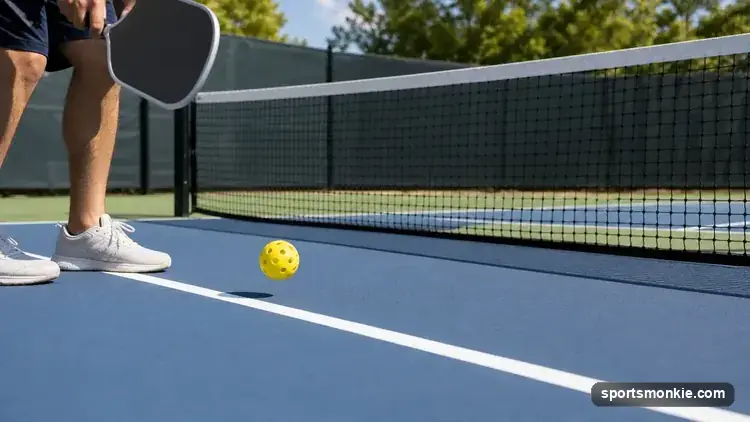
What Is the Kitchen in Pickleball? The Non-Volley Zone Rule
The kitchen is pickleball's 7-foot non-volley zone at the net where you can't hit the ball out of the air. Here's the rule and the faults that catch beginners.
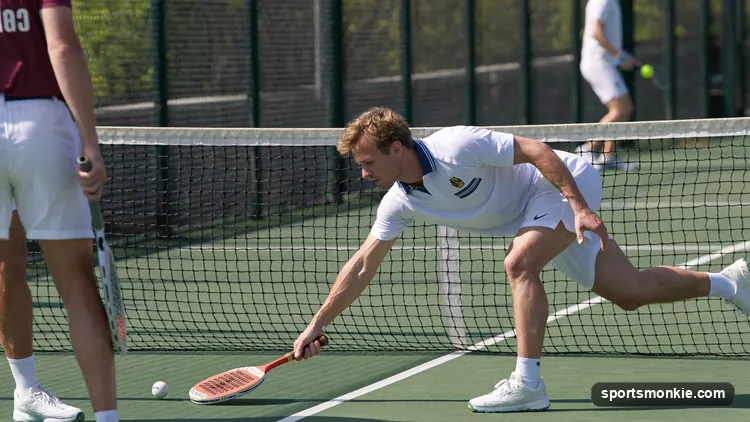
Pickleball Faults Explained: The Full List of Common Faults
A fault ends the rally in pickleball. Here's the full list — kitchen volleys, serve faults, out of bounds, two-bounce violations and net touches.
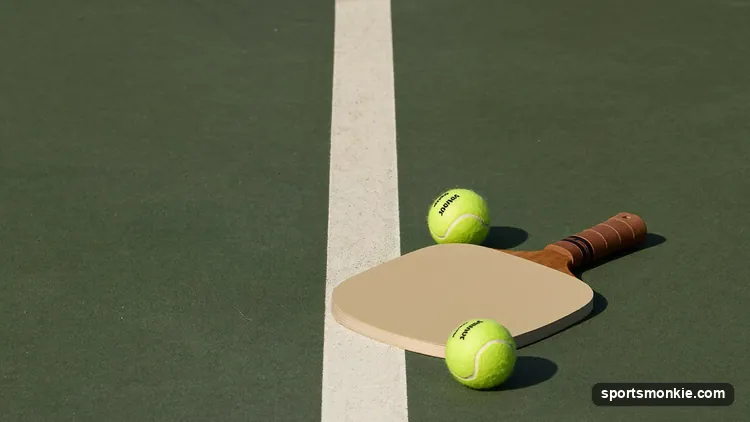
The Double-Bounce Rule in Pickleball, Explained Simply
The double-bounce (two-bounce) rule means the ball must bounce once on each side before anyone can volley. Here's why it exists and the faults it causes.
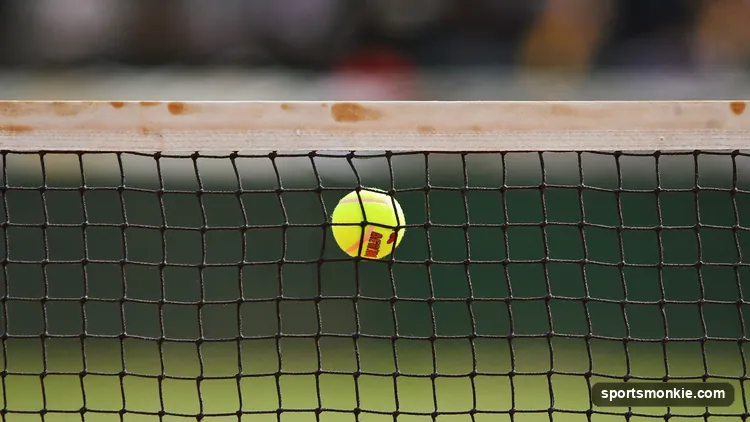
Is There a Let in Pickleball? No — the Net Serve Is Live
There is no let serve in pickleball. Since 2021 a serve that clips the net and lands in is live and played on. Here's what changed and why.
Pickleball Line Call Rules: What's In, What's Out, Who Calls
Every line is in except the kitchen line on a serve. Players call their own end and give the benefit of the doubt. Here's how line calls work.

Pickleball Scoring Explained: How Points Actually Work
Only the serving side scores in traditional pickleball. Games go to 11, win by 2. Here's how side-out scoring works and how to call the score.