
The Double-Bounce Rule in Pickleball, Explained Simply
On this page4
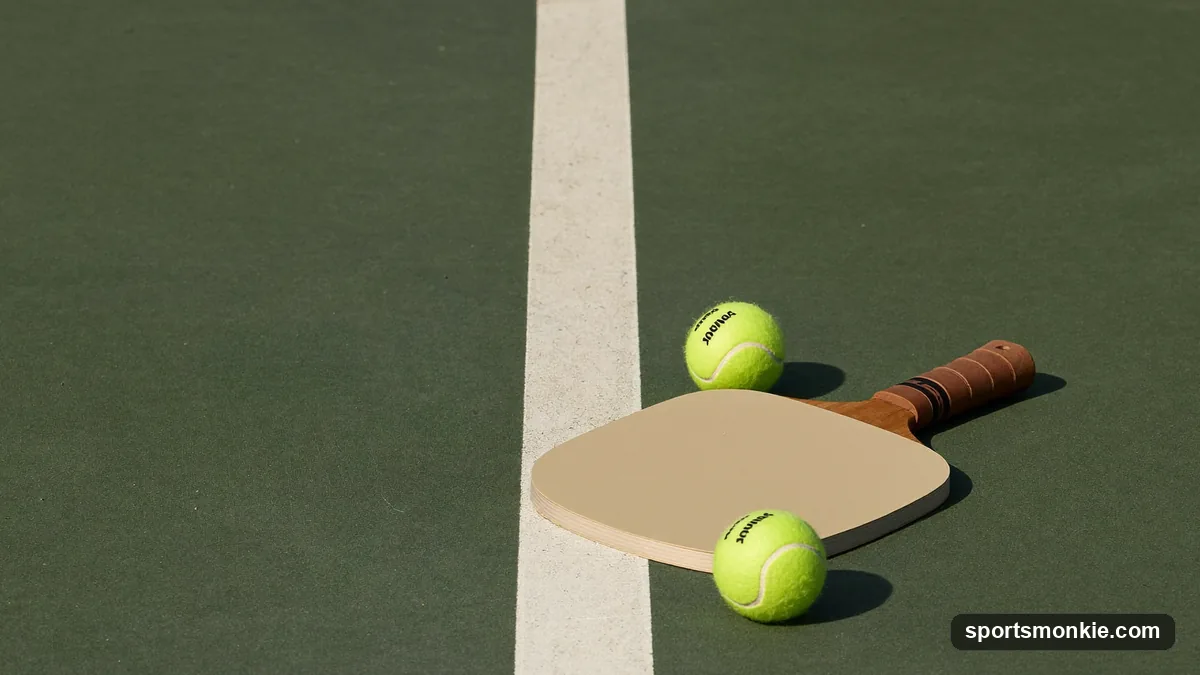
The double-bounce rule — officially the two-bounce rule — means the ball has to bounce once on each side of the net before anyone is allowed to hit it out of the air. After the serve, the receiving team must let it bounce, then the serving team must let the return bounce. Only from the fourth shot onward can either side volley. It is the rule that shapes the entire opening of every pickleball rally.
The nickname causes confusion, so let’s clear it up first: nobody bounces the ball twice on one side. It is one bounce on the receiving side, one bounce on the serving side — two bounces total, across the two halves of the court.
How it works, shot by shot
Walk through the first four shots of any rally:
- The serve is hit and must bounce in the receiving team’s court.
- The return — the receiving team hits it only after that bounce, then it must bounce in the serving team’s court.
- The third shot — the serving team hits it only after the return has bounced.
- From here on, either team may volley (hit the ball in the air), provided they are not in the kitchen when they do.
So the rule governs shots one and two. Once both have bounced, it is done for that point and normal play resumes until the next serve.
Why the rule exists
Take the rule away and pickleball changes completely. The serving team could serve, sprint to the net, and volley the return out of the air straight down for a winner. Serve-and-volley would dominate, points would be short, and power would beat placement.
The two-bounce rule kills that. It pins the serving team near the baseline for their third shot, which is exactly why the third-shot drop had to be invented — the serving team needs a soft way to get forward instead of a smash. The rule is the single reason the game rewards patient, positional play at the net rather than raw serving power. It is also what makes the receiving team’s early net position an advantage worth having.
The faults it causes
Almost all two-bounce faults come from a player at the net getting eager and picking the ball out of the air too soon.
| Situation | Legal or fault? |
|---|---|
| Receiving team volleys the serve (no bounce) | Fault |
| Serving team volleys the return (no bounce) | Fault |
| Serving team lets the return bounce, then hits | Legal |
| Either team volleys on the fourth shot or later | Legal (if outside the kitchen) |
| Letting the ball bounce twice on your own side | Fault (ends the rally) |
The classic mistake is the serving player who has crept forward and instinctively volleys the return before it bounces — a reflex carried over from tennis. It is an easy habit to break once you know the rule: on the serving team’s first ball after the return, you must let it land.
A simple way to remember it
“Serve bounces, return bounces, then you’re free.” Two bounces to open the point, and after that you play normally. If you are the serving team, your golden rule for the first exchange is let it land — do not volley your third shot.
Getting the two-bounce rule automatic is one of the first real milestones in pickleball, because it unlocks the entire strategy that follows — the third-shot drop, the race to the kitchen, and the dink game at the net. If you are still assembling the basics, our pickleball rules for beginners covers this alongside the serve, the kitchen and scoring in one place.
Frequently asked questions
Is it called the double-bounce rule or the two-bounce rule?+
Both names refer to the same rule; USA Pickleball's rulebook calls it the two-bounce rule. 'Double bounce' is a common nickname, though it can be misleading — the ball is not bouncing twice on one side. It is one bounce on each side, two bounces total across the two sides, before volleying is allowed.
When can you start volleying in pickleball?+
Only after the two required bounces have happened: the serve bounces once on the receiving side, and the return bounces once on the serving side. From the fourth shot onward, either team may volley (hit the ball out of the air), as long as they are not standing in the non-volley zone when they do.
What happens if you volley before the two bounces?+
It is a fault, and the rally ends. If the serving team volleys the return before letting it bounce, they lose the serve or the point depending on the situation. If the receiving team volleys the serve, they lose the rally. The offending side simply loses that point exchange.
Why does the two-bounce rule exist?+
To take away the serve-and-volley advantage. Without it, the serving team could rush the net and smash the return out of the air, ending points cheaply and making the serve dominant. Forcing two bounces keeps the serving team back for their third shot, extends rallies and rewards placement over power.
Does the two-bounce rule apply the whole game?+
No, only at the start of each rally. Once the serve and the return have each bounced, the rule is satisfied for the rest of that point and normal volleying resumes. It resets on the next serve. So it governs the first two shots of every rally, not the whole exchange.
Can you let the ball bounce more than required?+
You can always choose to let the ball bounce even after the two-bounce rule is satisfied — there is no rule forcing you to volley. But you may never let the ball bounce twice on your own side; a second bounce on your side ends the rally. The rule sets a minimum of bounces early, not a maximum later.
Sources
Play & tools
Free browser games and tools — no account, no download.
- Play today's Sports Connections — Today's Sports Connections — daily hints, answers, and play the grid.
- Play Guess the NFL Player — A new mystery NFL player every day. Eight guesses, with a clue on each — plus free unlimited mode.
- Explore all our games →
Related racket sports guides
View all →
Is There a Let in Pickleball? No — the Net Serve Is Live
There is no let serve in pickleball. Since 2021 a serve that clips the net and lands in is live and played on. Here's what changed and why.
Non-Volley Zone Rules in Pickleball: The Complete Reference
The full non-volley zone rulebook: what's allowed, every common kitchen fault, the momentum rule, and the edge cases players argue about most.
Pickleball Faults Explained: The Full List of Common Faults
A fault ends the rally in pickleball. Here's the full list — kitchen volleys, serve faults, out of bounds, two-bounce violations and net touches.
Pickleball Line Call Rules: What's In, What's Out, Who Calls
Every line is in except the kitchen line on a serve. Players call their own end and give the benefit of the doubt. Here's how line calls work.
Pickleball Scoring Explained: How Points Actually Work
Only the serving side scores in traditional pickleball. Games go to 11, win by 2. Here's how side-out scoring works and how to call the score.
Pickleball Serving Sequence: Who Serves When in Doubles
In doubles, both partners serve before a side-out — except the first turn of the game. Here's the serving sequence and the 0-0-2 start rule.