
Pickleball Rules for Beginners: A Simple Guide
On this page5
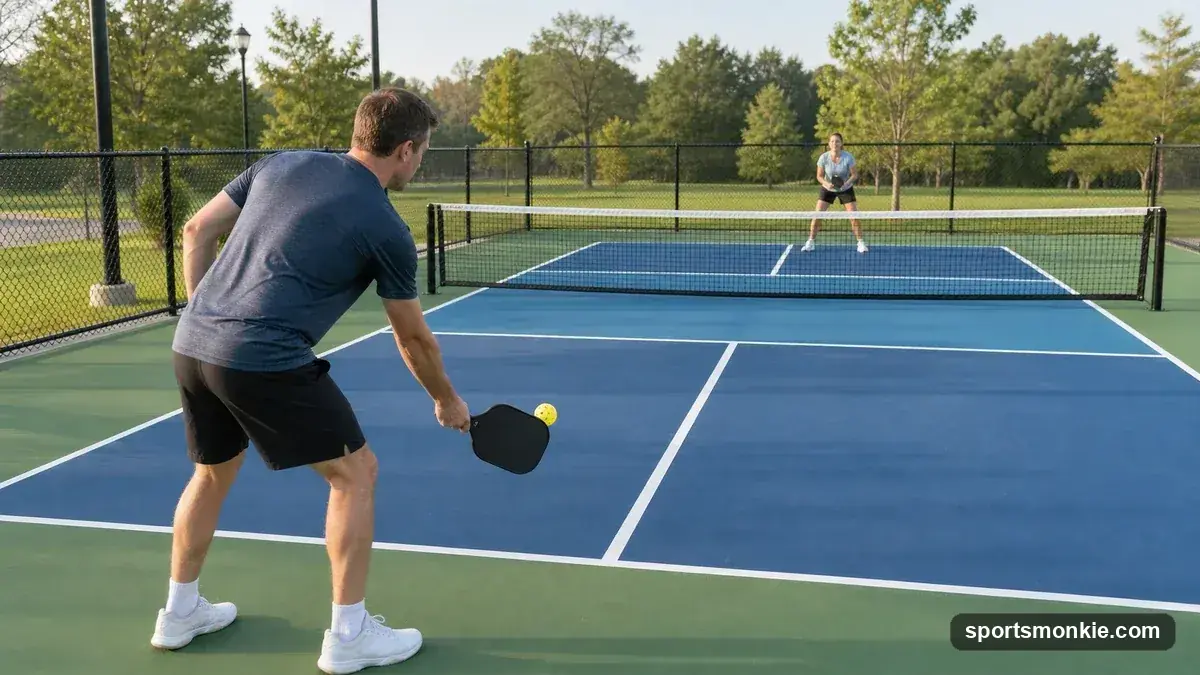
Pickleball is easy to start and weirdly hard to stop playing. The court is small, the paddle is light, and the ball is a plastic wiffle-style ball that keeps rallies alive. Most of the confusion for new players comes down to four things: the serve, the two-bounce rule, the kitchen, and how points actually get counted. Get those and you can play a real game today.
The serve
You serve underhand, with contact below your waist, and the paddle moving upward. You stand behind the baseline and hit diagonally into the opponent’s service box on the far side.
The serve has to clear the net and land in the correct box. Unlike tennis, there is no second serve in standard rules, and traditionally you get one attempt. Serves are meant to start the rally, not end it, so beginners should aim deep and safe rather than for aces.
The two-bounce rule
This is the rule that catches everyone out. After the serve:
- The receiving team must let the ball bounce once before hitting it back.
- The serving team must then let that return bounce once too.
Only after those two bounces can a player hit the ball in the air (a volley). The rule stops the serving side from rushing the net and smashing the return, and it makes for longer, fairer rallies.
The kitchen (non-volley zone)
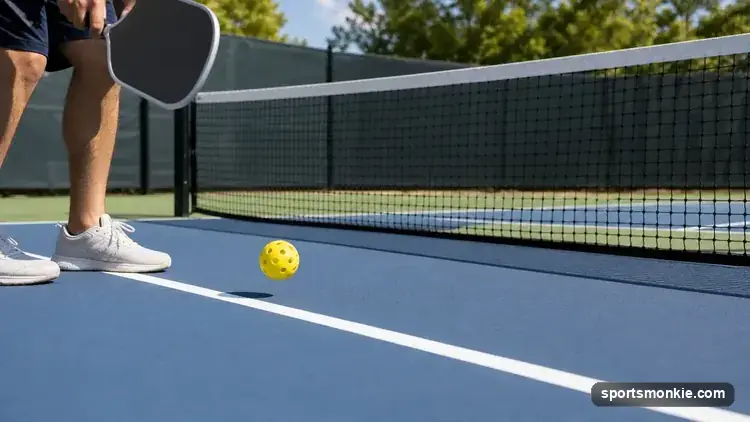
The kitchen is the 7-foot zone on each side of the net. You cannot hit a volley while standing in it, or while your momentum carries you into it after the shot. You can step into the kitchen anytime to play a ball that has bounced, but you must be fully out before volleying again.
Think of the kitchen as a no-smash zone right at the net. It is what keeps pickleball from becoming a game of pure power.
Scoring
Standard pickleball uses side-out scoring:
| Rule | Detail |
|---|---|
| Who can score | Only the serving side |
| Game target | 11 points, win by 2 |
| Losing a rally on serve | You lose the serve, not a point |
| Doubles serving | Both partners serve before a side-out (except the first service turn of the game) |
Because only the server scores, matches ebb and flow. You will hear players call three numbers in doubles, such as “4-2-1”: your score, their score, and which server you are.
Common beginner faults
The quickest way to lose points early is to break one of these:
- Volleying from inside the kitchen or stepping on the line.
- Hitting the ball out of the air before the two required bounces.
- Serving into the net or the wrong box.
- Letting the ball bounce twice on your side before returning it.
None of this is complicated once you have played a few points. Start with a soft, deep serve, respect the kitchen line, and count your bounces. The rest is just rallying.
Frequently asked questions
Can you volley in pickleball?+
Yes, but not from inside the non-volley zone, the seven-foot area next to the net known as the kitchen. You can volley from anywhere behind that line. Stepping into the kitchen while volleying, or on the momentum after, is a fault.
Why can only the serving team score?+
Traditional pickleball uses side-out scoring, where only the serving side can win a point. If the serving side loses the rally, they lose the serve rather than give up a point. This is why games can swing back and forth before someone reaches 11.
What is the two-bounce rule?+
After the serve, the receiving side must let the ball bounce once before returning it, and the serving side must let that return bounce once too. Only after those two bounces can either side hit the ball out of the air.
Sources
Play & tools
Free browser games and tools — no account, no download.
- Play today's Sports Connections — Today's Sports Connections — daily hints, answers, and play the grid.
- Play Guess the NFL Player — A new mystery NFL player every day. Eight guesses, with a clue on each — plus free unlimited mode.
- Explore all our games →
Related guides
The Double-Bounce Rule in Pickleball, Explained Simply
The double-bounce (two-bounce) rule means the ball must bounce once on each side before anyone can volley. Here's why it exists and the faults it causes.
Pickleball Strategy for Beginners: 5 Habits That Win Points
A beginner pickleball strategy primer: serve deep, get to the kitchen, dink with patience, aim the middle, and keep the ball in play to win more points.
What Is a Dink in Pickleball? The Soft Shot Explained
A dink is a soft pickleball shot that arcs just over the net into the opponent's kitchen, too low to attack. Here's why it's used and how to hit one.
What Is the Kitchen in Pickleball? The Non-Volley Zone Rule
The kitchen is pickleball's 7-foot non-volley zone at the net where you can't hit the ball out of the air. Here's the rule and the faults that catch beginners.
How to Hold a Pickleball Paddle: Grips and Grip Pressure
How to hold a pickleball paddle: the continental and eastern grips, the neutral ready grip, and how much grip pressure to use for control.
How to Serve in Pickleball: Technique for a Consistent Serve
A step-by-step pickleball serve technique: grip, ball drop or toss, contact point below the waist, and follow-through for a deep, reliable serve.