
Paddle Tennis vs Pickleball: Key Differences
On this page5
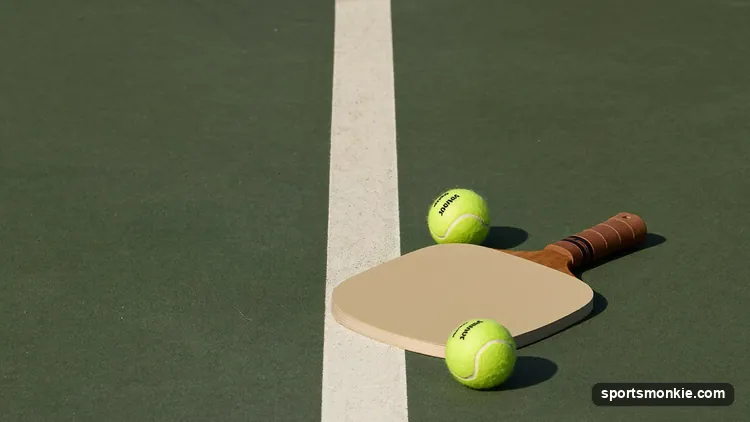
Paddle tennis and pickleball are both racquet-family sports played with solid paddles on courts smaller than a tennis court, but they differ in nearly every detail. Paddle tennis uses a depressurised tennis ball, a solid paddle and a single underhand serve on a court about the size of a tennis doubles service area, while pickleball uses a perforated plastic ball, a smaller court and a unique no-volley zone at the net called the kitchen.
The confusion runs deeper than these two, because “paddle tennis,” “platform tennis” and “padel” all sound alike and get mixed up constantly. This guide separates paddle tennis from pickleball first, then clears up where padel and platform tennis fit.
The core differences
The clearest split is the equipment and the net play. Pickleball’s plastic ball with holes flies slower and lower than paddle tennis’s depressurised tennis ball, which changes the whole rhythm of a rally. Pickleball also has its signature kitchen, a seven-foot zone on each side of the net where you cannot hit the ball out of the air, forcing the soft “dink” game that defines the sport. Paddle tennis has no such zone, so net play is more aggressive.
Serving differs too. Pickleball requires an underhand serve and, in doubles, a specific serving rotation, while paddle tennis traditionally allows a single underhand serve with no second-serve safety net. Both reward touch over raw power, which is a big part of why older players and families love them.
Court, ball and scoring compared
The table below lines up the essentials. Figures for pickleball follow USA Pickleball’s standards; paddle tennis dimensions reflect the common American game.
| Feature | Pickleball | Paddle tennis |
|---|---|---|
| Court size | 20 x 44 ft | About 50 x 20 ft |
| Net height | 34 in at center | Similar low net |
| Ball | Perforated plastic | Depressurised tennis ball |
| Paddle | Solid, no strings | Solid, no strings |
| No-volley zone | Yes, the “kitchen” | No |
| Serve | Underhand, one attempt | Underhand, one attempt |
| Walls in play | No | No |
If you are new to pickleball specifically, our pickleball rules for beginners covers scoring and serving in full, and the kitchen in pickleball explainer digs into the one rule that trips up almost every newcomer.
Where padel fits in
Padel is the sport people most often confuse with paddle tennis because of the near-identical name. It is a different game: played in doubles on an enclosed court roughly 20 by 10 metres, surrounded by glass walls and mesh fencing that the ball can rebound off, much like squash. Serves are underhand, and the wall play adds a tactical layer that paddle tennis and pickleball simply do not have.
Padel is enormous in Spain and Latin America and is growing fast in the US, though it spread more slowly here because it needs a purpose-built glass court. That construction cost is the main reason pickleball, which can be painted onto existing tennis or gym floors, grew faster. If you want the specifics of the walled court, our padel court size guide has the measurements.
And platform tennis
Platform tennis, sometimes just called “paddle,” is a fourth relative and the one governed in the US by the American Platform Tennis Association. It is played outdoors in cold weather on a raised, heated aluminum court surrounded by tight wire screens. Like padel, the ball can be played off the screens after it bounces, and it is almost always a doubles, winter-season game. It shares the solid paddle but little else with pickleball.
Which should you try?
Choose by what is near you and what you enjoy. Pickleball is the easiest to find and to start, thanks to cheap, plentiful courts and a gentle learning curve. Paddle tennis suits players who like a faster, tennis-flavoured game without walls. Padel and platform tennis are worth seeking out if you enjoy the extra dimension of playing the ball off walls or screens.
The bottom line: paddle tennis and pickleball are cousins, not the same sport, differing in ball, court and the kitchen rule, and neither should be confused with padel or platform tennis, which are wall-based games with their own courts and traditions.
Frequently asked questions
Is padel easier than pickleball?+
For many beginners pickleball feels easier to pick up first, because the court is small, the plastic ball is slow, and rallies start quickly. Padel has a bigger court and glass walls that balls can rebound off, which adds tactics that take longer to learn. Neither is objectively harder; padel rewards tennis-style movement and wall play, while pickleball rewards quick hands and soft dinks at the net.
What is padel called in the US?+
In the US it is simply called padel, though it is often confused with 'paddle tennis' and 'platform tennis' because the names sound alike. They are separate sports: padel is the walled, glass-court game that is huge in Spain and Latin America, while paddle tennis is a small-court game usually played without walls, and platform tennis is a winter game on a raised, screened court.
Why is padel not popular in the US yet?+
Padel spread slowly in the US mainly because it needs a purpose-built enclosed glass court, which is expensive to install compared with painting pickleball lines on an existing surface. Pickleball's low cost and easy conversion of tennis and gym courts let it grow far faster. Padel is now expanding quickly in US cities as more dedicated clubs open.
What is the new sport replacing pickleball?+
No single sport is replacing pickleball, which remains one of the fastest-growing sports in the US. Padel is the most talked-about challenger because of its explosive global growth, and paddle and platform tennis keep loyal followings, but these are additions to the paddle-sports family rather than replacements. They tend to attract overlapping players rather than take them away.
Sources
Play & tools
Free browser games and tools — no account, no download.
- Play today's Sports Connections — Today's Sports Connections — daily hints, answers, and play the grid.
- Play Guess the NFL Player — A new mystery NFL player every day. Eight guesses, with a clue on each — plus free unlimited mode.
- Explore all our games →
Related racket sports guides
View all →
How to Hold a Pickleball Paddle: Grips and Grip Pressure
How to hold a pickleball paddle: the continental and eastern grips, the neutral ready grip, and how much grip pressure to use for control.
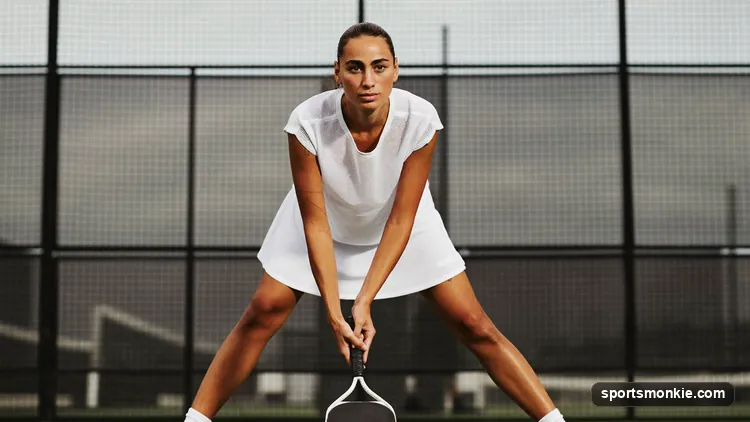
Pickleball Ready Position: Paddle Up, Balanced, Prepared
The pickleball ready position: paddle up in front, knees bent, weight forward. Why paddle height matters and how it speeds up your reactions.
Around the Post Shot in Pickleball (ATP): Legal and Deadly
The around-the-post shot is legal in pickleball — you hit the ball around the outside of the net post, and it can travel below net height. Here's how.
The Double-Bounce Rule in Pickleball, Explained Simply
The double-bounce (two-bounce) rule means the ball must bounce once on each side before anyone can volley. Here's why it exists and the faults it causes.
How to Play Pickleball Singles: Strategy and Court Coverage
Pickleball singles strategy: where to serve, how to cover the court, when to attack, and why it rewards fitness and placement over doubles touch.
How to Serve in Pickleball: Technique for a Consistent Serve
A step-by-step pickleball serve technique: grip, ball drop or toss, contact point below the waist, and follow-through for a deep, reliable serve.