
How to Hold a Pickleball Paddle: Grips and Grip Pressure
On this page4
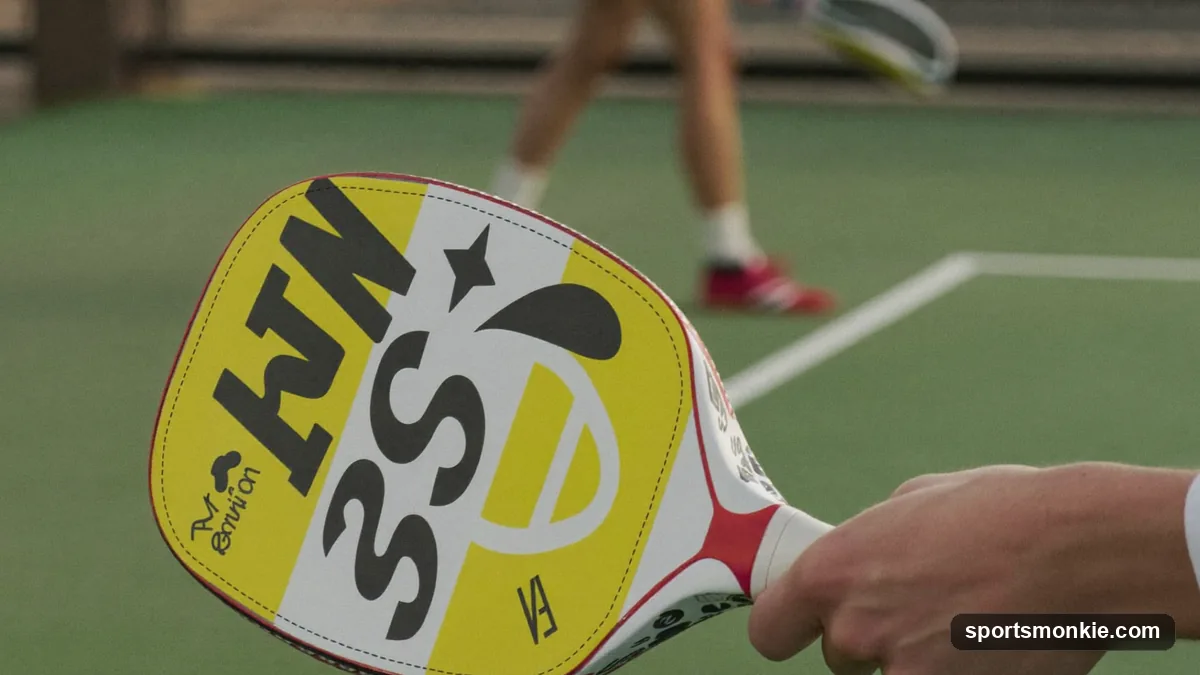
Hold a pickleball paddle with a continental grip: shake hands with the handle so the face sits roughly vertical. That grip lets you hit forehands and backhands without switching, which is exactly what you need in fast exchanges at the kitchen line where there is no time to change. Grip pressure should sit around 4 or 5 out of 10 for most shots and loosen for the soft game. Get this right first, because every stroke you own is built on top of the grip.
The continental grip, step by step
- Hold the paddle out in front, face perpendicular to the ground, as if you were about to hammer a nail with the edge.
- Shake hands with the handle. Your palm wraps the grip naturally and the V between thumb and index finger lands on the top edge of the handle.
- Check the face. With a relaxed arm the paddle face should be close to vertical, equally ready to swing to either side.
- Keep the wrist neutral. You want to be able to flick a backhand and roll a forehand from the same hold without rotating your hand.
The reason continental wins for most players is versatility. At the net, a dink to your forehand can be followed instantly by a backhand volley, and there is no window to change grips between them. One neutral grip covers both wings and every soft shot.
Continental vs eastern: which grip?
| Continental | Eastern | |
|---|---|---|
| Feel | ”Shake hands,” face vertical | Palm slightly behind the handle |
| Forehand | Solid, neutral | A little more power |
| Backhand | Strong, quick to deploy | Weaker, needs adjustment |
| Net play | Excellent — no switching | Slower to switch under pressure |
| Best for | Almost everyone, especially net play | Players who favour a forehand-heavy baseline game |
For the overwhelming majority of players, continental is the right buy. The eastern grip’s forehand bump is real but small, and it costs you speed on the backhand and at the net — where most pickleball points are actually decided.
Grip pressure is half the battle
A relaxed grip is what gives you touch. Squeeze the handle at 4 or 5 out of 10 for drives and volleys, and drop to around 3 for dinks and third-shot drops. The physics is simple: a tight grip passes the incoming ball’s pace straight back and pops soft shots up above net height, where they get attacked. A loose grip absorbs that energy so the ball dies where you want it.
The habit to build is a variable grip. Stay relaxed as a default, firm up for the split second you punch a volley or drive, then immediately soften again. Players who grip hard all the time have no soft game; players who grip soft all the time get overpowered on drives. The good ones switch.
The ready grip between shots
Between shots, return the paddle to a neutral, paddle-up position in front of your chest with a continental grip — the ready position that keeps both wings equally available. If your paddle drifts down or your grip rotates toward a forehand, you have quietly given up your backhand, and a smart opponent will aim there.
New to the whole setup? Once the grip feels natural, the next building block is how you stand and move — see our guide to pickleball footwork, because a great grip on a ball you reached off-balance still produces a poor shot. Grip first, then feet, then strokes. In that order, everything else gets easier.
Frequently asked questions
What is the best grip for pickleball?+
The continental grip suits most players because it handles forehands, backhands, dinks and volleys without switching, which is essential in fast net exchanges where there is no time to change. The eastern grip gives a slightly stronger forehand but a weaker backhand. Start continental; it is the most versatile and the standard most coaches teach first.
How do I find a continental grip?+
Hold the paddle out in front with the face perpendicular to the ground and 'shake hands' with the handle. The V between your thumb and index finger sits on the top edge of the handle. A quick check: the paddle should feel like an extension of your hand for a hammer-style tap, equally ready for either side.
How tight should I grip a pickleball paddle?+
Around 4 or 5 out of 10 for drives and volleys, and looser — 3 or so — for dinks and drops. A relaxed grip absorbs pace and gives touch; a tight grip transmits every bit of the incoming ball's energy and pops soft shots up. Firm up momentarily only when you punch a volley or drive, then relax again.
Should I switch grips for forehand and backhand?+
Most players do not, and that is the point of the continental grip — it lets both wings work from one hold. At the kitchen line, balls come too fast to change grips between shots, so a single neutral grip is a real advantage. Some players make small adjustments for a two-handed backhand, but a base continental serves both sides.
Does grip size matter in pickleball?+
Yes. Too small a grip encourages over-squeezing and wrist strain; too large limits wrist action and can slip. A rough test: hold the paddle and you should be able to fit your other index finger in the gap between your fingertips and palm. Overgrips let you fine-tune the size and add tack.
What is a choked-up or two-handed grip?+
Choking up means holding higher on the handle, closer to the face, for more control on touch shots — some players do it on dinks. A two-handed backhand adds the non-dominant hand above the dominant one for extra stability and power on that wing, much like tennis. Both are refinements on top of a solid base grip, not replacements for it.
Sources
Play & tools
Free browser games and tools — no account, no download.
- Play today's Sports Connections — Today's Sports Connections — daily hints, answers, and play the grid.
- Play Guess the NFL Player — A new mystery NFL player every day. Eight guesses, with a clue on each — plus free unlimited mode.
- Explore all our games →
Related racket sports guides
View all →
How to Serve in Pickleball: Technique for a Consistent Serve
A step-by-step pickleball serve technique: grip, ball drop or toss, contact point below the waist, and follow-through for a deep, reliable serve.
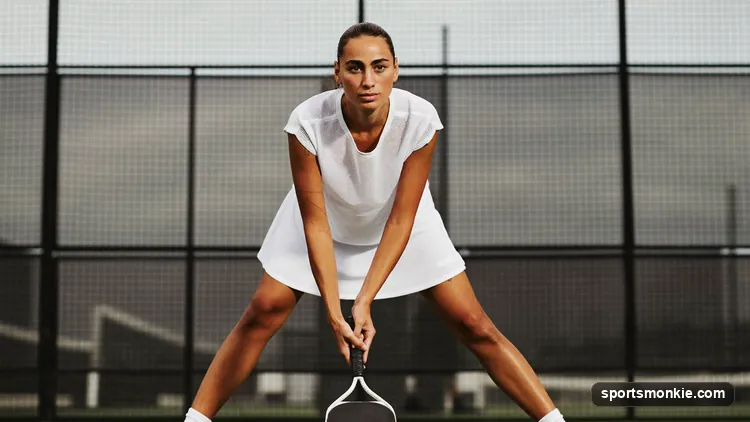
Pickleball Ready Position: Paddle Up, Balanced, Prepared
The pickleball ready position: paddle up in front, knees bent, weight forward. Why paddle height matters and how it speeds up your reactions.
How to Play Pickleball Singles: Strategy and Court Coverage
Pickleball singles strategy: where to serve, how to cover the court, when to attack, and why it rewards fitness and placement over doubles touch.
Pickleball Backhand Technique: One-Handed vs Two-Handed
Pickleball backhand technique: one-handed vs two-handed, plus how to hit the backhand dink, drive and volley with control and depth.
Pickleball Drills: The Practice List That Fixes Your Game
The best pickleball drills for dinking, the third shot, serve and return, volleys and footwork — a practical list with reps and what each one fixes.
Pickleball Lob Shot: When to Use It and How to Defend One
The pickleball lob explained: offensive vs defensive lobs, when to use each, how to hit one over the net players, and how to defend a lob.