
Pickleball Footwork: Split Step, Shuffle and Recovery
On this page5
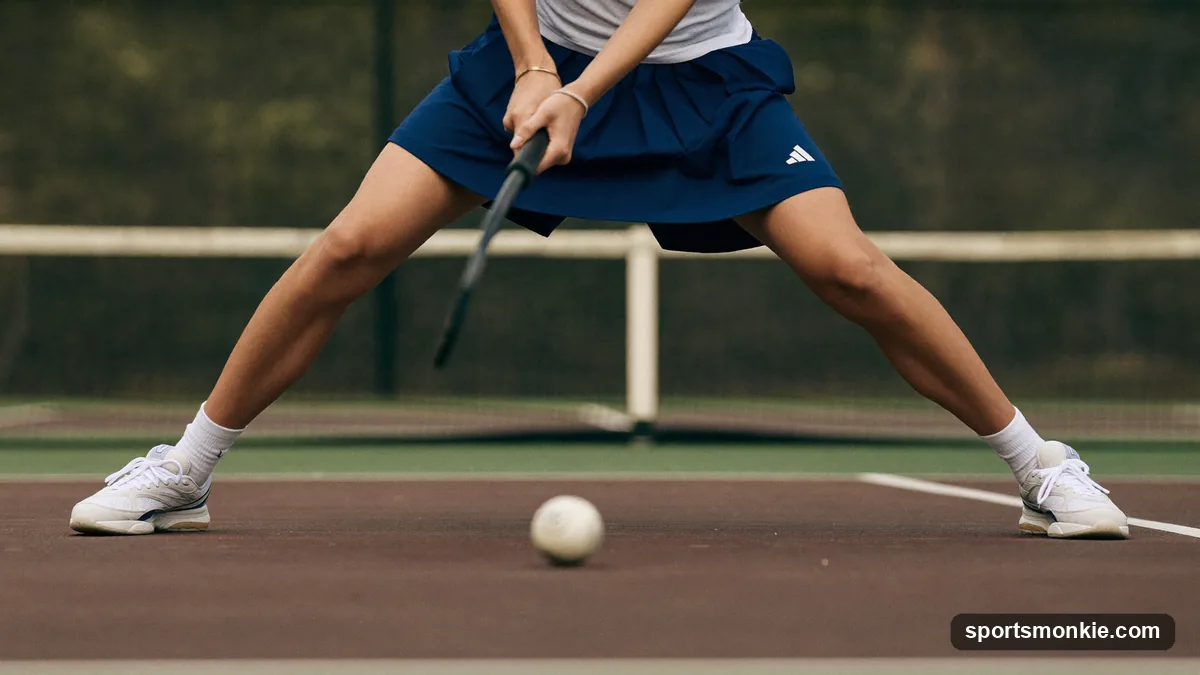
Good pickleball footwork is splitting, shuffling and recovering under control — not lunging and reaching. Split-step as your opponent hits so you can push off in any direction, shuffle sideways to stay square to the ball, recover to a balanced stance after every shot, and move through the mid-court in controlled steps rather than a full sprint. The principle behind all of it is simple: a ball you reach on balance is a ball you can control, and a ball you lunge for is usually an error. Most missed dinks and volleys are footwork failures, not hand failures.
The split step
The split step is the foundation. It is a small hop that lands on the balls of both feet at the exact moment your opponent contacts the ball. That landing leaves you in a low, athletic, balanced stance, coiled to push off toward wherever the ball goes.
The timing is the whole trick: land as they hit, not before and not after. Do it on every shot — serve return, dink, volley, everything — and your reaction time and reach improve without you moving any faster. It is the least visible and most valuable footwork habit in the game.
Shuffle, don’t cross (mostly)
For the small side-to-side adjustments that make up most pickleball movement, shuffle: short steps that keep your feet from crossing so you stay square to the ball and balanced to hit. Crossing your feet on a short move leaves you tangled and off-balance.
For covering more ground in a hurry — a wide ball or a lob over your head — a crossover step or a turn-and-run is faster and correct, as long as you square up again before you strike the ball. The rule of thumb: shuffle for small moves, cross over only when you genuinely need the speed.
Moving through the transition zone
The transition zone — the mid-court stretch between the baseline and the kitchen line — is where footwork matters most, because it is where you are most exposed. The mistake is running through it and hitting on the move, which sends the ball floating up to be attacked.
Instead:
- Advance a few controlled steps toward the kitchen line when a ball lets you.
- Split-step as your opponent contacts the ball.
- Stop, get low, and hit from a balanced stance — often a soft reset into the kitchen.
- Advance again on the next opportunity.
Move, stop, hit, move. You are not sprinting to the line; you are walking up behind unattackable balls, one balanced shot at a time.
Recover after every shot
Recovery is the habit of returning to a balanced ready position after each shot instead of admiring it from where you stood. In singles that means resetting to the middle of the baseline; at the net it means squaring up behind the kitchen line with the paddle up. Skip recovery and you get wrong-footed on the very next ball.
A quick footwork checklist
| Situation | Footwork | Common error it fixes |
|---|---|---|
| Opponent about to hit | Split step, land on their contact | Reacting late, flat-footed |
| Small side adjustment | Shuffle, stay square | Crossing feet, off-balance |
| Wide ball or lob | Crossover / turn-and-run, then square up | Reaching and falling |
| Advancing mid-court | Move, stop, hit | Hitting on the run, floating the ball |
| After any shot | Recover to ready position | Getting wrong-footed next ball |
Stay low with bent knees through all of it — height is the enemy of balance. Footwork is trainable exactly like strokes are, so drill it: shadow split-steps, shuffle-and-dink along the line, and stop-to-hit reps through the transition zone, all in our pickleball drills guide. Get the feet right and every shot you own gets a little better, because you will be hitting from balance instead of scrambling.
Frequently asked questions
What is a split step in pickleball?+
A split step is a small hop that lands on the balls of both feet just as your opponent contacts the ball. It puts you in a balanced, athletic stance ready to push off in any direction, so you react faster to wherever the ball goes. Doing it on every shot is one of the biggest quiet upgrades to your court coverage.
Why is footwork important in pickleball?+
Because a ball you reach on balance is a ball you can control, and a ball you lunge for is usually an error or a pop-up. Most missed dinks and volleys are footwork failures, not hand failures — the player got to the ball late or off-balance. Good feet set up every good shot, which is why coaches drill movement as much as strokes.
Should you cross your feet in pickleball?+
For short adjustments, no — shuffle sideways with small steps so you stay square to the ball and balanced. For covering more ground quickly, a crossover step or a turn-and-run is fine and faster, then square up before you hit. The rule of thumb: shuffle for small moves, cross over only when you genuinely need the extra speed.
How do you move through the transition zone?+
In controlled steps, and stop to hit. The transition zone — the mid-court area between the baseline and the kitchen — is where you are most vulnerable, so move forward a few steps, split-step as your opponent hits, and take the ball from a balanced stance rather than while still running. A ball struck on the move floats up and gets attacked.
What is recovery footwork?+
Recovery is returning to a balanced ready position after each shot instead of standing where you just hit. It resets your base so you can react to the next ball. In singles you recover to the middle of the baseline; at the net you reset square behind the kitchen line with the paddle up. Failing to recover is why players get wrong-footed on the next shot.
How can I improve my pickleball footwork?+
Drill it deliberately: shadow split-steps timed to a partner's contact, shuffle side to side along the kitchen line while dinking, and practise stopping to hit as you advance through the transition zone. Staying low with bent knees is the common thread. Footwork improves with focused reps the same way strokes do — it is trainable, not just natural athleticism.
Sources
Play & tools
Free browser games and tools — no account, no download.
- Play today's Sports Connections — Today's Sports Connections — daily hints, answers, and play the grid.
- Play Guess the NFL Player — A new mystery NFL player every day. Eight guesses, with a clue on each — plus free unlimited mode.
- Explore all our games →
Related racket sports guides
View all →
How to Hold a Pickleball Paddle: Grips and Grip Pressure
How to hold a pickleball paddle: the continental and eastern grips, the neutral ready grip, and how much grip pressure to use for control.
How to Play Pickleball Singles: Strategy and Court Coverage
Pickleball singles strategy: where to serve, how to cover the court, when to attack, and why it rewards fitness and placement over doubles touch.
How to Serve in Pickleball: Technique for a Consistent Serve
A step-by-step pickleball serve technique: grip, ball drop or toss, contact point below the waist, and follow-through for a deep, reliable serve.
Pickleball Backhand Technique: One-Handed vs Two-Handed
Pickleball backhand technique: one-handed vs two-handed, plus how to hit the backhand dink, drive and volley with control and depth.
Pickleball Drills: The Practice List That Fixes Your Game
The best pickleball drills for dinking, the third shot, serve and return, volleys and footwork — a practical list with reps and what each one fixes.
Pickleball Lob Shot: When to Use It and How to Defend One
The pickleball lob explained: offensive vs defensive lobs, when to use each, how to hit one over the net players, and how to defend a lob.