
Pickleball Serving Rules: The Legal Serve, Explained
On this page5
A legal pickleball serve is hit underhand from behind the baseline, contact made below your waist, and sent diagonally into the opposite service court — with a single attempt, no second serve. That is the whole framework. The details of how low is low enough and where your feet can be are what actually get called as faults.
There are two legal serves in the current USA Pickleball rules: the traditional volley serve and the newer drop serve. Here is what makes each one legal, step by step.
The volley serve, step by step
The volley serve is the classic motion — you toss nothing, you hold the ball and strike it out of your hand. To be legal it has to satisfy three things at the moment of contact:
- The paddle moves in an upward arc. Your swing has to be traveling upward when you hit the ball.
- Contact is below your waist. “Waist” means your navel level. Hit it above that and it is a fault.
- The paddle head is below your wrist. The highest point of the paddle can’t be above the highest point of your wrist when you make contact.
Get all three and the underhand serve is clean. The point of these rules is to keep the serve from becoming a weapon — it is meant to put the ball in play, not to end the rally.
The drop serve, step by step
Added as a permanent rule in 2021, the drop serve is the easier one to keep legal, which is why a lot of beginners adopt it.
- Hold the ball in your hand (or balance it on the paddle face).
- Let it drop. You must release it and let it fall on its own — you cannot toss it up, throw it down, or add any force.
- Let it bounce anywhere you like on your side.
- Hit it after the bounce.
Because the ball has already bounced, the below-the-waist rule and the upward-arc rule no longer apply. You can hit it however you can reach it. The one thing that can go wrong is propelling the ball — if you flick or throw it rather than dropping it, the serve is a fault.
Volley serve vs drop serve
| Requirement | Volley serve | Drop serve |
|---|---|---|
| Underhand, upward swing | Required | Not required |
| Contact below the waist | Required | Not required |
| Paddle head below wrist | Required | Not required |
| Ball must bounce first | No | Yes |
| Can you add force to the ball drop | N/A | No — must drop naturally |
| Feet behind baseline | Required | Required |
Feet, position and direction
Wherever you serve from, the same positioning rules apply. At contact, both feet are behind the baseline and at least one is touching the ground. Neither foot may touch the baseline or the imaginary lines extending the centerline and sideline. Step on the line before you strike and it is a foot fault — one of the most common serve faults in rec play.
You serve diagonally, cross-court, into the far service box, and the serve has to clear the non-volley zone known as the kitchen — a serve landing in the kitchen or on its line is a fault. Which side you serve from depends on your score: an even team score serves from the right/even court, an odd score from the left/odd court.
One serve, and the net is live
There is no second serve in pickleball. One attempt, and a fault ends your service turn. Since 2021 there is also no service let: a serve that ticks the net and drops into the correct box is live and must be played, so do not stop and expect a redo.
If you can land a legal serve deep and consistently, you have most of what a serve needs to do. Once that is automatic, the shot that actually wins points on serve is the one that comes after the return — read our guide to the third-shot drop, and if you are still nailing down the basics, the pickleball rules for beginners covers the serve alongside the two-bounce rule and scoring.
Frequently asked questions
Can you serve overhand in pickleball?+
No. The traditional volley serve must be underhand — the paddle has to move in an upward arc and contact the ball below your waist. An overhand or sidearm smash serve is a fault. The only way around the underhand motion is the drop serve, where the ball bounces first.
Do you get two serves in pickleball like tennis?+
No. You get one serve attempt per point. If you fault the serve, it is a side-out or passes to your partner in doubles — there is no let-and-retry second serve. The one exception used to be serves that clipped the net and landed in; those are now live and playable, not replayed.
What is the drop serve in pickleball?+
The drop serve lets you drop the ball from your hand (or paddle) and hit it after it bounces, rather than striking it out of the air. Because the ball bounces first, the below-the-waist and upward-swing rules do not apply. You cannot throw or slam the ball down — it must be released and allowed to fall naturally.
Where do your feet have to be when serving?+
At the moment you strike the ball, both feet must be behind the baseline, and at least one foot must be on the ground behind it. Neither foot may touch the baseline or the imaginary extensions of the centerline or sideline. Stepping on or over the line before contact is a foot fault.
Does a serve that hits the net count in pickleball?+
Yes, if it lands in the correct service court it is live and in play — as of 2021 there is no service let. A serve that touches the net and still lands good must be played. Only a serve that hits the net and lands out, or fails to clear it, is a fault.
Which service box do you serve to in pickleball?+
You always serve diagonally (cross-court) into the service court on the far side, and the serve must clear the non-volley zone — it cannot land in the kitchen or on the kitchen line. Your serving side is set by your score: even score serves from the right, odd from the left.
Sources
Play & tools
Free browser games and tools — no account, no download.
- Play today's Sports Connections — Today's Sports Connections — daily hints, answers, and play the grid.
- Play Guess the NFL Player — A new mystery NFL player every day. Eight guesses, with a clue on each — plus free unlimited mode.
- Explore all our games →
Related racket sports guides
View all →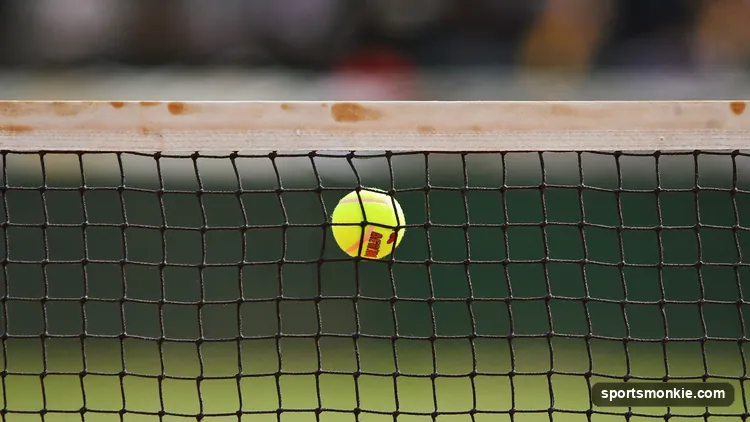
Is There a Let in Pickleball? No — the Net Serve Is Live
There is no let serve in pickleball. Since 2021 a serve that clips the net and lands in is live and played on. Here's what changed and why.
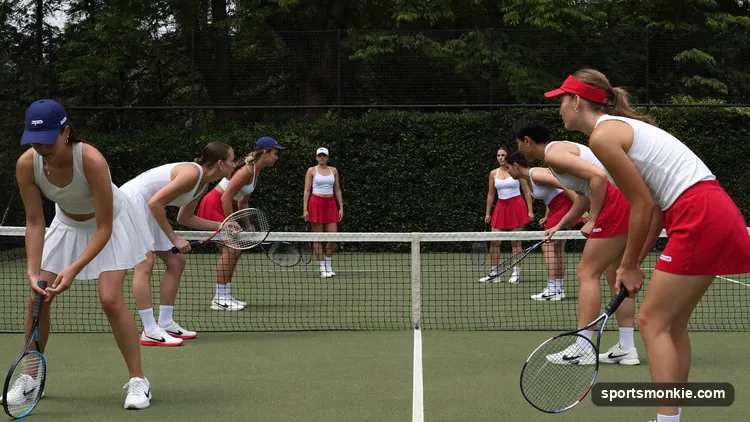
Pickleball Serving Sequence: Who Serves When in Doubles
In doubles, both partners serve before a side-out — except the first turn of the game. Here's the serving sequence and the 0-0-2 start rule.
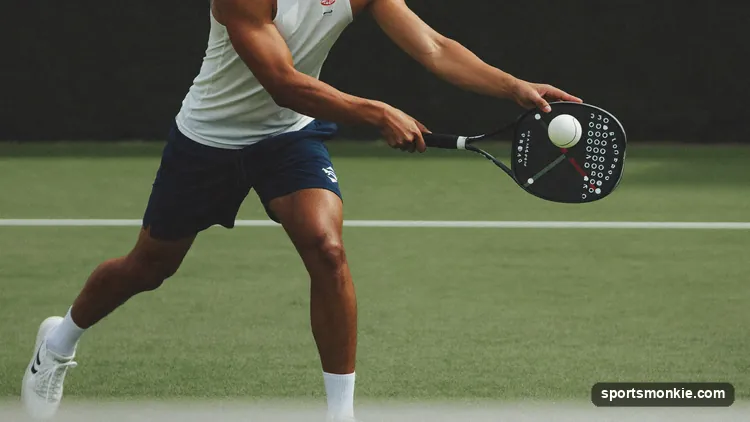
Pickleball Spin Serve: What's Legal and How to Add Spin
The pickleball spin serve explained: the pre-release hand spin is banned, but legal paddle spin is allowed. How to add safe spin the right way.
The Double-Bounce Rule in Pickleball, Explained Simply
The double-bounce (two-bounce) rule means the ball must bounce once on each side before anyone can volley. Here's why it exists and the faults it causes.
Non-Volley Zone Rules in Pickleball: The Complete Reference
The full non-volley zone rulebook: what's allowed, every common kitchen fault, the momentum rule, and the edge cases players argue about most.
Pickleball Faults Explained: The Full List of Common Faults
A fault ends the rally in pickleball. Here's the full list — kitchen volleys, serve faults, out of bounds, two-bounce violations and net touches.