
Poaching in Pickleball: When to Cross and Steal the Ball
On this page5
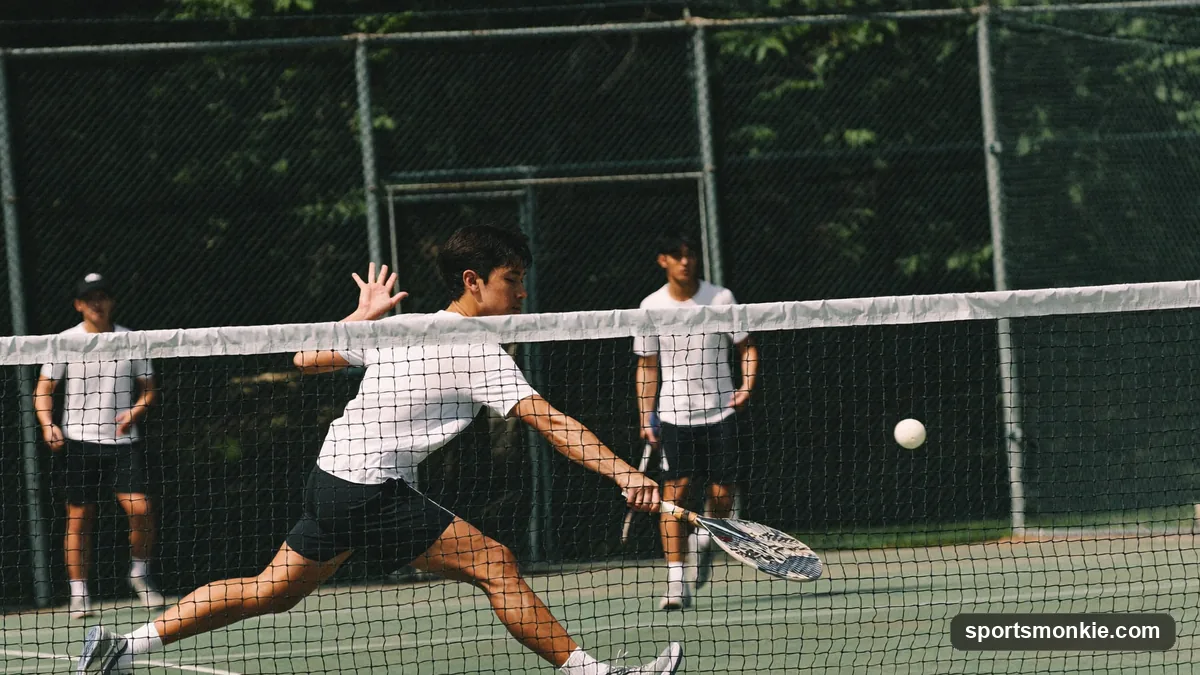
Poaching in pickleball means crossing into your partner’s side to intercept a ball that was heading to them — usually to put away a floating dink or a weak return with your stronger volley, before your partner has to handle it from a worse position. It is legal, it is aggressive, and timed well it ends points fast.
The catch is that every poach leaves space behind you. Here is when the trade is worth it and how to make it safe.
Why poaching works
A poach takes the ball early and from an angle the opponent did not plan for. They hit toward what they think is the weaker player or the open side, and suddenly the other partner is there, volleying it away before the intended target even moves. That element of surprise, plus the extra pace of hitting a floater out of the air, is what makes the poach so effective at the net.
It also applies pressure over a whole match. Opponents who know you might poach start second-guessing where to hit, which produces the rushed, tentative shots you feed on. A team that never poaches is easy to target; a team that might poach on any ball is not.
When to poach
The green light is a ball that floats high or slow toward your partner — a soft return, a lazy dink, a pop-up — that you can reach cleanly at the net. Ask three quick questions:
- Is the ball above net height where I can hit down on it?
- Can I get there without lunging off-balance into the kitchen?
- Is my volley or angle genuinely better than my partner’s would be here?
Three yeses, poach. Prime targets are high, soft balls through the middle, exactly the ones your doubles middle strategy is designed to produce in the first place.
When not to poach
Leave it alone when the ball is low, sharp, or well-placed to your partner — you will only reach it stretched and off-balance, and a poached ball hit from a bad position is worse than your partner’s routine shot. Also resist poaching just because you can: over-poaching makes you predictable, and good opponents will hit behind you into the court you keep vacating.
And never poach if your partner will not cover the space you leave. An uncommunicated poach that gets redirected is a free point for the other team.
Signals and covering the court
The safe poach is a rotated poach. When you cross, your partner slides over to fill the side you left, so the team shifts as a unit rather than leaving a hole. That coordination is why teams signal.
| Method | How it works |
|---|---|
| Pre-serve hand signal | The player at the net signals behind their back (open vs closed hand) whether they plan to poach, so the server knows to cover |
| Verbal call | A quick “mine” or “switch” as you cross in-rally |
| Established habit | Regular partners learn each other’s tendencies and rotate on instinct |
Whatever the method, the non-negotiable is that your partner knows to move. Poaching without switching leaves both of you stranded on one side.
Poaching as part of the bigger picture
Poaching sits alongside stacking in the toolkit of deliberate doubles positioning — stacking keeps your stronger player on a preferred side, and poaching lets that stronger player range across to take the ball that matters. Both only pay off once the fundamentals are solid: getting to the net together, moving as a pair, and the patience to wait for the floater worth attacking.
If you are still building those, our pickleball doubles strategy guide covers the four core habits, and the beginner rules lock down the non-volley-zone limits that keep your poach legal at the line.
Poach decisively, poach the floaters, and never poach without your partner covering behind you — that is the whole discipline.
Frequently asked questions
What does poaching mean in pickleball?+
Poaching is when you move across into the space your partner was covering to take a ball that was heading to them. It is a deliberate doubles tactic, most often used to intercept a floating ball at the net and put it away with your stronger side, before your partner would have had to play a tougher shot from a worse position.
Is poaching legal in pickleball?+
Yes. There is no rule assigning each player a side of the court, so either partner may play any ball on their team's side. Poaching is simply choosing to cover your partner's ball. The only limits are the normal ones — you cannot volley from inside the kitchen and you cannot interfere illegally with your opponents.
When should you poach in pickleball?+
Poach when the ball floats high or slow toward your partner and you can reach it cleanly without over-committing, especially if your volley or your angle is stronger than theirs would be. High, soft, middle balls are the best poach targets. Skip the poach on low, sharp, well-placed balls where you would only make contact off-balance.
How do you signal a poach to your partner?+
Many teams use a hand signal behind the back before the serve — an open or closed hand telling the partner whether the signaller intends to poach — so the partner knows to cover the vacated side. In-rally poaches rely on a quick call or established habit. The key is that your partner must know to slide over and fill the space you leave.
What are the risks of poaching?+
The main risk is the open court you leave behind. If you cross and miss, or your opponent redirects behind you, the space you vacated is wide open and your partner may not get there. Over-poaching also becomes predictable, letting opponents wrong-foot you. A good poach is decisive and covered; a bad one gifts an easy passing shot.
Does your partner move when you poach?+
Yes, they should. When you cross to poach, your partner slides over to cover the side you left, so the team rotates rather than leaving a hole. This switch is why communication matters — an uncommunicated poach can leave both players on the same side with half the court empty. Move as a connected pair, even when one of you is crossing.
Sources
Play & tools
Free browser games and tools — no account, no download.
- Play today's Sports Connections — Today's Sports Connections — daily hints, answers, and play the grid.
- Play Guess the NFL Player — A new mystery NFL player every day. Eight guesses, with a clue on each — plus free unlimited mode.
- Explore all our games →
Related racket sports guides
View all →
Stacking in Pickleball: What It Is and How to Do It
Stacking is a legal doubles tactic where partners line up on the same side, then switch after the serve to keep each player on their stronger side.
Pickleball Transition Zone: How to Cross No-Man's Land
The transition zone is the mid-court between baseline and kitchen — the most dangerous place to stand. Here's how to move through it and reset.
Pickleball Doubles Strategy: The Core Habits That Win
Winning pickleball doubles comes down to four habits: get to the net, move as a pair, target the middle, and out-patience the dink. Here's how.
Pickleball Serving Sequence: Who Serves When in Doubles
In doubles, both partners serve before a side-out — except the first turn of the game. Here's the serving sequence and the 0-0-2 start rule.
Around the Post Shot in Pickleball (ATP): Legal and Deadly
The around-the-post shot is legal in pickleball — you hit the ball around the outside of the net post, and it can travel below net height. Here's how.
Pickleball Lob Shot: When to Use It and How to Defend One
The pickleball lob explained: offensive vs defensive lobs, when to use each, how to hit one over the net players, and how to defend a lob.