
Decathlon Events in Order: All 10

On this page5
The decathlon runs its ten events in a fixed order over two days. Day one is the 100 metres, long jump, shot put, high jump and 400 metres; day two is the 110 metres hurdles, discus throw, pole vault, javelin throw and, finally, the 1500 metres.
That order is set by World Athletics, the sport’s world governing body, and it is the same at the Olympics and World Championships. Below is the full running order with what each event tests, how the scoring works, and why the closing 1500 metres is the event decathletes dread most.
The ten events in order
The decathlon is a men’s combined event (the women’s equivalent is the seven-event heptathlon). The events alternate between sprints, jumps, throws and a distance run, deliberately arranged so no athlete’s specialty dominates.
| Order | Day | Event | Type |
|---|---|---|---|
| 1 | Day 1 | 100 metres | Sprint |
| 2 | Day 1 | Long jump | Jump |
| 3 | Day 1 | Shot put | Throw |
| 4 | Day 1 | High jump | Jump |
| 5 | Day 1 | 400 metres | Sprint |
| 6 | Day 2 | 110 metres hurdles | Sprint/hurdles |
| 7 | Day 2 | Discus throw | Throw |
| 8 | Day 2 | Pole vault | Jump |
| 9 | Day 2 | Javelin throw | Throw |
| 10 | Day 2 | 1500 metres | Middle distance |
This sequence never changes in official competition. Day one opens with the explosive 100 metres and closes with the punishing 400 metres; day two opens with the 110 metres hurdles and ends with the 1500 metres, the only true endurance test in the whole programme.
How the scoring works
Winning the decathlon is not about finishing first in any single event. Instead, each performance, a time, a distance or a height, is converted into points using official World Athletics scoring tables. A faster sprint, a longer throw or a higher jump earns more points. After all ten events, the athlete with the highest points total wins.
This points system is why the decathlon rewards the most complete athlete rather than a specialist. A world-class sprinter who cannot throw or vault will lose to a well-rounded competitor who scores solidly across all ten. The best decathletes in history have pushed past 9,000 points, a benchmark first broken by Roman Sebrle of the Czech Republic and later exceeded by Ashton Eaton of the United States.
Why the order matters
The fixed order is not arbitrary; it spreads different physical demands across the two days so athletes must manage their energy. Day one front-loads speed and power, then ends with the lactic-acid burn of the 400 metres. Day two starts technical (hurdles, discus, the highly demanding pole vault) before finishing with the 1500 metres, a middle-distance run that punishes athletes built for explosive power. Because it comes last, the 1500 metres often decides the medals: a decathlete who has banked a lead over nine events can still lose it if a rival is a much stronger runner, which is what makes the closing lap one of the most dramatic finishes in athletics.
The idea of a set event sequence appears elsewhere in multi-discipline sports, from the order of a triathlon to the individual medley order in swimming, but the decathlon packs the widest variety of skills into a single competition.
The events, briefly explained
- 100 metres — a flat-out sprint that opens the competition and sets an early tone.
- Long jump — sprint down a runway and jump for maximum distance from the take-off board.
- Shot put — throw a heavy metal ball for distance from a small circle.
- High jump — clear a horizontal bar at increasing heights.
- 400 metres — a full lap of the track, the hardest of the day-one events.
- 110 metres hurdles — sprint over ten barriers to open day two.
- Discus — spin and hurl a heavy disc for distance.
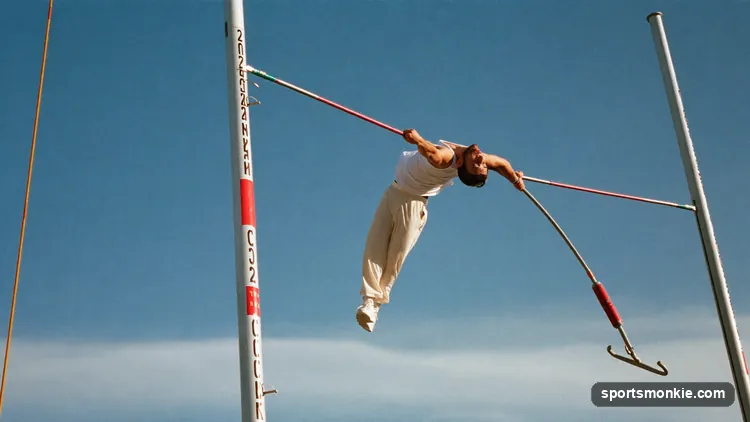
- Pole vault — use a flexible pole to clear a high bar; technically the most complex event.
- Javelin — a running throw of a spear-like implement for distance.
- 1500 metres — the endurance finale, roughly three and three-quarter laps.
The greats of the event
The decathlon has produced some of track and field’s most celebrated all-rounders. Ashton Eaton (USA) won back-to-back Olympic titles and held the world record; Roman Sebrle (Czech Republic) was the first past 9,000 points; and earlier legends such as Daley Thompson (Great Britain), Rafer Johnson (USA) and Bob Mathias (USA) dominated their eras. Perhaps the most famous of all in the United States is Bruce Jenner (now Caitlyn Jenner), whose world-record gold at the 1976 Montreal Olympics turned the decathlon champion into a national celebrity. Because the title is traditionally associated with being crowned the “world’s greatest athlete,” decathlon winners occupy a special place in the sport, much like the standout sprinters featured in our list of the greatest male sprinters.
The short version: the decathlon’s ten events run in a fixed two-day order set by World Athletics, day one is 100m, long jump, shot put, high jump and 400m; day two is 110m hurdles, discus, pole vault, javelin and 1500m. Points are awarded per event from official tables, the highest total wins, and the closing 1500 metres, tackled after two exhausting days, is the event most decathletes fear and the one that often decides the medals. For how each discipline works on its own — and every other athletics event — see our guide to track and field events explained.
Frequently asked questions
What 10 sports are in the decathlon?+
They are ten track-and-field events, not separate sports, contested in a set order over two days. Day one: the 100 metres sprint, long jump, shot put, high jump and 400 metres. Day two: the 110 metres hurdles, discus throw, pole vault, javelin throw and the 1500 metres. The mix spans sprints, jumps, throws and a middle-distance run, which is why decathletes are considered among the most complete athletes in the sport. World Athletics governs the format and the scoring tables.
What is the hardest event in a decathlon?+
The final event, the 1500 metres, is widely considered the toughest, because it is a lung-burning middle-distance run tackled at the very end of two exhausting days, often deciding the overall standings. Many decathletes are built for power and speed rather than endurance, so the 1500m is the event they least enjoy and where the standings can shift dramatically. The pole vault is another candidate for hardest because it is highly technical and a failed height can cost an athlete a huge number of points.
Who is the greatest decathlete of all time?+
There is no single undisputed answer, but the names most often cited include Ashton Eaton of the United States, a two-time Olympic champion and former world-record holder, and Roman Sebrle of the Czech Republic, the first man to pass 9,000 points. Historic greats such as Daley Thompson of Great Britain and Bob Mathias of the USA are also frequently named. 'Greatest' depends on whether you weigh Olympic titles, world records or longevity, so several athletes have a strong claim.
Was Bruce Jenner a decathlete?+
Yes. Bruce Jenner (now known as Caitlyn Jenner) won the decathlon gold medal at the 1976 Montreal Olympics for the United States, setting a world record in the process and becoming a household name. The decathlon victory made Jenner one of the most famous athletes of the era. Jenner is one of the best-known Olympic decathlon champions in American history, alongside figures like Bob Mathias and Rafer Johnson.
Sources
Play & tools
Free browser games and tools — no account, no download.
- Play today's Sports Connections — Today's Sports Connections — daily hints, answers, and play the grid.
- Play Guess the NFL Player — A new mystery NFL player every day. Eight guesses, with a clue on each — plus free unlimited mode.
- Explore all our games →
Related guides
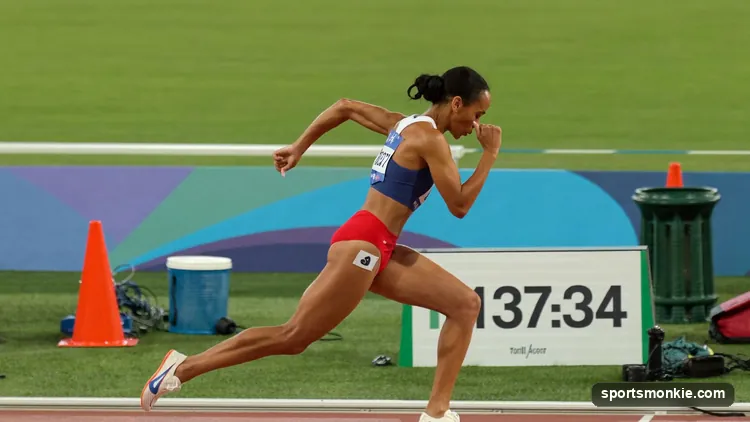
Heptathlon Events Explained: Order, Rules and Scoring
The heptathlon has seven events over two days. See the event order, scoring, false-start rules, tie rule, records and beginner training notes.
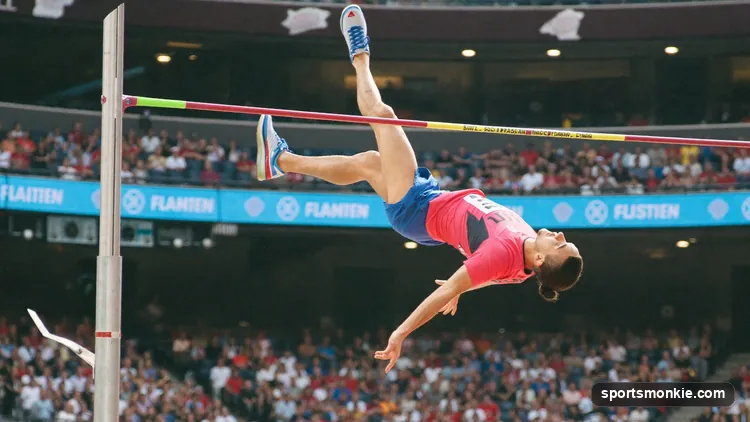
High Jump Explained: Rules, Technique, and World Records
High jump explained: the J-shaped approach, Fosbury Flop technique, three-attempt rules, countback ties, and the current men's and women's world records.
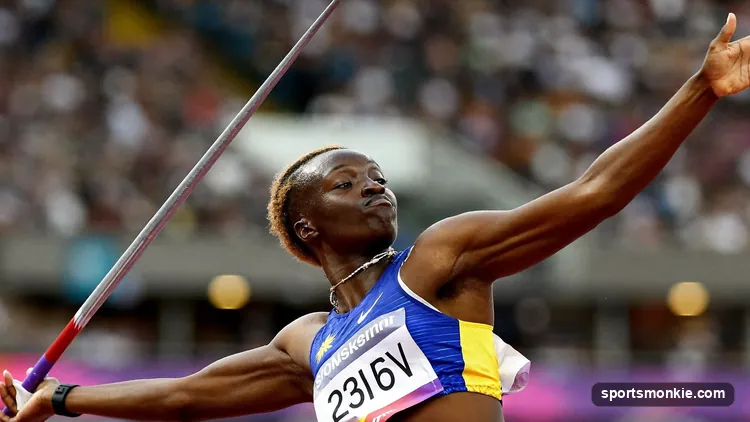
Javelin Throw Explained: Rules, Technique & World Records
Javelin throw explained: weight, runway rules, throwing technique, the 1986 redesign, and world records — men's 98.48m, women's 72.28m, as of 2026.
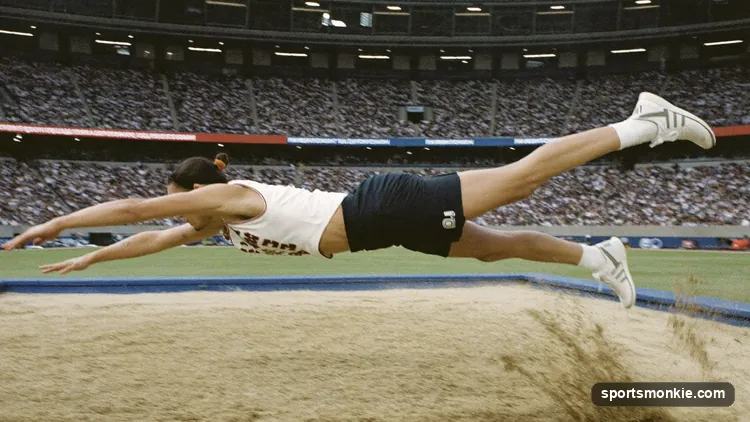
Long Jump Explained: Rules, Technique & World Records
Long jump explained: the 40m runway, plasticine take-off board, how jumps are measured, hang vs hitch-kick technique, fouls, and the world records.
Pole Vault Explained: Rules, Technique, Equipment and World Records
Pole vault explained: how the runway, pole and box work, the six phases of a vault, scoring rules, and current world records as of 2026.
Steeplechase Explained: Rules, Barriers, Water Jump & World Records
Steeplechase explained: 28 barriers, 7 water jumps over 3000m, barrier heights, technique, and the current men's and women's world records.