
Darts Checkout Chart: Every Finish From 170
On this page5
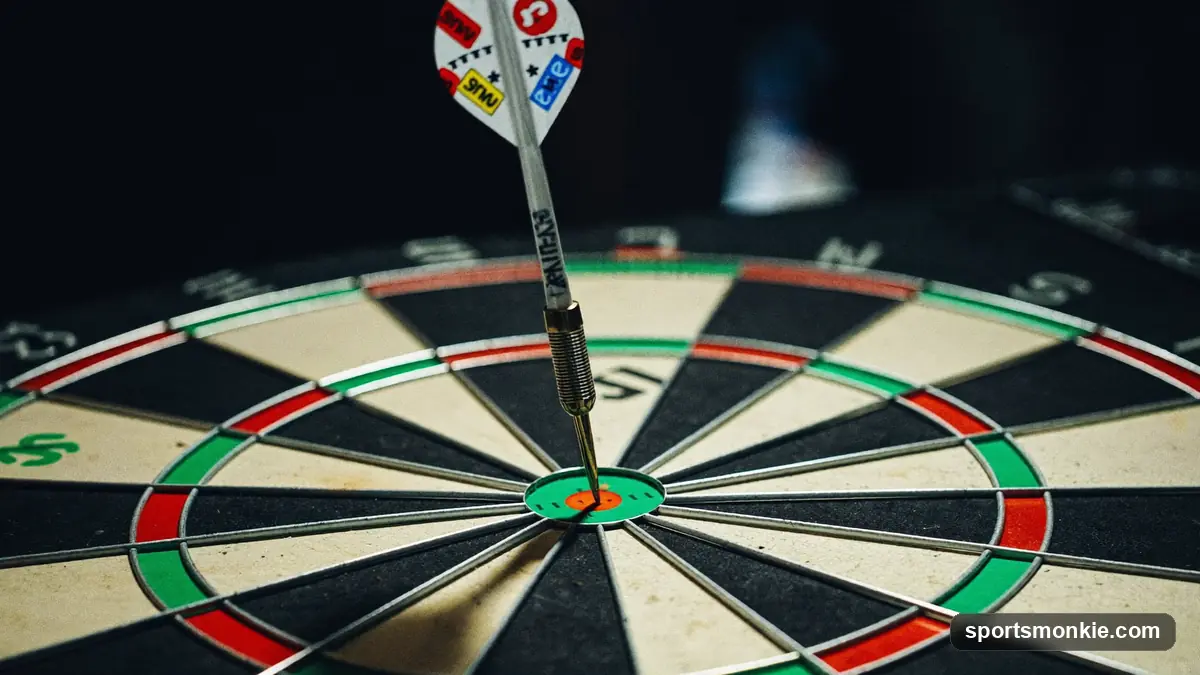
A darts checkout chart shows the recommended dart combinations for finishing a leg of 501 from a given score, always ending on a double or the bullseye. The highest possible three-dart checkout is 170, thrown as treble 20, treble 20 and the bullseye, and everything below it works down through standard routes to the common closing doubles.
In the standard game run by bodies like the Professional Darts Corporation (PDC) and the World Darts Federation (WDF), you start on 501, subtract each turn, and must land your last dart in a double to win. That final requirement is why checkouts matter: you are not just hitting big numbers, you are steering your score toward a finish you can actually close out.
How checkouts work
Every leg of 501 ends the same way. You need to reach exactly zero, and the winning dart has to be a double, meaning the thin outer ring of a number, or the bullseye, which counts as a double 25 (50). Miss low, and if the dart drops you below two or leaves a remainder you cannot halve into a double, it is a “bust” and your score resets to where the turn began.
Because of that, good players think in reverse. From a scoring number like 140 or 100, they pick a route that both lowers the score and leaves a comfortable double, most often double 16 or double 20, on the last dart.
Reading the notation
Checkout charts use a compact shorthand:
- T20 = treble 20 (worth 60)
- D20 = double 20 (worth 40)
- S20 = single 20 (worth 20)
- Bull = bullseye (50, scored as a double)
So a 100 finish written as “T20 D20” means treble 20 for 60, then double 20 for 40.
Standard checkouts from 170 down
The table below lists reliable, commonly used routes. Many scores have more than one valid path; these are standard finishes that keep a makeable double last.
| Score | Standard route |
|---|---|
| 170 | T20 T20 Bull |
| 167 | T20 T19 Bull |
| 164 | T20 T18 Bull |
| 161 | T20 T17 Bull |
| 160 | T20 T20 D20 |
| 158 | T20 T20 D19 |
| 157 | T20 T19 D20 |
| 156 | T20 T20 D18 |
| 154 | T20 T18 D20 |
| 152 | T20 T20 D16 |
| 150 | T20 T18 D18 |
| 148 | T20 T20 D14 |
| 145 | T20 T15 D20 |
| 144 | T20 T20 D12 |
| 141 | T20 T19 D12 |
| 140 | T20 T20 D10 |
| 138 | T20 T18 D12 |
| 136 | T20 T20 D8 |
| 132 | T20 T20 D6 |
| 130 | T20 T20 D5 |
| 121 | T17 T20 D5 |
| 120 | T20 S20 D20 |
| 100 | T20 D20 |
| 40 | D20 |
| 32 | D16 |
Every route above has been chosen to leave a standard finishing double, and each adds up exactly to its score. For the in-between numbers not listed, the principle is the same: score with a treble, then set up a two-dart or one-dart double.
The bogey numbers
A few scores simply cannot be finished in three darts, no matter how you throw. These are the bogey numbers: 169, 168, 166, 165, 163, 162 and 159. If you are left on one of them, the smart play is to score deliberately, for example leaving 170 or a clean number, so your next visit has a real checkout. Recognising bogey numbers is half the value of learning a chart, because it stops you aiming at an impossible out.
Why the chart is worth learning
Memorising a checkout chart is what separates casual throwers from consistent match players. It lets you play “setup” darts under pressure rather than freezing on a big number, and it trains you to always keep a favourite double, usually double 16 or double 20, waiting on the final dart.
If you are still building the basics, our guides to how to play darts and the correct dart board height and distance cover the setup you need before finishes become the priority. For a completely different scoring game on the same board, see our walkthrough of how to play cricket darts, and for inspiration, our roundup of the greatest darts players shows what elite checkout hitting looks like.
The short version: a checkout chart maps the dart routes to finish 501 on a double, 170 is the highest three-dart out (T20 T20 Bull), a handful of numbers from 159 to 169 are unfinishable bogey numbers, and the goal on every visit is to leave yourself a comfortable double last.
Frequently asked questions
What is the highest checkout in darts?+
The highest possible three-dart checkout is 170, taken as treble 20 (60), treble 20 (60) and the bullseye (50). You cannot finish anything above 170 in three darts, because you must end on a double and the maths does not allow it, which is why 501 is often reduced toward that range before a checkout is attempted.
What are the bogey numbers in darts?+
Bogey numbers are scores that cannot be checked out with three darts even in theory: 169, 168, 166, 165, 163, 162 and 159. If you are left on one of these, you deliberately score to leave a finishable number, so a checkout chart helps you plan the score before the finish rather than aiming at an impossible out.
Why must you finish on a double in darts?+
In standard 501 you have to reduce your score to exactly zero and the final dart must land in a double (the thin outer ring) or the bullseye, which counts as a double 25. If a dart takes you below two or leaves an odd remainder that cannot be halved into a double, it is a 'bust' and your score returns to what it was at the start of that turn.
How do you read darts checkout notation?+
The shorthand uses a letter and a number: T20 means treble 20 (worth 60), D16 means double 16 (worth 32), S20 means single 20 (worth 20), and Bull means the bullseye (50, which scores as a double). So a 100 checkout written as T20 D20 means treble 20 for 60, then double 20 for 40 to finish.
Sources
Play & tools
Free browser games and tools — no account, no download.
- Play today's Sports Connections — Today's Sports Connections — daily hints, answers, and play the grid.
- Play Guess the NFL Player — A new mystery NFL player every day. Eight guesses, with a clue on each — plus free unlimited mode.
- Explore all our games →
Related guides
How to Play Darts: Rules and 501 Scoring
How to play darts: the 501 rules, how scoring works, the double-out finish and your first checkout, plus the official oche distance and board height.
What Is a 9-Darter in Darts?
A 9-darter is a perfect leg: finishing 501 in the fewest possible nine darts. How it's done, common routes, how rare it is, and the famous perfect legs.
How to Play Cricket Darts: Rules & Scoring
How to play cricket darts: hit the numbers 15 through 20 and the bullseye three times each to open them, then score before your opponent closes them.

Greatest Darts Players of All Time, Ranked
The greatest darts players ever, ranked by world titles, major wins, peak dominance, longevity and era strength, from Phil Taylor and Eric Bristow to Luke Littler.
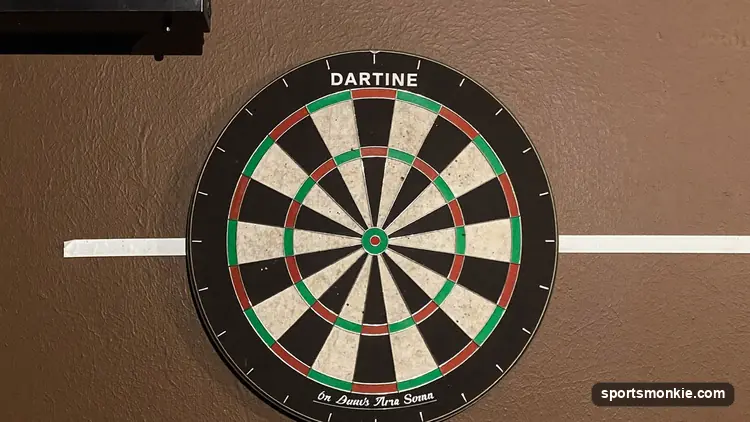
Dart Board Height and Distance Explained
Dart board height is 5 ft 8 in to the bullseye and the oche sits 7 ft 9.25 in back. Full PDC/WDF setup for steel-tip and soft-tip darts.
Best Ways to Throw Darts: A Complete Technique Guide
The best way to throw darts blends a stable grip, steady stance, and smooth follow-through. Master these three basics to boost accuracy at any distance.