
What Is a 9-Darter in Darts?
On this page5
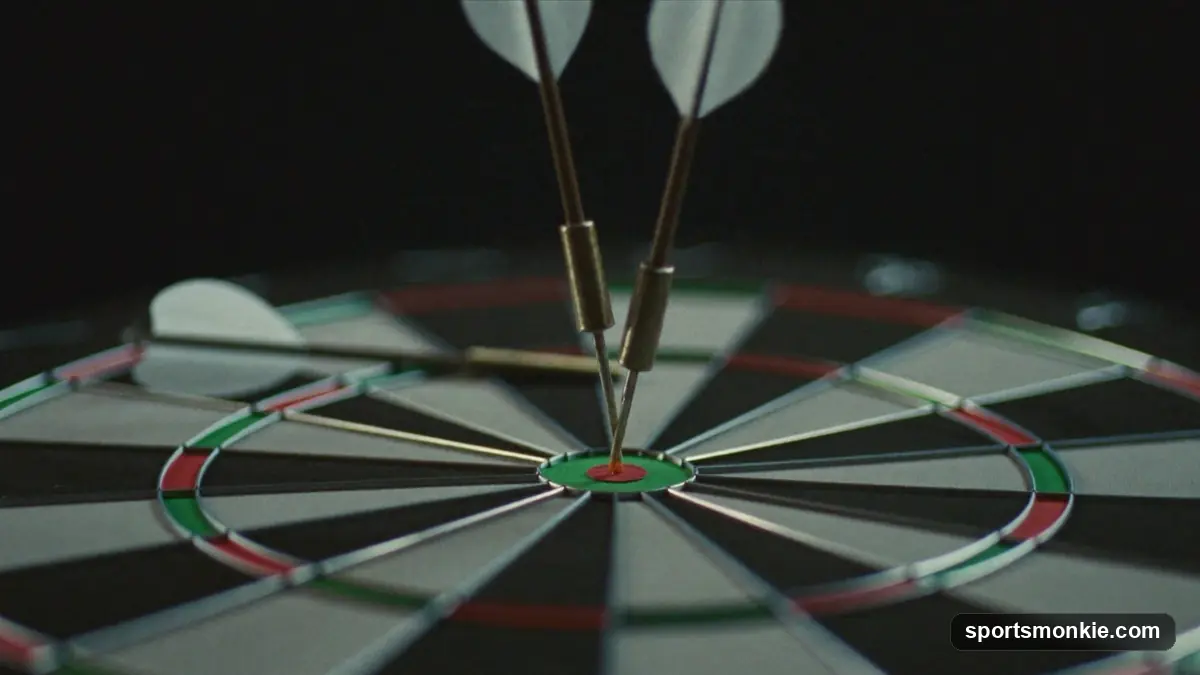
A 9-darter, or nine-dart finish, is a perfect leg of darts: checking out from 501 in the minimum possible nine darts. Because three darts can score at most 180, nine is the fewest throws in which a player can reach zero and finish on a double, making the nine-darter darts’ version of a perfect game.
It is the achievement every darts player dreams of and most never manage. Here is exactly why nine is the minimum, how a perfect leg is thrown, how rare it really is, and the famous names attached to it.
Why nine is the minimum
Standard professional darts is played from 501 down to exactly zero, and the winning dart must land in a double. The highest score possible with three darts is 180 — three treble 20s. So the quickest anyone can whittle 501 to zero is by scoring big and finishing cleanly:
- Three darts: up to 180
- Six darts: up to 360
- Nine darts: enough to clear 501 and land the final dart on a double
You cannot do it in eight, because eight darts cannot both cover 501 and end on a double. Nine is the mathematical floor, which is why a nine-darter is called a “perfect leg.”
The classic route
There are several valid paths to a nine-darter, but one is by far the most common.
| Visit | Darts | Score | Remaining |
|---|---|---|---|
| First | T20, T20, T20 | 180 | 321 |
| Second | T20, T20, T20 | 180 | 141 |
| Third | T20, T19, D12 | 141 | 0 |
Two maximums leave 141, and a 141 checkout of treble 20 (60), treble 19 (57) and double 12 (24) closes the leg. Other routes exist — for instance 180, 177 and 144, or finishes built around treble 17 — but the principle is always the same: score maximums early, then hit a perfect three-dart checkout on a double. If you want to understand the finishing side in depth, our darts checkout chart maps the routes to close out a leg from any score.
How rare is it?
A nine-darter is rare but not mythical in the modern game. Elite professionals produce a small number of televised nine-darters each season, and many more happen in non-broadcast events and in practice. Measured against the huge number of legs played, though, a perfect leg is still a highlight-reel moment — it demands perfect scoring with no wasted darts and a flawless checkout, where a single missed treble or double ends the attempt.
For amateur players, hitting a nine-darter is often the achievement of a lifetime, precisely because there is zero margin for error across all nine throws.
The famous perfect legs
The nine-darter has produced some of darts’ greatest moments. John Lowe hit the first televised nine-dart finish in 1984, earning a large prize for the feat. Phil Taylor famously hit two nine-darters in a single televised match, and Michael van Gerwen produced a celebrated one on the World Championship stage. In 2021, Fallon Sherrock became the first woman to hit a televised nine-darter, a landmark for the sport.
These moments are a big part of why the perfect leg is so revered, and they feature prominently among the achievements of the sport’s greatest players.
Building toward the perfect leg
You cannot practise a nine-darter directly, but you can build the two skills it needs: relentless treble-20 scoring and reliable checkouts on the doubles you finish on. If you are still learning the game’s format and setup, our beginner’s guide to how to play darts covers the 501 format, the double-out rule and the board layout that make the nine-darter possible.
The short version: a nine-darter is a perfect leg — finishing 501 in the fewest possible nine darts, ending on a double. The classic route is 180, 180 and a 141 checkout, it is rare enough to be a career highlight, and its history runs from John Lowe’s 1984 first to Fallon Sherrock’s televised breakthrough in 2021.
Frequently asked questions
How rare are nine-dart finishes?+
They are rare but no longer once-in-a-lifetime. In the professional era, top players hit a handful of televised nine-darters across a season, and many more happen in non-televised events and practice. Still, relative to the number of legs played, a nine-darter is a genuine highlight — it requires perfect scoring and a flawless checkout with zero margin for a single missed treble or double. For amateurs, hitting one is a career-defining moment.
What is harder, a 147 or a nine-darter?+
Both are the 'perfect' achievement in their sport, so it is largely subjective. A snooker 147 requires around 36 consecutive pots with perfect positioning; a nine-darter requires nine perfect throws with no room for error and only two doubles' worth of finishing margin. Many argue the nine-darter is harder to repeat because it depends on hitting tiny treble and double beds under pressure, but both are elite feats that most players never manage even once.
How do you do a nine-dart finish?+
You must reduce 501 to zero in nine darts, ending on a double. The classic route is two visits of 180 (six treble 20s) leaving 141, then a 141 checkout of treble 20, treble 19 and double 12. Other routes exist — for example 180, 177 and 144, or paths using treble 17 — but every nine-darter needs maximum scoring early and a clean three-dart finish on a double to close it out.
Has a woman ever hit a nine-darter?+
Yes. Fallon Sherrock is widely recognised as the first woman to hit a nine-dart finish in a televised event, achieving it at the 2021 Nordic Darts Masters. Her perfect leg was a landmark moment for women's darts and one of the sport's most talked-about achievements. Other female players have since produced perfect legs in various events, but Sherrock's televised nine-darter remains the historic first.
Sources
Play & tools
Free browser games and tools — no account, no download.
- Play today's Sports Connections — Today's Sports Connections — daily hints, answers, and play the grid.
- Play Guess the NFL Player — A new mystery NFL player every day. Eight guesses, with a clue on each — plus free unlimited mode.
- Explore all our games →
Related guides

Darts Checkout Chart: Every Finish From 170
A darts checkout chart shows the dart routes to finish a 501 leg on a double. Standard finishes from 170 down, bogey numbers, and how to read the notation.
How to Play Cricket Darts: Rules & Scoring
How to play cricket darts: hit the numbers 15 through 20 and the bullseye three times each to open them, then score before your opponent closes them.
How to Play Darts: Rules and 501 Scoring
How to play darts: the 501 rules, how scoring works, the double-out finish and your first checkout, plus the official oche distance and board height.

Greatest Darts Players of All Time, Ranked
The greatest darts players ever, ranked by world titles, major wins, peak dominance, longevity and era strength, from Phil Taylor and Eric Bristow to Luke Littler.
Dart Board Height and Distance Explained
Dart board height is 5 ft 8 in to the bullseye and the oche sits 7 ft 9.25 in back. Full PDC/WDF setup for steel-tip and soft-tip darts.
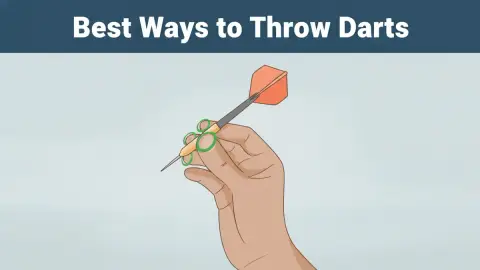
Best Ways to Throw Darts: A Complete Technique Guide
The best way to throw darts blends a stable grip, steady stance, and smooth follow-through. Master these three basics to boost accuracy at any distance.