
The Restricted Area in Basketball
On this page6
The restricted area in basketball is the small semicircle painted on the floor directly under the basket, marked by an arc that in the NBA extends four feet from the center of the rim. Its job is to stop defenders from parking right beneath the hoop and drawing a charging foul on players driving to the basket.
That single arc settles some of the most contentious calls in the game, the block-or-charge collisions at the rim. Here is exactly what the restricted area is, why it exists, and how it changes what a defender is allowed to do.
What the restricted area is
Look under any NBA basket and you will see a painted arc that forms a half-circle around the hoop. That is the restricted area. In the NBA the arc sits four feet from the center of the basket, creating a small no-charge zone directly beneath the rim.
The line matters because it defines where a defender may legally take a charge. Inside the arc is a protected space for the offense; outside it, normal charge rules apply.
Why the rule exists
Before rim-protection rules like this, defenders could simply stand underneath the basket and wait for a driving player to crash into them, drawing a charge and wiping out the attack. That was both dangerous, players landing on a defender planted under the rim, and bad for the game, since it punished exactly the aggressive drives fans love.
The restricted area fixes that. By carving out a zone where a defender cannot draw a charge, the rule rewards attacking players who beat their defender to the rim and discourages defenders from camping helplessly under the basket. It shifts the balance back toward the offense in the area right at the hoop.
How the no-charge rule works
The core rule is straightforward: if a defender is inside the restricted-area arc when he makes contact with an airborne offensive player driving to the basket, he cannot be awarded a charge. Instead, officials call a blocking foul on the defender, or, sometimes, no foul at all.
For a defender to legally take a charge on such a play, both of his feet must be set outside the arc before the contact. This is why you often see help defenders sprint out to the edge of the paint and plant themselves just beyond the line, they are trying to get outside the restricted area so a charge can count.
There are limits to the rule. It is designed mainly for the airborne shooter driving to the rim, and it does not turn every contact under the basket into a block. Officials still judge each play, but the arc gives them a clear boundary for the block-or-charge decision.
Block or charge: how the arc decides
The block/charge call is one of the hardest in officiating, and the restricted area is the deciding factor at the rim.
| Situation | Defender’s feet | Likely call |
|---|---|---|
| Airborne driver hits set defender | Outside the arc | Charge (offensive foul) |
| Airborne driver hits defender under rim | Inside the arc | Block (defensive foul) |
| Defender still moving into position | Anywhere | Block (defensive foul) |
| Defender set, contact away from rim | N/A (no restricted area) | Charge if legally set |
Reading across, the same collision can be a charge or a block depending on one thing, where the defender’s feet are relative to the arc. That is what makes the restricted area so decisive: it converts a subjective judgment into a line on the floor officials can point to.
How it fits with basketball’s other rim rules
The restricted area is part of a family of rules governing the most crowded part of the court. It works alongside concepts like goaltending in basketball, which protects shots on their way down, and the fouls that shape play, including what a technical foul is. All of them exist to keep play at the rim fair and safe.
Understanding the arc also helps you appreciate why players and coaches argue block/charge calls so fiercely, a single foot on the wrong side of the line can swing possession and free throws. It sits alongside other spatial and timing rules such as the shot clock and double dribble that together define legal play.
The short version
The restricted area is the four-foot semicircle under the basket where a defender cannot draw a charge. If a defender is inside the arc when he collides with an airborne player driving to the rim, the call is a blocking foul on the defender, not a charge. A defender must set his feet outside the arc to legally take a charge, which is why the little painted line settles some of basketball’s most heated block/charge debates.
Frequently asked questions
What is the restricted area in the NBA?+
The restricted area is the semicircle painted under each basket, defined by an arc that extends four feet from the center of the rim. It exists to stop defenders from planting themselves directly beneath the hoop to draw charges. When a defender is inside this arc and collides with an airborne offensive player driving to the basket, he cannot be awarded a charge, the contact is ruled a blocking foul on the defender instead, or nothing at all. It is one of the most important rules governing play at the rim.
Can you get a charge in the restricted area?+
No, a defender standing inside the restricted area generally cannot draw a charging foul against a player driving to the basket. If contact occurs there with an airborne shooter, officials call a blocking foul on the defender rather than a charge. The whole point of the arc is to prevent defenders from camping under the rim to take charges. A defender must have both feet outside the restricted area to legally take a charge on such a play.
How does the restricted area work?+
It works as a no-charge zone. The arc marks how close to the basket a defender can be and still legally draw a charge. If the defender's feet are inside the arc when he takes contact from an airborne driver, he forfeits the charge and is called for a blocking foul. If his feet are set outside the arc, a charge can still be called as normal. There are exceptions, the rule mainly applies to airborne shooters driving to the rim, and does not cover every contact under the basket.
What is the difference between a charge and a block?+
A charge is an offensive foul: the ball-handler runs into a defender who has established a legal, set position, so the offense is penalized. A block is a defensive foul: the defender is not set, is still moving, or is in an illegal spot, so the defender is penalized. The restricted area tips this call, because a defender inside the arc cannot draw a charge, contact there with an airborne driver is ruled a block on the defender even if he looks stationary.
Sources
Play & tools
Free browser games and tools — no account, no download.
- Play 82-0 — Draft five, one per position, and see if your lineup can go a flawless NBA season.
- Play Era Ball — Draft an all-time NBA roster from a single era, then simulate a season and chase a perfect run.
- Play 32-0 — Draft five college basketball legends, one per position, and chase a perfect 32-0 national title.
- Explore all our games →
- Get the printable bracket — Download and print a blank tournament bracket to fill out by hand.
- Open the TS% calculator — Calculate TS% from points, field goal attempts and free throw attempts — scoring efficiency in one number.
- Explore all our free sports tools →
Related basketball guides
View all →
Basketball Positions Explained: All 5 Roles, Numbers & Duties
Basketball positions explained: point guard, shooting guard, small forward, power forward, and center — roles, the 1-5 numbering, and positionless basketball.
What Is a Fadeaway in Basketball? Technique, History & Best Shooters
A fadeaway in basketball is a jump shot taken while leaping backward, away from the defender, to create space. How it works, technique, and top shooters.
What Is an And-One in Basketball?
An and-one is when a player is fouled while making a basket and earns one free throw for a possible three-point play. How it works, explained.
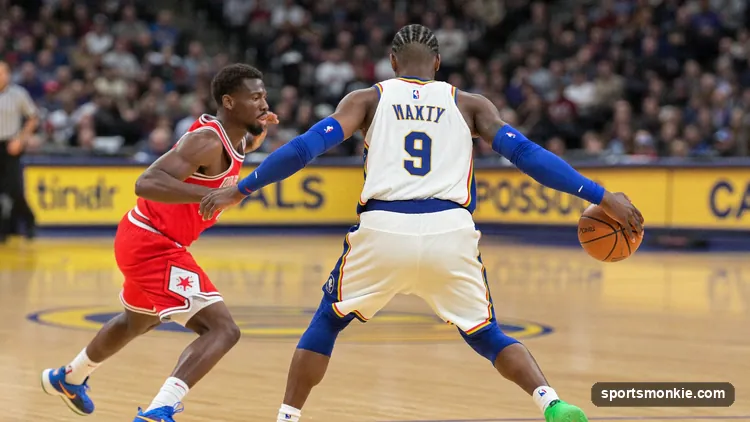
What Is a Charge in Basketball? Charge vs. Block
A charge is an offensive foul called when a ball handler runs into a defender who has established legal guarding position. Here's the charge vs. block rule.

What Is a Heat Check in Basketball?
A heat check is a bold, often difficult shot a player takes after making several in a row to test if they're truly 'on fire.' The term explained.
Ben Simmons Tears Right Achilles in Kings Practice, Three Days Before the Season Opener
The Kings said an MRI confirmed Ben Simmons tore his right Achilles tendon in a practice drill on Sunday. Surgery is next, and ESPN reports his comeback season is likely over.