
What Is a Technical Foul in Basketball?
On this page5
A technical foul in basketball is a penalty called for unsportsmanlike conduct or a rules violation that does not involve legal contact between players — unlike a contact foul such as a charge — and it awards the opposing team a free throw. Where a personal foul punishes illegal contact like a shove or a reach-in, a technical punishes behaviour, arguing with a referee, taunting, hanging on the rim, or procedural mistakes like having too many players on the floor.
That distinction, conduct versus contact, is the key to understanding the whole rule. Under the NBA rulebook and the college and high-school codes overseen by bodies like the NCAA and NFHS, technicals exist to keep the game orderly and respectful. Here is how they work, what triggers them and when they lead to an ejection.
Technical foul vs personal foul
Most fouls in basketball are personal fouls: illegal contact on a shooter, a defender, or a screener. They accumulate toward a player fouling out (six in the NBA, five in college) and put the other team in the bonus for free throws.
A technical foul is a different animal. It is charged for conduct or a game-management breach, and in the pros it does not count toward the six personal fouls that disqualify a player. It does, however, carry its own ejection track: two technicals and you are gone. Think of the two systems as running in parallel, one policing contact, the other policing behaviour and procedure.
What triggers a technical
Technicals fall into two broad buckets. Understanding both makes the calls far less mysterious.
- Unsportsmanlike conduct. Arguing a decision, using profanity toward officials, taunting an opponent, excessive complaining, or disrespectful gestures. This is the category fans see most, especially from vocal stars.
- Administrative and procedural violations. Delay of game, calling a timeout your team does not have, having too many players on the court, or hanging on the rim without cause. These are less dramatic but just as chargeable.
A player does not have to be angry to earn one. Hanging on the rim after a dunk, for instance, is a technical unless a referee judges the player did it to avoid landing on someone. The rule is about the act, not the intent behind it.
There is also a related but distinct call worth knowing: the defensive three-second violation and other administrative technicals in the NBA, which are charged against a team rather than pinned to a player’s ejection count. These keep the game flowing and punish stalling or illegal positioning without treating them as misconduct. The common thread across all of them is that no legal basketball contact is involved; something about behaviour, positioning or procedure crossed a line the rulebook draws.
The penalty, step by step
When a technical is called, the sequence is consistent across levels, with small differences in how many shots are awarded.
| Element | NBA | College (NCAA) |
|---|---|---|
| Free throws awarded | 1 | 2 |
| Who shoots | Any player on the floor for the opponent | Any player on the floor for the opponent |
| Possession after | Team retains its prior possession | Shooting team’s possession follows in most cases |
| Counts toward foul-out | No | No (charged separately) |
| Ejection threshold | 2 technicals | 2 technicals |
Because the shots go to the other team and can flip momentum, coaches often coach restraint: a technical for arguing a call not only gives away a point or two but can hand the opponent the ball as well.
Ejections and season penalties
Two technical fouls in a single game means automatic ejection in both the NBA and college basketball. That is the rule that turns a heated exchange into an early shower.
The NBA layers a season-long system on top. Once a player accumulates a set number of technicals across the year, each additional one brings a fine and eventually a one-game suspension, escalating as the total climbs. This is designed to discourage repeat offenders rather than punish a single bad night. Certain acts, fighting, violent contact, egregious taunting, can also be ruled a flagrant foul or a single ejecting technical on their own, so a player can be tossed on one call if it is serious enough.
Where technicals fit among basketball’s rules
Technicals are one piece of a larger rulebook that governs contact, time and space. They sit alongside violations that also stop play without being contact fouls, like goaltending in basketball, which penalises interfering with a shot on its downward flight, and the shot clock, which forces the offense to attempt a shot within a set time. A double dribble is another non-contact violation, though it results in a turnover rather than a free throw.
The behavioural side of the game matters more than casual fans assume. A team that keeps its composure protects free points and possessions, which is why coaches drill emotional discipline as hard as they drill a pick and roll. Losing a starter to two technicals in a close game can decide it.
The short version: a technical foul punishes conduct or a procedural rule break rather than illegal contact, it hands the other team a free throw (one in the NBA, two in college), it does not count toward fouling out, and two in a game gets you ejected.
Frequently asked questions
What is an example of a technical foul in basketball?+
Common examples include arguing a call and using profanity toward a referee, taunting an opponent, hanging on the rim after a dunk without being pushed to do so, calling a timeout when none remain, and having too many players on the court. Bench conduct counts too: a coach yelling at officials or a substitute leaving the bench area during an altercation can all draw a technical.
How many technical fouls before ejection?+
In the NBA and NCAA, two technical fouls in a single game result in automatic ejection. The NBA also tracks technicals across the season: once a player reaches a set league threshold, additional technicals trigger suspensions. Certain severe acts are ruled flagrant or a single ejecting technical on their own, so one call can end a night if it is serious enough.
What counts as a technical foul?+
Two broad categories: unsportsmanlike conduct (arguing, taunting, profanity, disrespectfully addressing an official, excessive celebration) and administrative or procedural violations (delay of game, illegal defense in some leagues, too many players, calling an unavailable timeout, hanging on the rim). The unifying idea is that a technical is not about legal basketball contact, it is about behaviour or breaking a game-management rule.
Why did Luka get a technical?+
Players like Luka Doncic most often draw technicals for complaining to referees, using demonstrative gestures after a no-call, or aggressively questioning a decision. Star guards who dispute officiating frequently are common targets because the rule covers disrespectfully addressing or gesturing at officials, regardless of how justified the player feels the complaint is.
Sources
Play & tools
Free browser games and tools — no account, no download.
- Play 82-0 — Draft five, one per position, and see if your lineup can go a flawless NBA season.
- Play Era Ball — Draft an all-time NBA roster from a single era, then simulate a season and chase a perfect run.
- Play 32-0 — Draft five college basketball legends, one per position, and chase a perfect 32-0 national title.
- Explore all our games →
- Get the printable bracket — Download and print a blank tournament bracket to fill out by hand.
- Open the TS% calculator — Calculate TS% from points, field goal attempts and free throw attempts — scoring efficiency in one number.
- Explore all our free sports tools →
Related basketball guides
View all →
Goaltending in Basketball: The Rule Explained
Goaltending in basketball is touching a shot on its way down above the rim. What separates a legal block from a goaltend, plus basket interference.
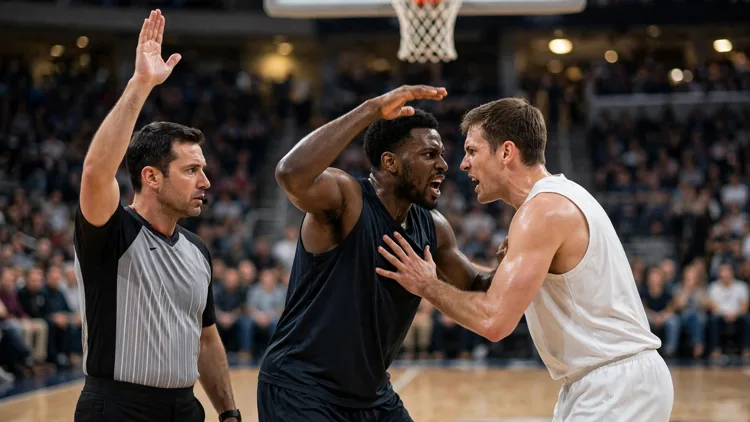
Jokic Gets the Technical After Hayes Shoves Him First in Nuggets-Jazz Preseason Clash
Jaxson Hayes shoved Nikola Jokic to create space in the second quarter in Utah, no foul was called, and Jokic's retaliation drew the technical in Denver's 117-106 win.
Scottie Barnes Gets First Push-Off Call as NBA's New Emphasis Debuts in Preseason Opener
Scottie Barnes was whistled for an off-arm push-off inside two minutes of the Raptors' preseason opener, the first call under the NBA's new point of emphasis.
What Is a Flagrant Foul in Basketball?
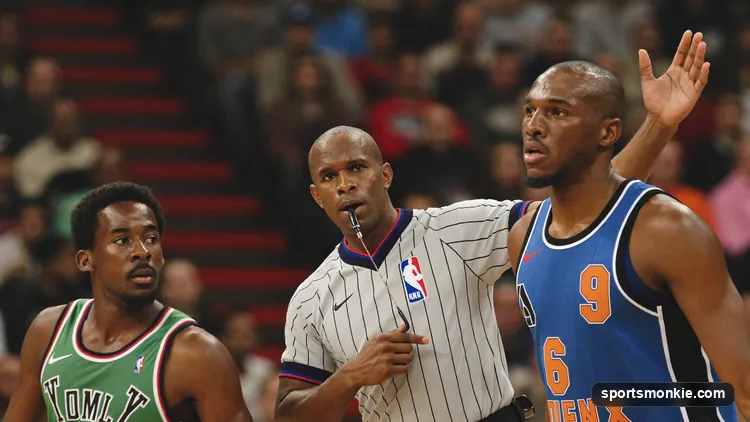
A flagrant foul is unnecessary or excessive contact against an opponent. Flagrant 1 gives free throws and possession; Flagrant 2 adds an automatic ejection.
Brunson Gets a Flopping Technical After a Gobert Push and Calls It 'Bulls---'
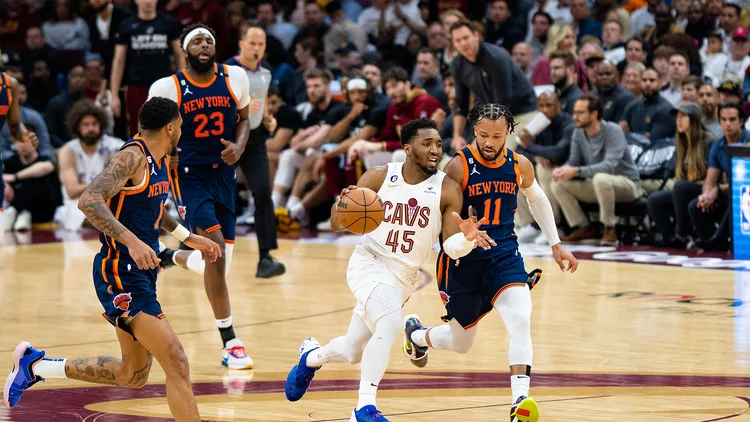
Jalen Brunson was pushed in the back by Rudy Gobert, sprawled forward, and was then called for flopping in the Knicks' preseason loss to Minnesota.
Technical Foul vs Flagrant Foul in Basketball
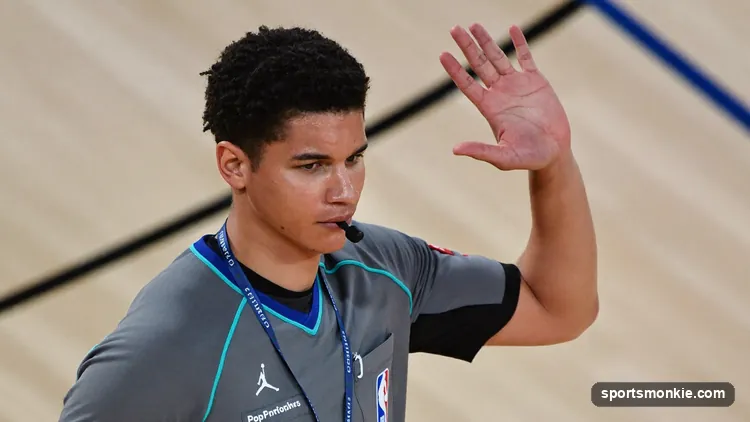
Technical fouls punish unsporting or procedural conduct; flagrant fouls involve excessive or unnecessary contact and carry different penalties.