
What Is a Flagrant Foul in Basketball?
On this page5
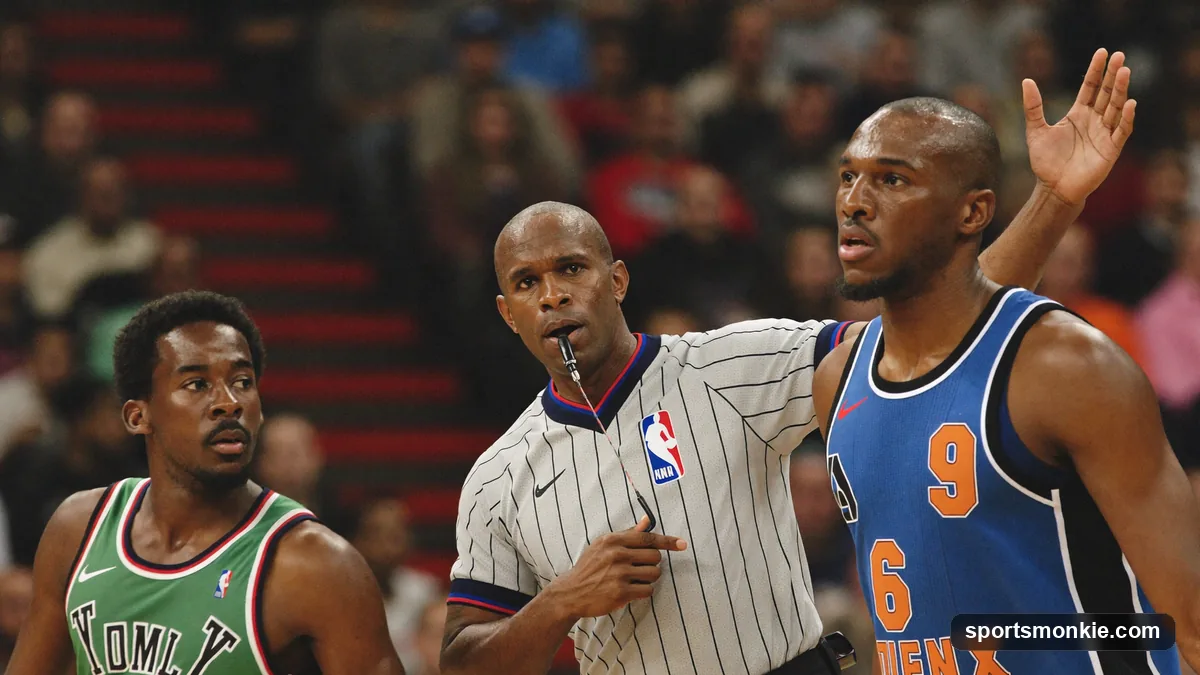
A flagrant foul is unnecessary or excessive contact against an opponent — not a normal basketball play. It comes in two levels: a Flagrant 1 (unnecessary contact) gives the fouled team free throws and possession; a Flagrant 2 (unnecessary and excessive) adds an automatic ejection. The rule exists to protect players from dangerous plays.
The two levels
The whole flagrant system hinges on the difference between “unnecessary” and “unnecessary and excessive.”
| Level | Contact | Penalty |
|---|---|---|
| Flagrant 1 | Unnecessary | 2 free throws + possession; player stays |
| Flagrant 2 | Unnecessary AND excessive | 2 free throws + possession + ejection |
Two Flagrant 1 fouls in one game also equal an ejection, so the penalties stack.
Why the penalty is so costly
A flagrant is unusually punishing because the fouled team gets both free throws and the ball back — a swing most fouls do not produce. That combination is deliberate: it makes reckless contact expensive and discourages players from committing it, protecting shooters and drivers from dangerous hits.
Flagrant vs. technical
A flagrant is about dangerous physical contact; a technical foul is usually about conduct — arguing, taunting, unsportsmanlike acts — often with no contact at all. In a heated game the two can appear together, but they address different things: behavior versus dangerous play.
Review and league discipline
Officials can use replay to decide whether a foul is common, Flagrant 1, or Flagrant 2, and the league office can review afterward to upgrade, downgrade, or add a suspension. In the playoffs, accumulated “flagrant points” can trigger an automatic one-game ban, adding a layer of deterrence beyond the game itself.
Why it matters
The flagrant rule is the league’s main tool for keeping physical play from becoming dangerous, and it can swing momentum with its free-throws-plus-possession penalty. Understanding the two levels is key to reading tense, physical games — explore more in our basketball guides.
Frequently asked questions
What is a flagrant foul in basketball?+
A flagrant foul is a personal foul that involves unnecessary contact against an opponent, judged to go beyond a normal attempt to play the ball or make a basketball move. The fouled team is awarded free throws and keeps possession afterward. The rule exists to punish and deter reckless or dangerous contact that could injure a player, separate from ordinary fouls.
What is the difference between a Flagrant 1 and Flagrant 2?+
A Flagrant 1 is unnecessary contact: the fouled team gets two free throws and possession, but the offending player stays in the game. A Flagrant 2 is unnecessary AND excessive contact — a harder, more dangerous act — and adds an automatic ejection on top of the free throws and possession. Accumulating flagrant points across the playoffs can also trigger a suspension.
Does a flagrant foul mean ejection?+
Only a Flagrant 2 carries an automatic ejection. A Flagrant 1 does not eject the player, though two Flagrant 1 fouls in the same game equal an ejection. This tiering lets officials distinguish between contact that is unnecessary but not dangerous and contact that is both unnecessary and excessive, applying the harsher penalty only to the most serious plays.
How is a flagrant foul different from a technical foul?+
A [technical foul](/what-is-a-technical-foul-in-basketball/) is usually for conduct — arguing, taunting, unsportsmanlike behavior — and often involves no contact. A flagrant foul is specifically about excessive or unnecessary physical contact against an opponent. They can overlap in heated moments, but the technical addresses behavior while the flagrant addresses dangerous contact during a play.
Are flagrant fouls reviewable?+
Yes. Officials can go to instant replay to determine whether a foul is common, a Flagrant 1, or a Flagrant 2, and to make sure the right penalty and any ejection are applied. Because the severity level carries very different consequences, review is used to get the call right, especially late in close games and in the playoffs.
What happens after a flagrant foul?+
The fouled team shoots free throws — typically two — and then also gets possession of the ball, an unusual combination that makes a flagrant costly for the offending team. For a Flagrant 2, the offending player is ejected as well. The league office can also review flagrant fouls after the game and upgrade, downgrade, or add discipline.
Can a flagrant foul lead to a suspension?+
Yes, indirectly. The league tracks 'flagrant foul points' during the playoffs, and reaching set thresholds triggers an automatic one-game suspension. The league can also suspend a player directly for an especially dangerous act after review. So beyond the in-game penalty, flagrant fouls carry potential league discipline, particularly in the postseason.
Sources
Play & tools
Free browser games and tools — no account, no download.
- Play 82-0 — Draft five, one per position, and see if your lineup can go a flawless NBA season.
- Play Era Ball — Draft an all-time NBA roster from a single era, then simulate a season and chase a perfect run.
- Play 32-0 — Draft five college basketball legends, one per position, and chase a perfect 32-0 national title.
- Explore all our games →
- Get the printable bracket — Download and print a blank tournament bracket to fill out by hand.
- Open the TS% calculator — Calculate TS% from points, field goal attempts and free throw attempts — scoring efficiency in one number.
- Explore all our free sports tools →
Related basketball guides
View all →
What Is a Charge in Basketball? Charge vs. Block
A charge is an offensive foul called when a ball handler runs into a defender who has established legal guarding position. Here's the charge vs. block rule.
What Is the Shot Clock in Basketball?
The shot clock forces a team to attempt a shot within a set time, 24 seconds in the NBA. Learn how it works, the reset rules, and why it changed the game.
Technical Foul vs Flagrant Foul in Basketball
Technical fouls punish unsporting or procedural conduct; flagrant fouls involve excessive or unnecessary contact and carry different penalties.

What Is a 10-Day Contract in the NBA?
A 10-day contract is a short NBA deal covering up to 10 days or three games. How the pay works, the two-contract limit and why teams use them, explained.
What Is a Technical Foul in Basketball?
A technical foul penalizes unsportsmanlike conduct or rule breaches, not contact, and gives the other team a free throw. Rules, examples and ejections.

What Is Traveling in Basketball? Footwork Rules Explained
Traveling is an illegal movement with the ball caused by taking extra steps or moving the pivot foot beyond what the basketball rules allow.