
What Is a Heat Check in Basketball?
On this page6
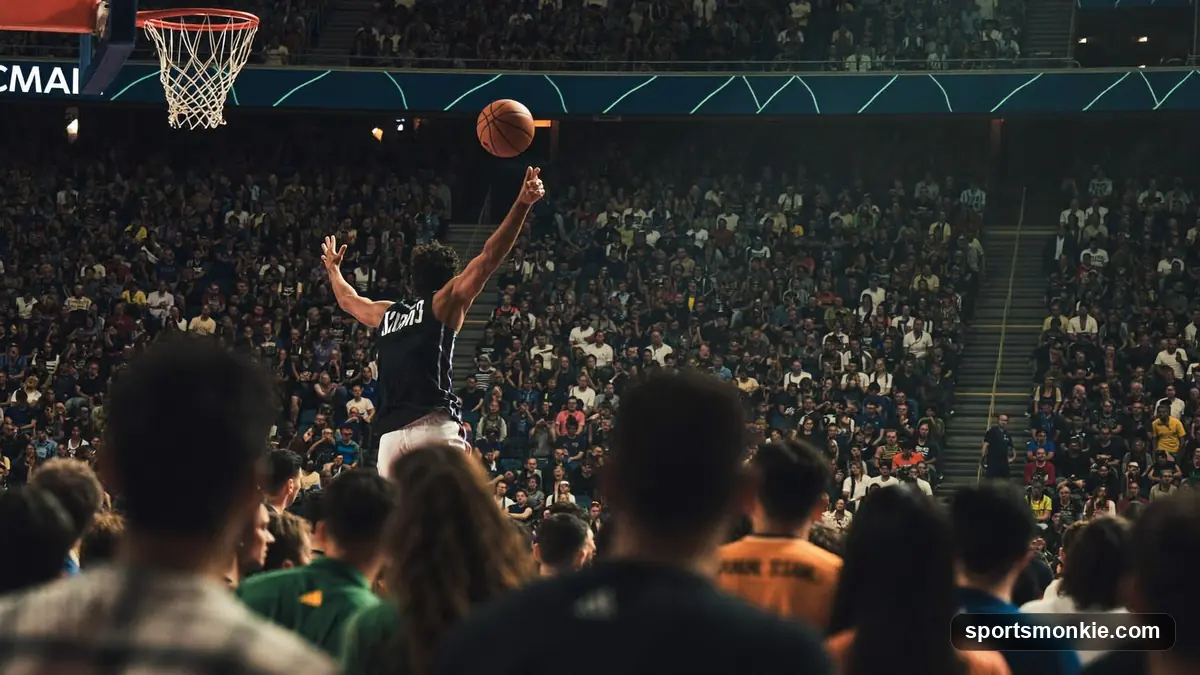
A heat check in basketball is a bold, usually difficult shot a player takes right after making several in a row, deliberately testing whether they are still “on fire.” The idea is simple: the shooter is checking their own heat, launching a tougher-than-normal attempt to confirm they are in a rhythm where almost anything they throw up will fall.
You will not find “heat check” in any rulebook. It is a piece of basketball culture, born on playgrounds and popularised by NBA broadcasts and video games, that describes one of the most human parts of the sport: momentum, confidence and the gambler’s instinct to keep pressing when things are going well. Here is exactly what a heat check is, where it comes from, and when it is a smart play versus a selfish one.
What a heat check actually is
Picture a guard who has just drained three straight jump shots. The defense is rattled, the crowd is rising, and the player feels, in the well-worn phrase, like they cannot miss. On the very next possession, instead of taking the open, sensible shot, they pull up from several feet behind the three-point line with a defender in their face. That extra-difficult attempt is the heat check.
The defining features are consistent:
- It follows a hot streak. A heat check only exists after a player has already made several shots in a row.
- It is harder than a normal shot. Deeper range, quicker trigger, tighter coverage, or all three.
- It is a test. The player wants to know whether the hot streak is real enough to keep exploiting.
If it drops, the message to everyone watching is unmistakable: this player is locked in, and the defense is in trouble. If it clangs, it was simply a low-percentage shot, the kind coaches grit their teeth through.
Where the term comes from
The language of a hot shooter runs all through basketball. Players “heat up,” get “in a zone,” or are said to be “on fire.” A heat check is the natural companion to that vocabulary, it is literally a check of how much heat the shooter has. The phrase gained mainstream traction through television commentary, where announcers narrate a scorer’s run, and through basketball video games, which turned “on fire” into a visible, celebrated state. Over time the shot itself earned the name.
Heat check vs a normal shot
The difference is best seen side by side.
| Factor | Normal shot | Heat check |
|---|---|---|
| When it’s taken | Any time in a possession | Right after several makes in a row |
| Shot difficulty | Within the offense, good look | Deliberately harder, often contested/deep |
| Main driver | The play design | Confidence and momentum |
| If it misses | Routine | A low-percentage gamble |
| If it makes | Two or three points | Two or three points plus a momentum swing |
Reading across, the points on the scoreboard are identical, a made three counts the same either way. What changes is the risk taken to get them and the psychological jolt a made heat check delivers to both benches.
When a heat check is smart, and when it isn’t
The honest answer to “is a heat check a good idea?” is that it depends entirely on context. Coaches live with heat checks from proven, high-usage scorers during a genuine hot streak, because those players tilt the math: their tough-shot percentage in a rhythm is high enough, and a make can break a close game open. The same shot from a role player who has made one bucket, or early in the clock with a wide-open teammate available, is a bad decision dressed up as confidence.
There is also a defensive reading here. A team that keeps giving up heat checks may be closing out too slowly or losing track of a hot hand. Just as good defenses adjust their coverage to a scorer catching fire, they will also crowd a known streaky shooter to force the ball out of their hands, a chess match similar to how teams defend the pick-and-roll to take away a preferred option.
The psychology of the hot hand
Heat checks sit at the center of one of sport’s longest debates: the “hot hand.” Players and fans are convinced that makes beget makes, that a shooter genuinely rides a wave. Statisticians have argued for decades over how much of that is real versus perception. What is not in dispute is that belief in the hot hand changes behavior on the floor: a player who feels hot shoots more, and shoots harder shots, which is exactly the heat check in action. Whether or not the streak is statistically “real,” the confidence it produces is a real force in a game.
That confidence is why the biggest heat checks are so memorable. A deep, off-balance three that somehow rips through the net does more than add points; it can deflate an opponent and energise an arena, which is part of what makes scoring runs so central to the flow of the game. The best pure scorers in NBA history built their reputations partly on stretches where they seemed unguardable, taking, and making, shots no coach would draw up.
The bottom line
A heat check is one of basketball’s most entertaining rituals: a confident scorer, riding a hot streak, daring themselves to take, and make, a shot they have no business attempting. It is not in the rules and it is not a formal statistic. It is a moment of momentum and swagger. When it works, it is electric. When it does not, it is just a bad shot, and the difference between the two is timing, personnel and the razor-thin margin between confidence and recklessness.
Frequently asked questions
What does a heat check mean?+
A heat check means a player who has just made several shots in a row takes an extra, deliberately harder shot to confirm they are truly 'hot.' It is the player checking their own heat: if the tough shot goes in, it signals they are in a rhythm where almost anything falls. The shot is usually deeper, quicker or more contested than a normal look, and it is driven by confidence and momentum rather than by the play the coach drew up.
Where does the term heat check come from?+
The phrase comes from the idea of being 'hot' or 'on fire,' basketball slang for a player who cannot seem to miss. A 'heat check' is literally a check of how hot the shooter is. The term spread through NBA broadcasts, playground culture and video games, where a scorer who buries several jumpers is said to be heating up before the next audacious attempt tests just how hot they really are.
Is a heat check a good or bad shot?+
It depends who takes it and when. From an elite, rhythm scorer during a genuine hot streak, a heat check can extend momentum and demoralise the opponent, so coaches accept it. From a role player, or early in a possession with better options available, the same low-percentage shot is a bad decision. The shot is only 'good' in context: the right player, a real hot streak, and a moment where a made basket swings the game.
What is the difference between being hot and taking a heat check?+
Being hot describes the streak itself, making several shots in a row and feeling unguardable. A heat check is the specific next shot a player takes to test that streak, usually harder than the ones that got them hot. In short, the hot streak is the state, and the heat check is the deliberate gamble a confident scorer makes to see if the state is still holding.
Sources
Play & tools
Free browser games and tools — no account, no download.
- Play 82-0 — Draft five, one per position, and see if your lineup can go a flawless NBA season.
- Play Era Ball — Draft an all-time NBA roster from a single era, then simulate a season and chase a perfect run.
- Play 32-0 — Draft five college basketball legends, one per position, and chase a perfect 32-0 national title.
- Explore all our games →
- Get the printable bracket — Download and print a blank tournament bracket to fill out by hand.
- Open the TS% calculator — Calculate TS% from points, field goal attempts and free throw attempts — scoring efficiency in one number.
- Explore all our free sports tools →
Related basketball guides
View all →
Basketball Positions Explained: All 5 Roles, Numbers & Duties
Basketball positions explained: point guard, shooting guard, small forward, power forward, and center — roles, the 1-5 numbering, and positionless basketball.
What Is a Fadeaway in Basketball? Technique, History & Best Shooters
A fadeaway in basketball is a jump shot taken while leaping backward, away from the defender, to create space. How it works, technique, and top shooters.
The Restricted Area in Basketball
The restricted area is a 4-foot arc under the basket where a defender can't draw a charge. What the semicircle means and how the no-charge rule works.
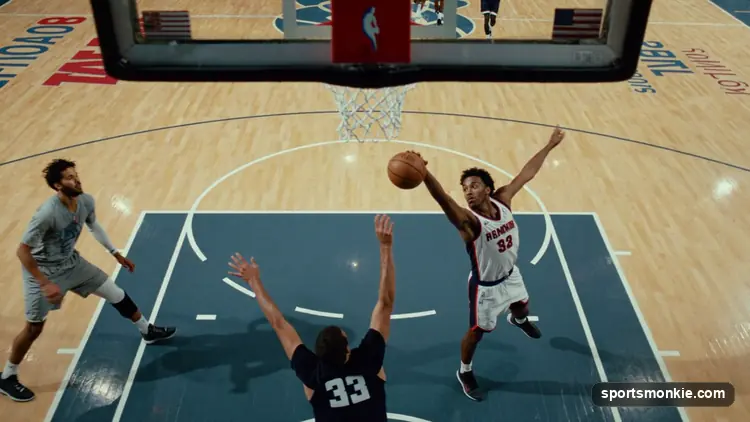
What Is an And-One in Basketball?
An and-one is when a player is fouled while making a basket and earns one free throw for a possible three-point play. How it works, explained.
Ben Simmons Tears Right Achilles in Kings Practice, Three Days Before the Season Opener
The Kings said an MRI confirmed Ben Simmons tore his right Achilles tendon in a practice drill on Sunday. Surgery is next, and ESPN reports his comeback season is likely over.
Steve Kerr's Lookalike Is Back: Steve Gillis Stops the Warriors Coach Cold in Las Vegas
Steve Kerr froze for five seconds when his lookalike Steve Gillis took a seat behind the Warriors bench in Las Vegas. The Las Vegas teacher first went viral in 2024.