
Basketball Positions Explained: All 5 Roles, Numbers & Duties
On this page9
- 01The Five Basketball Positions at a Glance
- 02Point Guard (1): The Floor General
- 03Shooting Guard (2): The Perimeter Scorer
- 04Small Forward (3): The Do-Everything Wing
- 05Power Forward (4): The Interior Enforcer
- 06Center (5): The Paint Anchor
- 07Guards vs. Forwards vs. Centers: How the Groupings Work
- 08The 1-5 Numbering System
- 09Positionless Basketball: How the Lines Are Blurring
Basketball has five traditional positions — point guard, shooting guard, small forward, power forward, and center — numbered 1 through 5, each with a distinct role on both ends of the floor. Guards (1-2) bring the ball up and score from the perimeter, forwards (3-4) rebound and attack both inside and out, and the center (5) anchors the paint. This is the hub guide to every position; jump to any individual breakdown below for the full detail on that role.
The Five Basketball Positions at a Glance
Every basketball team, from a driveway pickup game to the NBA and WNBA, fields five players who each fill one of five traditional roles. The names and numbers have stayed largely the same for decades, even as how those roles are actually played has changed a lot.
| # | Position | Common abbreviation | Grouped as | Core job |
|---|---|---|---|---|
| 1 | Point guard | PG | Guard | Ball-handling, playmaking, running the offense |
| 2 | Shooting guard | SG | Guard | Perimeter scoring, spacing the floor |
| 3 | Small forward | SF | Forward | Scoring inside and out, versatile wing defense |
| 4 | Power forward | PF | Forward | Rebounding, interior scoring, screening |
| 5 | Center | C | Center | Rim protection, rebounding, low-post presence |
Point Guard (1): The Floor General
The point guard is usually the smallest player on the floor and the primary ball handler. Their main job is to bring the ball up court, read the defense, and get teammates into position to score — whether that means a quick pass ahead in transition or setting up a half-court set. Elite point guards like Stephen Curry and Sabrina Ionescu combine playmaking with scoring, but the position’s foundation is always passing, ball-handling, and decision-making under pressure. See the full point guard guide for skills, stats, and famous examples.
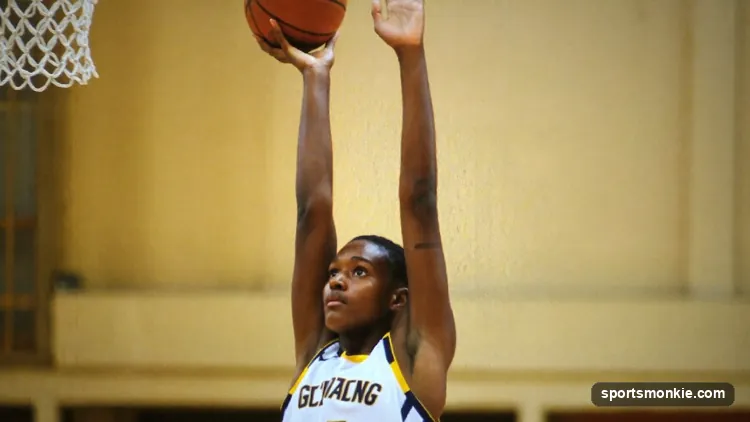
Shooting Guard (2): The Perimeter Scorer
The shooting guard lines up next to the point guard in the backcourt but focuses more on scoring than distributing. Shooting guards work off screens and off-ball movement to get open for jumpers, attack closeouts, and space the floor for driving teammates. Historically this was the “gunner” position; today’s shooting guards are also asked to defend the opponent’s best perimeter scorer. Read the shooting guard breakdown for a closer look.
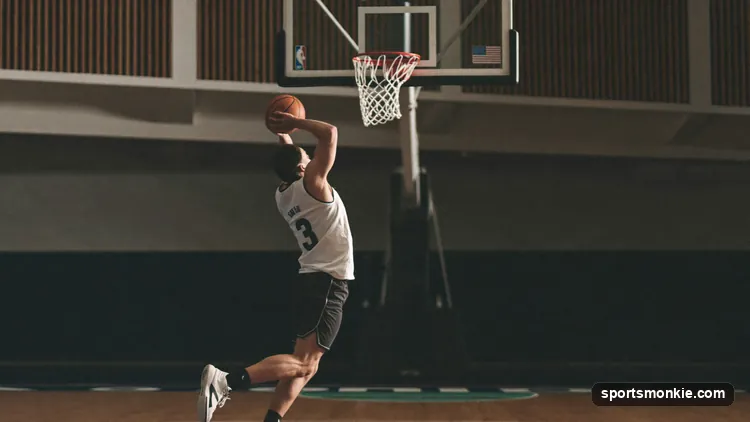
Small Forward (3): The Do-Everything Wing
Small forward is often called basketball’s most versatile position because it demands a mix of guard skills (ball-handling, perimeter shooting) and forward skills (finishing inside, defending bigger players). Small forwards need to score from mid-range and beyond the arc, drive to the rim, and guard multiple positions on defense. LeBron James built a Hall of Fame career largely from this spot before expanding into a positionless role. Full details are in the small forward guide.
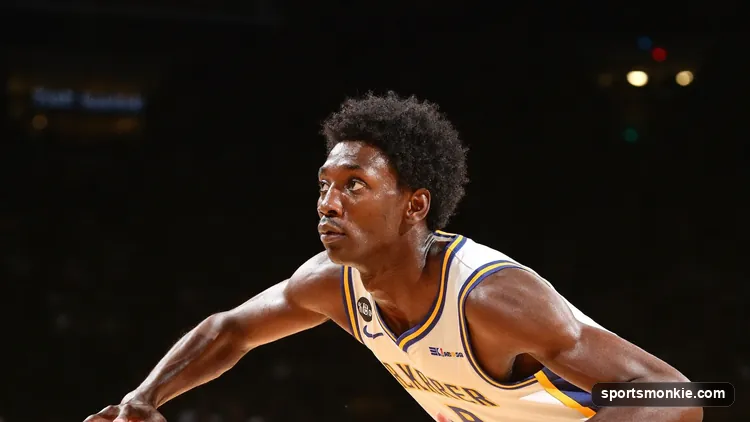
Power Forward (4): The Interior Enforcer
The power forward plays closer to the basket than the small forward, prioritizing rebounding, screening, and scoring in the paint or from mid-range. Power forwards are typically strong and physical, fighting for position on both the offensive and defensive glass. Many modern power forwards, sometimes called “stretch fours,” have added a reliable three-point shot to pull opposing bigs away from the rim. The power forward guide covers the full skill set.
Center (5): The Paint Anchor
The center is traditionally the tallest player on the team, stationed nearest the basket. On offense, centers score on close-range shots, offensive rebounds, and put-backs; on defense, they protect the rim by blocking or altering shots and control the defensive glass. The position has evolved dramatically — players like Nikola Jokic now lead their teams in assists — but rim protection and rebounding remain the job’s core. The complete center position guide covers both the traditional and modern versions of the role.
Guards vs. Forwards vs. Centers: How the Groupings Work
Coaches and broadcasters often talk in three broader groups rather than five individual positions:
- Guards (1-2): Point guard and shooting guard, generally the smallest, quickest players, responsible for ball-handling and perimeter scoring.
- Forwards (3-4): Small forward and power forward, a blend of perimeter skill and interior toughness, responsible for scoring at multiple levels and rebounding.
- Center (5): A group of one, the team’s primary rim protector and low-post presence.
This grouping matters for roster construction — teams typically need at least two natural guards, two forwards, and a center on the floor to cover spacing and rebounding, even in lineups that blur the exact position lines.
The 1-5 Numbering System
The numbers 1 through 5 are shorthand that coaches use in practice plans, playbooks, and scouting reports instead of full position names — “get the ball to your 4 on the block” is faster to say than “get the ball to your power forward.” The numbering runs roughly from smallest/most perimeter-skilled (1) to biggest/most interior-oriented (5), though it’s a naming convention rather than a strict height rule. For a deeper dive into how and why the system works this way, see basketball positions by number.
Positionless Basketball: How the Lines Are Blurring
The five-position framework still describes what a lineup needs to cover, but fewer and fewer players fit neatly into just one box. This shift, often called “positionless basketball,” has been building for decades: Magic Johnson ran the point at 6-foot-9 in the 1980s, LeBron James has logged real minutes at every spot from point guard to center, and today Nikola Jokic — officially a center — routinely leads his team in assists. On defense, the trend shows up as switching, where all five defenders are expected to guard multiple positions rather than staying locked onto a size-matched opponent. Teams still need rebounding, rim protection, ball-handling, and shooting somewhere in their starting five — positionless basketball just means those skills no longer map to one fixed label per player. Understanding how teams organize defensively around this versatility is easier once you know the schemes themselves; see basketball defenses and offenses explained for how modern lineups guard each other.
Frequently Asked Questions
What are the 5 basketball positions? Point guard, shooting guard, small forward, power forward, and center — numbered 1 through 5 in that order.
Which position scores the most? It varies by team and era, but shooting guards and small forwards have historically produced the most primary scorers, while modern centers and point guards increasingly lead teams in scoring too.
Is point guard the hardest position to play? It’s widely considered one of the most demanding because it combines ball-handling, decision-making, and often the responsibility of late-game shot creation, though every position has its own specialized difficulty.
Whatever position a player fills, the five roles above are the starting vocabulary for talking about basketball at any level, from youth leagues through the NBA and WNBA.
Frequently asked questions
What are the 5 basketball positions?+
The five basketball positions are point guard (1), shooting guard (2), small forward (3), power forward (4), and center (5). Point guard and shooting guard are grouped as guards, small forward and power forward are grouped as forwards, and center stands alone as the team's primary interior anchor.
What do the position numbers 1 through 5 mean in basketball?+
The numbers 1-5 are a shorthand naming system that runs roughly from smallest/most perimeter-oriented to biggest/most interior-oriented: 1 is point guard, 2 is shooting guard, 3 is small forward, 4 is power forward, and 5 is center. Coaches and playbooks use these numbers instead of full position names for speed. See our full breakdown of basketball positions by number.
Which basketball position is the most important?+
There's no single most important position — point guard is often called the floor general because they run the offense, but centers anchor rim protection and rebounding, and shooting guards and small forwards carry most of the scoring load. Championship teams need all five roles filled, even if the star player who takes the last shot varies by team.
What is the difference between a small forward and a power forward?+
A small forward (3) is typically quicker and more perimeter-skilled, often defending wings and attacking off the dribble, while a power forward (4) is usually bigger and plays closer to the basket, focusing on rebounding and interior scoring. In modern basketball the gap between the two has narrowed as both positions shoot more three-pointers.
What is positionless basketball?+
Positionless basketball is the modern trend where players are not locked into one traditional role and instead switch on defense and fill multiple jobs on offense regardless of size. Nikola Jokic, a 6-foot-11 center, leads the league in assists some seasons, and LeBron James has played point guard, forward, and everything between — both are examples of positionless stars.
Do WNBA teams use the same five positions as the NBA?+
Yes, WNBA teams use the identical five-position framework — point guard, shooting guard, small forward, power forward, and center — with the same responsibilities. Stars like Sabrina Ionescu (point guard) and Breanna Stewart (forward) fill the same functional roles their NBA counterparts do.
Can a player play more than one position?+
Yes, and it's increasingly common. Players who can guard and produce at two or more spots are called 'combo' players (like a combo guard who plays both point guard and shooting guard) or 'point forwards' who initiate offense from a forward spot. Versatility across positions is one of the most valued traits in today's NBA and WNBA.
Why is the center position becoming less common in modern basketball?+
Traditional low-post centers are less common because the NBA has shifted toward pace, spacing, and three-point shooting, which rewards bigs who can shoot, pass, and switch onto smaller players rather than ones who only score with their back to the basket. Teams still need rim protection and rebounding, so the position hasn't disappeared — it has just evolved. Read our full center position guide for specifics.
Sources
Play & tools
Free browser games and tools — no account, no download.
- Play 82-0 — Draft five, one per position, and see if your lineup can go a flawless NBA season.
- Play Era Ball — Draft an all-time NBA roster from a single era, then simulate a season and chase a perfect run.
- Play 32-0 — Draft five college basketball legends, one per position, and chase a perfect 32-0 national title.
- Explore all our games →
- Get the printable bracket — Download and print a blank tournament bracket to fill out by hand.
- Open the TS% calculator — Calculate TS% from points, field goal attempts and free throw attempts — scoring efficiency in one number.
- Explore all our free sports tools →
Related basketball guides
View all →
What Is a Point Guard in Basketball? Role, Skills & Famous PGs
A point guard is basketball's floor general — the primary ball-handler who runs the offense. Learn the role, key skills, and famous PGs.
Basketball Positions by Number (1-5): The Complete Guide
Basketball positions by number: 1 is point guard, 2 shooting guard, 3 small forward, 4 power forward, 5 center. Learn the system and how coaches use it.
What Is a Fadeaway in Basketball? Technique, History & Best Shooters
A fadeaway in basketball is a jump shot taken while leaping backward, away from the defender, to create space. How it works, technique, and top shooters.
What Is a Power Forward in Basketball? The 4 Position Explained
A power forward (the '4') is basketball's versatile big man — rebounding, defending, scoring in the post, and increasingly shooting threes.
What Is a Shooting Guard in Basketball? Role, Skills & Examples
A shooting guard is basketball's primary perimeter scorer — the '2' who shoots off the catch and dribble, hits threes, and guards the wing.
What Is a Small Forward in Basketball? Role, Skills & Best Players
A small forward is basketball's most versatile position (the '3'), scoring inside and out, defending multiple spots, and rebounding on the wing.