
What Is a Power Forward in Basketball? The 4 Position Explained
On this page6
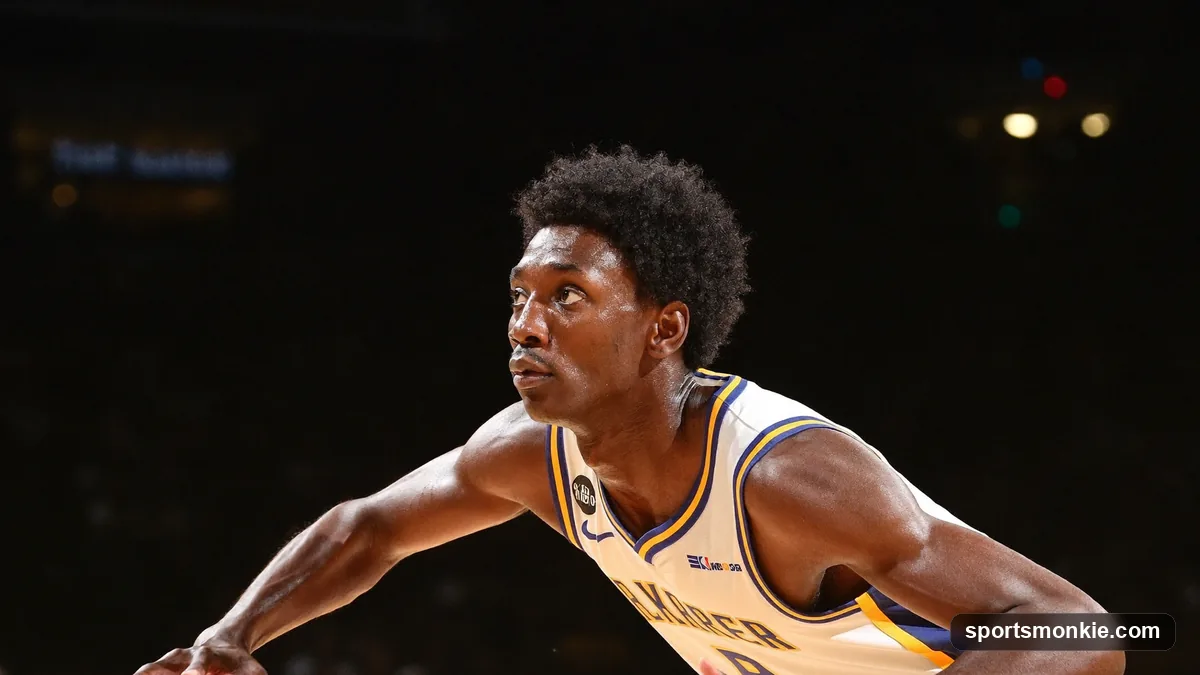
A power forward, or “the 4,” is one of basketball’s five traditional positions — the strong, athletic big who rebounds, defends inside, and scores near the basket, while the modern version also stretches the floor with three-point shooting. Alongside the center, the power forward forms the frontcourt duo that controls the paint, but the position has changed more than any other over the past two decades. To see how it fits with the rest of the lineup, check out our full breakdown of basketball positions explained.
Where the Power Forward Fits on the Court
In the standard five-position system used across the NBA and WNBA, the power forward is numbered “4,” slotting in between the small forward (3) and center (5). Traditionally, the power forward played with their back to the basket in the post, working for position on the block much like a center. On defense, they’re usually tasked with guarding the opposing team’s power forward or center, which means they need the strength to hold ground against bigger bodies while still moving well enough to switch onto smaller, faster players in pick-and-roll situations.
Physically, NBA power forwards typically stand between 6-foot-8 and 7-feet — tall enough to battle for rebounds and contest shots near the rim, but generally a little shorter, leaner, and quicker than true centers. In the WNBA, power forwards usually range from about 6-foot-1 to 6-foot-4. That combination of size and mobility is what separates the position from both the small forward, who plays more on the perimeter, and the center, who anchors the paint as the tallest player on the floor.
Core Responsibilities of a Power Forward
The power forward’s job breaks down into a handful of recurring duties every possession:
- Rebounding on both ends — crashing the offensive glass for second-chance points and boxing out for defensive rebounds to end opponent possessions.
- Scoring in the post — using footwork, spin moves, and hook shots to score close to the basket, historically the position’s signature skill.
- Setting screens — freeing up guards and wings in pick-and-roll and pick-and-pop actions, one of the most repeated actions in modern offense.
- Defending the frontcourt — guarding opposing power forwards and centers, contesting shots, and helping protect the rim.
- Stretching the floor — for many modern power forwards, spacing the defense with reliable mid-range or three-point shooting.
That last point is where the position has evolved the most, and it deserves its own section.
The Stretch-Four Evolution
For most of basketball history, the power forward was a paint-bound bruiser — someone who scored with his back to the basket and rarely ventured beyond 15 feet. Players like Karl Malone and Charles Barkley built Hall of Fame careers almost entirely inside the arc, combining strength, footwork, and mid-range touch out to about 12-18 feet.
That changed starting in the late 1990s and accelerated through the 2000s and 2010s as the NBA embraced pace-and-space offense. Dirk Nowitzki is widely credited as the player who redefined the position, using a nearly unblockable fadeaway jumper and reliable three-point shooting to drag traditional centers away from the rim. Kevin Love and Amar’e Stoudemire followed with their own stretch-four skill sets, opening driving lanes for guards and forcing defenses to choose between protecting the paint and closing out on the perimeter.
Today, the “stretch four” is close to the default rather than the exception. Giannis Antetokounmpo, Jayson Tatum, Pascal Siakam, and A’ja Wilson in the WNBA all operate comfortably away from the basket while still handling traditional power forward duties like rebounding and interior defense. This blending of skills is part of the broader “positionless basketball” trend, where a team’s best five players share ball-handling, shooting, and defensive switching regardless of their listed position.
Power Forward vs. Other Positions
The table below compares the power forward to its closest neighbors on the floor.
| Position | Typical NBA Height | Primary Role | Court Location |
|---|---|---|---|
| Power Forward (4) | 6’8”-7’0” | Rebounding, post scoring, interior defense, floor spacing | Post and elbow, extending to three-point line |
| Center (5) | 6’10”-7’3”+ | Rim protection, primary rebounding, interior anchor | Paint, close to the basket |
| Small Forward (3) | 6’6”-6’9” | Scoring versatility, perimeter defense, slashing | Wing and perimeter |
The clearest distinction is proximity to the basket and shooting range: centers stay closest to the rim, small forwards operate furthest out on the wing, and power forwards traditionally sat in between — though the stretch-four trend has pushed many of them out toward the arc as well.
Skills That Define a Great Power Forward
The best power forwards combine several traits at once. Rebounding demands timing, strength, and a willingness to fight for position under the boards on both ends of the floor. Post scoring relies on footwork, touch around the rim, and the ability to draw fouls. Defensively, power forwards need enough lateral quickness to switch onto smaller players without giving up easy dribble drives, plus the strength to hold position against bigger centers. And in today’s NBA and WNBA, a reliable jump shot — ideally out to three-point range — has become close to mandatory, since it forces the defense to guard the power forward honestly instead of sagging into the paint.
Hall of Fame power forwards such as Tim Duncan, Karl Malone, Kevin Garnett, and Dirk Nowitzki each brought a different balance of these skills, which is part of why the position allows for so much stylistic variety compared to more rigidly defined roles like point guard.
Famous Power Forwards to Know
A short list of players who defined different eras of the position:
- Karl Malone — one of the most dominant traditional post scorers ever, second all-time in NBA scoring.
- Tim Duncan — fundamentals-first two-way anchor, five-time NBA champion with the Spurs.
- Kevin Garnett — elite defensive versatility paired with a smooth mid-range jumper.
- Charles Barkley — undersized but relentless rebounder and post scorer.
- Dirk Nowitzki — the pioneer of the modern stretch four, 2011 NBA champion and Finals MVP.
- Giannis Antetokounmpo — a modern hybrid who blends power forward strength with guard-like ball-handling.
- A’ja Wilson — one of the WNBA’s most dominant current power forwards, combining post scoring with elite defense.
Frequently asked questions
What is a power forward in basketball?+
A power forward, or 'the 4,' is one of basketball's five traditional positions. It's typically the second-tallest and strongest player on the floor, responsible for rebounding, interior defense, and scoring close to the basket, while modern power forwards also stretch the floor with three-point shooting.
What is the difference between a power forward and a center?+
Power forwards are usually a bit shorter, leaner, and quicker than centers, and they play more facing the basket, including from mid-range or three-point range. Centers are the tallest players and stay closest to the rim as the primary interior anchor and shot-blocker.
What is the difference between a power forward and a small forward?+
Power forwards (the 4) are bigger and play closer to the basket, focusing on rebounding and post scoring. Small forwards (the 3) are more perimeter-oriented, relying on speed, ball-handling, and shooting from the wing rather than physical post play.
What is a stretch four in basketball?+
A stretch four is a power forward who can consistently shoot from three-point range, pulling opposing big men away from the basket to open driving and passing lanes for teammates. Dirk Nowitzki and Kevin Love are among the players most credited with popularizing the style.
How tall is a typical NBA power forward?+
NBA power forwards typically stand between 6-foot-8 and 7-feet, making them the tallest or second-tallest players on the floor. WNBA power forwards are generally 6-foot-1 to 6-foot-4.
Who are some famous power forwards in NBA history?+
Hall of Fame power forwards include Tim Duncan, Karl Malone, Kevin Garnett, Charles Barkley, and Dirk Nowitzki. Modern standouts at the position include Giannis Antetokounmpo, Jayson Tatum, Anthony Davis, and Pascal Siakam.
What skills does a power forward need?+
A power forward needs strength and toughness for rebounding and post defense, footwork for post scoring, and — in the modern game — a reliable mid-range or three-point jump shot along with basic ball-handling and passing ability.
Is the power forward position disappearing in the NBA?+
Not disappearing, but blending — many modern power forwards now play a hybrid style that overlaps with small forward and center duties, a trend often called 'positionless basketball,' where skill sets matter more than a fixed label.
Sources
Play & tools
Free browser games and tools — no account, no download.
- Play 82-0 — Draft five, one per position, and see if your lineup can go a flawless NBA season.
- Play Era Ball — Draft an all-time NBA roster from a single era, then simulate a season and chase a perfect run.
- Play 32-0 — Draft five college basketball legends, one per position, and chase a perfect 32-0 national title.
- Explore all our games →
- Get the printable bracket — Download and print a blank tournament bracket to fill out by hand.
- Open the TS% calculator — Calculate TS% from points, field goal attempts and free throw attempts — scoring efficiency in one number.
- Explore all our free sports tools →
Related basketball guides
View all →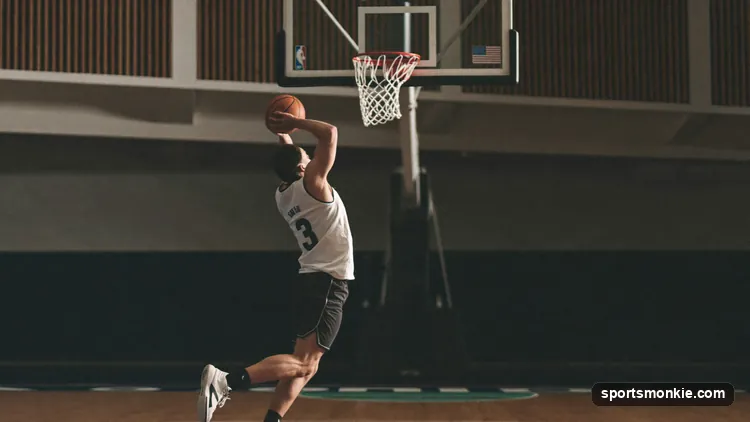
What Is a Small Forward in Basketball? Role, Skills & Best Players
A small forward is basketball's most versatile position (the '3'), scoring inside and out, defending multiple spots, and rebounding on the wing.
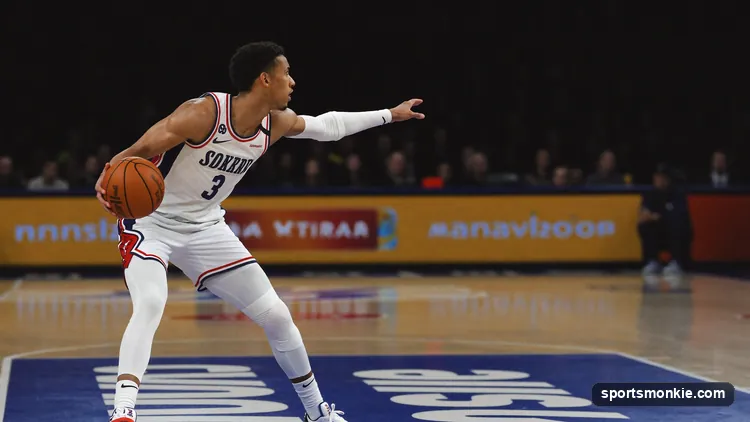
What Is a Point Guard in Basketball? Role, Skills & Famous PGs
A point guard is basketball's floor general — the primary ball-handler who runs the offense. Learn the role, key skills, and famous PGs.
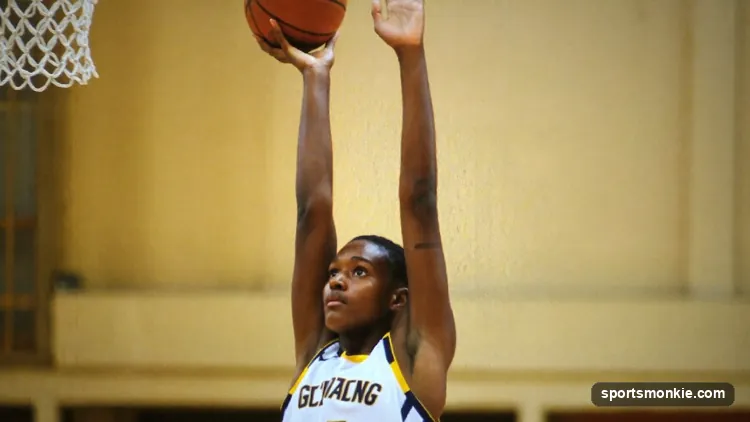
What Is a Shooting Guard in Basketball? Role, Skills & Examples
A shooting guard is basketball's primary perimeter scorer — the '2' who shoots off the catch and dribble, hits threes, and guards the wing.
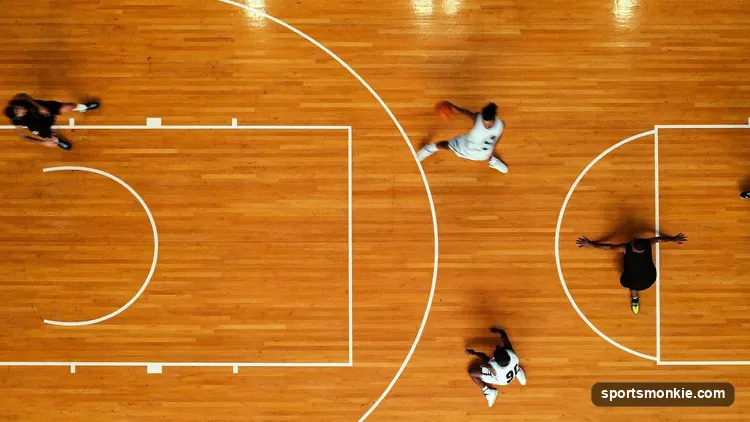
Basketball Positions by Number (1-5): The Complete Guide
Basketball positions by number: 1 is point guard, 2 shooting guard, 3 small forward, 4 power forward, 5 center. Learn the system and how coaches use it.
Basketball Positions Explained: All 5 Roles, Numbers & Duties
Basketball positions explained: point guard, shooting guard, small forward, power forward, and center — roles, the 1-5 numbering, and positionless basketball.
What Is a Layup in Basketball? Footwork, Types & Why It Scores
What is a layup in basketball? A close-range shot laid or banked off the glass after a drive. Learn the footwork, overhand vs. underhand, and variations.