
What Is a Shooting Guard in Basketball? Role, Skills & Examples
On this page7
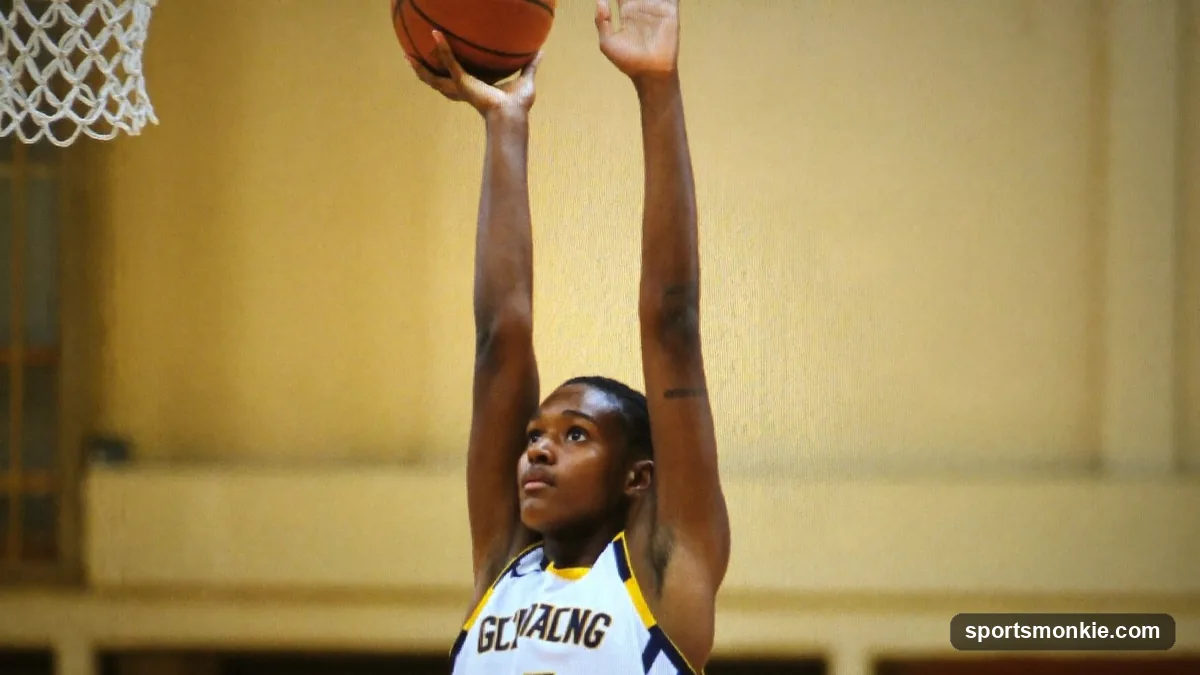
A shooting guard, known as the “2” or “off guard,” is basketball’s primary perimeter scorer — the player tasked with putting the ball in the basket off the catch, off the dribble, and coming off screens, while also guarding the other team’s top wing scorer. Alongside the point guard, the shooting guard forms a backcourt built to space the floor, create shots, and close out possessions.
What Does a Shooting Guard Do on Offense?
The shooting guard’s job starts with scoring. Unlike a point guard, whose first read is usually to distribute, a shooting guard’s first read is usually to shoot — and offenses are frequently designed around getting that player a clean look. That happens three ways:
- Off the catch. Shooting guards run off pin-down screens, flare screens, and baseline curls to shake free for catch-and-shoot threes and mid-range jumpers.
- Off the dribble. Elite shooting guards can also create their own shot, pulling up in isolation or attacking a closeout to get to a mid-range jumper or the rim.
- Secondary ball-handling. Most modern shooting guards can bring the ball up in a pinch, run a pick-and-roll, or initiate offense late in the shot clock — a skill set the position increasingly shares with the point guard.
Because so much offense flows through this position, shooting guards tend to lead their teams in shot attempts and often in scoring. For a full breakdown of how this role fits alongside the other four spots on the floor, see our guide to basketball positions explained.
Shooting Guard vs. Point Guard vs. Small Forward
The shooting guard sits between two positions it’s frequently confused with. Here’s how the roles compare at a glance:
| Position | Primary Job | Typical Height (NBA) | Signature Skill |
|---|---|---|---|
| Point Guard (1) | Initiate offense, set up teammates | 6’0”–6’3” | Passing, ball-handling |
| Shooting Guard (2) | Score from the perimeter | 6’4”–6’6” | Shooting off screens and the dribble |
| Small Forward (3) | Score inside and outside the arc, rebound the wing | 6’6”–6’9” | Scoring versatility, size |
A point guard typically brings the ball up and orchestrates the offense, deferring shots to set teammates up; the shooting guard is often the one on the receiving end of that setup, finishing plays as a scorer. Compared to the small forward, the shooting guard is usually a step quicker and lives further from the basket, relying on shooting range rather than size to score.
Core Skills Every Shooting Guard Needs
Playing the 2 well requires a specific toolkit:
- Shooting mechanics and range. Consistency from three-point range and mid-range is the baseline requirement — most rotation shooting guards shoot in the mid-to-high 30s from deep.
- Off-ball movement. Reading screens, relocating to open space, and timing cuts are what separate good shooting guards from great ones.
- Athleticism and footwork. Quick first steps and controlled footwork let shooting guards separate from defenders and finish through contact at the rim.
- Secondary ball-handling. The ability to run a pick-and-roll or attack a closeout adds a dimension beyond spot-up shooting.
- Free-throw shooting. Because shooting guards draw contact attacking closeouts, a high free-throw percentage compounds their scoring efficiency.
Shooting Guard Defensive Responsibilities
On defense, the shooting guard is typically assigned to the opponent’s best perimeter scorer — often whichever wing is doing the most damage from outside. That demands lateral quickness to stay in front of drivers, the length to contest catch-and-shoot threes, and the discipline to fight through screens rather than switch every action. The modern “3-and-D” archetype — a shooting guard who provides plus perimeter defense to go with reliable outside shooting — has become one of the most valued player types across the NBA and WNBA.
Famous Shooting Guards in NBA and WNBA History
Few positions have produced as many all-time great scorers. In the NBA, Michael Jordan and Kobe Bryant set the standard for shooting-guard scoring and competitiveness, while Allen Iverson redefined the position with an undersized, shot-creating game. James Harden pushed shooting-guard shot creation into the step-back three era, and Klay Thompson and Donovan Mitchell represent the modern movement-shooter and pull-up-scorer archetypes, respectively.
In the WNBA, Diana Taurasi is widely regarded as one of the greatest shooting guards ever, combining volume scoring with clutch shot-making across two decades. Cynthia Cooper dominated the league’s early years as a scoring guard, while Seimone Augustus and Jewell Loyd have each anchored championship-caliber offenses from the 2 spot in more recent eras.
How the Shooting Guard Overlaps With the Wing
In today’s basketball, the line between shooting guard and small forward has blurred into a broader category coaches simply call “the wing.” Many teams now use interchangeable 2-3 combinations, sliding players between shooting guard and small forward possession to possession depending on matchups, size, and shooting. A team might start a bigger shooting guard who can guard small forwards, or a smaller small forward who spaces the floor like a shooting guard. This positionless trend hasn’t eliminated the shooting guard’s core identity — perimeter scoring — but it has made the title more about skill set than a fixed size or spot on the roster.
Bottom Line
The shooting guard remains basketball’s clearest answer to “who is supposed to score?” From Jordan and Kobe to Taurasi and Loyd, the position has always belonged to the players who could get their own shot and knock down the ones their teammates created for them — a role that, alongside the ball-handling point guard and the bigger small forward, completes the modern perimeter attack. To judge that scoring by efficiency instead of points alone, use the true shooting percentage calculator.
Frequently asked questions
What is a shooting guard in basketball?+
A shooting guard is the basketball position numbered '2,' responsible for perimeter scoring. Shooting guards score off the catch, off the dribble, and coming off screens, and they typically rank among a team's best three-point and mid-range shooters.
What are the main responsibilities of a shooting guard?+
A shooting guard's main jobs are scoring from the perimeter, moving without the ball to get open for catch-and-shoot chances, providing secondary ball-handling when the point guard is pressured, and defending the opponent's top perimeter scorer.
What skills does a shooting guard need?+
Elite shooting mechanics and range, quick footwork to navigate screens, athleticism to finish through contact, solid ball-handling for pull-up jumpers and drives, and lateral quickness on defense are the core skills every shooting guard needs.
What is the difference between a shooting guard and a point guard?+
A point guard primarily initiates the offense, brings the ball up the floor, and sets up teammates, while a shooting guard is the player that offense is often designed to get shots for, finishing plays as a scorer rather than starting them.
What is the difference between a shooting guard and a small forward?+
Shooting guards are usually the smaller, faster perimeter scorers who thrive off screens and in space, while small forwards are typically bigger wings who score more inside the arc and rebound more; in modern basketball the two roles overlap heavily as 'wings.'
Who are some famous NBA shooting guards?+
Michael Jordan, Kobe Bryant, Allen Iverson, James Harden, Klay Thompson, and Donovan Mitchell are among the most notable shooting guards in NBA history, each known for elite perimeter scoring.
Who are some famous WNBA shooting guards?+
Diana Taurasi, Cynthia Cooper, Seimone Augustus, and Jewell Loyd are among the WNBA's most accomplished shooting guards, each recognized as a premier perimeter scorer for their era.
How tall is the average shooting guard?+
In the NBA, shooting guards typically stand between 6'4" and 6'6". In the WNBA, shooting guards are generally between 5'10" and 6'1", though height matters less than shooting range and quickness at the position.
Sources
Play & tools
Free browser games and tools — no account, no download.
- Play 82-0 — Draft five, one per position, and see if your lineup can go a flawless NBA season.
- Play Era Ball — Draft an all-time NBA roster from a single era, then simulate a season and chase a perfect run.
- Play 32-0 — Draft five college basketball legends, one per position, and chase a perfect 32-0 national title.
- Explore all our games →
- Get the printable bracket — Download and print a blank tournament bracket to fill out by hand.
- Open the TS% calculator — Calculate TS% from points, field goal attempts and free throw attempts — scoring efficiency in one number.
- Explore all our free sports tools →
Related basketball guides
View all →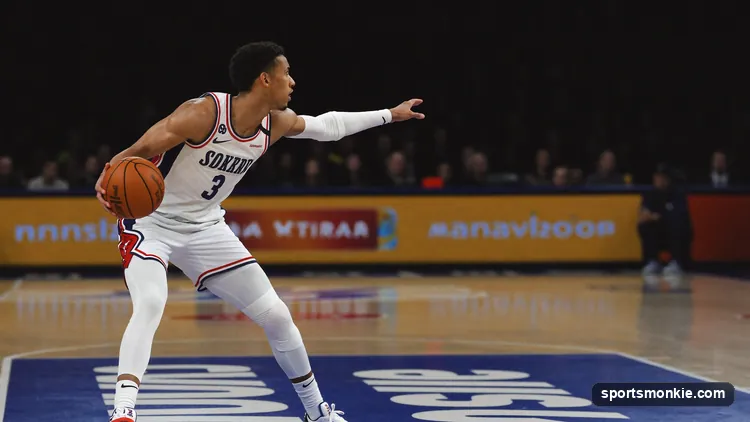
What Is a Point Guard in Basketball? Role, Skills & Famous PGs
A point guard is basketball's floor general — the primary ball-handler who runs the offense. Learn the role, key skills, and famous PGs.
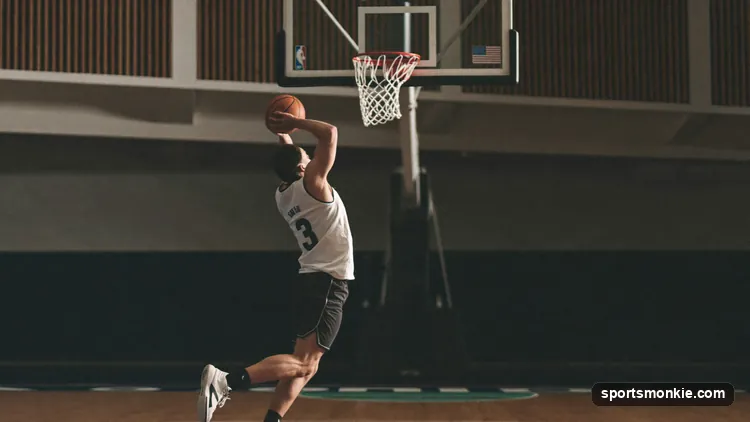
What Is a Small Forward in Basketball? Role, Skills & Best Players
A small forward is basketball's most versatile position (the '3'), scoring inside and out, defending multiple spots, and rebounding on the wing.
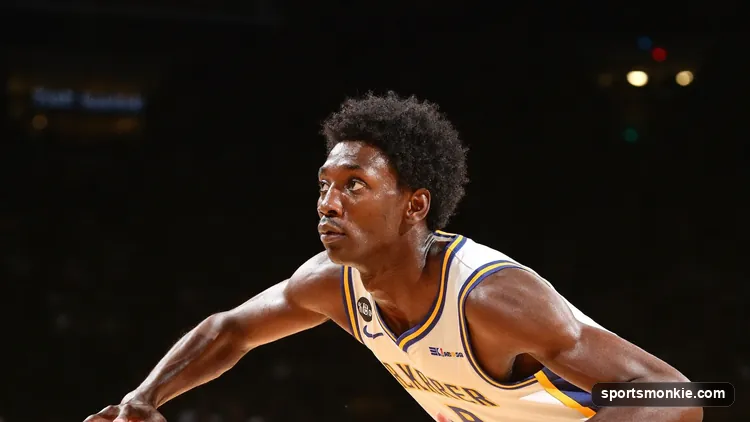
What Is a Power Forward in Basketball? The 4 Position Explained
A power forward (the '4') is basketball's versatile big man — rebounding, defending, scoring in the post, and increasingly shooting threes.
Basketball Positions by Number (1-5): The Complete Guide
Basketball positions by number: 1 is point guard, 2 shooting guard, 3 small forward, 4 power forward, 5 center. Learn the system and how coaches use it.
Basketball Positions Explained: All 5 Roles, Numbers & Duties
Basketball positions explained: point guard, shooting guard, small forward, power forward, and center — roles, the 1-5 numbering, and positionless basketball.
What Is a Layup in Basketball? Footwork, Types & Why It Scores
What is a layup in basketball? A close-range shot laid or banked off the glass after a drive. Learn the footwork, overhand vs. underhand, and variations.