
What Is a Layup in Basketball? Footwork, Types & Why It Scores
On this page6
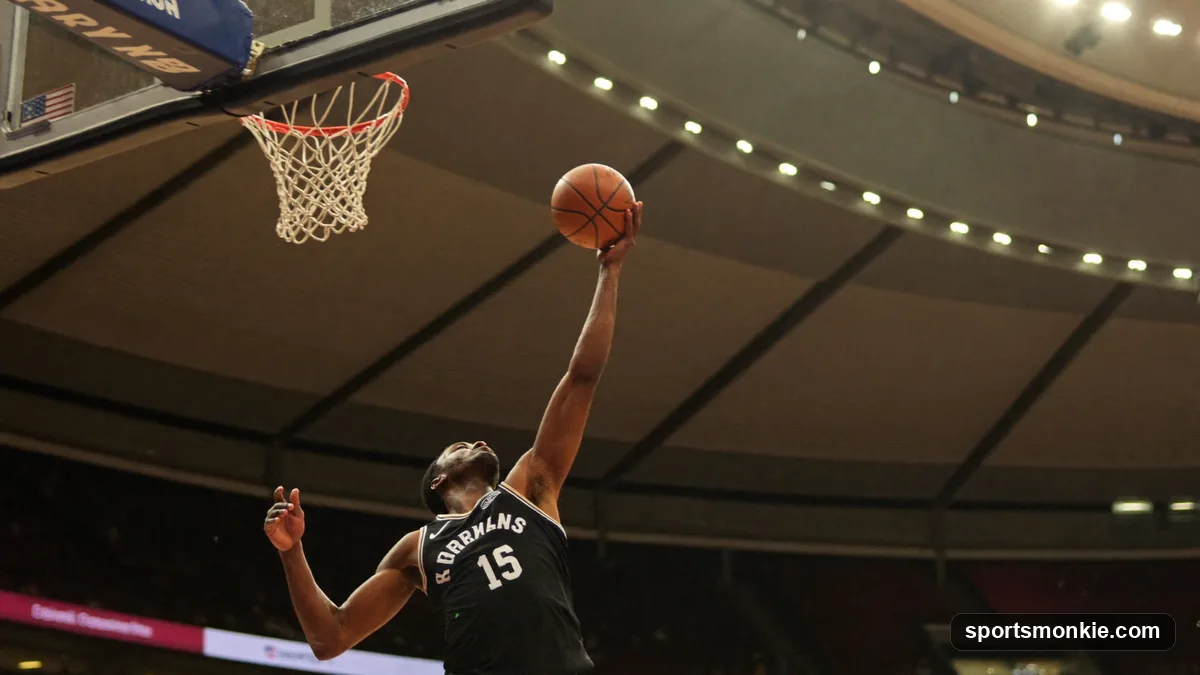
A layup is a close-range, one-handed shot taken while driving to the basket, where the shooter leaps off one foot and lays the ball softly off the backboard or directly through the net. It is the most basic scoring move in basketball, the first shot every player learns, and — because it happens so near the rim — the highest-percentage shot in the sport. Understanding the footwork, the overhand and underhand releases, and the common variations explains why the layup remains a foundational skill even at the NBA and WNBA level.
The Basics: What Makes a Shot a Layup
A layup is a two-point attempt taken from a drive rather than a stationary set shot. The player dribbles toward the basket, gathers the ball, takes the allotted two steps, and releases it with one hand at close range — usually banking it off the glass so the backboard’s angle guides the ball into the net. It sits at the entry point of the broader shooting toolkit covered in our guide to the types of basketball shots, and it’s the shot every other finishing move — from the euro step to the floater — is built on top of.
Unlike a jump shot, a layup doesn’t rely on a high arc or a set shooting pocket. It relies on proximity, timing, and footwork. Get close enough to the rim with the right mechanics, and the shot becomes almost automatic — which is exactly why it’s drilled from a player’s very first practice.
Layup Footwork: The 1-2 Step
Correct footwork is what separates a smooth layup from a traveling violation or an awkward, low-percentage attempt. The standard sequence for a right-handed layup is:
- Gather the ball as you approach the basket, usually off your last dribble.
- Step 1 (left foot): Plant the left, or “inside,” foot first as you take off from the drive.
- Step 2 (right foot): Follow with the right foot for a short, controlled stride toward the rim.
- Jump off the left foot, driving the right knee and right hand upward together.
- Release the ball with the right hand near the top of the jump, banking it off the backboard’s square.
A left-handed layup simply mirrors the pattern: right foot, then left foot, jumping off the right foot and shooting with the left hand. Coaches call this the “outside-inside” rule — the outside foot (farther from the rim) plants first, and the inside foot provides the final push-off, which keeps the shooter’s body between the ball and a defender.
| Element | Right-handed layup | Left-handed layup |
|---|---|---|
| First step | Left foot | Right foot |
| Second step | Right foot | Left foot |
| Push-off / jump foot | Left foot | Right foot |
| Shooting hand | Right hand | Left hand |
| Knee that drives up | Right knee | Left knee |
Getting this footwork wrong — jumping off the same foot as the shooting hand, for example — kills lift, throws off balance, and makes the shot far easier for a defender to contest or block.
Overhand vs. Underhand Release
Once the footwork is set, players choose between two release styles:
- Overhand layup: The ball is pushed up and off the fingertips like a compact jump shot, aimed at a spot on the backboard’s square so it banks down into the net. This is the standard finish taught to beginners and used by the vast majority of layups at every level.
- Underhand layup (finger roll): The ball is released below a defender’s reach, rolled — not pushed — off the fingertips with topspin so it arcs softly over outstretched arms before dropping through the rim. Because the release point is lower and the launch angle steeper, it’s much harder for a shot-blocker to affect.
The finger roll is technically demanding but extremely effective in traffic, which is why it’s covered in more depth in our separate breakdown of the finger roll in basketball.
Common Layup Variations
Beyond the standard finish, several layup variations let players adapt to different angles, defenders, and driving lanes:
- Reverse layup: Taken on the opposite side of the rim from where the shooter approached, using the backboard and the player’s own body to shield the ball from a defender. It’s a common finish on baseline drives and appears constantly in NBA and WNBA highlight reels — Caitlin Clark, Stephen Curry, and Devin Booker all use it regularly to avoid help defenders.
- Power layup: A two-footed, more physical version used to absorb contact near the rim, prioritizing strength and balance over finesse.
- Finger roll: Covered above — an underhand release that arcs the ball over defenders.
- Euro step: Not technically a layup itself, but a footwork setup that often ends in one. The ball-handler takes two steps in different directions to dodge a defender before finishing at the rim; see our full explainer on the euro step in basketball for the mechanics.
Why the Layup Is the Highest-Percentage Shot
Every added foot of distance from the rim adds difficulty: more arc is needed, more force is required, and defenders have more time to react. A layup strips almost all of that away. Taken from point-blank range with a clear driving lane, it should be converted at an extremely high rate — which is exactly why an open, missed layup is treated as such a costly mistake by coaches at every level, from youth leagues up through the NBA and WNBA.
That’s also why layup drills dominate early practices. Long before players work on threes or step-back jumpers, they master the footwork, the overhand and underhand releases, and the confidence to finish through contact — because the layup underpins nearly every other scoring move in the sport.
Quick Recap
A layup is basketball’s foundational close-range shot: drive to the rim, gather, use the correct 1-2 step footwork, and release the ball overhand or underhand off the backboard. Master the basic version first, then layer in the reverse layup, finger roll, and euro step as your game — and the defenders you face — get tougher to solve.
Frequently asked questions
What is a layup in basketball?+
A layup is a close-range, two-point shot taken while driving toward the basket, where the shooter leaps off one foot and lays the ball up near the rim with one hand, typically banking it off the backboard. It's the most fundamental scoring move in basketball and the foundation for nearly every finishing technique players learn.
What is the correct footwork for a layup?+
For a right-handed layup, the standard footwork is left-right-jump: the player's left (inside) foot plants first, the right foot follows, and the final push-off comes from the left foot while the right hand releases the shot. It's reversed for a left-handed layup — right foot, then left foot, then jump off the right foot shooting with the left hand.
Why do players jump off the opposite foot from their shooting hand?+
Jumping off the opposite (inside) foot lets the shooting-hand knee drive upward with the ball, creating balance, extra lift, and body protection between the shooter and a defender. It also squares the shoulders toward the backboard, making the release more consistent.
What is the difference between an overhand and underhand layup?+
An overhand layup is released like a mini jump shot, with the ball pushed up and off the fingertips toward the backboard — the standard finish most players learn first. An underhand layup, better known as a finger roll, is released below the defender's reach and rolled off the fingertips with backspin so it drops softly through the net.
What is a reverse layup?+
A reverse layup is finished on the opposite side of the rim from where the shooter took off, with the player's body between the ball and the defender as they lay it off the glass. It's commonly used on baseline drives or to shield the shot from a shot-blocker, and it's a staple move for players like Caitlin Clark and Devin Booker.
What is a finger roll layup?+
The finger roll is an underhand layup variation where the ball rolls off the fingertips with topspin instead of being pushed, letting it arc high over a defender's outstretched arm before dropping into the basket. George Gervin made the shot famous in the late 1970s, using it to lead the NBA in scoring multiple times.
Why is the layup considered the highest-percentage shot in basketball?+
A layup is taken from point-blank range, often within a few feet of the rim, which removes most of the distance and arc that make jump shots and three-pointers harder to convert. An unguarded layup should be made almost every time, which is why coaches treat a missed open layup as one of the costliest mistakes in the sport.
How is a layup different from a euro step or a finger roll?+
A layup is the broad category of close-range, one-handed finishes near the basket; the euro step and finger roll are specific techniques within that category. The euro step changes direction mid-air using two steps to dodge a defender before finishing, while the finger roll changes only the release, rolling the ball off the fingertips instead of pushing it off the backboard.
Sources
Play & tools
Free browser games and tools — no account, no download.
- Play 82-0 — Draft five, one per position, and see if your lineup can go a flawless NBA season.
- Play Era Ball — Draft an all-time NBA roster from a single era, then simulate a season and chase a perfect run.
- Play 32-0 — Draft five college basketball legends, one per position, and chase a perfect 32-0 national title.
- Explore all our games →
- Get the printable bracket — Download and print a blank tournament bracket to fill out by hand.
- Open the TS% calculator — Calculate TS% from points, field goal attempts and free throw attempts — scoring efficiency in one number.
- Explore all our free sports tools →
Related basketball guides
View all →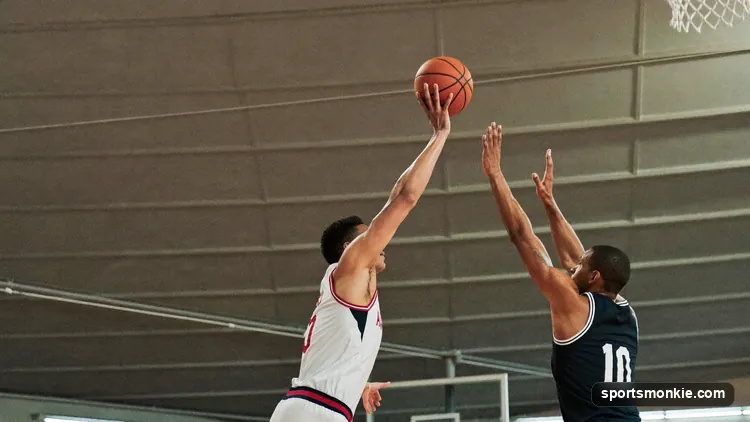
Types of Basketball Shots: Every Shot Explained
The main types of basketball shots are the layup, jump shot, three-pointer, dunk, floater, hook shot, bank shot, fadeaway, step-back, and euro-step.
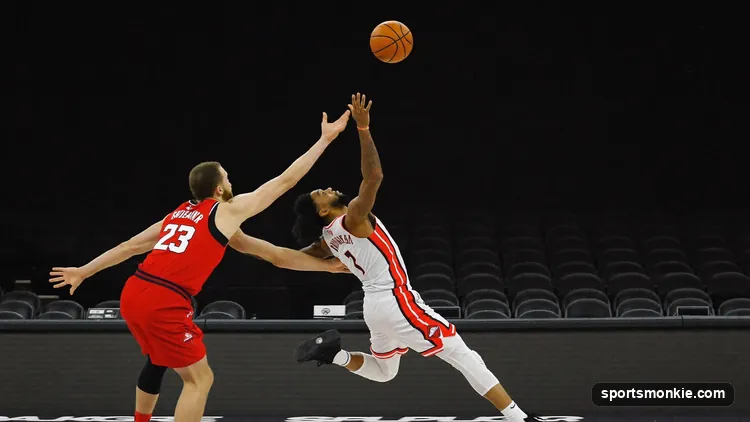
What Is a Fadeaway in Basketball? Technique, History & Best Shooters
A fadeaway in basketball is a jump shot taken while leaping backward, away from the defender, to create space. How it works, technique, and top shooters.
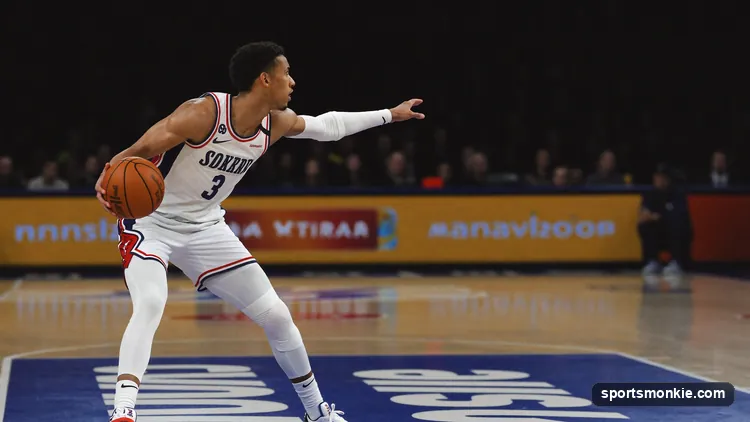
What Is a Point Guard in Basketball? Role, Skills & Famous PGs
A point guard is basketball's floor general — the primary ball-handler who runs the offense. Learn the role, key skills, and famous PGs.
What Is a Power Forward in Basketball? The 4 Position Explained
A power forward (the '4') is basketball's versatile big man — rebounding, defending, scoring in the post, and increasingly shooting threes.
What Is a Shooting Guard in Basketball? Role, Skills & Examples
A shooting guard is basketball's primary perimeter scorer — the '2' who shoots off the catch and dribble, hits threes, and guards the wing.
What Is a Small Forward in Basketball? Role, Skills & Best Players
A small forward is basketball's most versatile position (the '3'), scoring inside and out, defending multiple spots, and rebounding on the wing.