
Finger Roll in Basketball: Technique, History & How to Shoot One
On this page6
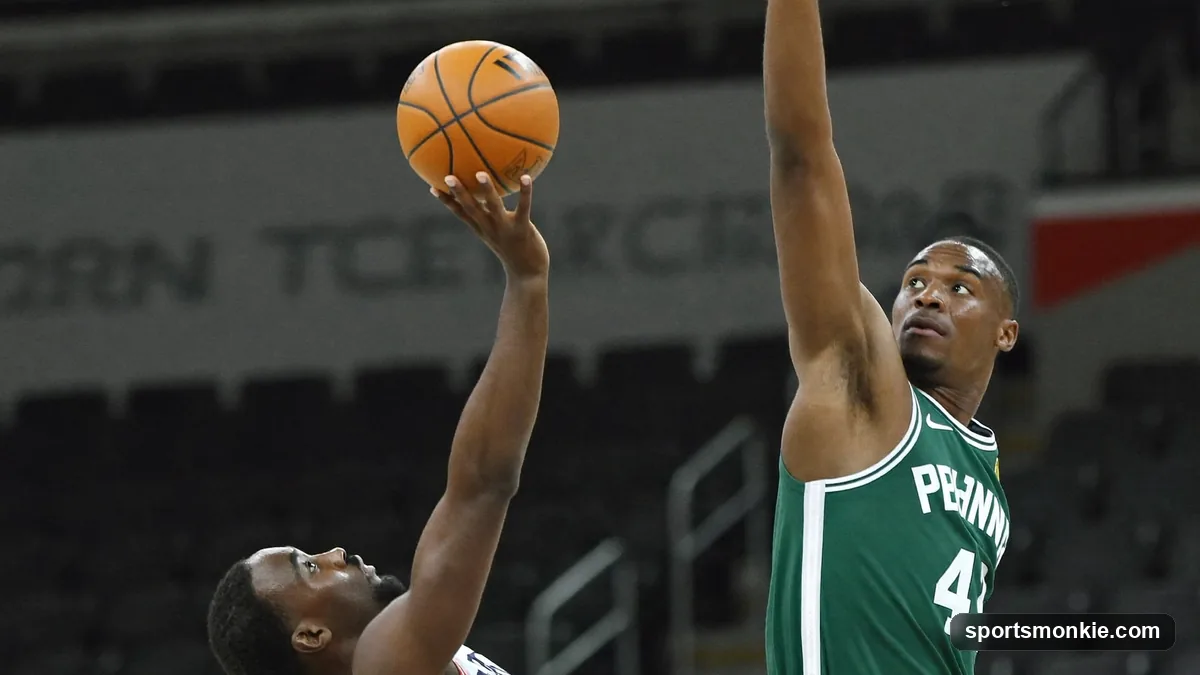
A finger roll in basketball is a soft, one-handed layup where the shooter releases the ball off the fingertips with an underhand, rolling motion instead of a flat push, letting it arc up and over the rim or a defender’s hand before dropping through the net. It is one of the oldest finesse moves in the sport, built for scoring over size rather than through it, and it remains a staple of finishing packages in the NBA and WNBA today.
What Is a Finger Roll?
The finger roll belongs to the layup family, but it is not a standard layup. A regular layup is essentially a controlled push shot: the ball leaves the hand relatively flat, banked hard off the backboard or dropped straight through. A finger roll changes the release entirely. The shooter cups the ball late, rolls it off the tips of the fingers rather than the palm, and lets a soft backspin carry it the rest of the way.
That difference in release is the whole point. The ball comes off the hand slower and higher than a pushed layup, which means it can clear a taller or later-arriving defender that a flatter shot would run straight into. It is a touch shot, not a power shot, which is why it has always favored players with long arms, soft hands, and body control in the air rather than pure explosiveness.
It also belongs alongside the other core scoring moves near the rim, and it is worth knowing exactly how it fits among the broader types of basketball shots a player has available once they get into the paint.
The Technique: How to Shoot a Finger Roll
The mechanics come down to footwork, hand position, and release. Here is the sequence coaches teach:
- Attack with two steps. Approach the rim off a drive or a pass, gathering the ball with two hands the same way you would for a layup, then take your final two steps (right-left for a right-hand finish, left-right for a left-hand finish).
- Cradle the ball high. As you plant and jump, bring the ball up in one hand, palm mostly underneath rather than behind it, with the fingers spread and relaxed.
- Extend the arm fully. Reach the shooting arm up toward the rim as you rise, almost to full extension, aiming to release well above where a standard layup would come off the hand.
- Roll, don’t push. At the top of the extension, roll the ball off the fingertips rather than snapping the wrist. The motion should feel like tipping a ball off a shelf, not shooting it.
- Let backspin do the work. A clean release imparts backspin that softens the ball’s landing on the rim or backboard, giving it a higher chance of dropping in even off a slightly imperfect touch.
| Element | Standard layup | Finger roll |
|---|---|---|
| Release point | Lower, closer to shoulder | Higher, near full arm extension |
| Hand contact | Palm and fingers, flatter push | Fingertips only, rolling motion |
| Spin | Minimal to moderate | Heavy backspin |
| Best used against | Little to no resistance | A late-arriving or taller shot-blocker |
| Typical range | 0-3 feet | 0-4 feet, occasionally further with a strong release |
Why the Finger Roll Beats Shot-Blockers
The core advantage is geometry. A shot-blocker times a jump to meet the ball at its expected release point. Because the finger roll releases higher and with a slower, looping trajectory, it clears that timing window. The defender’s hand is often already dropping by the time the ball reaches its peak.
The backspin matters just as much as the height. A ball rolled softly off the fingertips loses speed as it approaches the rim, which means even a shot that clips the front iron or the backboard tends to drop rather than bounce away. That forgiving bounce is a big reason the shot has survived for over sixty years despite defenses getting longer, more athletic, and more schooled in shot-blocking angles every decade.
History and Famous Practitioners
Wilt Chamberlain is generally credited with popularizing the finger roll in the NBA during the 1960s. At well over seven feet tall with an enormous wingspan, he used it to shoot over defenders who had no realistic chance of contesting a shot released that high, turning what could have been a simple layup into a near-automatic basket.
The player most identified with the move, however, is George Gervin. Nicknamed “Iceman” for his calm, unbothered scoring style, Gervin made the finger roll his signature weapon with the San Antonio Spurs from the late 1970s into the 1980s, winning four NBA scoring titles largely on the back of it. Gervin himself has said he drew on players before him, including Julius “Dr. J” Erving and Connie Hawkins, when developing his own version of the shot, but it was Gervin’s volume and consistency with it that cemented the finger roll as a signature move in basketball history rather than a novelty.
The shot never disappeared. Smaller guards and wings in both the NBA and WNBA still reach for it any time a shot-blocker rotates over late, proof that a soft touch can still beat a taller, more athletic defender when the fundamentals are sound.
When to Use a Finger Roll
The finger roll is not an every-possession shot; it is a situational counter. The clearest use case is driving into the paint and seeing a help defender rotating in from the weak side a step too late to fully contest a normal layup but early enough to challenge one. Rather than forcing a shot into that outstretched hand, a shooter can extend the arm, roll the ball, and let the arc carry it past the block attempt.
It is also useful in transition against a trailing big man, and for smaller guards who lack the strength to finish through contact but have the touch to finish over it. Compare that to a floater in basketball, which is launched from further away specifically to avoid contact altogether before a defender even arrives at the rim. The finger roll, by contrast, is typically shot right at the basket; it is the release, not the distance, that beats the defense.
Finger Roll vs. Other Finishing Moves
Players inside the paint generally choose between a handful of finishing tools depending on distance, defender position, and their own skill set. The finger roll sits in a specific niche among them:
- Standard layup: Fastest, flattest release, best when there is little resistance.
- Finger roll: Higher, softer release used specifically to clear a late or taller defender right at the rim.
- Floater: Launched from several feet out with a high arc to avoid contact before reaching the defense entirely.
- Reverse layup: Uses the body and backboard as a shield rather than height, best against a defender directly in front.
Understanding where the finger roll fits among these options, and inside the sport’s overall structure covered in basketball NBA/WNBA, helps explain why a shot invented in the 1960s is still coached to guards and forwards today. It solves a problem, beating a bigger defender’s reach with touch instead of force, that has never gone away in basketball.
Frequently asked questions
What is a finger roll in basketball?+
A finger roll is a layup variation where the shooter, instead of pushing the ball flat off the palm, rolls it off the fingertips with a soft, underhand motion. The release imparts backspin and lift, letting the ball float up and over the rim (or a defender's hand) before dropping through the net.
Who invented the finger roll?+
No single player invented it, but Wilt Chamberlain is widely credited as the first NBA player to use it consistently in the 1960s, relying on his size and reach to roll the ball high over smaller defenders near the rim.
Why is George Gervin famous for the finger roll?+
George Gervin, nicknamed 'Iceman,' made the finger roll his signature shot through the late 1970s and early 1980s with the San Antonio Spurs, using it so consistently while winning four scoring titles that the move became permanently associated with his name.
Is a finger roll harder than a regular layup?+
Yes. A finger roll requires more touch and hand control than a standard layup because the shooter has to generate the right amount of backspin with the fingertips alone, without banking the ball hard off the backboard, which takes more practice to control consistently.
When should you use a finger roll instead of a normal layup?+
Use it when a shot-blocker is closing in from the weak side or has better size and vertical reach than you. The higher, softer arc clears outstretched hands that a flatter, harder layup would run into, making it a go-to counter against rim protectors.
Does the finger roll use the backboard?+
It can go either way. Many finger rolls are shot off the glass just like a standard layup, but the softer touch also lets skilled shooters drop the ball directly through the net without using the backboard at all, especially from a straight-on angle.
What is the difference between a finger roll and a floater?+
A finger roll is released at the rim, usually off one or two steps with the shooting hand extended close to the basket. A floater in basketball is launched from farther out, often 8-12 feet away, with a higher, looping arc to clear a defender before the shooter even reaches the paint.
Can beginners learn the finger roll?+
Yes, though it takes repetition. Coaches typically have players start close to the rim without a defender, focus on rolling the ball off the fingertips rather than pushing it, and gradually build up speed and distance once the soft release becomes consistent.
Sources
Play & tools
Free browser games and tools — no account, no download.
- Play 82-0 — Draft five, one per position, and see if your lineup can go a flawless NBA season.
- Play Era Ball — Draft an all-time NBA roster from a single era, then simulate a season and chase a perfect run.
- Play 32-0 — Draft five college basketball legends, one per position, and chase a perfect 32-0 national title.
- Explore all our games →
- Get the printable bracket — Download and print a blank tournament bracket to fill out by hand.
- Open the TS% calculator — Calculate TS% from points, field goal attempts and free throw attempts — scoring efficiency in one number.
- Explore all our free sports tools →
Related basketball guides
View all →
Bank Shot in Basketball: Technique, Geometry, and Why It Works
A bank shot in basketball is a shot deliberately banked off the backboard into the hoop. Learn the aim points, angles, and players who mastered it.
What Is a Fadeaway in Basketball? Technique, History & Best Shooters
A fadeaway in basketball is a jump shot taken while leaping backward, away from the defender, to create space. How it works, technique, and top shooters.
Floater in Basketball: What It Is and How to Shoot One
A floater in basketball is a high, soft one-handed shot lofted over a taller defender before the rim. Learn the technique, when to use it, and the NBA masters.
Most Points by a Rookie in NBA History
Wilt Chamberlain scored 2,707 points as a rookie in 1959-60, the NBA record. Full leaderboard of top rookie scoring seasons, plus the PPG mark.
Box Out in Basketball: The Complete Rebounding Technique Guide
Learn how to box out in basketball with a step-by-step technique, common mistakes, and drills that turn positioning into extra rebounds.
Hook Shot in Basketball: Technique, Skyhook, and Why It's Unblockable
The hook shot in basketball is a one-handed shot released in a sweeping arc with the shooter's body shielding the ball from the defender.