
Box Out in Basketball: The Complete Rebounding Technique Guide
On this page7
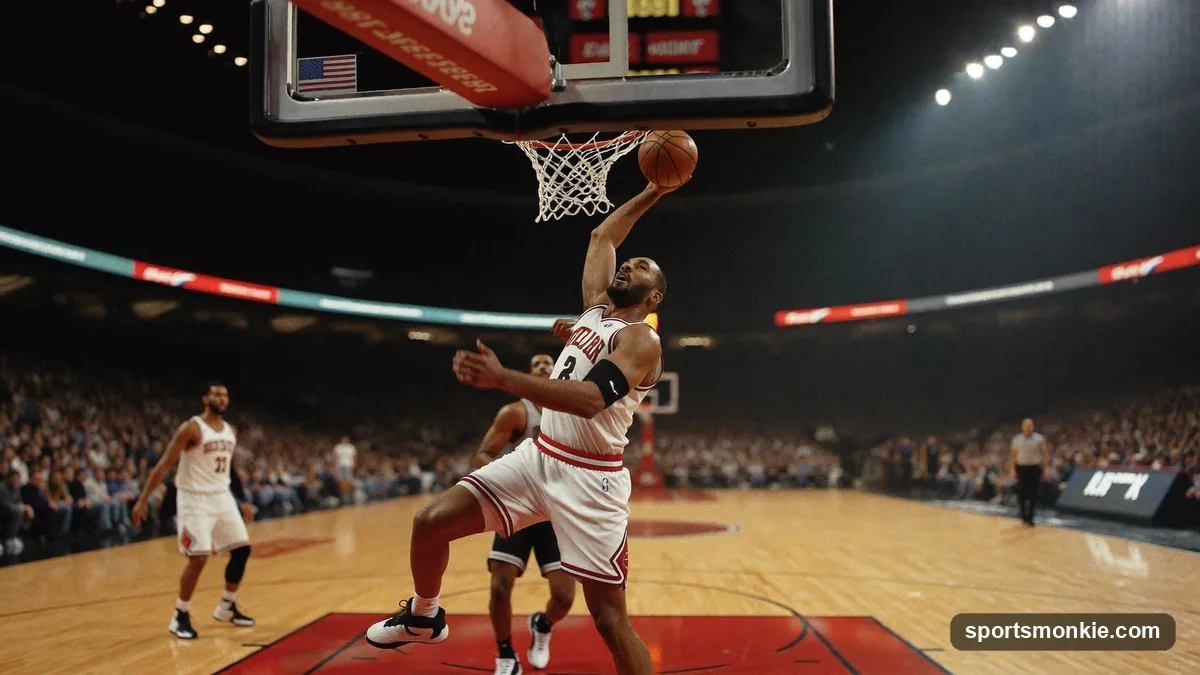
A box out in basketball is the technique of using your body to seal an opponent away from the basket the instant a shot is released, so they cannot get a clean path to the rebound. It is one of the most fundamental — and most frequently skipped — skills in the sport, because it demands effort and discipline on every single shot rather than athleticism on the ones that matter.
What “Boxing Out” Actually Means
Boxing out happens in the half-second between a shot leaving a shooter’s hands and the ball hitting the rim. Every player near the basket, offense and defense alike, is responsible for identifying an opponent and getting a body on them before the ball arrives. The goal isn’t to grab the rebound immediately — it’s to deny the other player a path to where the rebound is likely to land, buying your own team the space and time to go get it.
This applies both ways. Defenders box out to stop offensive rebounds and second-chance points. Offensive players do the same thing in reverse — sometimes called “blocking out” — to crash the glass after their own team’s miss. The footwork doesn’t change based on direction; only who’s initiating contact does.
The Alignment: How a Box Out Looks on the Floor
Picture a defender guarding a shooter near the free-throw line. The instant the shot goes up:
- The defender closes the gap and makes contact with a forearm or chest bump against the shooter’s torso, roughly between the sternum and shoulder.
- The defender pivots — stepping across the shooter’s body with the foot closest to the basket — so their back, butt, and hips end up between the shooter and the rim.
- From that sealed position, the defender widens their stance to shoulder-width, bends the knees low, and extends the elbows to occupy as much space as possible.
- Only after the seal is secure does the defender release to track the ball and jump to meet it with two hands.
The shape you’re aiming for is simple: your body forms a wall, and the opponent is on the wrong side of it. Get the order wrong — turning before contact, or chasing the ball before sealing — and the whole technique collapses.
Roles: Who Boxes Out Whom
| Position | Primary box-out assignment | Why |
|---|---|---|
| Centers / power forwards | Whoever is closest to the rim, usually the opposing big | Highest rebound volume happens in the paint |
| Small forwards / guards | The shooter or nearest perimeter player | Shooters crash long rebounds on jump shots |
| Weak-side defenders | Any offensive player drifting into the lane | Prevents “cherry-picking” a rebound from the far side |
| Offensive players | The defender guarding them | Fights for a second-chance possession |
Every player on the floor has a box-out job on every shot — it’s a team-wide responsibility, not just a big-man task. This is part of why box outs sit alongside communication concepts like defensive rotations in team schemes such as a zone defense, where help-side players often have the longest way to travel to find a body.
Strengths of a Good Box Out
- Neutralizes a height or vertical disadvantage. Positioning beats jumping ability almost every time; a well-sealed 6’3” player will out-rebound an unsealed 6’9” player.
- Ends possessions. A clean box out is often the single biggest driver of “one-and-done” defensive stops, because it removes the offense’s second and third chances.
- Creates fast-break opportunities. Securing a defensive rebound cleanly, rather than tipping and scrambling for it, lets a team push in transition immediately.
- Teachable at any age or size. Unlike shot-blocking or explosive leaping, box-out technique can be coached to nearly any player and improves with repetition, not just physical growth.
Weaknesses and Common Mistakes
- Turning too early. Pivoting to seal before making solid contact lets the opponent slide around the box out entirely — contact has to come first.
- Running under the basket. Chasing the spot where the ball might land, instead of attacking the opponent’s body first, leaves both players out of position.
- Standing flat-footed. Sealing an opponent and then waiting for the ball to bounce off the rim, instead of jumping to attack it, gives it away to a more aggressive player.
- Losing contact. A box out isn’t a one-time hit — if the defender stands up straight or stops pushing, the offensive player can shed the position and get moving again.
- Fouling instead of sealing. Overly aggressive shoving, rather than a legal seal with a wide stance, draws an over-the-back or illegal-contact whistle.
How to Attack (and Beat) a Box Out
Offensive players have counters, and understanding them helps defenders close the gaps:
- Spin-out move: the offensive player spins off the initial contact before the seal is set, which is exactly why the “hit before turn” sequencing matters so much for defenders.
- Go-behind: crashing from an unexpected angle — often from the weak side — to arrive at the rim before a help defender has identified anyone to box out.
- Get skinny: flattening the body to slide through a gap between two boxing-out defenders rather than trying to go around either one.
Coaches drill these counters specifically so their bigs learn to widen their base and keep their head on a swivel for crashing weak-side players, not just the man they’re guarding.
Where Boxing Out Fits in a Team’s Overall System
Box outs are a rebounding fundamental, but they connect directly to a team’s broader basketball defenses and offenses game plan. Teams that run pack-line or help-heavy schemes rely on disciplined box outs to survive the extra ball movement those defenses invite, since defenders are farther from their assignments when a shot goes up. On the other end, teams built around crashing the offensive glass — attacking through off-ball screens to free up rebounders — need players who box out aggressively on the defensive end too, since giving up second-chance points erases the value of extra possessions gained.
Whether you’re breaking down a possession from the basketball and NBA/WNBA hub or coaching a youth practice, boxing out remains one of the few skills where fundamentals — not size — decide who wins the ball.
Frequently asked questions
What does it mean to box out in basketball?+
Boxing out means using your body to establish and hold position between an opponent and the basket the moment a shot is released, so they cannot get a clean angle to chase down the rebound. It is a positioning skill, not a jumping skill, and it is the single biggest factor in winning individual rebounds.
What are the four steps of a proper box out?+
Coaches generally teach it in four parts: (1) make contact with a forearm or chest bump on the opponent's torso the instant the shot goes up, (2) pivot and step across their body to seal them with your back and hips, (3) drive them away from the basket with short, low, powerful steps, and (4) release to pursue and secure the ball with two hands once it is in the air.
Do you box out on both offense and defense?+
Yes. Defensive players box out to prevent second-chance points, while offensive players box out (sometimes called blocking out) to fight for an offensive rebound after their own team's missed shot. The footwork and contact principles are the same in both directions.
What is the difference between boxing out and blocking out?+
The terms are used interchangeably in most gyms. Some coaches reserve 'boxing out' for the defensive rebounding action and 'blocking out' for offensive rebounding, but the technique — seal, drive, pursue — does not change based on which basket a team is attacking.
Why is boxing out more important than jumping ability?+
A player who is sealed out of the play cannot out-jump anyone because they never get to the spot where the ball lands. Studies of rebounding by coaches and analysts consistently show that positioning before the shot lands wins far more rebounds than vertical leap, which is why some of the best rebounders in basketball history were undersized for their position.
What is a common mistake players make when boxing out?+
The most common error is turning to seal an opponent before making solid initial contact, which lets the offensive player slide around the box out. Other frequent mistakes include running underneath the basket instead of attacking the opponent, and standing flat-footed waiting for the ball instead of jumping to meet it.
How do you box out a taller or bigger opponent?+
Get lower than they are. A low center of gravity, bent knees, and a wide base let a smaller or shorter player generate more leverage than a taller opponent who is standing upright. Contact, angle, and leg drive beat height in a box out almost every time.
What drills help players learn to box out?+
Common drills include partner box-out reps where one player shoots and the other boxes out on the sound of the shot, live rebounding drills where a coach tosses the ball off the rim, and full-team shell drills that combine box outs with a full defensive rotation before the ball is live.
Sources
Play & tools
Free browser games and tools — no account, no download.
- Play 82-0 — Draft five, one per position, and see if your lineup can go a flawless NBA season.
- Play Era Ball — Draft an all-time NBA roster from a single era, then simulate a season and chase a perfect run.
- Play 32-0 — Draft five college basketball legends, one per position, and chase a perfect 32-0 national title.
- Explore all our games →
- Get the printable bracket — Download and print a blank tournament bracket to fill out by hand.
- Open the TS% calculator — Calculate TS% from points, field goal attempts and free throw attempts — scoring efficiency in one number.
- Explore all our free sports tools →
Related basketball guides
View all →
1-3-1 Zone Defense in Basketball: Alignment, Roles & How to Attack It
The 1-3-1 zone defense explained: player alignment, roles, traps, strengths, weaknesses, and how offenses beat it. A full coaching breakdown.
2-3 Zone vs Man-to-Man Defense: Full Basketball Comparison
2-3 zone vs man to man defense compared: coverage, pick-and-roll, 3-point defense, rebounding, and when coaches at every level pick each.
3-2 Zone Defense in Basketball: Alignment, Roles, and How to Attack It
The 3-2 zone defense explained: alignment, player roles, strengths, weaknesses, and how offenses attack this high-pressure zone.
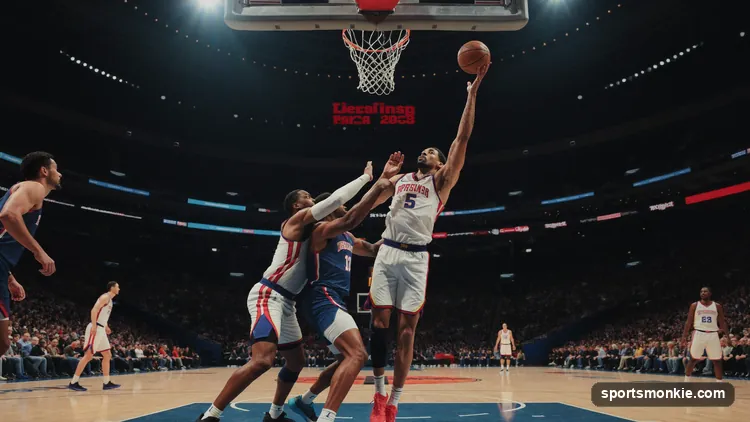
Full Court Press in Basketball: Types, Alignment, and How to Break It
A full court press pressures the ball the entire length of the court. Learn how a full court press works, its formations (2-2-1, 1-2-1-1, 1-3-1), and counters.
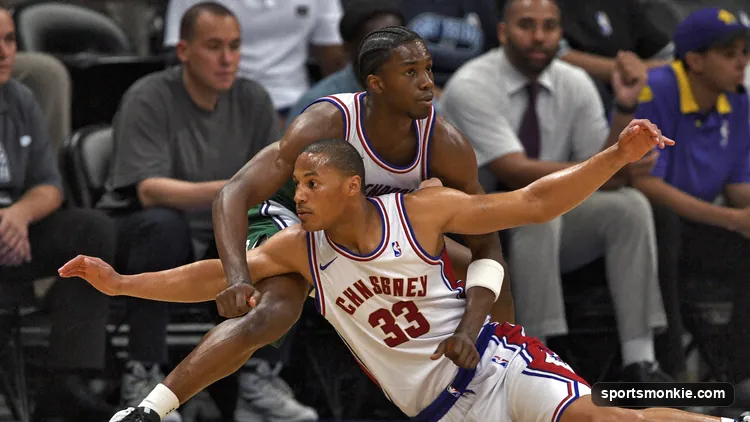
Man-to-Man Defense in Basketball: Rules, Roles, and How It Works
Man to man defense explained: on-ball, denial, and help roles, stance, closeouts, and how it differs from zone. Full breakdown with drills and FAQs.
Off-Ball Screens in Basketball: Types, Alignment & How to Use Them
A basketball screen set away from the ball is an off-ball screen. Learn the down, back, flare, cross, and elevator screens with alignment, roles, and counters.