
Man-to-Man Defense in Basketball: Rules, Roles, and How It Works
On this page6
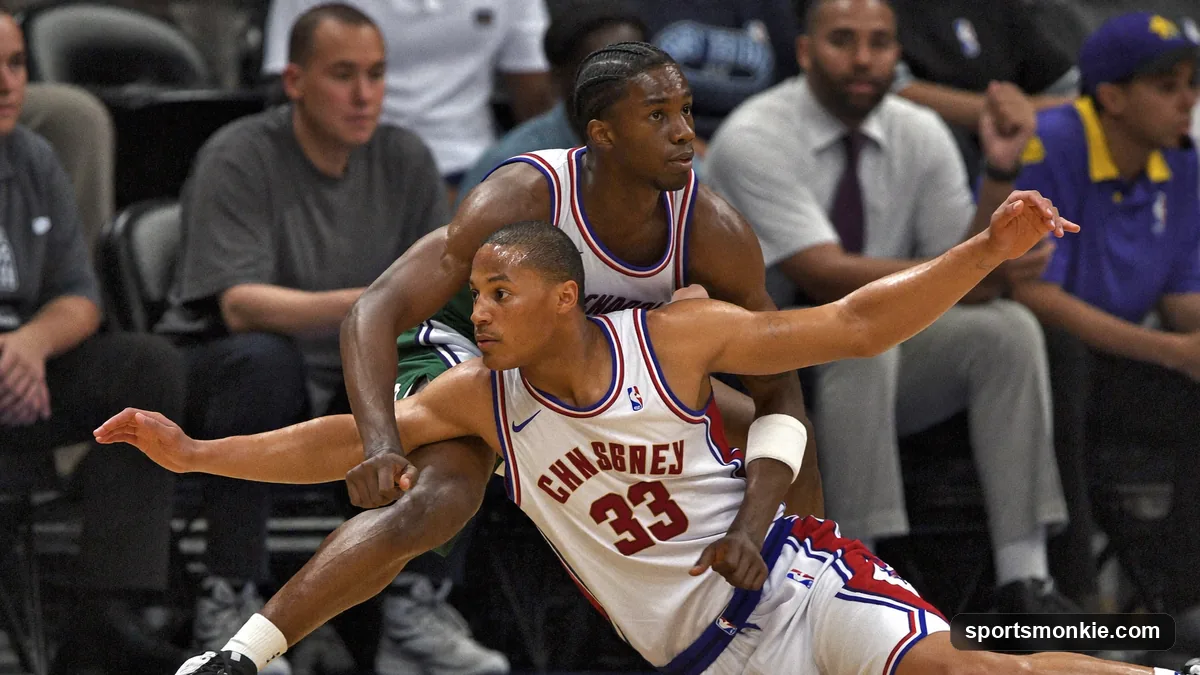
Man-to-man defense is a scheme where each of the five defenders guards one specific offensive player for the entire possession, following that player wherever they go on the court instead of covering a fixed zone. It’s the most-used defense in basketball, from youth leagues to the NBA, because it holds every player individually accountable and adjusts instantly to whatever the offense runs. This guide breaks down the roles, stance, team principles, and how it stacks up against zone defense — part of SportsMonkie’s basketball defenses and offenses hub.
What Is Man-to-Man Defense?
In man-to-man defense, matchups are set before the possession begins — usually by position, size, or ability — and each defender stays attached to that assigned opponent no matter where they move on the floor. If your man cuts from the corner to the top of the key, you go with him. This is different from help defense as a standalone concept, which is actually one of the three roles within man-to-man, not a separate system. It’s also different from zone defense, where defenders own a patch of floor and pass players off to a teammate when they enter that area.
Man-to-man is the default defense taught first at nearly every level, including in the NBA and WNBA, because it forces players to develop real one-on-one defensive skills rather than hiding in a zone.
The Three Defensive Roles
Every man-to-man defender is always in one of three roles, and it changes possession by possession, even pass by pass:
- On-ball defense — you’re guarding whoever has the basketball right now. Your job is to contain the dribble, contest the shot, and funnel the ball handler toward help (usually the sideline and baseline).
- Denial defense — your man is one pass away from the ball. You deny the passing lane, often with your back hand up and body angled to see both the ball and your man, making the entry pass hard to complete.
- Help defense — your man is two or more passes away, so you sag off toward the paint to protect the rim and be ready to rotate if a teammate gets beaten off the dribble.
Recognizing which role you’re in at every instant — and moving your feet the moment the ball moves — is what separates a good man-to-man defense from a disorganized one.
Stance and Footwork
Good man-to-man defense starts with the body, not the scheme. The fundamentals:
- Feet shoulder-width apart, knees bent, weight on the balls of the feet (not the heels)
- Back straight, chest up, head over the hips for balance
- Eyes on the opponent’s midsection or belt buckle — it can’t fake you out the way a head or ball can
- Lateral slides without crossing the feet or standing up out of the stance
- Active hands to contest passes and shots without reaching in and fouling
On a closeout — sprinting at a shooter who just caught the ball — defenders use short, choppy steps to arrive under control, with a hand up to contest the shot without flying past and giving up a driving lane.
Team Principles That Tie It Together
Individual technique only works if the whole unit moves together. Core team principles include:
| Principle | What it means |
|---|---|
| Ball-you-man positioning | Defenders angle their body to see both the ball and their assigned player at all times |
| Help and recover | Step in to stop dribble penetration, then sprint back to your own man once the danger passes |
| Closing out | Contest a catch-and-shoot look with balance, not a wild, off-balance lunge |
| Post defense | Play behind, three-quarter, or fully front the post depending on where the ball is and how much help is available |
| Communication | Constant talk on screens, cutters, and switches so no defender is caught by surprise |
Teams that run man-to-man well also drill trapping — sending a second defender to double-team the ball in specific spots, like the corner or half court, to force a turnover or a bad pass.
Man-to-Man vs. Zone Defense
| Man-to-Man | Zone | |
|---|---|---|
| Assignment | One specific player | An area of the floor |
| Accountability | High — clear who’s at fault on a blown coverage | Lower — gaps can be shared blame |
| Foul risk | Higher, especially on the perimeter | Lower, generally |
| Rebounding | Boxing out is man-specific | Can be harder to assign boxouts |
| Best against | Isolation-heavy, one-on-one offenses | Teams weak at outside shooting |
| Common counter defense | — | See our box and one defense breakdown for a hybrid look |
Most competitive teams treat man-to-man as their base defense and mix in zone or hybrid looks like box-and-one situationally, rather than picking one system exclusively.
Common Mistakes and How to Fix Them
Even experienced players slip on a few recurring errors:
- Ball-watching — losing track of your own man while staring at the ball. Fix: keep peripheral vision on both at all times.
- Standing up out of stance — gassed legs lead to an upright posture that’s easy to blow by. Fix: build defensive-slide conditioning into practice.
- Late help — waiting too long to step in on penetration. Fix: anticipate the drive based on ball position, not just reaction.
- Chasing over screens instead of switching or fighting through — leads to open catch-and-shoot looks. Fix: decide the coverage (switch, fight over, go under) before the screen arrives, and communicate it loudly.
Man-to-man defense rewards teams that drill the fundamentals relentlessly: stance, slides, closeouts, and constant talk. Get those right and the scheme itself does the rest.
Frequently asked questions
What is man-to-man defense in basketball?+
It's a defensive scheme where each of the five defenders is assigned one specific offensive player to guard for the entire possession, following that player around the court regardless of where the ball goes. It contrasts with zone defense, where players guard an area of the floor instead of a person.
What are the three positions in man-to-man defense?+
On-ball defense (guarding whoever has the basketball), denial defense (denying the pass to a player one pass away from the ball), and help defense (sagging off a distant player to protect the paint and rotate if a teammate gets beaten).
Is man-to-man or zone defense better?+
Neither is universally better — man-to-man builds individual accountability and pressures the ball more, while zone protects the paint and rebounds with less foul risk. Most competitive teams use man-to-man as their base defense and mix in zone looks situationally.
What is the correct defensive stance for man-to-man defense?+
A low, wide stance with feet about shoulder-width apart, weight on the balls of the feet, knees bent, back straight, and arms active. Defenders slide their feet laterally without crossing them or standing upright, keeping their eyes on the opponent's midsection rather than the head or ball fakes.
What does 'help and recover' mean in man-to-man defense?+
It's when a defender leaves their own assignment to stop dribble penetration or a post move by a teammate's man, then sprints back to close out on their original player once the immediate danger passes.
Why do coaches teach man-to-man defense to youth players first?+
It forces every player to guard a specific opponent, which builds fundamental skills like stance, footwork, closeouts, and one-on-one accountability that zone defense can let weaker defenders hide from.
What is a switch in man-to-man defense?+
A switch happens when two defenders trade assignments mid-possession, usually on a screen, so each guards whichever offensive player is now closest rather than chasing their original matchup around the pick.
What is denial defense in basketball?+
Denial defense is played by a defender guarding a teammate's man who is one pass away from the ball; the defender positions on the passing lane, often with a hand up, to make that pass difficult or impossible.
Sources
Play & tools
Free browser games and tools — no account, no download.
- Play 82-0 — Draft five, one per position, and see if your lineup can go a flawless NBA season.
- Play Era Ball — Draft an all-time NBA roster from a single era, then simulate a season and chase a perfect run.
- Play 32-0 — Draft five college basketball legends, one per position, and chase a perfect 32-0 national title.
- Explore all our games →
- Get the printable bracket — Download and print a blank tournament bracket to fill out by hand.
- Open the TS% calculator — Calculate TS% from points, field goal attempts and free throw attempts — scoring efficiency in one number.
- Explore all our free sports tools →
Related basketball guides
View all →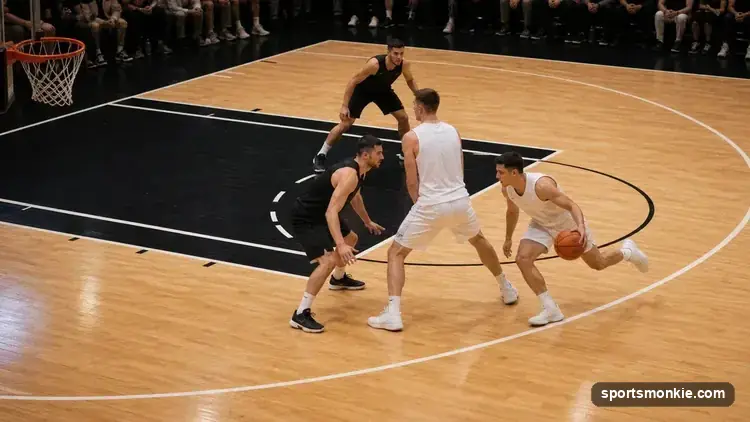
Pick and Roll in Basketball: How It Works, Types, and How to Defend It
The pick and roll explained: how the screen-and-roll works, its variations, and the defensive coverages teams use to stop it.
1-3-1 Zone Defense in Basketball: Alignment, Roles & How to Attack It
The 1-3-1 zone defense explained: player alignment, roles, traps, strengths, weaknesses, and how offenses beat it. A full coaching breakdown.
2-3 Zone vs Man-to-Man Defense: Full Basketball Comparison
2-3 zone vs man to man defense compared: coverage, pick-and-roll, 3-point defense, rebounding, and when coaches at every level pick each.
3-2 Zone Defense in Basketball: Alignment, Roles, and How to Attack It
The 3-2 zone defense explained: alignment, player roles, strengths, weaknesses, and how offenses attack this high-pressure zone.
Help Defense in Basketball: How It Works, Positioning, and Key Rules
Help defense is when off-ball defenders shift toward the ball to stop dribble penetration. Learn positioning, rotations, stunts, tags, and closeouts.
Box and One Defense: How It Works, When to Use It, and How to Beat It
The box and one defense mixes zone and man-to-man: four defenders form a box while one shadows the opponent's top scorer. Setup, uses, and counters.