
Help Defense in Basketball: How It Works, Positioning, and Key Rules
On this page6
Help defense is when an off-ball defender leaves their own man for a moment to stop dribble penetration or protect the rim, usually after a teammate gets beaten. It’s the glue that turns five individual defenders into one team defense, trading a temporary numbers advantage near the ball for a rotation everyone else has to cover.
What help defense actually means
In man-to-man defense, every player is assigned one opponent, everywhere on the floor. But no single defender stops a good ball handler alone every time. Help defense is the answer: defenders not guarding the ball adjust position based on how close their own man is to the action, so they can step in and stop a drive before it reaches the basket.
The core idea is simple. If your assigned player is far from the ball — say, in the corner while the ball is on the opposite wing — you don’t need to guard them tightly. You can sag toward the paint to help a teammate who gets beaten, since it would take the offense a pass or two to reach your man anyway. This is often called help side defense or weak side defense, since it usually happens on the side of the floor away from the ball.
Good team defense isn’t five players locking down five matchups in isolation. It’s five players constantly adjusting distance from their own man based on the ball’s location, so help is always available and rotations happen before the offense can exploit them.
Positioning: the ball-you-man triangle
Coaches teach help defense with a simple visual: imagine a triangle connecting the ball, the help defender, and the defender’s own man. The help defender should always be positioned inside that triangle, closer to the paint than either the ball or their man, with a stance that lets them see both at once.
Practical positioning rules:
- One foot in the lane. A defender one or more passes away from the ball should have at least one foot in the free-throw lane, ready to step into a driving lane.
- See the ball and your man. Stand with your body angled so you can watch the ball handler out of one eye and your assignment out of the other — never fully turn your back on either.
- Sag proportional to distance. The farther your man is from the ball, the more you can help. A player in the opposite corner (two or more passes away) allows deep help; a player one pass away on the same-side wing allows only a small cheat toward the paint.
- Stay low and ready. Help defense requires quick closeouts, so defenders stay in a low stance rather than standing upright and flat-footed.
This positioning is what lets a helper step in front of a driving ball handler a half-second before contact, forcing a tough shot, a charge, or a pass out of trouble.
Types of help: on-ball penetration, post help, and cutters
- Help on dribble penetration. The most common trigger — a ball handler blows past their defender, and the nearest helper steps over to cut off the lane, often drawing a charge or forcing a tough finish.
- Help in the post. When a post player gets deep position, a nearby defender “digs down” to poke at the ball before recovering to their own man.
- Help on cutters. A backdoor or lane cut draws a brief “tag” — a quick bump as the cutter passes through the paint.
- Help against the pick-and-roll. A big man or nearby defender hedges, shows, or drops to contain the drive while the screener’s man recovers — see how this interacts with a pick and roll.
Related techniques: stunt, tag, dig, and closeout
Coaches use specific vocabulary for the different flavors of help defense:
| Technique | What it is | When it’s used |
|---|---|---|
| Stunt | A hard fake step or jab toward the ball without fully leaving your man | To slow a driver or make a passer hesitate, without committing to full help |
| Tag | A brief bump on a cutter running through the paint | To disrupt a roller or cutter’s timing in pick-and-roll or motion offense |
| Dig (or “dig down”) | Dropping toward the post to poke at the ball, then recovering | Against a post-up when your own man is a weak outside threat |
| Help and recover | Fully stepping in to stop a drive, then sprinting back to your own man | When the ball handler is genuinely stopped and the helper’s man hasn’t moved to exploit the gap |
| Closeout | Sprinting to contest an open shooter under control, low and with a hand up | After a kick-out pass from a drive that drew help |
| Rotate (or “X-out”) | A full defensive rotation where the helper stays on the new man and teammates shift to cover the chain reaction | When help fully commits and can’t recover in time, requiring the whole defense to shift assignments |
Rotations: why help defense is a team effort, not one player’s job
Help defense only works if it doesn’t end with the helper. The moment a defender leaves their man to help, that man becomes open — so the defense needs a rotation plan for who covers him next. This is where possessions are won or lost.
A standard sequence: the ball handler drives, beats the on-ball defender, and the nearest help defender steps in. If the ball handler kicks out to the player help just left, a second defender — often the “low man” nearest the baseline — has to rotate to contest that shot, which can leave a third player open. Elite defenses chain two or three rotations fast enough that the offense never gets a clean look; weaker defenses break down after the first one. This is exactly why teams drill “shell defense” — rotating around an imaginary ball until moving together becomes automatic.
Strengths and weaknesses of help defense
Strengths: turns a one-on-one loss into a stop, protects the rim without needing every defender to be elite on the ball, forces tougher contested shots even after a defender is beaten, and builds the communication that separates good defenses from great ones.
Weaknesses: it creates a temporarily open man every time it’s used, and good offenses hunt that deliberately. It requires constant talk — a missed rotation call means a wide-open shot — and it adds physical and mental strain on defenders who are helping on nearly every possession.
Zone schemes like the 2-3 zone defense build help into the structure by design, since defenders guard areas rather than people — which is part of why some coaches choose zone over man-to-man when their team struggles to execute help rotations consistently.
How offenses attack help defense
Good offenses don’t avoid help defense — they bait it on purpose:
- Drive-and-kick. Attacking downhill to draw a help defender, then passing to the shooter that help left behind.
- Skip passes. Throwing across the court to the weak side before help defenders can recover.
- Cutting off the drive. As soon as help commits, a third player cuts into the vacated space for a layup.
- Spacing the floor. Modern offenses space four or five shooters around the arc so every helper leaves a shooter open, not a non-threat.
Understanding both sides of help defense — how it protects the rim and how it gets exploited — is part of reading any possession, whether you’re studying a post up matchup, a pick-and-roll action, or a simple straight-line drive. For the bigger picture on how man-to-man, zone, and hybrid defenses fit together, see the full basketball defenses and offenses guide, or browse more basketball coverage.
Frequently asked questions
What is help defense in basketball?+
Help defense is a team defense concept where an off-ball defender temporarily leaves their own assignment to stop dribble penetration or contest a shot near the basket, usually because the on-ball defender got beaten. The helper comes from the weak side or a gap, closes the driving lane, and then either recovers to their original man or the defense rotates as a unit to cover the resulting gap.
What is help side defense?+
Help side defense (also called weak side defense) refers to the positioning of defenders whose own man is on the opposite side of the floor from the ball, or two or more passes away from it. Instead of standing directly on their man, these defenders sag toward the paint with one foot in the lane, ready to help stop a drive while staying close enough to recover if the ball swings to their side.
How do you position yourself for help defense?+
A help defender should keep one foot in the lane (the 'ball-you-man' triangle), face the ball with their back partially toward their own man, and stay low in a defensive stance. The farther your assigned player is from the ball, the farther off them you can sag — a player in the opposite corner allows more help than a player one pass away on the wing.
What is the difference between help defense and man-to-man defense?+
Man-to-man defense is the overall scheme where each defender is individually assigned to guard one opponent everywhere on the court. Help defense is a technique used inside that scheme — it's how off-ball defenders support the on-ball defender by shading toward the paint and rotating when a teammate gets beaten. Pure man-to-man without help concepts leaves defenders isolated on drives; team defense builds help into every possession.
What is the difference between a stunt, a tag, and a closeout?+
A stunt is a fake help — a defender takes one hard step or jab at the ball handler to slow them down without fully committing, then recovers to their own man. A tag means a help defender briefly bumps or chucks a cutter (often a roller in the pick-and-roll) as they run through the paint, disrupting their path without leaving their primary rotation. A closeout is the technique of sprinting out to contest an open shooter under control, with a low stance and high hands, after help defense forces a kick-out pass.
Why is help defense important in basketball?+
Help defense turns isolated one-on-one battles into a team effort. Without it, any offensive player who beats their defender off the dribble has a free run to the rim. With coordinated help, the offense faces a numbers disadvantage on the drive — but the defense has to rotate as a five-man unit, or the help just creates an open shot for someone else. Teams with the best team defense communicate constantly so every rotation is covered.
Can help defense lead to open shots for the offense?+
Yes. Help defense is a trade-off: stopping the ball near the basket means someone on the floor is now open, at least briefly. Good offenses attack help defense on purpose, driving to force a help defender to commit and then kicking the ball to the open shooter that help left behind. That's why full defensive rotations — not just the initial help — determine whether the possession ends in a stop or a wide-open three.
Sources
Play & tools
Free browser games and tools — no account, no download.
- Play 82-0 — Draft five, one per position, and see if your lineup can go a flawless NBA season.
- Play Era Ball — Draft an all-time NBA roster from a single era, then simulate a season and chase a perfect run.
- Play 32-0 — Draft five college basketball legends, one per position, and chase a perfect 32-0 national title.
- Explore all our games →
- Get the printable bracket — Download and print a blank tournament bracket to fill out by hand.
- Open the TS% calculator — Calculate TS% from points, field goal attempts and free throw attempts — scoring efficiency in one number.
- Explore all our free sports tools →
Related basketball guides
View all →
2-3 Zone Defense in Basketball: Alignment, Roles, and How to Attack It
The 2-3 zone defense lines up two guards up top and three defenders low, guarding areas instead of players. Here's how it works and how to beat it.
Box and One Defense: How It Works, When to Use It, and How to Beat It
The box and one defense mixes zone and man-to-man: four defenders form a box while one shadows the opponent's top scorer. Setup, uses, and counters.
Backdoor Cut in Basketball: Definition, When to Use It, and How to Run It
What a backdoor cut is in basketball, when players use it against overplaying defenders, and how to execute and defend it correctly.
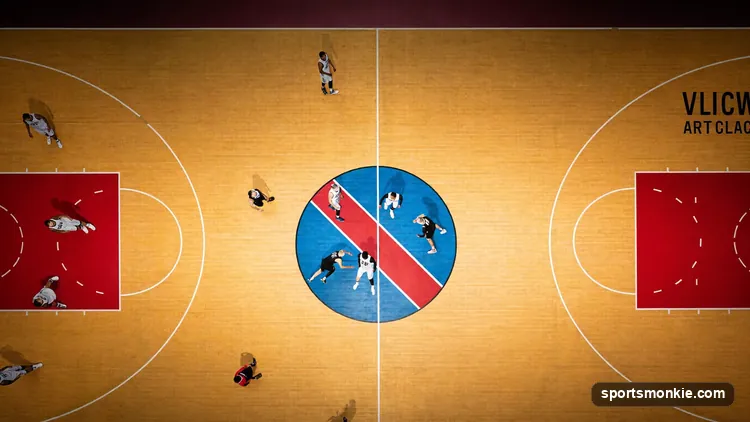
Basketball Defenses and Offenses Explained: Zone, Man-to-Man, and More
Basketball defenses and offenses explained: man-to-man, zone defense in basketball, presses, and the plays teams run to attack each one.
Man-to-Man Defense in Basketball: Rules, Roles, and How It Works
Man to man defense explained: on-ball, denial, and help roles, stance, closeouts, and how it differs from zone. Full breakdown with drills and FAQs.
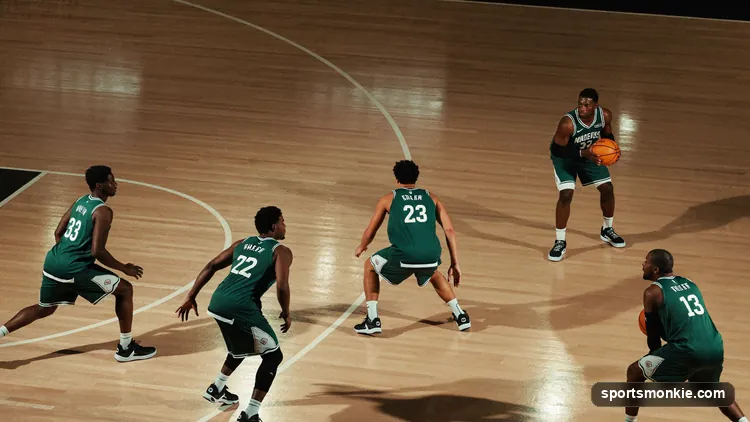
2-3 Zone vs Man-to-Man Defense: Full Basketball Comparison
2-3 zone vs man to man defense compared: coverage, pick-and-roll, 3-point defense, rebounding, and when coaches at every level pick each.