
What Is a Give and Go in Basketball? How It Works
On this page8
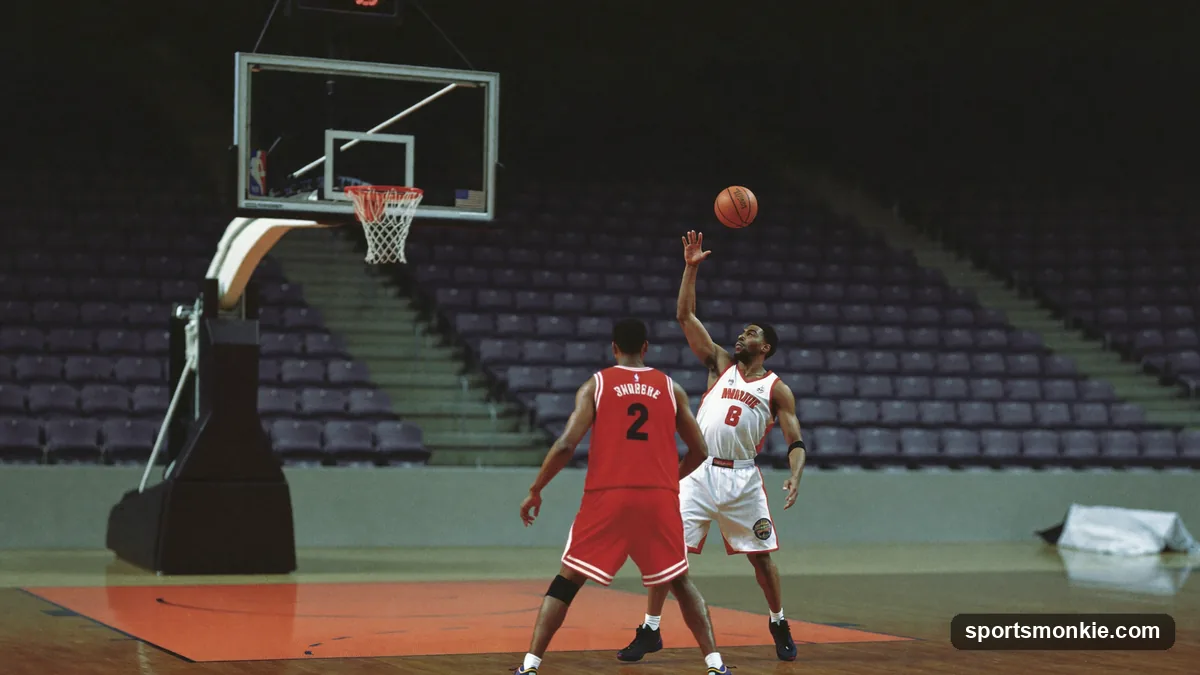
A give and go is a two-player basketball play: one player passes the ball to a teammate, then immediately cuts hard toward the basket for a return pass and an easy shot at the rim. It’s often called the oldest play in basketball, and it still shows up in NBA sets, college motion offenses, and every rec-league gym in the country because it beats a common defensive mistake — watching the ball instead of the player.
The Two Moves That Make It Work
The play is exactly as simple as its name suggests, and it happens in a matter of seconds.
The give. A player with the ball (call them Player A) passes to a teammate (Player B), usually on the wing or top of the key.
The go. The instant the pass leaves Player A’s hands, they explode into a cut toward the basket — not a jog, a hard, decisive move. If their defender has drifted even a step to watch the ball, that gap is the opening.
Player B reads the cut and delivers a return pass, usually a bounce pass timed to hit Player A in stride near the rim, for a layup. The whole sequence, from the first pass to the finish, should take two or three seconds. Hesitation kills it — a cutter who jogs gives the defense time to recover.
Why It Beats So Many Defenders
Good defense in basketball means guarding your player, not the ball. But watching the ball is a natural human instinct, and even disciplined defenders glance at a pass as it travels. A give and go is built entirely around exploiting that split-second lapse.
It also works because of simple geometry. The passer is already moving toward the rim before their defender has finished reacting to the pass, so the defender is always a beat behind. Unlike plays that rely on a size mismatch or a screen, the give and go only needs two willing players and a defender who blinks once.
That’s why it’s taught to beginners and still run by professionals: it doesn’t require elite athleticism, just timing, a good pass, and a decisive cut.
Defending the Give and Go
Coaches drill specific counters because the play is so common. The main principles:
| Defensive counter | What it does |
|---|---|
| Stay attached, don’t watch the ball | Removes the moment of hesitation the cut is designed to exploit |
| Deny the passing lane back to the cutter | Stops the return pass even if the cutter gets a step |
| Communicate (“cutter!”) early | Lets a help defender step in front of the cut before it fully develops |
| Force the cutter wide of the rim | Turns a clean layup into a contested, tougher shot |
The single biggest fix is the first one: a defender who keeps their eyes on their assigned player, using peripheral vision to track the ball, almost never gets beat by a give and go. Most successful give and go plays happen because a defender’s attention slipped, not because the offense did anything unstoppable.
Give and Go vs. Backdoor Cut
The two plays are cousins, and people often mix them up. A backdoor cut is any hard cut behind a defender who is overplaying the passing lane — it can be set up with a v-cut, a screen, or just a defender’s poor positioning, and it doesn’t require the cutter to have passed the ball first.
A give and go, by contrast, always starts with the cutter giving up the ball. The pass is the trigger. Many give and go plays end with what is technically a backdoor cut, but not every backdoor cut is a give and go.
Running It Inside a Bigger Offense
The give and go rarely stands alone as an entire game plan — it’s a building block inside larger sets. It pairs naturally with the pick and roll, since a ball-handler who can’t find room off a screen can reset by passing out and cutting instead. Motion offenses often chain give and go actions together: after the return pass, the new ball-handler can immediately look to run the same action with a different teammate, keeping defenders reacting instead of resting.
Teams that struggle to score against set defenses often lean on it as a release valve, because it doesn’t need a called play to work — just two alert players and a defense that isn’t paying attention.
Common Mistakes That Kill the Play
The give and go looks simple, but it breaks down in predictable ways when players rush or lose discipline:
- Jogging the cut instead of sprinting it. A slow cut gives the defender time to recover before the passer is ever open again.
- Cutting before the pass is fully released. Leaving too early tips off the defense and lets a help defender step in front of the cut.
- Standing and watching after the pass. The most common error at every level — a player passes and then admires it instead of moving, which erases the entire advantage.
- The receiver holding the ball too long. If Player B hesitates, the defender has time to recover and the passing lane closes before the return pass can be made.
- No spacing. If a third offensive player is standing in the cutting lane, there’s nowhere for the cutter to go and no angle for the return pass.
Coaches drill the timing specifically because the margin for error is so small — the play works because it happens fast, and any hesitation on either side of the pass gives it back to the defense.
A Play That Predates the Modern Game
The give and go isn’t a modern invention — it’s one of the oldest tactical concepts in basketball, dating back to the sport’s earliest decades before the shot clock, the three-point line, or advanced scouting existed. It has survived essentially unchanged because it doesn’t depend on rule changes or evolving athleticism; it depends on a defender’s attention lapsing for a single second, which happens in every era of basketball. That’s also why it remains one of the first plays youth coaches teach, right alongside dribbling and shooting fundamentals.
Where It Fits in Basketball’s Broader Playbook
The give and go is one of the foundational actions coaches point to when teaching spacing, cutting, and timing, alongside screens, post plays, and zone attacks. For the fuller picture of how offenses are built to attack different defensive looks, see our guide to basketball defenses and offenses explained, and browse more tactics and rules breakdowns in the basketball hub.
Frequently asked questions
What is a give and go in basketball?+
A give and go is a play where an offensive player passes the ball to a teammate, then instantly cuts toward the basket. If the cutter's defender relaxes even slightly, the passer becomes the receiver, delivers a return pass, and the cutter finishes with a layup near the rim.
Why is it called a give and go?+
The name describes the two actions in order: you "give" the ball away with a pass, then you "go" — cutting hard to the basket to get it back. Some coaches also call it a pass-and-cut.
Why is the give and go so effective?+
It punishes the natural instinct of defenders to watch the ball instead of their assigned player. The instant a defender's eyes drift to track the pass, the cutter is already moving, and by the time the defender reacts, the passing lane back to the rim is open.
How do you defend a give and go?+
Defenders counter it by staying attached to their player instead of watching the ball, cutting off the passing lane back to the cutter, and communicating early so a teammate can help if the cutter gets a step. Denying the easy return pass is usually more effective than trying to outrun the cut.
Is the give and go the same as a backdoor cut?+
They're closely related but not identical. A give and go always starts with the cutter passing the ball away first. A backdoor cut can happen without that initial pass — it's any hard cut behind an overplaying defender toward the rim, often set up by a v-cut or a screen rather than a pass.
What skills does the give and go teach young players?+
It's one of the first tactical concepts coaches teach because it rewards fundamentals over athleticism: making a crisp pass, cutting hard immediately after passing (not standing and watching), and finishing off a well-timed feed. It also teaches spacing, since a good give and go needs room to operate.
Can the give and go be run more than once in a possession?+
Yes. Many motion offenses use a continuous give and go, where after the return pass the receiving player can reset and run the same action with a different teammate on the other side of the floor, keeping the defense off balance for the whole possession.
Sources
Play & tools
Free browser games and tools — no account, no download.
- Play 82-0 — Draft five, one per position, and see if your lineup can go a flawless NBA season.
- Play Era Ball — Draft an all-time NBA roster from a single era, then simulate a season and chase a perfect run.
- Play 32-0 — Draft five college basketball legends, one per position, and chase a perfect 32-0 national title.
- Explore all our games →
- Get the printable bracket — Download and print a blank tournament bracket to fill out by hand.
- Open the TS% calculator — Calculate TS% from points, field goal attempts and free throw attempts — scoring efficiency in one number.
- Explore all our free sports tools →
Related basketball guides
View all →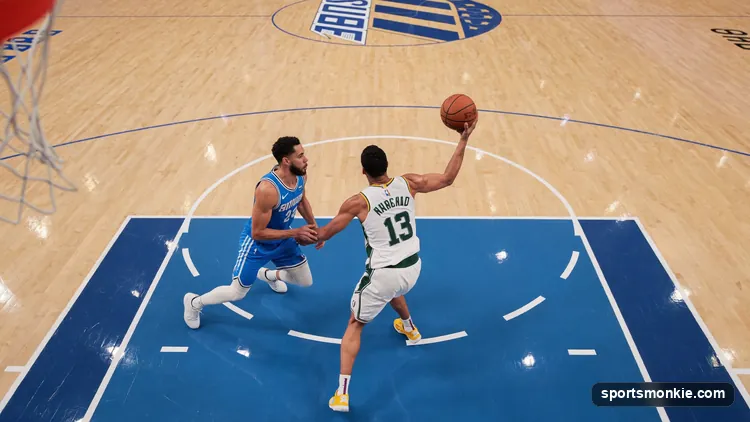
Backdoor Cut in Basketball: Definition, When to Use It, and How to Run It
What a backdoor cut is in basketball, when players use it against overplaying defenders, and how to execute and defend it correctly.
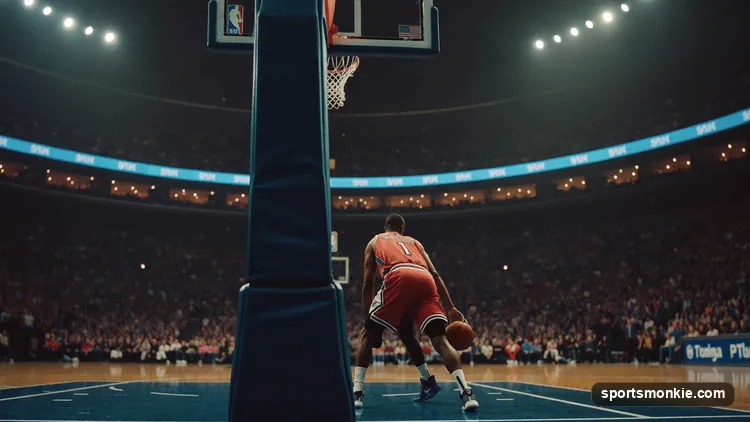
What Is a Post Up in Basketball? Post Moves and How to Defend It
A post up in basketball is when a player backs their defender down near the basket to score. Learn how to post up, key post moves, and how to defend it.
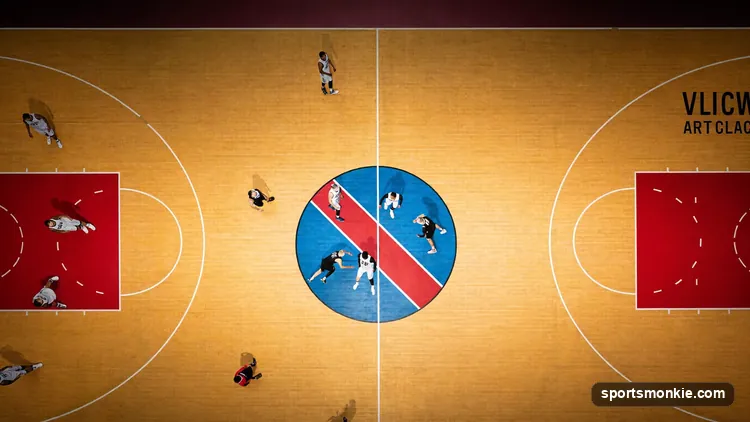
Basketball Defenses and Offenses Explained: Zone, Man-to-Man, and More
Basketball defenses and offenses explained: man-to-man, zone defense in basketball, presses, and the plays teams run to attack each one.
Basketball Positions Explained: All 5 Roles, Numbers & Duties
Basketball positions explained: point guard, shooting guard, small forward, power forward, and center — roles, the 1-5 numbering, and positionless basketball.
What Is a Fadeaway in Basketball? Technique, History & Best Shooters
A fadeaway in basketball is a jump shot taken while leaping backward, away from the defender, to create space. How it works, technique, and top shooters.
The Restricted Area in Basketball
The restricted area is a 4-foot arc under the basket where a defender can't draw a charge. What the semicircle means and how the no-charge rule works.