
What Is a Post Up in Basketball? Post Moves and How to Defend It
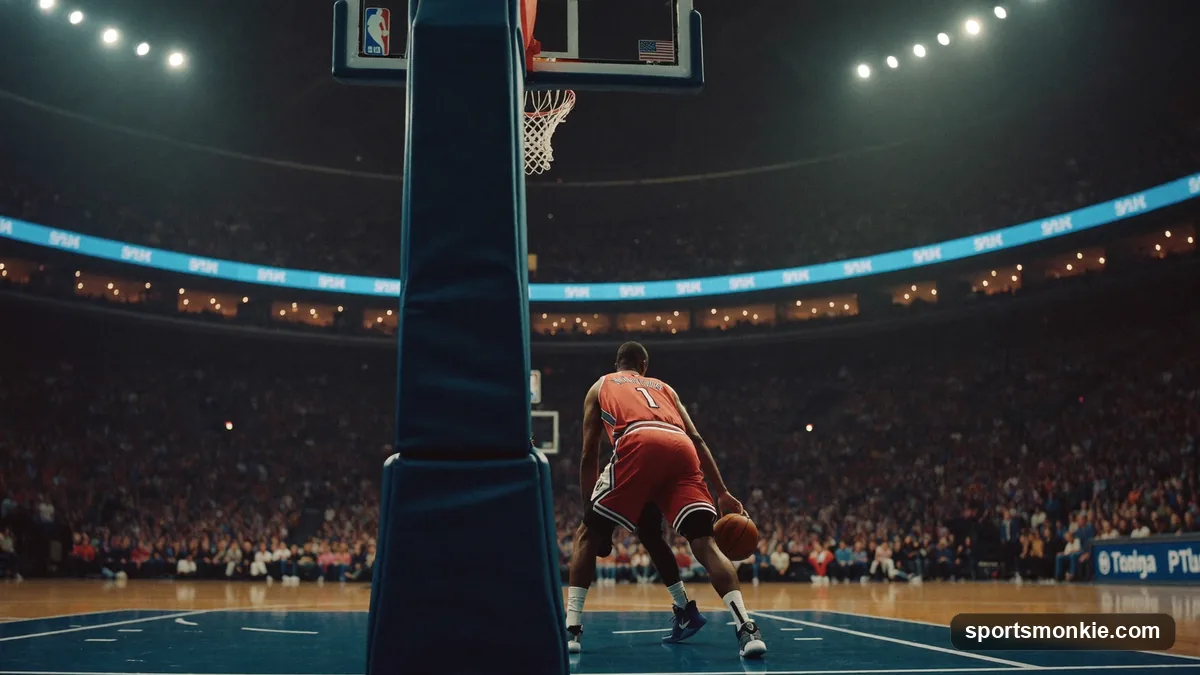
On this page6
A post up is when an offensive player catches the ball with their back to the basket, typically near the low block, and uses footwork, body positioning, and a scoring move to beat the defender directly guarding them. It is a one-on-one action rather than a screen-based play, and it lives or dies on positioning before the catch, not just skill after it.
How a post up actually works
Most post-ups start the same way: a guard passes to a teammate stationed near the block, roughly the painted rectangle at the edge of the free-throw lane closest to the basket. The sequence has three stages.
- Establish position. The post player fights for real estate low and close to the rim, ideally between the ball and their defender.
- Seal the defender. Using a wide base and a strong lower body, the post player pins the defender on one side so they cannot slide over to contest the catch or the eventual move.
- Catch and attack. Once the ball arrives, the post player reads the defense and picks a counter — drive, shoot, or kick the ball back out.
Good post players catch the ball with the basketball “chinned” high near the chest and elbows out, not down at the waist, because a low ball is an easy target for a digging guard’s hand.
Sealing the defender
Sealing is the technical skill that separates a good post-up player from one who just stands near the rim. To seal, the offensive player steps into and across the defender’s body with the outside foot, then reverse pivots so their back and hip lock the defender behind them. Done correctly, the defender is stuck a full step behind the play and cannot reach around to disrupt the catch. Sealing is why size alone does not win post-ups — a smaller, better-positioned player can seal a taller defender out of the play entirely.
The core post moves
Once the catch happens, the post player has a menu of counters. Coaches teach these as a package because each move sets up the next — if a defender overplays one side, the counter move punishes it.
| Move | What it is | Best used when |
|---|---|---|
| Drop step | Pivot and step baseline or middle after sealing, finishing at the rim | Defender is fully sealed behind the post player |
| Jump hook | A one-handed shot released high over the shoulder, arcing away from the defender | Defender is close and contesting straight up |
| Up-and-under | A shot fake that draws a jump, followed by a step-through drive | Defender bites on the fake |
| Fadeaway | A jump shot that pushes away from the defender on release | Little space and no clean angle to the rim |
| Quick spin | A tight reverse pivot toward the open side of the floor | Defender overplays one shoulder |
Each move pairs footwork with deception — a shoulder fake or ball fake before committing is what turns a predictable post-up into an efficient shot.
How defenses stop the post
Defenders have three main answers to a good post-up threat. Fronting means playing directly in front of the post player to deny the entry pass altogether, usually backed up by a teammate ready to intercept a lob over the top. Three-quarters positioning splits the difference, playing on the high or ball side to make the entry pass harder without fully committing to a front. Digging and doubling sends help from the weak side the instant the ball is caught, forcing a rushed decision or a turnover.
The three-second rule also limits offensive post play: a player cannot camp inside the free-throw lane for more than three consecutive seconds without shooting, missing, or stepping out, which is why post players flash in and out rather than parking under the rim.
Why post-ups matter less — and still matter — today
Modern NBA offenses lean on ball screens, spacing, and three-point shooting because the analytics favor shots at the rim or from deep over contested post shots. That has pushed the pure post-up from a primary offense to more of a situational weapon. Where it still thrives is the mismatch hunt: a bigger wing switched onto a smaller guard, or a skilled big posting a smaller defender after a switch. Teams that run heavy motion offense in basketball still use a quick post entry as one of several reads, not the whole plan.
Post-ups also connect to other tactics covered across SportsMonkie’s basketball tactics library, including how a backdoor cut punishes a defense that overplays the perimeter the same way a post seal punishes a defender who loses inside positioning. For the full picture of how these actions fit together on both ends of the floor, see our guide to basketball offenses and defenses explained, or browse more basketball coverage.
The bottom line
A post up rewards footwork, patience, and body control over raw athleticism. Sealing wins position, a package of counters like the drop step and jump hook finishes the play, and defenses answer with fronting, three-quarters positioning, and early doubles. It is used less as a team’s core offense than it was decades ago, but as a mismatch-hunting tool it remains one of basketball’s most reliable ways to manufacture an easy bucket.
Frequently asked questions
What is a post up in basketball?+
A post up is when a player establishes position with their back to the basket, usually on or near the low block, catches a pass there, and attacks the defender directly in front of them. It is one of the oldest scoring actions in basketball, built on footwork and body control rather than dribbling in the open floor.
What is the difference between posting up and backing someone down?+
Backing down is the act of dribbling into the post and using your body to push a defender closer to the rim before making a move. Posting up is the broader term for the whole action, including catching the ball already in position, sealing, and finishing without any dribbling at all.
What is a drop step?+
A drop step is the most common post-up finishing move. After sealing the defender on one side, the offensive player pivots on their back foot and steps toward the basket with the other foot, using their body to shield the ball, then finishes with a layup or dunk.
How do defenders stop a post up?+
Defenses front the post (playing in front to deny the pass), play three-quarters on the high or ball side, or send an early double-team from the weak side. Help defense collapsing off a non-shooter is one of the most common counters at every level.
What is the three-second rule in the post?+
Offensive players cannot stand inside the painted key for more than three consecutive seconds without the ball being shot, hitting the rim, or the player leaving the lane. It stops a post player from parking under the rim and waiting for a pass, which is why good post players flash in and out of the lane.
Can a guard post up?+
Yes. Guards post up whenever they have a size or strength mismatch, usually against a smaller opposing guard switched onto them. It became common in the 2010s and 2020s as teams switch more screens, creating short guard-on-guard post-ups deep in the shot clock.
Why has post-up basketball declined in the NBA?+
Analytics-driven offenses value three-pointers and shots at the rim over contested mid-range post shots, and most post-ups end in a lower-efficiency look than a spread pick-and-roll possession. Post-ups still appear as a counter for mismatches, just less often as a team's primary offense.
What is the difference between a post up and a pick and roll?+
A post up is a one-on-one action where a player catches the ball near the basket and attacks their own defender. A pick and roll involves two players and a screen away from the basket, designed to force a defensive breakdown rather than win an individual matchup.
Sources
Play & tools
Free browser games and tools — no account, no download.
- Play 82-0 — Draft five, one per position, and see if your lineup can go a flawless NBA season.
- Play Era Ball — Draft an all-time NBA roster from a single era, then simulate a season and chase a perfect run.
- Play 32-0 — Draft five college basketball legends, one per position, and chase a perfect 32-0 national title.
- Explore all our games →
- Get the printable bracket — Download and print a blank tournament bracket to fill out by hand.
- Open the TS% calculator — Calculate TS% from points, field goal attempts and free throw attempts — scoring efficiency in one number.
- Explore all our free sports tools →
Related basketball guides
View all →
What Is a Give and Go in Basketball? How It Works
A give and go in basketball is a pass, cut, and return-pass play between two players. See how it works, why it's so hard to stop, and how to defend it.
Backdoor Cut in Basketball: Definition, When to Use It, and How to Run It
What a backdoor cut is in basketball, when players use it against overplaying defenders, and how to execute and defend it correctly.
Basketball Defenses and Offenses Explained: Zone, Man-to-Man, and More
Basketball defenses and offenses explained: man-to-man, zone defense in basketball, presses, and the plays teams run to attack each one.
Basketball Positions Explained: All 5 Roles, Numbers & Duties
Basketball positions explained: point guard, shooting guard, small forward, power forward, and center — roles, the 1-5 numbering, and positionless basketball.
What Is a Fadeaway in Basketball? Technique, History & Best Shooters
A fadeaway in basketball is a jump shot taken while leaping backward, away from the defender, to create space. How it works, technique, and top shooters.
Hook Shot in Basketball: Technique, Skyhook, and Why It's Unblockable
The hook shot in basketball is a one-handed shot released in a sweeping arc with the shooter's body shielding the ball from the defender.