
Box and One Defense: How It Works, When to Use It, and How to Beat It
On this page6
A box and one defense puts four defenders in a box-shaped zone around the free-throw line and lane while a fifth defender plays tight man-to-man denial on the opponent’s single best scorer. It is a hybrid, or “junk,” defense built to take one dangerous player out of a game while the zone behind it protects the rim against everyone else. This guide covers the exact setup, who plays each role, when coaches reach for it, and the counters that beat it. For the full picture of how it fits alongside other schemes, see our basketball defenses and offenses explained breakdown.
How the box and one is set up
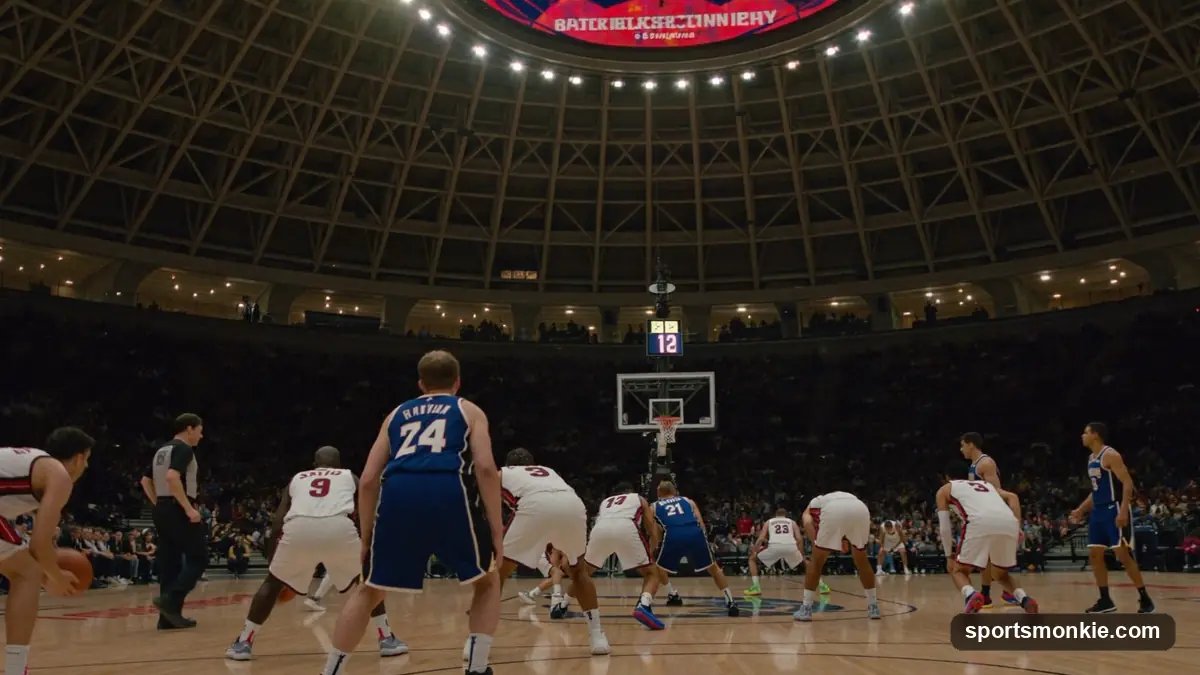
The name describes the shape. Four defenders form a box: two “high” defenders sit at the free-throw line extended, and two “low” defenders sit on the blocks near the rim. Together they guard the paint and the highest-value scoring area on the floor as a unit, sliding toward the ball and closing out on whoever the zone assigns them, the same way defenders would in any zone shell — including the 1-3-1 zone defense that uses a different shape to guard the same space.
The fifth defender, the “one,” ignores the zone completely. This player, often nicknamed the chaser, has a single job: deny the ball to the opponent’s top scorer. That means face-guarding, fighting through screens, and following the star through the corner, out to half court, and anywhere else they roam, closer to true denial man-to-man defense than anything a zone defender does.
- Two high defenders — cover the elbows and top of the key, closing out on perimeter catches.
- Two low defenders — protect the rim, contest post touches, and rebound out of the box.
- The chaser — full denial coverage on one player, on and off the ball, for the entire possession.
Who should play each role
Personnel matters as much as the shape. The chaser needs elite conditioning and quickness, because fighting through screens for 30-plus minutes without a break is exhausting; teams often use their best perimeter defender or a specialist brought in purely for this job. The four box defenders need high basketball IQ and communication more than pure athleticism, since the zone lives or dies on defenders reading the ball and rotating together rather than chasing individual matchups.
When a box and one works — and when it doesn’t
| Situation | Box and one verdict |
|---|---|
| Opponent has one clearly dominant scorer | Strong fit |
| Rest of the roster is a weak outside-shooting threat | Strong fit |
| Team has multiple three-point shooters | Poor fit, gets picked apart |
| Opponent has a skilled passing big in the post | Risky, high defenders get exploited |
| Used as a short, surprise change-up for a few possessions | Very effective |
| Used as a full-game base defense | Rarely sustainable |
The scheme is most common in high school and youth basketball, where scoring is frequently top-heavy around one standout player. At higher levels it usually appears as a wrinkle for a quarter or a stretch of possessions rather than a full-game plan, because disciplined shooting teams eventually solve it.
How to beat a box and one
Every counter starts from the same idea: the guarded star is still useful without ever touching the ball, because the chaser has to go wherever they go.
- Turn the star into a screener. Have the chased player set on-ball screens. The chaser gets dragged into the action, forcing a box defender to help and opening a shooter elsewhere.
- Overload one side of the floor. Stack three offensive players on one side. Four zone defenders cannot cover an overload and protect the paint at the same time.
- Attack the gap in the middle. A ball handler who drives into the heart of the box collapses the high and low defenders, then kicks out to the open man — the same seam a pick and roll is designed to create.
- Station a shooter in the corner. Pulling a low defender out to the corner stretches the box until it stops looking like a box, widening the gaps every time the four defenders rotate.
- Crash the offensive glass. A box is poorly organized to box out, so extra rebounders often get second-chance putbacks.
Patient side-to-side ball movement is often the simplest fix of all: swing the ball enough times and one of the four zone defenders eventually rotates late, leaving an open catch-and-shoot look. Since the defense is conceding that shot on purpose, making it is usually the fastest way to force a coach to abandon the scheme.
Box and one vs. other junk defenses
The box and one is one member of a small family of hybrid, or junk, defenses that all trade zone coverage for extra man-to-man attention on specific scorers.
| Defense | Zone defenders | Man-to-man defenders | Best against |
|---|---|---|---|
| Box and one | 4 | 1 | One dominant scorer |
| Triangle and two | 3 | 2 | Two dangerous scorers |
| Diamond and one | 4 (diamond shape) | 1 | One scorer, more help at the elbows |
A triangle and two sacrifices more zone coverage to shut down a second scoring threat, which makes it even more vulnerable to a team with three or more outside shooters. A diamond and one covers the same one-star problem as a box and one but shifts a defender to the high post instead of the wing, trading corner coverage for extra interior help.
Notable examples
The highest-profile modern use came in the 2019 NBA Finals, when the Toronto Raptors deployed a box and one against Stephen Curry and the Golden State Warriors, with Fred VanVleet chasing Curry while the rest of the roster played zone behind him. The Raptors returned to a similar look in the 2020 playoffs against Jayson Tatum and the Boston Celtics. Both cases followed the same logic that governs the basketball version of the defense at any level: take away the one player scoring the most points, and make the rest of the roster prove it can win without him.
The short version: four defenders in a box zone, one locked onto the star, effective for a handful of possessions against a one-man show, and fragile the moment a team full of shooters figures out where the open man is standing.
Frequently asked questions
What is a box and one defense in basketball?+
It is a combination defense that blends zone and man-to-man principles. Four defenders form a box-shaped zone protecting the basket and free-throw line while a fifth defender, often called the chaser, plays denial man-to-man on the opposing team's top scorer, following that player everywhere on the floor.
Is the box and one legal in the NBA and college basketball?+
Yes, at every level. The NBA legalized zone defenses in 2001-02, and combination looks like the box and one are common in college, high school, and youth basketball. The only restriction is the standard defensive three-second rule against camping in the paint.
Who plays the 'one' in a box and one, and what do they do?+
The 'one' is usually the team's best on-ball defender, called the chaser. Their only job is denying the ball to the opponent's top scorer, fighting through screens and staying attached to that player for the full possession, on and off the ball.
When should a coach call a box and one?+
It works best when one player accounts for most of an opponent's scoring and the rest of the roster is a weak outside-shooting threat. It shows up often in high school and youth basketball for that reason, and at the pro level it is usually a short, surprise adjustment rather than a full-game defense.
How do you beat a box and one defense?+
Use the guarded star as a screener or decoy so the chaser gets dragged into the box, overload one side of the floor so four defenders cannot cover the overload and the paint, attack the gap in the middle of the box off the dribble, and hit open shooters the zone is forced to leave alone.
What is the difference between a box and one and a triangle and two?+
A box and one uses four zone defenders and one man-to-man defender on a single star scorer. A triangle and two flips that ratio, using three zone defenders in a triangle shape and two man-to-man defenders on the opponent's top two scoring threats.
Why is the box and one called a junk defense?+
'Junk defense' is the umbrella term for any scheme that breaks the standard either-zone-or-man rule by mixing both styles at once. The box and one, triangle and two, and diamond and one are all junk defenses built to solve a specific matchup problem rather than serve as a team's base defense.
Sources
Play & tools
Free browser games and tools — no account, no download.
- Play 82-0 — Draft five, one per position, and see if your lineup can go a flawless NBA season.
- Play Era Ball — Draft an all-time NBA roster from a single era, then simulate a season and chase a perfect run.
- Play 32-0 — Draft five college basketball legends, one per position, and chase a perfect 32-0 national title.
- Explore all our games →
- Get the printable bracket — Download and print a blank tournament bracket to fill out by hand.
- Open the TS% calculator — Calculate TS% from points, field goal attempts and free throw attempts — scoring efficiency in one number.
- Explore all our free sports tools →
Related basketball guides
View all →
Basketball Defenses and Offenses Explained: Zone, Man-to-Man, and More
Basketball defenses and offenses explained: man-to-man, zone defense in basketball, presses, and the plays teams run to attack each one.
Backdoor Cut in Basketball: Definition, When to Use It, and How to Run It
What a backdoor cut is in basketball, when players use it against overplaying defenders, and how to execute and defend it correctly.
Help Defense in Basketball: How It Works, Positioning, and Key Rules
Help defense is when off-ball defenders shift toward the ball to stop dribble penetration. Learn positioning, rotations, stunts, tags, and closeouts.
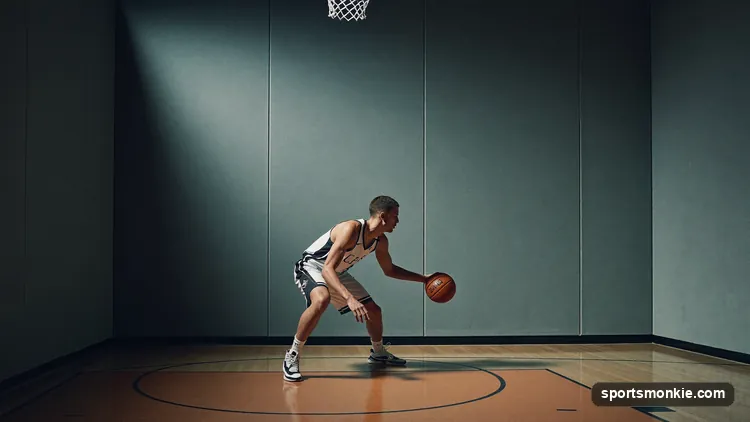
1-3-1 Zone Defense in Basketball: Alignment, Roles & How to Attack It
The 1-3-1 zone defense explained: player alignment, roles, traps, strengths, weaknesses, and how offenses beat it. A full coaching breakdown.
2-3 Zone Defense in Basketball: Alignment, Roles, and How to Attack It
The 2-3 zone defense lines up two guards up top and three defenders low, guarding areas instead of players. Here's how it works and how to beat it.
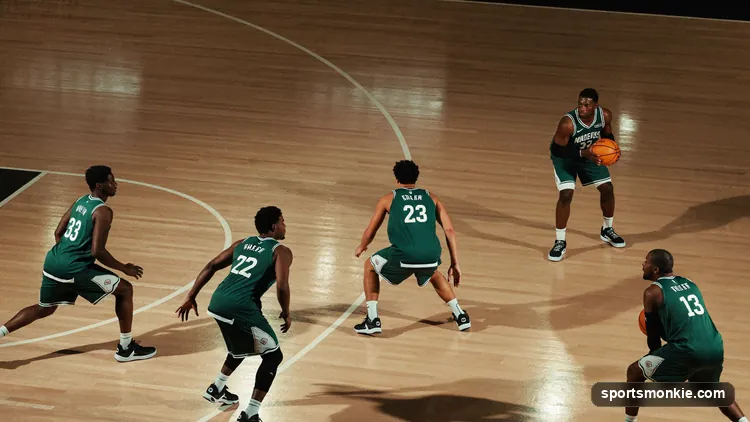
2-3 Zone vs Man-to-Man Defense: Full Basketball Comparison
2-3 zone vs man to man defense compared: coverage, pick-and-roll, 3-point defense, rebounding, and when coaches at every level pick each.