
Floater in Basketball: What It Is and How to Shoot One
On this page7
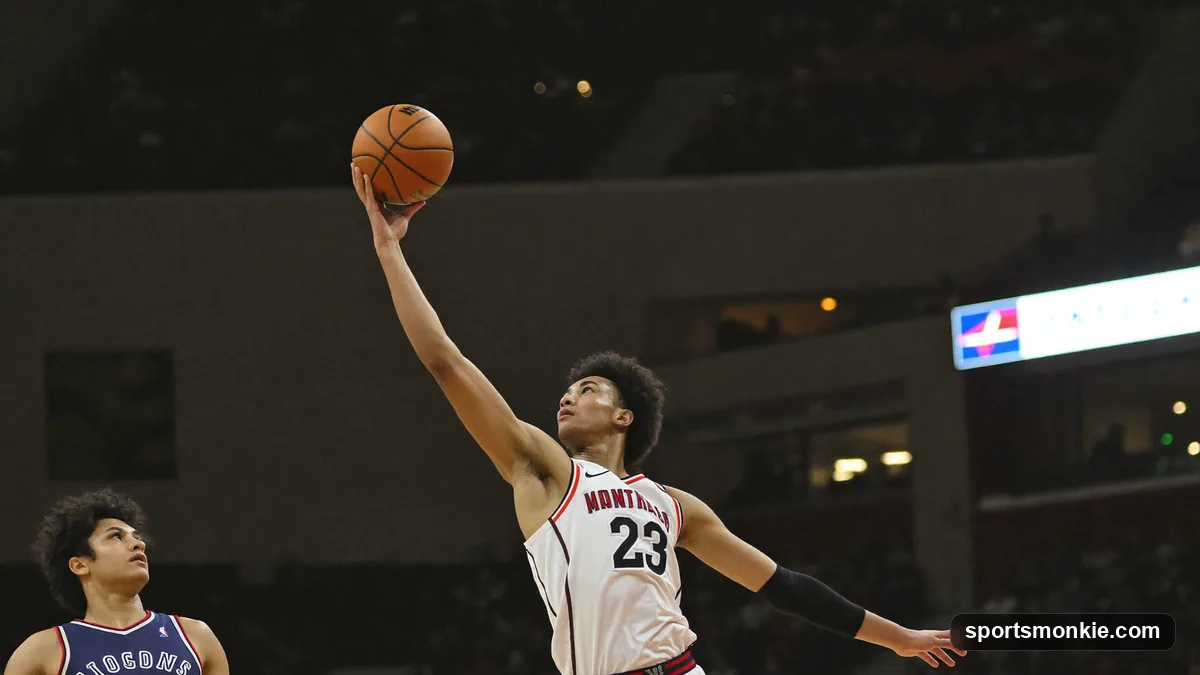
A floater in basketball is a high, soft one-handed shot a guard lofts over a taller defender’s reach while driving into the lane, released well before the rim so it drops in before a shot-blocker can contest it. Also called a teardrop or a runner, it is one of the most essential shots among the types of basketball shots available to smaller, quicker players who need a way to score against size in the paint.
What Is a Floater in Basketball?
The floater sits between a layup and a mid-range pull-up jumper. Instead of attacking all the way to the rim — where a 6-foot-10 shot-blocker can time a contest — the ball-handler releases the shot roughly 8 to 12 feet from the basket, well outside the reach of a help defender stepping up. The shot travels in a steep, looping arc and drops almost straight down through the net, which is where the “teardrop” nickname comes from.
Because it’s released early and high, the floater is functionally a different shot from a layup: a layup is banked or laid in close to the rim with a flatter trajectory, while a floater is launched from further away with extra arc specifically to clear a defender’s hands. Both shots share the same goal — finishing inside the arc without a jump shot — but the floater exists precisely because a straight-line layup isn’t available.
Why Guards Use the Floater Against Shot-Blockers
Rim protectors have a timing problem: they read a driving guard’s eyes, hips, and gather step to time a block. A floater breaks that rhythm because it is released a beat earlier and a few feet farther out than the defender expects a shot to come from. The shot-blocker has already committed to contesting a shot at the rim, and by the time they recognize the ball is in the air, it’s already above their outstretched hand.
This is why the floater is a signature shot for smaller guards. A 6-foot point guard driving into the lane cannot consistently finish through 6-foot-10 or 7-foot centers with a standard layup — the size gap is too large. The floater neutralizes that gap by taking the shot high in the air, over the top, rather than trying to finish through contact at the rim. It’s also a safer option than an euro step in basketball drive that ends in a contested finish, since the floater can be released from farther away with less risk of an offensive foul or a blocked shot.
How to Shoot a Floater: Step-by-Step Technique
The floater rewards touch over power. A shot launched too hard clangs off the back rim; a shot with too little arc gets swatted. Here is the core mechanic:
- Attack a gap, not the rim. Drive with the ball until a help defender steps in front of the basket, cutting off a direct layup path.
- Gather off one or two feet. A one-foot gather (off the outside foot on a drive) generates more forward momentum and disguise; a two-foot jump stop gives more balance and control, especially for beginners.
- Keep the elbow under the ball. Align the shooting elbow directly beneath the ball rather than flaring it out, which keeps the shot straight instead of pushing it off-line.
- Release early and high. Let the ball go from shoulder height or above well before the defender’s hand arrives, aiming for a release point higher than a normal jump shot.
- Add soft backspin, not force. A gentle wrist flick creates just enough backspin for the ball to die on contact with the rim, rather than firing it with a hard, flat push.
- Follow through with your eyes on the target. Watch the rim, not the defender, through the release — floaters miss most often when shooters rush the look to check for a block.
One-Foot vs. Two-Foot Floater
| Style | Best For | Trade-Off |
|---|---|---|
| One-foot floater | Live-dribble drives, disguising the shot as a layup | Less balance, harder to control distance |
| Two-foot floater (jump stop) | Beginners, controlled half-court sets | Slightly slower, easier for defenders to time |
| Off-hand floater | Finishing when the strong hand is cut off | Requires extra reps to build touch on the weak hand |
Most NBA and WNBA guards eventually develop both feet and both hands so the shot can’t be scouted or overplayed to one side.
Famous Floater Masters: Tony Parker, Chris Paul, and More
Tony Parker is widely credited with popularizing the modern floater during his Spurs career, using it relentlessly against taller centers protecting the rim in the 2000s and 2010s — it became one of the signature shots of that era’s NBA/WNBA basketball landscape. Chris Paul built much of his mid-range scoring package around a similarly soft, controlled floater, using change of pace to freeze defenders before releasing it from the elbow area of the paint.
Other guards known for elite floater touch include Mike Conley, who shoots it with either hand; Kyrie Irving, who pairs it with elite ball-handling to create separation; and Derrick Rose, who used explosive first-step speed to get into floater range even against long, athletic shot-blockers. The shot remains a staple for smaller, skilled guards across the WNBA and NBA who need to finish over size without relying purely on athleticism.
When to Use a Floater (and When Not To)
The floater is the right read when a driving lane collapses just short of the rim — when a help defender rotates over and a straight-line layup would be contested or blocked. It’s also useful late in the shot clock when there isn’t time to reset for a jumper, or when a smaller ball-handler is being switched onto a much taller defender.
It’s the wrong read when the lane is fully open (a layup or dunk is a higher-percentage shot), when the defender is shorter or not a rim-protecting threat, or when the shooter hasn’t built up enough touch to control the arc — an early, low-percentage floater habit can replace easier looks at the rim. Like any specialty shot, it works best as one tool inside a broader scoring package rather than a first option on every drive.
Bottom Line
The floater in basketball is a high-arc, soft-touch shot that lets smaller, quicker players beat taller rim protectors by releasing the ball before the defender can react — a skill that turned Tony Parker and Chris Paul into two of the most efficient scorers of their generation, and one every modern guard still needs in the bag.
Frequently asked questions
What is a floater in basketball?+
A floater is a high, soft shot released one-handed from roughly 8-12 feet out, typically off a drive into the lane, designed to arc over a taller defender's outstretched arms and drop into the basket before the shot-blocker can recover. It is also called a teardrop or a runner.
Why is it called a teardrop?+
The nickname 'teardrop' comes from the shot's shape in flight: it rises in a steep, soft arc and falls almost straight down into the rim, resembling the shape of a falling teardrop rather than the flatter trajectory of a jump shot or layup.
What is the difference between a floater and a runner?+
They describe the same shot family. 'Floater' and 'teardrop' usually refer to a shot released from a jump stop or one-foot hop closer to the rim, while 'runner' sometimes describes a version taken further out and in more continuous motion, but broadcasters and coaches use all three terms interchangeably.
Who is known for having the best floater in the NBA?+
Tony Parker is widely credited with popularizing the modern floater during his Spurs career, using it to score over taller centers. Chris Paul, Kyrie Irving, Mike Conley, and Derrick Rose are also regarded among the best floater shooters in NBA history.
When should a player use a floater instead of driving to the rim?+
Use a floater when a help defender or shot-blocker cuts off a direct path to the rim, when the ball-handler is smaller than the defender protecting the paint, or when there is no time to gather for a contested layup. It is a release valve when the drive stalls short of the basket.
How do you practice a floater?+
Start close to the basket and shoot one-footed floaters with a soft, high-arc touch, then move back in stages to 10-12 feet. Practice off a live dribble and a jump stop, using both hands, and add a passive defender with a raised arm to simulate game conditions.
Is the floater a legal or common shot at every level?+
Yes. The floater is a fully legal shot used from youth basketball through the WNBA and NBA. It is especially common among smaller, quicker guards who need a way to finish over bigger interior defenders without drawing a charge or having the shot blocked.
Sources
Play & tools
Free browser games and tools — no account, no download.
- Play 82-0 — Draft five, one per position, and see if your lineup can go a flawless NBA season.
- Play Era Ball — Draft an all-time NBA roster from a single era, then simulate a season and chase a perfect run.
- Play 32-0 — Draft five college basketball legends, one per position, and chase a perfect 32-0 national title.
- Explore all our games →
- Get the printable bracket — Download and print a blank tournament bracket to fill out by hand.
- Open the TS% calculator — Calculate TS% from points, field goal attempts and free throw attempts — scoring efficiency in one number.
- Explore all our free sports tools →
Related basketball guides
View all →
Types of Shots in Basketball: 10 Every Player Needs
The 10 essential types of shots in basketball, from layups and jump shots to floaters, hooks, fadeaways and dunks, with coaching cues and when to use each.
Finger Roll in Basketball: Technique, History & How to Shoot One
A finger roll in basketball is a one-handed layup released off the fingertips with soft backspin so it arcs high over defenders. Full technique guide.
What Is an And-One in Basketball?
An and-one is when a player is fouled while making a basket and earns one free throw for a possible three-point play. How it works, explained.
Double Dribble Rule in Basketball, Explained
The double dribble rule bans dribbling with two hands or dribbling again after you stop. Learn the two ways it happens, the penalty, and carry vs. double dribble.
How to Shoot a Basketball Better: Fix Flat Shots Fast
Learn how to shoot a basketball better by fixing flat shots, tightening footwork off the catch, and building a practice routine that makes your jumper repeatable.
How to Shoot a Basketball: Perfect Form Step by Step
Learn how to shoot a basketball with perfect form: master BEEF, balanced stance, a straight-up release, 45-degree arc, and follow-through to make more shots.