
Double Dribble Rule in Basketball, Explained
On this page7
A double dribble is a violation that happens two ways: dribbling the ball with both hands at once, or ending your dribble and then starting a new one. Both are illegal, and the penalty is the same at every level, a turnover that hands the ball to the other team. Understanding exactly what counts, and what does not, keeps you from giving away easy possessions.
What Is a Double Dribble?
In basketball, a legal dribble is one continuous action: you push the ball to the floor with one hand, it bounces back, and you push it down again. The rule allows only one live dribble per possession. A double dribble is any move that breaks that single-dribble rule.
The name is slightly misleading. You are not being penalized for “dribbling twice” in the counting sense. You are penalized for either using both hands or for beginning a second, separate dribble after your first one has already ended. Officials watch the ball and your hands closely, because both triggers happen fast.
This violation shows up constantly in youth and beginner play, and it still bites experienced players who get sped up under pressure. The good news is that once you understand the two triggers, it becomes easy to avoid with clean habits. Solid basketball dribbling drills train your hands to stay on top of the ball so the illegal patterns never form.
The Two Ways a Double Dribble Happens
There are exactly two scenarios that produce a double dribble. Coaches teach them as separate images because the fixes are different.
| Type | What happens | Common cause |
|---|---|---|
| Two-hand dribble | Both hands touch the ball while dribbling | Nervous ball handler, trying to protect the ball |
| Restart dribble | You stop your dribble, then dribble again | Picking up the ball, then panicking and driving |
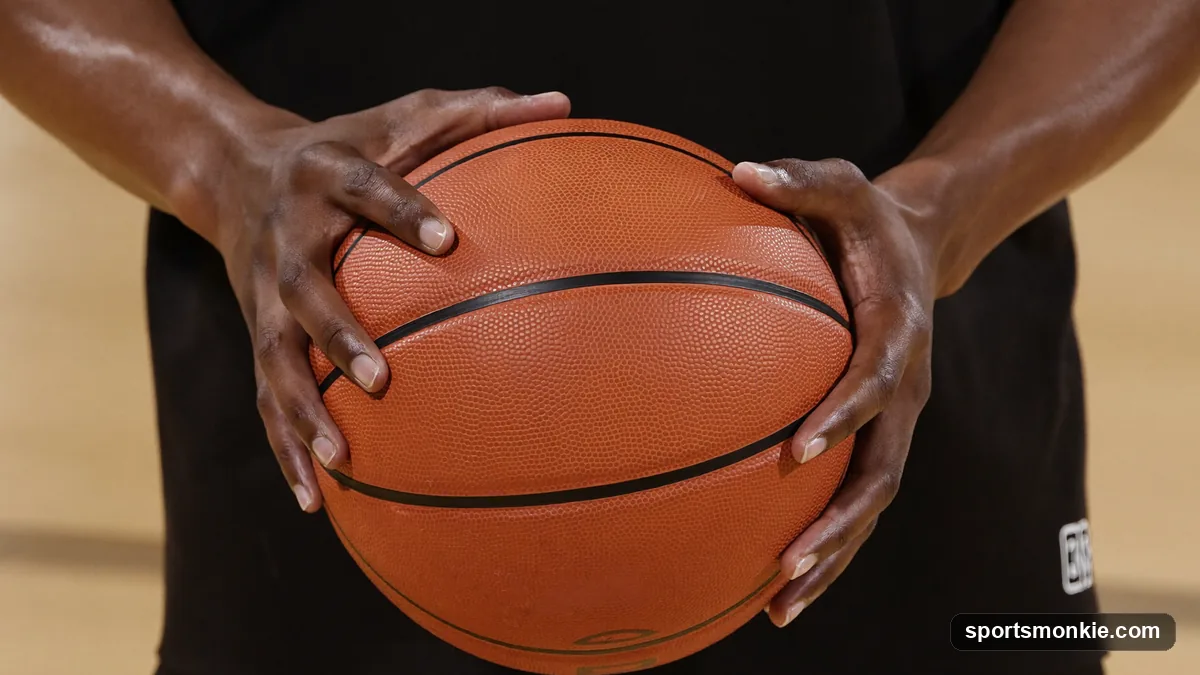
Two-hand dribble. A legal dribble uses one hand at a time. The instant both hands make contact with the ball at the same moment, your dribble is over. That alone is legal. It only becomes a violation if you then push the ball back to the floor.
Restart dribble. This is the more common version. You dribble toward the basket, get trapped, and catch the ball to gather yourself. The moment you gain control with one or both hands, your dribble has legally ended. If you then bounce the ball again, that is a double dribble. Once you pick it up, your only legal options are to pass, shoot, or pivot.
When Your Dribble Legally Ends
Knowing the exact moment your dribble ends is the key to never committing this violation. Your dribble ends when:
- You catch the ball or let it come to rest in one or both hands.
- You touch the ball with both hands simultaneously.
- You allow the ball to rest against your palm (which also flirts with a carry).
Once any of those happen, the dribble is dead. You cannot revive it. This is why guards learn to keep a live dribble alive until they have a clear plan. If you master your crossover dribble and change-of-direction moves, you can escape pressure without ever needing to pick the ball up prematurely.
A quick mental rule: if the ball has stopped moving in your hands, you have used your dribble. Treat every catch as final.
Double Dribble vs. Carry: The Key Difference
New players often confuse the double dribble with a carry (also called palming), because officials sometimes signal them in similar situations. They are separate violations.
- A double dribble is about two hands or a restarted dribble.
- A carry is about your hand position during a single dribble. If your hand slides under the ball and pauses its upward motion, the ball momentarily rests in your palm, and that is illegal.
You can commit a carry while still using only one hand and never stopping your dribble, so it is mechanically different. Both carry the same penalty, though: a turnover. To learn the full family of ball-handling rules, our how to dribble a basketball guide breaks down legal hand placement step by step. Staying on top of the ball, with your palm facing the floor at contact, prevents both violations at once.
What Is NOT a Double Dribble
Just as important is knowing what officials will let go. These are all legal:
- Fumbling the ball. If you accidentally lose control and the ball hits the floor, that is a fumble, not a dribble. You can recover it and then start a dribble.
- Bobbling a pass. Juggling a catch before securing it does not count against you.
- A ball knocked loose by a defender. If a defender bats the ball, then you regain it, you may dribble.
- Steadying with two hands, then shooting or passing. Ending your dribble with two hands is legal, as long as you do not dribble again.
- A ball that gets away on a hard dribble and you chase it. As long as you never gained full control (never ended the dribble), continuing is legal.
The theme is intent and control. Rulebooks specifically state that a fumble is not a dribble because you did not push the ball to the floor on purpose. Officials judge whether you truly ended the dribble or merely lost the handle.
The Penalty and How Officials Signal It
The penalty for a double dribble is a loss of possession. The whistle blows, play stops, and the opposing team inbounds the ball from the nearest spot along the sideline. No free throws are involved, because it is a violation, not a foul.
The referee’s signal is unmistakable: both hands out in front, palms down, moving up and down alternately as if dribbling two balls. When you see that motion, a double dribble (or an illegal dribble) has been called.
The rule is consistent across the NBA (Rule 10), NCAA, and NFHS high school play, so the habits you build transfer to every court. Whether you are refining your basketball shooting form or working the ball up the floor, clean dribbling mechanics are the foundation that keeps possessions alive.
How to Avoid the Double Dribble
Avoiding this turnover comes down to three disciplined habits:
- Keep your palm on top. Contact the ball with your palm facing down and your fingertips guiding it. This single cue prevents both the two-hand trigger and the carry.
- Have a plan before you pick it up. Decide whether you will shoot, pass, or pivot before you gather the ball. Never catch the ball hoping a new dribble will bail you out.
- Protect with your body, not a second hand. Use your off arm and shoulder to shield the ball rather than clamping a second hand onto it mid-dribble.
Drill these under fatigue and light defensive pressure so they hold up in a real game. The stronger your handle, the less often you will feel the panic that causes players to pick up their dribble and then illegally restart. Master the fundamentals in our complete how to shoot a basketball guide and pair them with confident, legal ball handling, and the double dribble simply disappears from your game.
Frequently asked questions
What are the two ways a double dribble can happen?+
A double dribble occurs in two distinct ways. The first is dribbling the ball with two hands at the same time, since a legal dribble requires one hand pushing the ball down. The second is picking up your live dribble, gaining control of the ball with one or both hands, and then starting a new dribble. Once you end a dribble, you cannot legally begin another until another player touches the ball.
Is a double dribble a turnover?+
Yes. A double dribble is a floor violation, and the penalty is loss of possession. Play stops immediately, and the opposing team inbounds the ball from the nearest point along the sideline. There are no free throws attached, unlike some fouls. The turnover counts against the player and team in the box score, which is why coaches drill ball control so heavily at every level.
What is the difference between a double dribble and a carry?+
Both are dribbling violations, but they look different. A double dribble means you either used two hands on the dribble or restarted after picking the ball up. A carry, sometimes called palming, happens when your hand slides under the ball and pauses its motion, so the ball momentarily comes to rest in your palm. A carry is technically an illegal dribble too, but the mechanics that trigger it are separate.
Can you dribble, stop, and then dribble again?+
No. Once you end your dribble by catching or gaining control of the ball, you cannot start a second dribble. Doing so is a double dribble and a turnover. After you stop your dribble you may still pass, shoot, or pivot on your established pivot foot, but you cannot put the ball back on the floor yourself. This rule is identical in the NBA, NCAA, and NFHS high school play.
Is fumbling or a bobbled catch a double dribble?+
No. Losing control accidentally, bobbling a pass, or having the ball momentarily juggled does not count as a dribble. Rulebooks say a fumble is not a dribble because you never intentionally batted or pushed the ball to the floor. You may recover a fumble and then start a dribble, as long as you had not already ended a previous dribble. Intent and control are what officials judge.
What happens if the ball touches both hands during a dribble?+
If both hands touch the ball at the same time while dribbling, your dribble legally ends at that moment. That itself is not a violation. The violation only occurs if you then push the ball back to the floor and dribble again. Briefly steadying the ball with two hands is fine as long as you shoot, pass, or pivot afterward rather than resuming a dribble.
Sources
Play & tools
Free browser games and tools — no account, no download.
- Play 82-0 — Draft five, one per position, and see if your lineup can go a flawless NBA season.
- Play Era Ball — Draft an all-time NBA roster from a single era, then simulate a season and chase a perfect run.
- Play 32-0 — Draft five college basketball legends, one per position, and chase a perfect 32-0 national title.
- Explore all our games →
- Get the printable bracket — Download and print a blank tournament bracket to fill out by hand.
- Open the TS% calculator — Calculate TS% from points, field goal attempts and free throw attempts — scoring efficiency in one number.
- Explore all our free sports tools →
Related basketball guides
View all →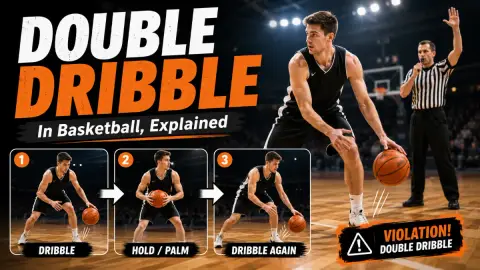
What Is a Double Dribble in Basketball?
A double dribble is a violation: dribbling with two hands at once, or picking the ball up and then dribbling again. It costs your team possession. Here's exactly what counts.
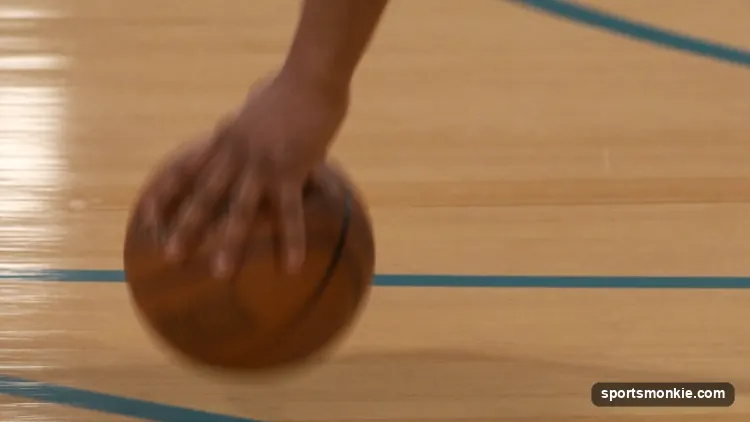
How to Dribble a Basketball: Control, Speed, Weak Hand
Learn how to dribble a basketball with fingertip control, a low hard bounce, and eyes up. Step-by-step cues plus weak-hand drills to build a real handle.
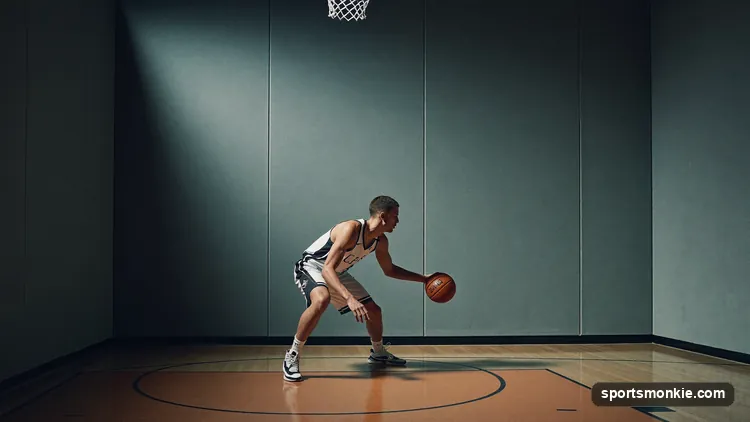
1-3-1 Zone Defense in Basketball: Alignment, Roles & How to Attack It
The 1-3-1 zone defense explained: player alignment, roles, traps, strengths, weaknesses, and how offenses beat it. A full coaching breakdown.
2-3 Zone Defense in Basketball: Alignment, Roles, and How to Attack It
The 2-3 zone defense lines up two guards up top and three defenders low, guarding areas instead of players. Here's how it works and how to beat it.
2-3 Zone vs Man-to-Man Defense: Full Basketball Comparison
2-3 zone vs man to man defense compared: coverage, pick-and-roll, 3-point defense, rebounding, and when coaches at every level pick each.
3-2 Zone Defense in Basketball: Alignment, Roles, and How to Attack It
The 3-2 zone defense explained: alignment, player roles, strengths, weaknesses, and how offenses attack this high-pressure zone.