
How to Do a Crossover Dribble: Step-by-Step Guide
On this page7
To do a crossover dribble, sell a hard attack in one direction to shift the defender’s weight, then push the ball low and fast across your body from one hand to the other, keeping the bounce below your knees. The instant the ball lands in your new hand, drop your shoulder and explode off your lead foot into a drive or pull-up. The move breaks a defender only when the setup is believable and the ball crosses low and quick.
Most players learn the hand switch in a day. What separates a crossover that scores from one that gets stolen is the height of the bounce, the honesty of the setup, and the explosion out of it. Below is the full breakdown, plus the drills that build it.
The Mechanics of a Clean Crossover
Break the crossover into four beats and it stops being a blur.
- Setup dribble. Attack or jab hard in one direction, say to your right, with the ball in your right hand at hip height. You want the defender to genuinely believe you are going that way.
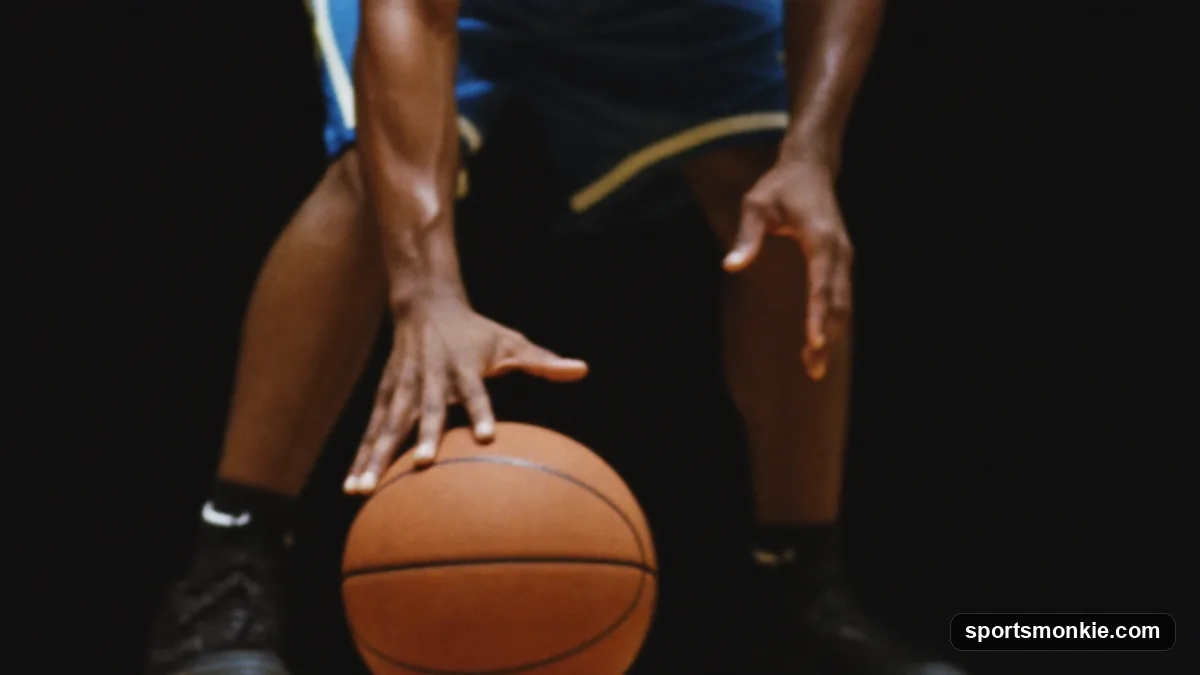
- The push. With your fingertips on the outside of the ball, snap it low and diagonally across your body toward your left foot. Do not swing your whole arm; the wrist and fingers do the work.
- The catch. Receive the ball outside your left hip, already loaded to go. Your off arm comes up as a shield.
- The explosion. Push off your right foot, drop your left shoulder past the defender’s hip, and go.
The single biggest error is bounce height. A crossover that pops up to your waist hangs in front of the defender long enough to be poked away. Keep it below your knees. This same low, controlled bounce is the foundation of good basketball shooting form when you rise into a pull-up, because a clean gather starts with a clean handle. For the complete footwork and balance base behind every move, start with our pillar on how to shoot a basketball, then layer the handle on top.
Sell the Setup: Why the Fake Matters More Than the Hands
A crossover with no setup is just a slow pass between your own hands, and any balanced defender jumps it. The break comes from the fake, not the switch.
Sell it with your whole body:
- Eyes and head point the direction you are faking.
- Shoulders and chest lean into the fake so your weight looks committed.
- First step is a real, hard jab, not a lazy shuffle.
- Pace change matters; a hesitation or a slow-then-fast rhythm forces the defender to react.
Allen Iverson’s famous crossover worked because defenders had to respect his blow-by speed, so when he sold right, they truly shifted right. You do not need his speed, but you do need a believable threat. If a defender never fears your drive, he will never bite on your fake. Learn to attack downhill first with our guide on how to shoot a basketball better, then the crossover has teeth.
Keep the Ball Low and Protected
Ball protection is where crossovers live or die. Use these cues:
| Cue | What it fixes |
|---|---|
| Bounce below the knee | Shortens the exposure window |
| Cross hip to hip | Keeps the ball out of the defender’s reach |
| Off arm up as a bar | Shields the ball and creates space |
| Fingertips, not palm | Faster, tighter control; avoids carrying |
| Stay low, chest down | Lowers your center of gravity for the burst |
Your non-dribbling arm is a tool, not decoration. Bring it up bent at the elbow, forearm parallel to the floor, to wall the defender off from the ball. Keep your palm on top or the side of the ball on the push; if your hand slides underneath, that is a carry. Understanding these boundaries protects you from turnovers, so read the double dribble rule and know that a crossover is one continuous dribble, never a pick-up-and-go.
Explode Out of It: Turning the Crossover Into a Score
A crossover that does not lead anywhere just resets the possession. The value is in what comes next.
- Into a drive. As the ball hits your new hand, your first step should already be attacking the gap. Long, low, and past the defender’s front foot; this is the setup for a finish, so pair it with our breakdown of how to do a layup.
- Into a pull-up. If the defender recovers or drops, rise straight into your jumper. Your handle should flow directly into your shooting pocket. The rhythm of a smooth jump shot technique starts the moment you gather off the dribble.
- Into a step-back or another move. A crossover chains beautifully into a between-the-legs or behind-the-back counter if the first one does not break the defender.
The defender’s reaction dictates your choice. If he lunges, drive. If he sinks, shoot. Reading that in real time is what turns a drill move into a game move, and it is a core part of the full menu in types of shots in basketball.
Common Mistakes That Get Your Crossover Stolen
Fix these before you add speed.
- Bounce too high. The number one killer. Force it below the knee every rep.
- Telegraphing. Staring at the ball or pre-leaning toward the crossover tips the defender. Keep your eyes up and your fake honest.
- No setup. Crossing over a flat-footed, disengaged defender does nothing. Make him move first.
- Standing tall. A high, upright stance means no explosion out of the move. Stay low through the whole sequence.
- Slapping instead of pushing. A loose, slappy hand loses control. Snap the ball with intent from your fingertips.
- Crossing too wide. The ball should cross roughly hip to hip, not swing out where a reaching hand can meet it.
Drills to Build a Game-Ready Crossover
Reps make the low bounce automatic so you stop thinking about it mid-game.
- Stationary low crossovers. In an athletic stance, cross the ball below your knees back and forth for 30 to 45 seconds, eyes up. Build to hard, snappy bounces.
- Two-ball crossovers. Cross two balls simultaneously; it forces control and strengthens both hands.
- Cone crossover attack. Set a cone as your defender. Attack it, crossover at the cone, and explode past on a straight line, not around a wide arc.
- Crossover into pull-up. Chain a cone crossover directly into a jump shot to train the gather-to-shot transition.
- Setup-and-go. Add a hesitation or in-and-out before the crossover so the fake becomes second nature.
Spend 10 to 15 minutes a day and rotate these. For a broader handle-building routine that feeds the crossover, work through our basketball dribbling drills and revisit the fundamentals in how to dribble a basketball. To sharpen the finishing side of the move, add reps from our basketball shooting drills.
Putting It All Together
A great crossover is not one skill; it is a sequence: a believable setup, a low and protected hand switch, and an explosive read into a score. Master the low bounce first, then obsess over selling the fake, then train the explosion out of it. Do that daily and the change of direction that once got stolen becomes the move that gets you a clean lane. When you are ready to expand your handle, the crossover pairs naturally with counters and shot creation across the rest of the SportsMonkie shooting and ball-handling cluster.
Frequently asked questions
How do you do a crossover dribble step by step?+
Start with the ball in one hand at hip height, then sell a hard fake or attack in that direction so the defender shifts his weight. Push the ball low and quick across your body toward your other hand, keeping the bounce below your knees. Catch it outside your opposite hip, drop your shoulder, and explode off your new lead foot into a drive or shot. The whole move should take under a second.
Why does my crossover get stolen so easily?+
Almost always because the ball is too high or too slow. A crossover that bounces at your waist gives the defender a full window to reach in. Keep the ball below your knees so it crosses in the shortest possible arc, and snap it with your fingertips, not a loopy swing. Also make sure you have a real setup first; a crossover with no fake is just a slow pass between your own hands that any on-balance defender can jump.
How low should a crossover dribble be?+
The bounce should stay below your knees, ideally around your shin, and cross your body roughly hip to hip. The lower and tighter the ball travels, the less time it is exposed and the harder it is to reach. A common cue is to imagine dribbling under an invisible bar at knee height. High crossovers look flashy but get picked off by any defender with active hands.
What is the difference between a crossover and a killer crossover?+
A basic crossover just changes the ball from one hand to the other. A killer crossover, popularized by players like Allen Iverson, adds a convincing setup dribble or hesitation that gets the defender to fully commit his weight one way before you snap it back the other. The break happens because of the fake, not the hand switch. Same mechanics, far better acting and timing.
How do I keep from traveling or double dribbling on a crossover?+
A crossover is one continuous dribble, so keep your palm on top or on the side of the ball, never underneath. If your hand slides under the ball and you carry it, that is a carrying violation. Picking the ball up with both hands and then dribbling again is a double dribble. See our guide to the double dribble rule so you know exactly where the line is.
How long does it take to get a good crossover?+
Most players build a game-ready crossover in four to eight weeks of daily reps, but it is a lifelong refinement. Spend 10 to 15 minutes a day on stationary low crossovers, then add a setup dribble, then a defender or cone. Ball handling is a skill of thousands of repetitions; the change of direction gets sharp only when the low, hard bounce becomes automatic and you no longer have to look at the ball.
Sources
Play & tools
Free browser games and tools — no account, no download.
- Play 82-0 — Draft five, one per position, and see if your lineup can go a flawless NBA season.
- Play Era Ball — Draft an all-time NBA roster from a single era, then simulate a season and chase a perfect run.
- Play 32-0 — Draft five college basketball legends, one per position, and chase a perfect 32-0 national title.
- Explore all our games →
- Get the printable bracket — Download and print a blank tournament bracket to fill out by hand.
- Open the TS% calculator — Calculate TS% from points, field goal attempts and free throw attempts — scoring efficiency in one number.
- Explore all our free sports tools →
Related basketball guides
View all →
How to Dribble a Basketball: Control, Speed, Weak Hand
Learn how to dribble a basketball with fingertip control, a low hard bounce, and eyes up. Step-by-step cues plus weak-hand drills to build a real handle.
Proper Basketball Shooting Form: A Step-by-Step Guide
Master proper basketball shooting form with clear cues for your feet, elbow alignment, guide hand, and wrist snap, plus how to build a repeatable one-motion shot.
How to Shoot a Basketball: Perfect Form Step by Step
Learn how to shoot a basketball with perfect form: master BEEF, balanced stance, a straight-up release, 45-degree arc, and follow-through to make more shots.
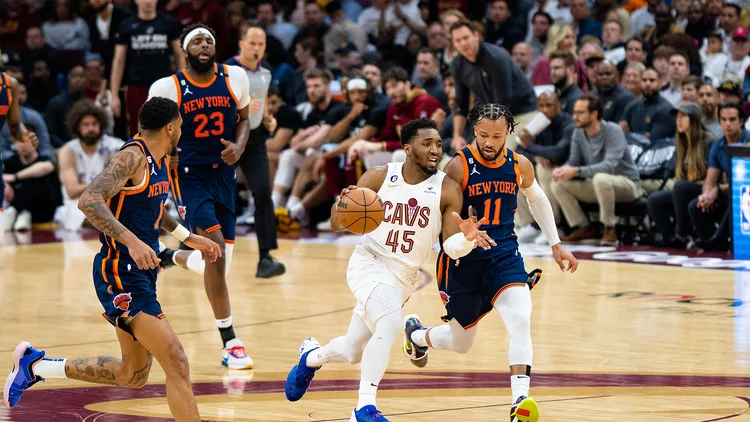
Brunson Gets a Flopping Technical After a Gobert Push and Calls It 'Bulls---'
Jalen Brunson was pushed in the back by Rudy Gobert, sprawled forward, and was then called for flopping in the Knicks' preseason loss to Minnesota.
Green Reveals His Viral Sideline Warning to Acuff: Don't Have Many of Those
Draymond Green says his viral sideline talk with Kings rookie Darius Acuff Jr. was a warning that ball-dominant possessions can turn teammates against a rookie.
NBA Players Fear Wearable Tech Data Could Be Used Against Them in Contract Talks
Adam Silver says the NBA and the Players Association have no agreement on wearable tech in games, because players fear their own data could be used in bargaining.