
How to Shoot a Basketball Better: Fix Flat Shots Fast
On this page8
To shoot a basketball better, you need three things working together: a higher, more consistent arc, a stable base you set the same way every time, and a practice structure that rewards good reps instead of just counting them. Raise your release, get your elbow under the ball, and snap your wrist for backspin, and the rim starts looking twice as big.
Most missed shots trace back to a handful of fixable errors. Below you will find the exact cues coaches use to correct flat shots, tighten footwork off the catch, and turn a streaky jumper into a repeatable one.
Fix the Flat Shot First
A flat shot is the single most common reason players plateau. When the ball travels on a low, line-drive path, it has to fit through a narrow slice of the rim, so anything slightly long or short clanks out. Raising your arc widens the margin dramatically.
Aim for a release angle around 45 degrees. On a free throw or short jumper, that means the ball should peak roughly three to four feet above the rim before dropping in. If your misses hit the front rim hard and shoot back at you, you are almost certainly too flat.
Three cues that add arc immediately:
- Start higher. Bring the ball up to your forehead or brow line before releasing, not your chest. A low set point forces a flat push.
- Reach up, not out. Imagine placing the ball on a high shelf. Your fingertips should finish pointing at the rim and slightly downward.
- Peak the ball. Picture an invisible bar a few feet above the rim that every shot must clear.
This connects directly to your basketball shooting form: arc is a product of a vertical release, not a wrist trick you add at the end.
Get Your Elbow and Follow-Through Right
Backspin and arc both come from a clean vertical follow-through. Keep your shooting elbow tucked under the ball rather than flared out to the side. A flared elbow pushes the ball off-line and flattens the shot.
Your guide hand (the off-hand) only steadies the ball. It should come off the moment you release so your thumb never pushes the ball sideways. If your shots drift left or right, a shoving guide hand is usually the culprit.
Finish every shot with a locked wrist, fingers relaxed and pointing down, holding the follow-through until the ball hits the rim. Coaches call this the “gooseneck” or “reaching into the cookie jar.” Holding it forces you to complete the motion instead of short-arming it. These same principles anchor three-point shooting, where a lazy follow-through gets exposed at distance.
Nail Your Footwork Off the Catch
Consistency starts below the waist. If your feet land differently every catch, your upper body has to compensate, and your shot becomes a guess. Pick one footwork pattern and drill it until it is automatic.
| Footwork | How it works | Best for |
|---|---|---|
| The hop | Both feet land together on the catch | Catching on the move, quick release |
| The one-two | Inside foot lands first, then outside foot | Longer shots, better balance |
Whichever you choose, follow these rules:
- Feet ready early. Have your base set toward the ball before the pass arrives.
- Land loaded. Knees bent, weight centered, ready to rise in one motion.
- Toes to the rim. Square your feet so your platform never changes.
Great footwork is what lets you shoot the same shot whether you are wide open or contested. Pairing this with jump shot technique work off the dribble will round out your catch-and-shoot game.
Shoot in One Fluid Motion
Power comes from your legs, not your arms. Load your knees, then let the shot flow upward so your legs, core, and arm fire in sequence. A shot that stalls, hitching between the leg drive and the release, loses rhythm and arc.
Release the ball as you rise, just before the peak of your jump. Waiting until the top means you are often shooting on the way down, which forces a push and flattens everything. The cue is simple: legs up, ball up, one motion.
Keep your feet, hips, shoulders, and eyes aligned to the rim. Any twist in that chain sends the ball off-line. If you want a full breakdown of the base mechanics, start with the pillar guide, how to shoot a basketball, and build from there.
Build a Practice Routine That Sticks
Random shooting builds random results. Structure your reps so every session reinforces good form and gives you honest feedback.
A proven close-to-far routine:
- Form shooting (2-3 ft): 25 one-handed shots, focusing only on arc and follow-through. No jumping.
- Free throws: Make 10 in a row before moving on. This trains rhythm under pressure.
- Five-spot circuit: From the paint out to the arc, make 8 of 10 at each spot before stepping back.
- Game-speed catch-and-shoot: 50 shots off a pass or self-toss, using your set footwork every rep.
Track your makes. Writing down 42 of 60 keeps you honest in a way that “I shot for a while” never will. As your percentages climb, add contest and movement. The drills in our basketball shooting drills guide give you a full menu to rotate through.
Diagnose Your Misses
Your misses are a coaching report if you read them. Use this quick table to self-correct on the spot:
| Miss pattern | Likely cause | Fix |
|---|---|---|
| Front rim, flat | Too little arc | Start higher, reach up |
| Long every time | Too much leg or push | Softer legs, softer touch |
| Left or right | Guide hand or elbow flare | Tuck elbow, quiet off-hand |
| Short, dying at rim | Shooting on the way down | Release earlier on the rise |
Fix one variable at a time. Trying to change arc, footwork, and follow-through in the same session usually breaks all three.
How It Fits Your Whole Game
Shooting does not live in isolation. Better balance and hand strength from ball-handling work translate directly to a steadier shot, so keep your how to dribble a basketball fundamentals sharp alongside your jumper. Finishing at the rim through a clean how to do a layup also keeps defenses honest, which earns you cleaner looks from outside.
If you want a broader roadmap to raising your percentage, the companion guide how to shoot a basketball better principles here feed straight into your free-throw and mid-range work through free throw technique.
The Bottom Line
Shooting better is not about talent, it is about repetition of the right motion. Raise your arc toward 45 degrees, keep your elbow under the ball, set the same footwork on every catch, and shoot one fluid motion driven by your legs. Then protect those mechanics with structured, honest practice. Do that daily for a few weeks and a streaky jumper becomes a shot you can trust.
Frequently asked questions
Why are my basketball shots flat?+
Flat shots usually come from pushing the ball forward instead of upward. Your release point is too low, your elbow flares out, and your wrist does not snap fully down. A flat shot has a small margin for error because the rim looks like a thin slot instead of an open circle. Fix it by starting the ball higher near your forehead, driving your guide elbow up, and aiming for an arc that peaks a few feet above the rim.
What is the ideal shooting arc in basketball?+
Most shooting coaches and ball-tracking data point to a release angle around 45 degrees, which sends the ball into the rim from above and opens up the effective size of the hoop. Too flat, near 35 degrees, and the ball must fit a narrow window; too high wastes energy and hurts distance control. A good visual cue is peaking the ball about three to four feet above the rim on a free throw or mid-range shot.
How do I get consistent footwork off the catch?+
Pick one footwork pattern and drill it until it is automatic. The hop, where both feet land together, squares you fast and works well catching on the move. The one-two, planting inside foot then outside foot, gives better balance on longer shots. Whichever you choose, have your feet set before the ball arrives, land with knees bent, and point your toes toward the rim so your base never changes shot to shot.
How many shots a day should I take to improve?+
Quality reps beat raw volume, but 200 to 300 focused, game-speed shots a day will move your percentage quickly if your form is sound. Shoot in blocks with a target, such as make 8 of 10 from five spots before moving back. Track your makes so practice stays honest. Fifty rushed, sloppy shots build bad habits faster than they build touch, so protect your mechanics on every rep.
Should I release the ball on the way up or at the top of my jump?+
For most players, releasing as you rise, just before the peak of your jump, produces the cleanest rhythm and the most repeatable arc. Waiting until the top of the jump often means you are shooting on the way down, which forces you to push and flattens the ball. Load your legs, then let the shot flow up in one motion so your power comes from your base, not your arms.
How long does it take to fix a broken jump shot?+
Rebuilding a shot usually takes four to eight weeks of daily, deliberate practice, though small fixes like arc or follow-through can improve within days. The hard part is overwriting muscle memory, so start close to the basket with slow form shooting, add distance only after the motion feels automatic, and expect your percentage to dip briefly before it climbs. Stay patient and keep every rep at the corrected form.
Sources
Play & tools
Free browser games and tools — no account, no download.
- Play 82-0 — Draft five, one per position, and see if your lineup can go a flawless NBA season.
- Play Era Ball — Draft an all-time NBA roster from a single era, then simulate a season and chase a perfect run.
- Play 32-0 — Draft five college basketball legends, one per position, and chase a perfect 32-0 national title.
- Explore all our games →
- Get the printable bracket — Download and print a blank tournament bracket to fill out by hand.
- Open the TS% calculator — Calculate TS% from points, field goal attempts and free throw attempts — scoring efficiency in one number.
- Explore all our free sports tools →
Related basketball guides
View all →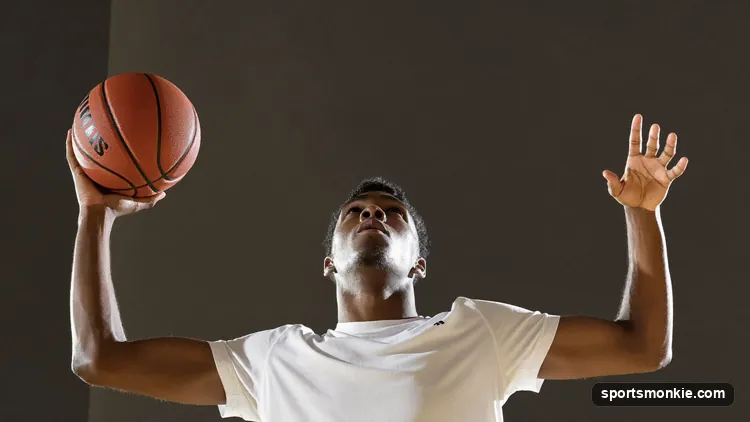
How to Shoot a Basketball: Perfect Form Step by Step
Learn how to shoot a basketball with perfect form: master BEEF, balanced stance, a straight-up release, 45-degree arc, and follow-through to make more shots.

How to Stop Hitting Fat Shots: Fix Your Low Point Fast
To stop hitting fat shots, move your low point in front of the ball: set 55% of your weight on your lead foot, keep it there through impact, and play the ball back an inch. Here is the full fix, with drills.
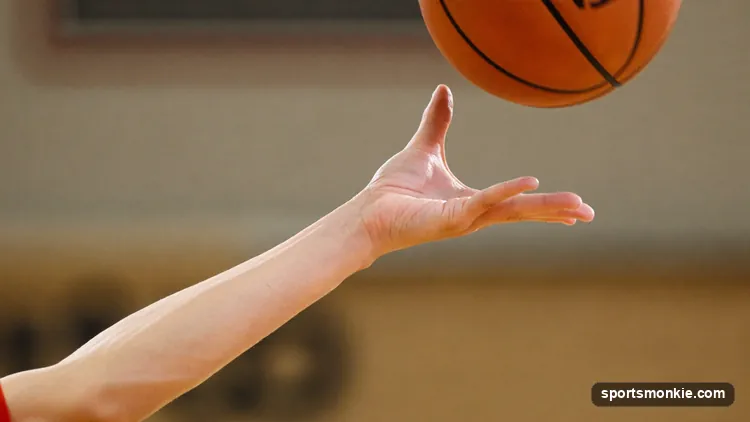
Proper Basketball Shooting Form: A Step-by-Step Guide
Master proper basketball shooting form with clear cues for your feet, elbow alignment, guide hand, and wrist snap, plus how to build a repeatable one-motion shot.
How to Dribble a Basketball: Control, Speed, Weak Hand
Learn how to dribble a basketball with fingertip control, a low hard bounce, and eyes up. Step-by-step cues plus weak-hand drills to build a real handle.
How to Shoot a Three-Pointer: Range, Power & Footwork
Learn how to shoot a three-pointer with a legs-driven stroke, clean footwork behind the line, and a range-building plan that keeps your form the same at 24 feet.
Types of Shots in Basketball: 10 Every Player Needs
The 10 essential types of shots in basketball, from layups and jump shots to floaters, hooks, fadeaways and dunks, with coaching cues and when to use each.