
Basketball Positions by Number (1-5): The Complete Guide
On this page6
Basketball positions are numbered 1 through 5: 1 is the point guard, 2 is the shooting guard, 3 is the small forward, 4 is the power forward, and 5 is the center. Every level of the game, from youth leagues to the NBA and WNBA, still leans on this shorthand even as rosters grow more versatile. For a broader look at how these roles fit into a full lineup, see our guide to basketball positions explained and how they compare across the NBA and WNBA.
The five basketball positions by number
The 1-5 numbering system assigns a digit to each starting role on the floor, moving roughly from the backcourt to the frontcourt:
- 1 — Point Guard: The primary ball-handler and offensive initiator. Runs the offense, sets up teammates, and typically has the ball in their hands to start a possession. For a full breakdown, read our guide on what is a point guard in basketball.
- 2 — Shooting Guard: The perimeter scorer. Spaces the floor, shoots off screens and catches, and can act as a secondary ball-handler.
- 3 — Small Forward: The most versatile player on the roster. Scores inside and out, defends multiple positions, and fills gaps as a “point forward” in some systems.
- 4 — Power Forward: A frontcourt scorer and rebounder. Traditionally worked the low post and mid-range; today’s “stretch fours” also shoot threes.
- 5 — Center: The anchor of the defense, usually the tallest player. Protects the rim, rebounds, and finishes close to the basket. See our deep dive on the center position in basketball for more detail.
Where the numbering system comes from
The 1-5 system grew out of a need for a standardized way to describe roles and responsibilities without naming every player by name. Numbers give coaches, players, broadcasters, and scouts a common language: a “1” always means a ball-handling guard, a “5” always means a rim-protecting big, no matter which team or era you’re talking about. The numbering roughly follows a player’s typical distance from the basket and their role in starting a possession — the point guard (1) begins the play farthest from the rim and works inward toward the center (5), who plays closest to it. This mirrors how position numbers evolved informally through decades of coaching clinics and playbooks rather than from a single official rulebook, since the NBA and NCAA rulebooks don’t formally define “position numbers” — they’re a coaching convention, not a written rule.
How coaches use numbers to call plays
Numbers aren’t just labels; they’re operational tools on the practice floor and during games:
- Play diagrams: Coaches draw up sets using numbers instead of names, so a diagram reads “1 passes to 2, then screens for 3” regardless of which specific players are on the floor.
- Verbal calls: During a possession, a coach or point guard might shout “get the ball to the 5” or “swing it to the 2,” communicating instantly without breaking down the whole play.
- Substitutions: Numbers help coaches track lineup balance — swapping a “4” for a smaller, faster player changes the shape of the offense and defense in a way everyone on the bench understands immediately.
- Scouting and stats: Analysts track performance by position number to compare, say, how a team’s “3” rebounds against league average, since raw stats mean little without positional context.
Guards, wings, and bigs: grouping the five positions
Beyond the individual numbers, coaches and analysts often group positions into three broader categories:
- Guards (1-2): The point guard and shooting guard make up the backcourt. They handle the ball most often, shoot from distance, and are usually the smallest, quickest players on the floor.
- Wings (2-3): The shooting guard and small forward overlap here — versatile perimeter players who score, defend, and space the floor. In today’s game, “wing” is often used more than “shooting guard” or “small forward” individually.
- Bigs (4-5): The power forward and center make up the frontcourt. They rebound, defend the paint, and score in close, though many modern “stretch bigs” also shoot from outside.
Quick-reference table: basketball positions by number
| # | Position | Primary role | Typical size | Common grouping |
|---|---|---|---|---|
| 1 | Point Guard | Ball-handling, playmaking, running offense | Shortest on floor | Guard |
| 2 | Shooting Guard | Perimeter scoring, secondary ball-handling | Short-to-mid | Guard / Wing |
| 3 | Small Forward | Two-way versatility, scoring inside and out | Mid-sized | Wing |
| 4 | Power Forward | Rebounding, interior scoring, floor spacing | Tall | Big |
| 5 | Center | Rim protection, rebounding, close-range scoring | Tallest on floor | Big |
Why positions matter less than they used to
The 1-5 system still shows up on stat sheets and broadcasts, but the boundaries between numbers have blurred, especially in the NBA and WNBA. “Positionless basketball” has become common, where a team might start five players who can all shoot, pass, handle the ball, and switch defensively regardless of their listed number. A modern power forward might spend most possessions beyond the three-point line, and a center might bring the ball up the floor in transition. Even so, the numbers remain useful as a starting vocabulary — they describe a player’s primary role on a given possession, even if that role shifts from play to play. Understanding the 1-5 framework is still the fastest way to learn how a basketball lineup is built, which is why it’s the foundation for our guides on basketball positions explained and the point guard and center roles specifically.
Frequently asked questions
What are the basketball positions by number?+
The five basketball positions are numbered 1 to 5: 1 is the point guard, 2 is the shooting guard, 3 is the small forward, 4 is the power forward, and 5 is the center. Coaches, broadcasters, and playbooks all use these numbers as shorthand instead of spelling out full position names.
Why is the point guard number 1?+
The point guard is number 1 because they typically bring the ball up the court first and initiate the offense, making them the natural starting point of a possession. The numbering generally follows a player's distance from the basket and role in starting the play, from the ball-handling guard up to the low-post center.
What position is number 5 in basketball?+
Number 5 is the center, usually the tallest player on the floor. Centers play closest to the basket, anchor the defense by protecting the rim, grab rebounds, and finish plays with dunks, layups, and put-backs near the paint.
What is the difference between a shooting guard (2) and a small forward (3)?+
The shooting guard (2) is typically a bit smaller and focuses on perimeter scoring and spacing, while the small forward (3) is usually taller, more versatile, and expected to contribute rebounding and defense on bigger wings in addition to scoring. In modern basketball the two roles overlap heavily and are often grouped together as 'wings.'
What is a power forward's role compared to a center?+
The power forward (4) plays in the frontcourt alongside the center but tends to be more mobile, often stepping out to mid-range or three-point range in modern 'stretch four' systems. The center (5) stays closer to the rim, focuses on interior defense and rebounding, and is generally the tallest, most physical player on the roster.
Do NBA and WNBA teams still use the 1-5 position system?+
Yes, broadcasters, coaches, and stat sheets still reference the 1-5 numbering, but many modern NBA and WNBA teams play 'position-less basketball,' where players are chosen for skill sets rather than strict size-based roles. A team might start five players who can all shoot, pass, and switch on defense regardless of their listed number.
What are guards, wings, and bigs in basketball?+
Guards (positions 1-2) are ball-handlers and perimeter shooters who play in the backcourt. Wings (positions 2-3) combine perimeter scoring with defensive versatility. Bigs (positions 4-5) are the frontcourt players who rebound, defend the paint, and score close to the basket.
How do coaches use position numbers to call plays?+
Coaches use numbers as a universal shorthand in play diagrams and verbal calls, such as telling the '1' to bring the ball up or instructing the '5' to set a screen. This lets a coach communicate an entire set quickly without naming every player, and it lets players learn a system that transfers between teams.
Sources
Play & tools
Free browser games and tools — no account, no download.
- Play 82-0 — Draft five, one per position, and see if your lineup can go a flawless NBA season.
- Play Era Ball — Draft an all-time NBA roster from a single era, then simulate a season and chase a perfect run.
- Play 32-0 — Draft five college basketball legends, one per position, and chase a perfect 32-0 national title.
- Explore all our games →
- Get the printable bracket — Download and print a blank tournament bracket to fill out by hand.
- Open the TS% calculator — Calculate TS% from points, field goal attempts and free throw attempts — scoring efficiency in one number.
- Explore all our free sports tools →
Related basketball guides
View all →
Basketball Positions Explained: All 5 Roles, Numbers & Duties
Basketball positions explained: point guard, shooting guard, small forward, power forward, and center — roles, the 1-5 numbering, and positionless basketball.
What Is a Point Guard in Basketball? Role, Skills & Famous PGs
A point guard is basketball's floor general — the primary ball-handler who runs the offense. Learn the role, key skills, and famous PGs.
What Is a Power Forward in Basketball? The 4 Position Explained
A power forward (the '4') is basketball's versatile big man — rebounding, defending, scoring in the post, and increasingly shooting threes.
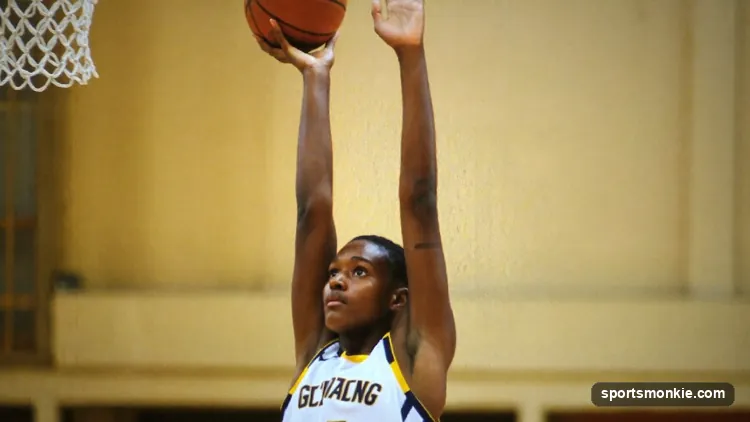
What Is a Shooting Guard in Basketball? Role, Skills & Examples
A shooting guard is basketball's primary perimeter scorer — the '2' who shoots off the catch and dribble, hits threes, and guards the wing.
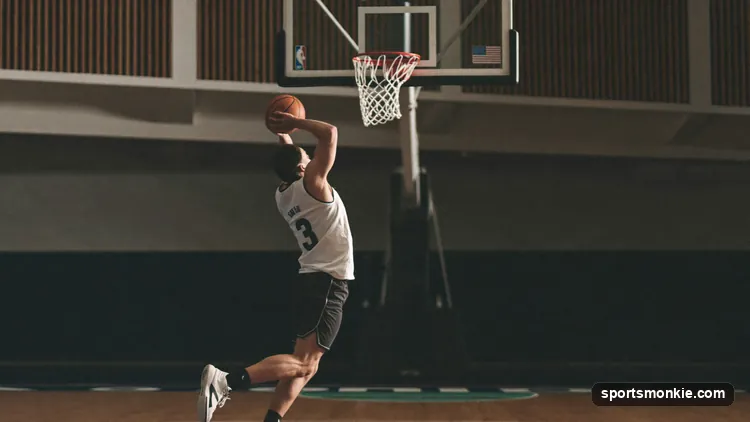
What Is a Small Forward in Basketball? Role, Skills & Best Players
A small forward is basketball's most versatile position (the '3'), scoring inside and out, defending multiple spots, and rebounding on the wing.
Double Dribble Rule in Basketball, Explained
The double dribble rule bans dribbling with two hands or dribbling again after you stop. Learn the two ways it happens, the penalty, and carry vs. double dribble.