
Referee Hand Signals Explained: Every Major Sport's System
On this page9
- 01Why Referees Use Hand Signals Instead of Just Talking
- 02The Three Categories Every Sport’s Signals Share
- 03Cross-Sport Signal Comparison Table
- 04Football Signals: The Most Recognizable System
- 05Basketball Signals: Built for Fast, Constant Stoppages
- 06Baseball Umpire Signals: Where Silence Is the Point
- 07Soccer and Hockey: Signals Built for Continuous Action
- 08Volleyball: A Simpler, More Uniform System
- 09Learning the Signals Makes You a Sharper Fan
Referee hand signals are standardized visual gestures — arm motions, fist positions, and pointing cues — that officials use instead of (or alongside) verbal calls to announce scores, fouls, penalties, and clock decisions so everyone in a loud stadium can see the ruling instantly. Every major sport has its own signal vocabulary, but they all serve the same purpose: turning a judgment call into a clear, repeatable, silent piece of communication.
If you’ve ever watched a football referee throw both arms overhead for a touchdown, a basketball official form a “T” with both hands, or a baseball umpire punch a fist into the air for a strikeout, you’ve seen this system in action. This guide breaks down why officials rely on hand signals, the three categories every sport’s signals fall into, and how the major US sports compare side by side.
Why Referees Use Hand Signals Instead of Just Talking
Stadiums and arenas are loud. A referee’s spoken ruling might carry 10 feet in a quiet gym, but it’s useless in a stadium of 70,000 fans or a hockey arena with the crowd roaring after a big hit. Hand signals solve that problem in a few specific ways:
- Visibility at distance. A signal thrown high overhead can be read from the last row of the upper deck or by a TV camera hundreds of feet away.
- Consistency across officials. Because signals are standardized by the league or governing body, a fan who knows the american-football-nfl signal chart can read any official’s call the same way, regardless of who’s working the game.
- A permanent visual record. Broadcasters and replay officials rely on signals to confirm what call was actually made, especially on close or reviewed plays.
- Cross-language clarity. In international sports like soccer, standardized gestures mean a call is understood the same way whether the match is in Manchester, Madrid, or Mexico City.
This is also why officiating crews drill signals constantly in training — a hesitant or ambiguous gesture defeats the entire purpose.
The Three Categories Every Sport’s Signals Share
Despite looking completely different sport to sport, referee and umpire hand signals almost always fall into one of three functional buckets:
- Scoring signals — confirming points, goals, runs, or touchdowns are on the board (think: arms straight up for a touchdown, or a fist pump for a home run call).
- Penalty and foul signals — identifying what infraction occurred, who committed it, and sometimes what the resulting punishment is (a specific gesture per foul type, often followed by pointing at the offending player or team).
- Timing and administrative signals — stopping or starting the clock, calling a timeout, signaling a substitution, or indicating a delay of game.
Once you recognize these three buckets, learning any single sport’s full signal set becomes far easier — you’re not memorizing dozens of random gestures, you’re sorting them into “is this the score, the violation, or the clock?”
Cross-Sport Signal Comparison Table
The table below lines up common signals across the five major US spectator sports so you can see how each one solves the same communication problem differently.
| Signal | Gesture | Meaning |
|---|---|---|
| Touchdown (NFL) | Both arms extended straight up overhead | Score confirmed, 6 points |
| Personal foul (NBA) | Closed fist raised, followed by signal for foul type | A foul has been called on a player |
| Timeout (NBA) | Both arms spread out to the sides forming a “T” | Full timeout charged to a team |
| Strike (MLB) | Right arm/fist punched to the side or overhead | Pitch ruled a strike |
| Safe (MLB) | Arms extended and swung open, palms down | Runner reached the base before the tag/force |
| Fair ball (MLB) | Umpire points into fair territory, no call spoken | Batted ball ruled fair |
| Delayed penalty (NHL) | One arm fully extended straight above the head | Penalty seen but play continues until possession changes |
| Holding (NHL/NFL) | Grasping the opposite wrist in front of the chest | Illegal hold called on a player |
| Offside (Soccer) | Assistant referee raises flag straight up, then angles it | Attacking player was in an offside position |
| Dangerous play (Soccer) | Both arms raised at roughly 45 degrees from the sides | Reckless or dangerous challenge called |
| Ball in/out (Volleyball) | Arm(s) pointed down for “in,” fingers spread pointing out for “out” | Ball ruled in or out of bounds |
Note how many signals reuse the same physical vocabulary for a completely different meaning — a raised fist means “strike” in baseball but “personal foul” in basketball. Context, not the gesture alone, tells you which sport’s rulebook applies.
Football Signals: The Most Recognizable System
Because NFL games are broadcast to tens of millions of viewers weekly, football-referee-signals are arguably the most widely recognized officiating gestures in American sports. Referees signal a touchdown with both arms straight overhead, a first down by pointing one arm toward the offense’s attacking end zone, and a false start or illegal formation by circling both wrists over each other at chest height. Holding is signaled by grasping the opposite wrist — a gesture that, notably, hockey officials also use for the same penalty. If you follow the american-football-nfl beat closely, these signals are worth memorizing since they appear on nearly every broadcast snap.
Basketball Signals: Built for Fast, Constant Stoppages
Basketball has one of the highest volumes of officiating stoppages per game, so its signal system is built for speed. A raised open hand overhead stops the clock instantly. A closed fist means a personal foul is coming, followed immediately by a secondary gesture — hands on hips for blocking, a fist striking an open palm for charging, or both hands forming a “T” for a technical foul. basketball-referee-signals also cover shot-clock violations and the traveling call’s signature rolling-arm motion. Fans following basketball-nba-wnba coverage will recognize these gestures from nearly every possession.
Baseball Umpire Signals: Where Silence Is the Point
Unlike other sports, several baseball calls are deliberately silent — a fair ball is signaled with a simple point and no verbal call at all, letting the play continue without interruption. baseball-umpire-signals include the classic punched-fist strikeout call, arms swung open for safe, and a raised fist for an out at any base. Umpires in baseball-mlb games also use distinct crew signals between the plate umpire and base umpires to confirm calls on close plays, since only one umpire may have had the best angle.
Soccer and Hockey: Signals Built for Continuous Action
Soccer and hockey both feature fast, flowing play where stopping the action for a lengthy explanation isn’t practical, so their signal systems lean on quick, in-motion gestures. soccer-referee-signals rely heavily on the assistant referee’s flag — raised straight up for offside, then angled to show field position — while the center official uses arm signals for direct free kicks, indirect free kicks (arm raised and held until the kick is taken), and advantage (both arms swept forward). Anyone following football-soccer internationally will see these same gestures used identically whether it’s a Premier League match or a World Cup qualifier.
hockey-referee-signals are built around the delayed penalty — one arm raised straight overhead the moment an infraction is spotted, held until the offending team touches the puck, at which point the whistle blows and the specific penalty (holding, cross-checking, boarding, elbowing) is signaled. Fans of ice-hockey-nhl will notice referees also point directly into the net to confirm a goal, mirroring the simple, unambiguous pointing gesture baseball umpires use for a fair ball.
Volleyball: A Simpler, More Uniform System
Volleyball referees use one of the more streamlined signal sets in team sports, largely because there are fewer distinct penalty types to communicate. volleyball-referee-signals cover ball-handling violations (a lifted, open hand rolled forward), touching the net (touching the net with a hand), and the simple in/out calls that determine whether a rally continues. Because volleyball officiating crews include a second referee and line judges, signals also have to be legible between officials, not just to spectators.
Learning the Signals Makes You a Sharper Fan
Once you know the three functional categories — scoring, fouls/penalties, and timing — the signal systems for football, basketball, baseball, hockey, soccer, and volleyball all become far easier to read in real time. You’ll catch penalty calls before the announcer says a word, understand why the clock stopped, and follow replay reviews with the same information the officiating crew is using. Each per-sport guide linked above goes deeper into that sport’s full signal chart if you want to master one system completely.
Frequently asked questions
What are referee hand signals used for?+
Referee hand signals let officials communicate rulings — scores, fouls, penalties, and clock stoppages — without relying on verbal calls that can get lost in crowd noise. They give players, coaches, broadcasters, and fans an instant, unambiguous visual record of every decision on the field or court.
Why do different sports use different hand signals?+
Each sport developed its signal system independently through its own rulebook and officiating tradition, so gestures for the same idea (like stopping the clock) look different across football, basketball, and hockey. However, most sports still group signals into similar categories: scoring, fouls/penalties, and administrative or timing calls.
What is the most universal referee hand signal across sports?+
The raised, closed fist or open flat palm held overhead to signal a stoppage or dead ball is close to universal — variations of it appear in football (timeout), basketball (stop clock), baseball (time out/dead ball), and hockey (delayed penalty).
How does an NFL referee signal a touchdown?+
An NFL referee signals a touchdown by extending both arms straight up over the head, palms usually facing forward, held for a beat so replay and fans can clearly see the score is confirmed.
What hand signal means a foul in basketball?+
Basketball officials signal a personal foul by raising a closed fist, then adding a specific gesture for the foul type — for example, hands on hips for blocking, or a fist striking an open palm for charging — followed by pointing to identify the offending player.
What does an umpire crossing arms above the head mean in baseball?+
In baseball, an umpire raising a clenched fist signals an out, while a time out or dead ball is signaled with both arms extended and crossed, or raised with open palms, depending on the situation and umpire mechanic used.
Do soccer referees use hand signals for offside?+
Yes. The center referee stops play with a whistle and points to indicate the restart, while the assistant referee (linesman) on the touchline raises a flag straight up to signal offside, then angles it to show where the infraction occurred on the field.
Are referee hand signals standardized worldwide?+
Within each sport, yes — leagues and governing bodies (the NFL, NBA, MLB, NHL, FIFA/IFAB) publish official signal charts that officials at every level are trained to use, so a signal means the same thing whether it's a youth league game or a professional broadcast.
Sources
Play & tools
Free browser games and tools — no account, no download.
- Play today's Sports Connections — Today's Sports Connections — daily hints, answers, and play the grid.
- Play Guess the NFL Player — A new mystery NFL player every day. Eight guesses, with a clue on each — plus free unlimited mode.
- Explore all our games →
Related guides
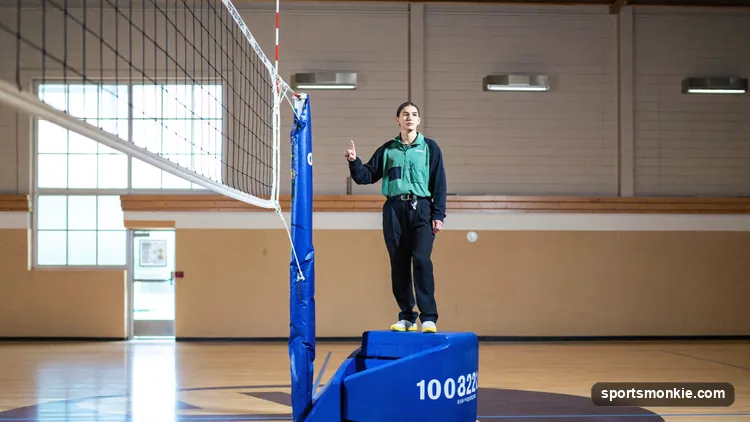
Volleyball Referee Signals: Every Official Hand Signal Explained
Volleyball referee signals explained: point, ball in/out, four hits, double contact, net touch, foot fault, ball touched, delay, substitution, and end of set.
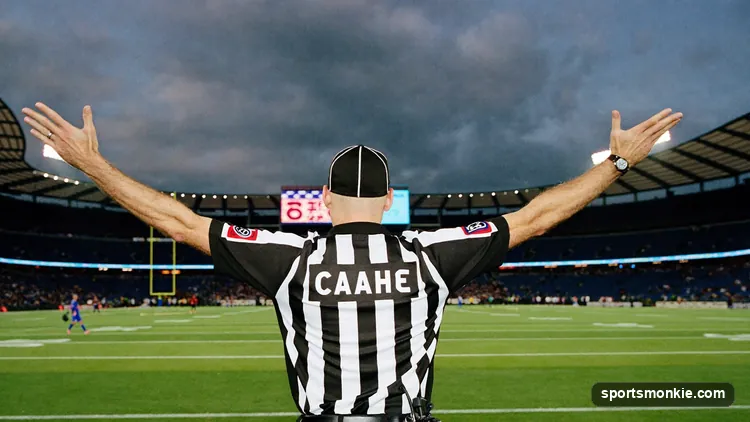
Football Referee Signals: The Complete NFL Hand Signal Chart
Football referee signals explained: touchdown, first down, holding, false start, pass interference, and every hand signal NFL officials use on the field.
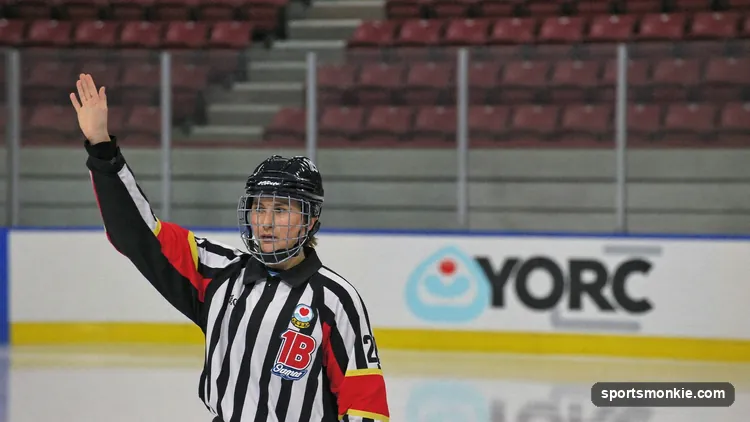
Hockey Referee Signals Explained: Every Penalty Arm Signal
Hockey referee signals decoded: the exact arm signal for hooking, tripping, slashing, cross-checking, high-sticking, holding, interference, and more.
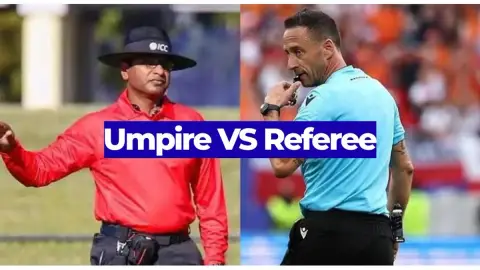
Umpire vs Referee: What's the Difference Across Sports?
Umpires and referees both enforce rules, but the title depends on the sport. Referees officiate football, basketball and boxing; umpires cover cricket.
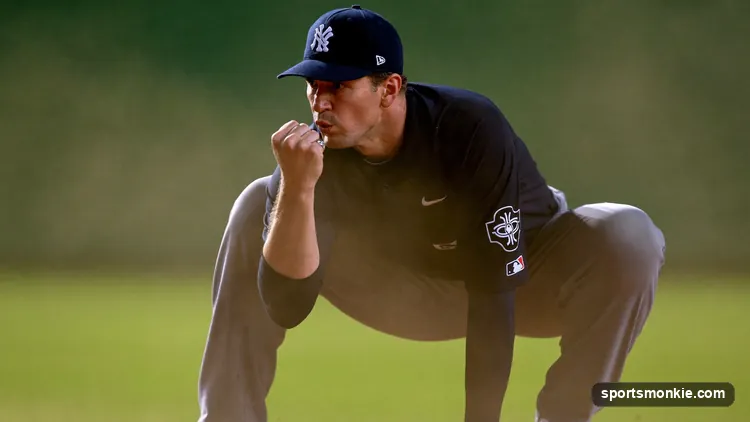
Baseball Umpire Signals Explained: Safe, Out, Strike, Fair, and More
Baseball umpire signals explained: safe, out, strike, ball, foul, fair, home run, infield fly, time, and count gestures with meanings.
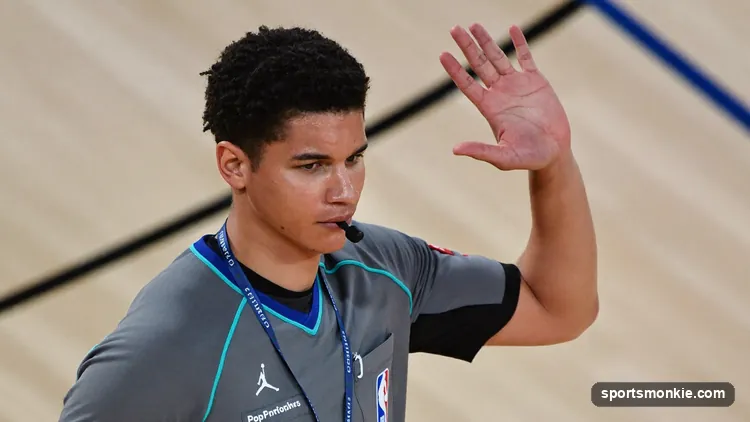
Basketball Referee Signals: The Complete Guide to Every Hand Signal
Basketball referee signals explained: scoring, traveling, double dribble, blocking, charging, holding, shot-clock violations, and technical fouls.