
Baseball Umpire Signals Explained: Safe, Out, Strike, Fair, and More
On this page8
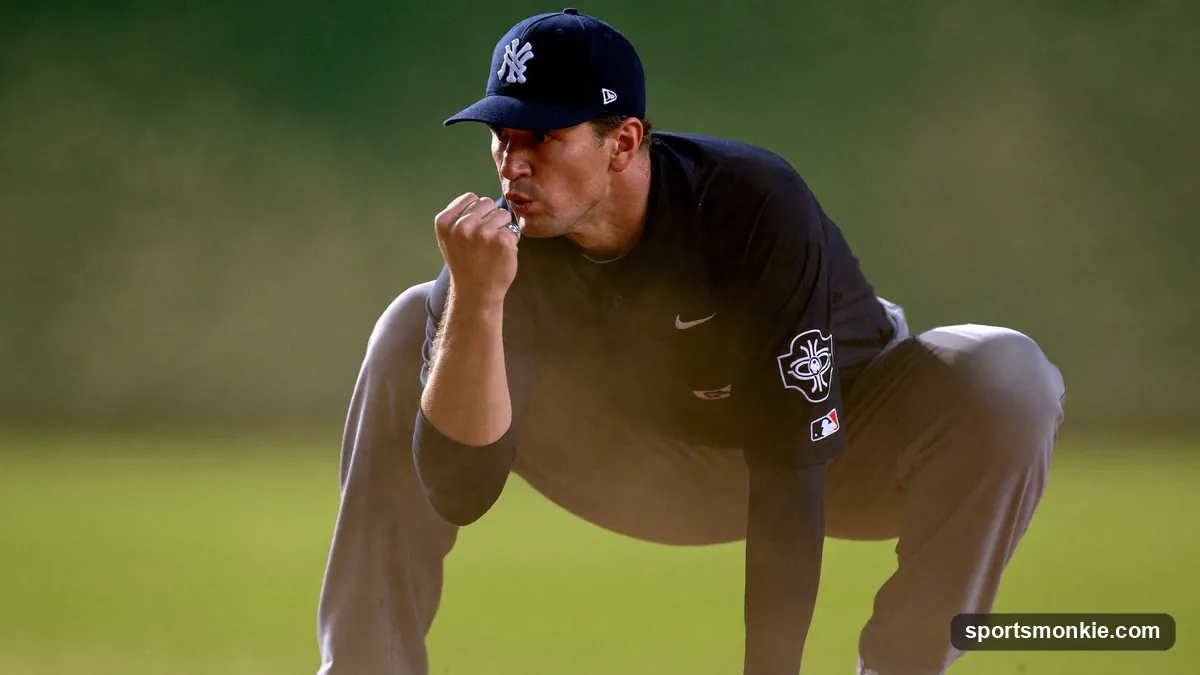
Baseball umpires use a standardized set of hand and arm gestures — safe, out, strike, fair, foul, home run, infield fly, time, and ball-strike counts — so every call is visible to players, coaches, and fans regardless of crowd noise. These signals are taught the same way at the MLB, college, high school, and youth levels, which is why a call at a Little League field looks identical to one at a major-league park. Below is a complete breakdown of each signal, what it looks like, and when an umpire uses it.
The Core Baseball Umpire Signals (Quick Reference Table)
Use this table as a cheat sheet for the signals you will see most often during a game.
| Signal | Gesture | Meaning |
|---|---|---|
| Safe | Both arms extended forward, then swept outward parallel to the ground, palms down | A runner has reached the base before being tagged or forced out |
| Out | Clenched right fist snapped downward in a sharp “hammer” motion | A batter or runner is retired; often paired with a loud verbal “out!” |
| Strike | Clenched right fist punched to the side (“pounding the door”) | A pitch is called a strike, whether looking or swinging |
| Ball | No hand signal — verbal call only | A pitch is outside the strike zone and not swung at |
| Foul | Both arms raised straight up while calling “foul” loudly | The batted ball lands or is touched outside fair territory |
| Fair | Right or left arm pointed directly into fair territory | The batted ball is ruled in play within the foul lines |
| Home Run | Right arm raised skyward with the index finger twirling in a circle | A batted ball clears the outfield fence in fair territory |
| Infield Fly | Right arm raised straight overhead, fist or index finger extended | A fly ball meets infield fly rule criteria; the batter is automatically out |
| Time | Both arms raised while calling “time” loudly | Play is stopped and the ball is dead |
| Count (balls/strikes) | Fingers displayed on both hands — left hand for balls, right hand for strikes | Communicates the current count to both dugouts |
Safe and Out Signals
The safe and out calls are the most recognizable gestures in the sport. For a safe call, the umpire extends both arms straight out in front of the body, then sweeps them outward to the sides with palms facing down — the classic “safe” motion fans imitate in the stands. For an out, the umpire clenches the right fist and delivers a quick, sharp punching motion downward, sometimes called the “hammer.” Umpires are given latitude for personal flair on close plays, as long as the gesture stays clear and doesn’t distract from tracking continuing action on the field. This pairing works the same way across most bat-and-ball and invasion sports; if you compare it to the signals used in other leagues, see our full breakdown of referee hand signals by sport.
Strike and Ball Signals
For a strike, the plate umpire throws a clenched right fist to the side in a short, sharp motion, often verbalized loudly on called third strikes so both dugouts hear it clearly. On swinging strikes, many umpires give only the physical signal since the batter’s own swing already communicates the outcome. A ball, by contrast, has no hand signal at all — the umpire simply says “ball” from the crouched stance and rises. One common coaching point among umpires is to never point toward first base on ball four; the verbal call is the entire mechanic, and pointing can be mistaken for a different signal mid-play.
Fair Ball and Foul Ball Signals
A fair ball is signaled by pointing the arm directly into fair territory, and umpires are trained never to verbalize “fair ball” — silence combined with the point is the correct mechanic, since a spoken “fair” could be confused with other calls. On close plays near the foul line, umpires will stab the arm toward fair territory several times for emphasis. A foul ball, on the other hand, is always both signaled and shouted: both arms go straight up while the umpire calls “foul” loudly enough for players in both dugouts to hear. Once a foul ball is verbalized, the call cannot be reversed, which is why umpires wait a beat on close calls near the line before committing.
Home Run and Foul Tip Signals
When a batted ball clears the outfield fence in fair territory, the umpire points the right arm skyward and twirls the index finger in a small circular motion — the universal home run signal, most useful on close calls down the foul lines or near the top of the wall. A foul tip is a more subtle signal: the umpire extends the left arm, brushes the back of the left hand with the right hand, and then follows with the strike signal. Umpires are trained never to say “foul tip” out loud, since it sounds too similar to a plain “foul” call and could confuse the defense on a play that is actually still live.
The Infield Fly Signal
The infield fly rule exists to prevent infielders from intentionally dropping an easy pop-up to turn a cheap double play with runners on base. When the rule’s conditions are met — a fair fly ball, fewer than two outs, and runners on first and second (or bases loaded) — the umpire raises the right arm straight overhead, often with a closed fist or extended finger, and calls “infield fly, batter’s out!” as loudly as possible. If the ball could land in either fair or foul territory, the umpire adds “if fair” to the call so the ruling is only in effect if the ball actually settles fair. Other umpires on the crew typically echo the signal so it’s visible to both benches at once, since misreading this call can change a team’s entire baserunning strategy mid-play.
Time and Count Signals
To stop play, an umpire raises both arms and calls “time” loudly and sharply — this creates a dead-ball situation and must be heard by every player on the field before action resumes. To restart play after any dead-ball stoppage, the umpire points at the pitcher with a stabbing motion of the right arm and calls “play.” Between pitches, the plate umpire keeps both benches informed of the count by holding up fingers on both hands — the left hand for balls, the right hand for strikes — while announcing the count aloud (for example, “two and one,” never shortened to ambiguous phrasing). These count and time signals are baseball’s version of the administrative gestures every sport relies on; basketball referees use a comparable system of possession and clock signals, detailed in our guide to basketball referee signals, and soccer officials use their own distinct set covered in our soccer referee signals explainer.
Why These Signals Matter
Standardized umpire signals exist because baseball is played in front of crowds that can drown out a spoken call, and because plays often happen far from where fans, broadcasters, or even other umpires are looking. A clear, consistent gesture lets a play be understood instantly from any seat in the ballpark or any camera angle in a broadcast. This is also why the signals are taught identically across levels — a call in a major-league park under MLB rules uses the exact same mechanics as a call at a high school or Little League field, so players moving up through the sport never have to relearn the visual language of the game.
Frequently asked questions
What are baseball umpire signals?+
Baseball umpire signals are the standardized hand and arm gestures officials use to announce calls like safe, out, strike, ball, fair, foul, home run, infield fly, and time. They let everyone in the stadium, dugouts, and press box see the call instantly, even when spoken calls are drowned out by crowd noise.
What is the signal for a strike in baseball?+
The plate umpire signals a strike with a sharp, clenched-fist punching motion of the right arm, often called 'pounding the door.' On called strikes the umpire also verbalizes the call loudly; on swinging strikes many umpires give the signal without shouting since the batter's swing already indicates the action.
How does an umpire signal a ball?+
There is no hand signal for a ball. The plate umpire simply calls 'ball' verbally from the crouched position and stands up. Umpires are taught never to point toward first base on ball four — the verbal call alone is the official mechanic.
What is the out and safe signal in baseball?+
For an out, the umpire snaps a clenched right fist downward in a hammer-like motion. For safe, the umpire extends both arms forward at chest level, then sweeps them outward parallel to the ground with palms down. Umpires often add a loud verbal call on close plays for emphasis.
What does the infield fly signal look like?+
The umpire raises the right arm straight overhead with a closed fist or extended index finger while calling 'infield fly, batter's out' loudly. If the ball could land in fair or foul territory, the umpire adds 'if fair' to the call. Other umpires on the crew echo the signal so both benches see it.
How do umpires signal balls and strikes count?+
The plate umpire displays the count by holding up fingers on both hands — the left hand shows the number of balls, the right hand shows the number of strikes — while calling the count aloud, such as 'two and one.' Umpires avoid shorthand phrasing to prevent confusion between benches.
What is the umpire signal for a home run?+
For a home run, the umpire points the right arm skyward and rotates the index finger in a small circular or twirling motion, signaling the batter to round the bases. This signal is most often used on ambiguous fly balls near the outfield wall or foul pole.
Why do umpires use hand signals instead of just talking?+
Hand signals give every player, coach, and fan a visual confirmation of the call that carries over crowd noise and works from any angle in the ballpark. They also create a permanent, unambiguous record of the decision that television and instant-replay booths can review.
Sources
Play & tools
Free browser games and tools — no account, no download.
- Play 162-0 — Draft nine and see if your roster can survive a flawless 162-game MLB season.
- Explore all our games →
- Analyze a trade — Compare both sides of a fantasy baseball trade before you accept.
- Run the MLB predictor — Simulate the MLB postseason bracket down to a World Series champion.
- Open the ERA calculator — Work out earned run average from earned runs and innings pitched — handles the .1/.2 thirds convention.
- Explore all our free sports tools →
Related baseball guides
View all →
How Many Innings Are in a Baseball Game? (9 in MLB)
A baseball game has nine innings in MLB, the minors, and college. High school plays seven and Little League six. Here's every level, plus how long games last.
What Is a Double Play in Baseball? Rules, Types & Scoring Explained
A double play in baseball is when the defense records two outs on one continuous play. Learn every type, how it's scored, and the slide rule that protects it.

The Infield Fly Rule in Baseball, Explained Simply
The infield fly rule calls the batter out on an easy pop-up with runners on first and second (or bases loaded) and fewer than two outs. Here is why it exists.
How to Read a Baseball Box Score: A Line-by-Line Guide
Learn how to read a baseball box score: the line score, batting lines (AB, R, H, RBI), pitching lines (IP, ER, ERA), and every abbreviation decoded.
What Is a Force Out in Baseball? Force Play Rules Explained
A force out in baseball happens when a runner must advance to an open base and is put out there before or without a tag. Full rules and examples.
What Is the Strike Zone in Baseball? Rules, Dimensions & 2026 ABS Explained
The strike zone in baseball is the area over home plate a pitch must cross for a strike. Learn its exact dimensions, history, and MLB's ABS challenge rules.