
What Is a Force Out in Baseball? Force Play Rules Explained
On this page7
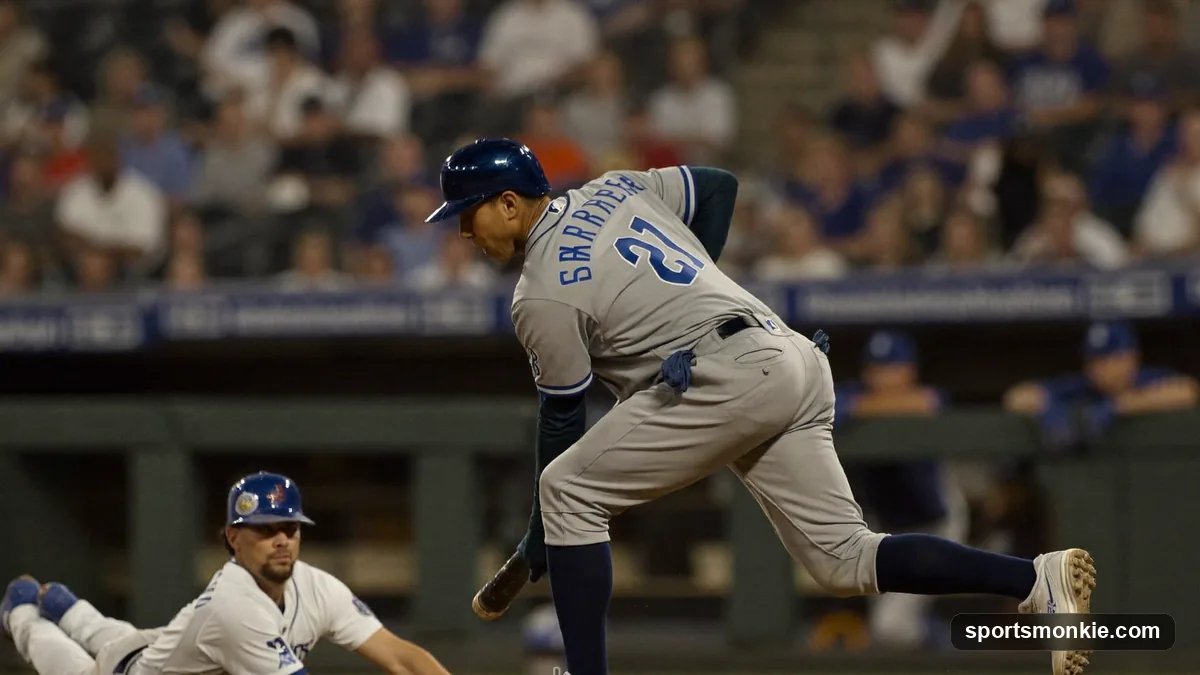
A force out in baseball is a putout on a baserunner who is legally required to advance to the next base — usually because the batter just put the ball in play — and gets there before the runner does while holding the ball, no tag required. It is one of the most common ways defenses record outs, and understanding it is essential to following any baseball game, from a routine grounder to a game-ending double play.
How a Force Out Works
A force out exists because of a simple rule: only one runner can legally occupy a base at a time. When a batter puts a ball in play and becomes a batter-runner heading to first base, any runner already standing on first has to vacate it — they are “forced” to try for second. If a runner on second is also bumped forward by the runner coming from first, they are forced to third, and so on down the base path like a chain reaction.
Because the rules require these runners to advance, the defense does not need to tag them to get an out. A fielder only needs to:
- Gain secure possession of the ball, and
- Touch the base the runner is forced to reach
…before the runner arrives there. That is a force out, officially scored FO in some scorekeeping systems and typically recorded as a routine assist-putout combination (for example, “6-4” on a shortstop-to-second-baseman force play).
The Classic Example
The textbook force-out scenario: a runner stands on first base, and the batter hits a ground ball to the shortstop. The runner on first is forced to run to second because the batter-runner is coming to occupy first base. The shortstop fields the ball, flips it (or throws it) to the second baseman, who steps on second base before the runner arrives. That is a force out at second — no tag needed.
This is also the foundation of the most common double play in baseball, sometimes called the “4-6-3” or “6-4-3” depending on which infielders are involved: a force out at second base immediately followed by a throw to first for a second out.
When a Runner Is NOT Forced
Not every runner on base is forced to advance. A runner is only forced when a teammate behind them has nowhere else to go. Some key situations:
- Runner on second only, nobody on first: Not forced. The runner can stay at second or advance at their own risk, and the defense must tag them to get them out.
- Runners on first and second: The runner on second IS forced to third because the runner from first is coming to second.
- Runner on third only: Not forced unless first and second are both occupied, since nobody is required to take third from behind.
- Bases loaded: Every runner is forced, all the way to home plate, since the chain reaction runs the entire base path.
| Runners on base | Batter hits a ground ball | Is the lead runner forced? |
|---|---|---|
| Runner on 1st only | Grounder to infield | Yes — forced to 2nd |
| Runner on 2nd only | Grounder to infield | No — must be tagged |
| Runners on 1st & 2nd | Grounder to infield | Both forced (2nd to 3rd, 1st to 2nd) |
| Runner on 3rd only | Grounder to infield | No — must be tagged |
| Bases loaded | Grounder to infield | All three runners forced |
Force Outs and Scoring Runs
One of the most important — and most misunderstood — force out rules involves runs. If the third out of an inning is a force out, no run scores on that play, no matter what else happened. Even if a runner from third crossed home plate a split second before the force out was completed at another base, the run does not count. This is different from a tag-out or a fly-ball third out, where a run can sometimes score if the runner crossed home before the out was recorded (a “time play”). Because of this rule, defenses will often choose the force out over a tag or a throw to first specifically to erase a run that would otherwise score.
Reverse Force Outs
A reverse force out is a wrinkle that shows up on double plays. Once the lead force out is recorded (say, the runner from first is out at second), the force is removed from any other runner — but if that other runner is still retired before getting back to their original base, it is called a reverse force out. This typically happens on an around-the-horn double play, such as a 5-4-3 (third base to second base to first base), where the runner going from second to third is retired by a tag after the force at third has technically already been broken by the first out.
Force Out vs. Tag Out vs. Fielder’s Choice
These three terms get mixed up often, so here is the difference:
- Force out: The runner must advance; the fielder only needs to touch the base with the ball.
- Tag out: The runner is not forced (or the force has been removed); the fielder must physically touch the runner with the ball or glove holding the ball.
- Fielder’s choice: A broader scorekeeping term for any play where a fielder, fielding a batted ball, chooses to throw to a base to get a runner out rather than throwing to first for the batter. The out recorded on a fielder’s choice is very often a force out, but the terms describe different things — one is the decision, the other is the type of out.
Why Force Outs Matter for Beginners
If you are new to watching baseball, force outs explain why infielders sprint to “cover” second base the instant a ground ball is hit with a runner on first, and why announcers say a runner was “forced” rather than “tagged.” Recognizing a force situation also helps you understand double plays, fielder’s-choice scoring on the box score, and why a run sometimes gets wiped off the board even though a runner clearly crossed home plate.
For more foundational baseball rules, see our full baseball terminology glossary, our breakdown of how a double play works, and our guide to baseball positions by number to understand who typically covers which base on a force play. You can also browse more explainers in our baseball and MLB hub.
Frequently asked questions
What is a force out in baseball?+
A force out in baseball occurs when a baserunner is legally required to advance to the next base because a teammate behind them is advancing too, and a fielder puts the runner out by touching that base with the ball before the runner gets there. Unlike a tag out, the fielder does not need to touch the runner — simply controlling the ball while touching the base is enough.
Why is it called a force out instead of a tag out?+
It is called a force out because the runner has no choice but to run — the rules force them off their base since another runner (or the batter-runner) is taking that spot. Because advancing is mandatory, the defense only needs to beat the runner to the bag, not physically tag them.
Do you always have to tag the runner to get a force out?+
No. On a true force play, the fielder only needs possession of the ball while touching the base the runner is forced to reach. A tag is unnecessary, though many fielders tag anyway out of habit or in case the force situation is unclear.
Can a runner be forced out at second, third, or home?+
Yes, at any base, as long as the bases behind the runner are occupied (or the batter is running) so that runner has no choice but to advance. A runner on second is only forced to third if first base is also occupied; a runner on third is only forced home if first and second are both occupied.
Does a run count if a force out ends the inning?+
No. If the third out of an inning is a force out, no run scores on that play, even if another runner crossed home plate before the force out was completed. This is one of the most important force-out rules for scoring.
What is a reverse force out?+
A reverse force out happens on a force double play when the first out removes the force on a following runner, but that runner is still retired by a tag before returning to their original base. It commonly appears on around-the-horn double plays.
What is the difference between a force out and a fielder's choice?+
A force out is one specific type of putout recorded on a runner who must advance. A fielder's choice describes the broader decision a defender makes to throw to a base for an out on a runner rather than to first base for the batter — that thrown-to base is very often the site of a force out.
Can a force play turn into a tag play?+
Yes. If a preceding runner is put out first (removing the force), any following runner who was forced is no longer forced, and the defense must tag that runner instead of simply touching the base.
Sources
Play & tools
Free browser games and tools — no account, no download.
- Play 162-0 — Draft nine and see if your roster can survive a flawless 162-game MLB season.
- Explore all our games →
- Analyze a trade — Compare both sides of a fantasy baseball trade before you accept.
- Run the MLB predictor — Simulate the MLB postseason bracket down to a World Series champion.
- Open the ERA calculator — Work out earned run average from earned runs and innings pitched — handles the .1/.2 thirds convention.
- Explore all our free sports tools →
Related baseball guides
View all →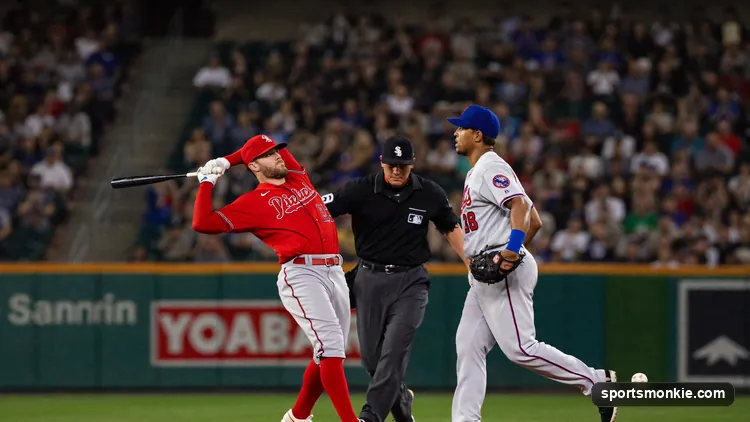
What Is a Double Play in Baseball? Rules, Types & Scoring Explained
A double play in baseball is when the defense records two outs on one continuous play. Learn every type, how it's scored, and the slide rule that protects it.

The Infield Fly Rule in Baseball, Explained Simply
The infield fly rule calls the batter out on an easy pop-up with runners on first and second (or bases loaded) and fewer than two outs. Here is why it exists.
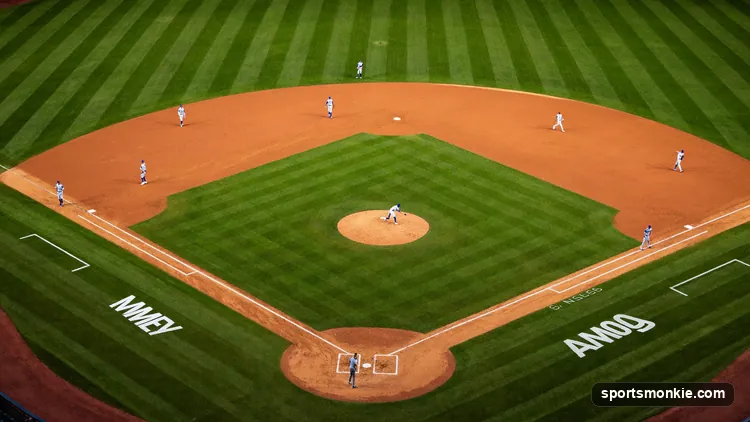
Baseball Positions by Number: The Complete 1-9 Guide
Baseball positions by number run 1-9: pitcher, catcher, first base, second, third, shortstop, left, center, right field. Full scorekeeping guide.
What Is a Full Count in Baseball? 3-2 Count Rules Explained
A full count in baseball is a 3-ball, 2-strike count on the batter, where the next non-foul pitch usually ends the at-bat. Here's how it works.
What Is the Strike Zone in Baseball? Rules, Dimensions & 2026 ABS Explained
The strike zone in baseball is the area over home plate a pitch must cross for a strike. Learn its exact dimensions, history, and MLB's ABS challenge rules.
What Is a Balk in Baseball? Rules, Types, and Penalty
A balk is an illegal pitching motion with runners on base, and the penalty advances every runner one base. Here are the common types and the reasons.