
What Is the Strike Zone in Baseball? Rules, Dimensions & 2026 ABS Explained
On this page8
- 01Official Definition of the Strike Zone
- 02Strike Zone Dimensions Explained
- 03How the Strike Zone Has Changed Over Time
- 04Who Calls Balls and Strikes
- 05MLB’s Automated Ball-Strike (ABS) Challenge System (2026)
- 06Other Ways a Strike Is Called
- 07Youth and Amateur League Differences
- 08Why the Strike Zone Matters
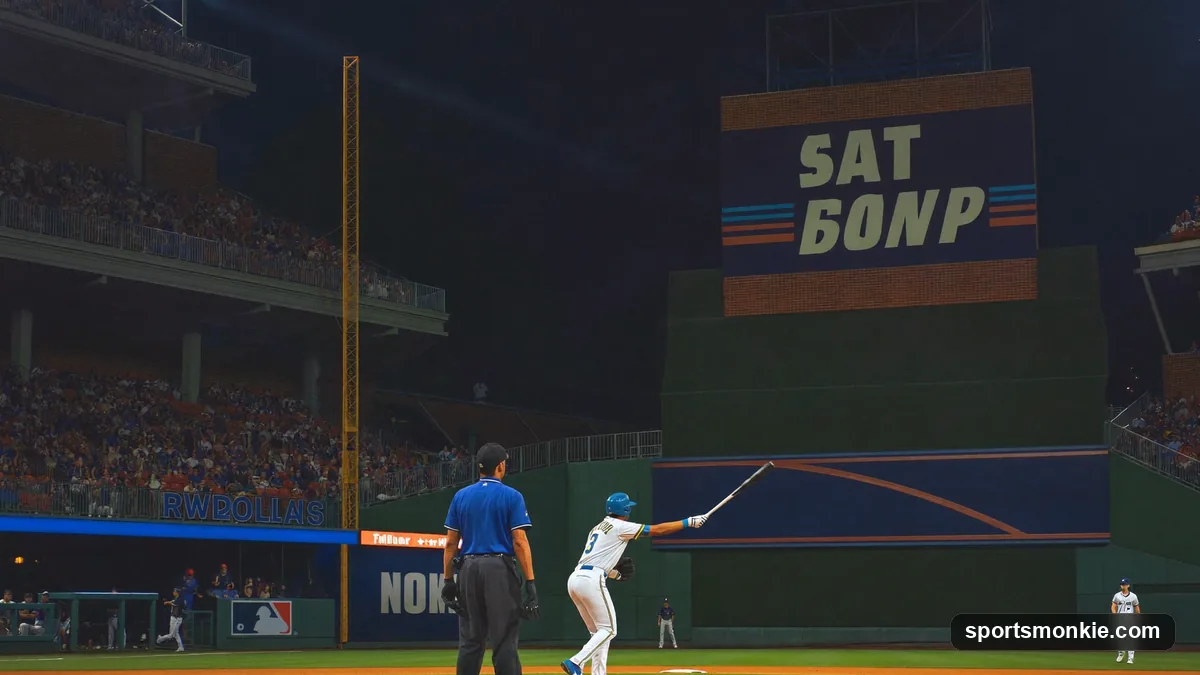
The strike zone in baseball is the area over home plate a pitched ball must pass through for the umpire to call a strike, running from the midpoint between the batter’s shoulders and belt down to just below the kneecap, and spanning the 17-inch width of the plate. It is the single most important judgment call in the sport, since every ball and strike decides the count, and the count decides nearly everything else that follows in an at-bat. Understanding how it is defined, measured, and now electronically verified is essential for anyone learning baseball terminology.
Official Definition of the Strike Zone
Per the MLB rulebook, the strike zone is the space above home plate between the batter’s shoulders and knees when the batter assumes a natural hitting stance. The umpire sets the boundaries individually for each hitter before that batter’s first pitch of the plate appearance, and those boundaries hold for the rest of the at-bat regardless of how the batter’s posture shifts mid-swing.
A pitch is a strike if any part of the ball passes through any part of the strike zone before it bounces. It does not need to travel through the dead center of the zone — clipping the outer edge counts exactly the same as a pitch down the middle. This is why borderline calls generate so much debate: umpires are judging fractions of an inch on pitches that arrive at 90-plus miles per hour.
Strike Zone Dimensions Explained
The strike zone has two boundaries that matter: a horizontal one fixed by the plate, and a vertical one that adjusts for each batter.
- Width: 17 inches, the exact width of home plate. Since a baseball is roughly 2.9 inches in diameter, a pitch can be up to a few inches off the plate and still clip the zone.
- Top boundary: The midpoint between the top of the batter’s shoulders and the top of the uniform pants, measured while the batter is in their stance and ready to swing.
- Bottom boundary: A point just below the kneecap.
Because the top and bottom are tied to each hitter’s own body, a 6-foot-5 first baseman and a 5-foot-9 second baseman have genuinely different strike zones. This is a deliberate design choice, not an inconsistency — the rule scales the zone to each player rather than using a fixed height for everyone.
How the Strike Zone Has Changed Over Time
The rulebook strike zone is not static; MLB has adjusted it multiple times to balance offense and pitching.
| Era | Top of Zone | Bottom of Zone |
|---|---|---|
| 1963-1968 | Top of the shoulders | Top of the knees |
| 1969-1987 | Armpits | Top of the knees |
| 1988-1995 | Midpoint of shoulders and belt | Top of the knees |
| 1996-present | Midpoint of shoulders and pants | Just below the kneecap |
The 1963 expansion, extending the top of the zone to the shoulders, was meant to help pitchers and led to a run-scoring drought. The 1969 shrink back to the armpits, paired with lowering the pitcher’s mound from 15 inches to 10, directly followed 1968’s “Year of the Pitcher,” when the league batting average fell to .237. The current definition has been in place since 1996 and is the version used across the modern game.
Who Calls Balls and Strikes
The home plate umpire, positioned directly behind the catcher, judges every pitch as it crosses the zone and immediately signals ball or strike. Even with instant replay available for other calls, judgment on close pitches has historically rested entirely with that one official — until 2026.
Studies have found human umpires get the overwhelming majority of calls right, but they still miss several close pitches per game, particularly at the edges of the zone where the margin for error is smallest.
MLB’s Automated Ball-Strike (ABS) Challenge System (2026)
Starting with the 2026 season, MLB rolled out the Automated Ball-Strike Challenge System leaguewide across spring training, the regular season, and the postseason. Twelve Hawk-Eye cameras track every pitch, and if the pitcher, catcher, or batter disagrees with the umpire’s call, that player can immediately challenge by tapping their cap or helmet. The review takes about 15 seconds and displays the tracked pitch location on the scoreboard.
Each team starts a game with two challenges and keeps any challenge it wins, so a successful challenge does not cost the team anything for later at-bats. Teams that enter extra innings without a challenge remaining are granted one additional challenge per extra frame. The system does not replace the umpire on every pitch — it only reviews the specific pitches players choose to dispute — so the strike zone itself is unchanged; only how borderline calls get corrected has changed.
Other Ways a Strike Is Called
A pitch does not have to be in the zone to count as a strike. The umpire also calls a strike when:
- The batter swings and misses at any pitch, regardless of location.
- The batter hits a foul ball with fewer than two strikes (a foul with two strikes does not add a strike, except on a bunt attempt).
- The batter attempts a bunt and fouls it off, at any strike count.
- The catcher cleanly catches a foul tip.
Three strikes in an at-bat is a strikeout, one of the two ways (along with fielding a batted ball) a batter can be put out. For the mechanics of another key defensive strategy that revolves around location and timing, see how a bunt in baseball is executed, or how a plate appearance can end with a full count in baseball after a long battle over the zone.
Youth and Amateur League Differences
Little League Baseball uses a different vertical range than MLB, defining the strike zone as the area between the armpits and the top of the knees. This wider, simpler-to-judge zone is more practical for young umpires and reflects the shorter average height of youth players compared to professional hitters. High school and college leagues generally follow rules closer to the professional standard but still see variation in how strictly umpires enforce the edges.
Why the Strike Zone Matters
Every plate appearance is a battle to control the count, and the strike zone is the boundary that decides who wins each pitch. A hitter ahead in the count can be selective and wait for a pitch to attack; a pitcher ahead in the count can expand the zone and get hitters to chase. Consistent, accurate zone calls protect the integrity of that battle, which is exactly why MLB invested in the ABS challenge technology for the 2026 season. To explore more foundational rules like this one, visit the full baseball terminology glossary or head back to the baseball and MLB hub for the complete cluster of rules explainers.
Frequently asked questions
What is the strike zone in baseball?+
The strike zone in baseball is the area over home plate a pitch must pass through for the umpire to call a strike, even if the batter doesn't swing. Its top is the midpoint between the batter's shoulders and the top of the uniform pants, and its bottom is just below the kneecap, both measured with the batter in their normal stance.
How wide is the strike zone?+
The strike zone is 17 inches wide, matching the width of home plate. Any part of the pitched ball passing over any part of the plate within the vertical boundaries counts, so the effective width including the ball's own diameter is closer to 19-20 inches under strict rulebook interpretation.
How tall is the strike zone?+
Height varies by batter. The top is the midpoint between the shoulders and the top of the uniform pants, and the bottom is just below the kneecap. A taller player naturally has a taller strike zone than a shorter player, since the zone is defined relative to each hitter's own body and stance.
Who decides if a pitch is a strike?+
The home plate umpire calls balls and strikes on every pitch, positioned directly behind the catcher. Starting in the 2026 season, MLB added the Automated Ball-Strike (ABS) Challenge System, which lets the pitcher, catcher, or batter challenge a call and have Hawk-Eye camera tracking confirm or overturn it.
Does the strike zone change for kids or Little League?+
Yes. Little League Baseball defines the strike zone as the area between the armpits and the top of the knees, which is different from MLB's shoulder-midpoint-to-below-kneecap standard. Youth and amateur leagues often use simplified zones that are easier for young umpires to judge consistently.
What counts as a strike besides a pitch in the zone?+
A strike is also called when the batter swings and misses at any pitch regardless of location, when the batter fouls off a pitch with fewer than two strikes, or when the batter fails to swing at a pitch a legal pitcher throws that catches any part of the strike zone. A foul tip caught by the catcher is also a strike.
Has the MLB strike zone always been the same size?+
No. The rulebook zone has changed several times: shoulders-to-knees from 1963-1968, armpits-to-top-of-knees from 1969-1987, shoulder-midpoint-to-top-of-knees from 1988-1995, and the current shoulder-midpoint-to-below-kneecap definition since 1996.
What is the ABS Challenge System in MLB?+
The Automated Ball-Strike (ABS) Challenge System, used leaguewide starting in the 2026 season, lets a pitcher, catcher, or batter challenge an umpire's ball-or-strike call by tapping their cap or helmet. Twelve Hawk-Eye cameras instantly confirm or overturn the call. Each team starts with two challenges per game and keeps any it wins.
Sources
Play & tools
Free browser games and tools — no account, no download.
- Play 162-0 — Draft nine and see if your roster can survive a flawless 162-game MLB season.
- Explore all our games →
- Analyze a trade — Compare both sides of a fantasy baseball trade before you accept.
- Run the MLB predictor — Simulate the MLB postseason bracket down to a World Series champion.
- Open the ERA calculator — Work out earned run average from earned runs and innings pitched — handles the .1/.2 thirds convention.
- Explore all our free sports tools →
Related baseball guides
View all →
Baseball Positions by Number: The Complete 1-9 Guide
Baseball positions by number run 1-9: pitcher, catcher, first base, second, third, shortstop, left, center, right field. Full scorekeeping guide.
What Is a Double Play in Baseball? Rules, Types & Scoring Explained
A double play in baseball is when the defense records two outs on one continuous play. Learn every type, how it's scored, and the slide rule that protects it.
What Is a Force Out in Baseball? Force Play Rules Explained
A force out in baseball happens when a runner must advance to an open base and is put out there before or without a tag. Full rules and examples.
What Is a Full Count in Baseball? 3-2 Count Rules Explained
A full count in baseball is a 3-ball, 2-strike count on the batter, where the next non-foul pitch usually ends the at-bat. Here's how it works.
What Is a Balk in Baseball? Rules, Types, and Penalty
A balk is an illegal pitching motion with runners on base, and the penalty advances every runner one base. Here are the common types and the reasons.

The Infield Fly Rule in Baseball, Explained Simply
The infield fly rule calls the batter out on an easy pop-up with runners on first and second (or bases loaded) and fewer than two outs. Here is why it exists.