
What Is a Bunt in Baseball? Types, Rules & Strategy Explained
On this page7
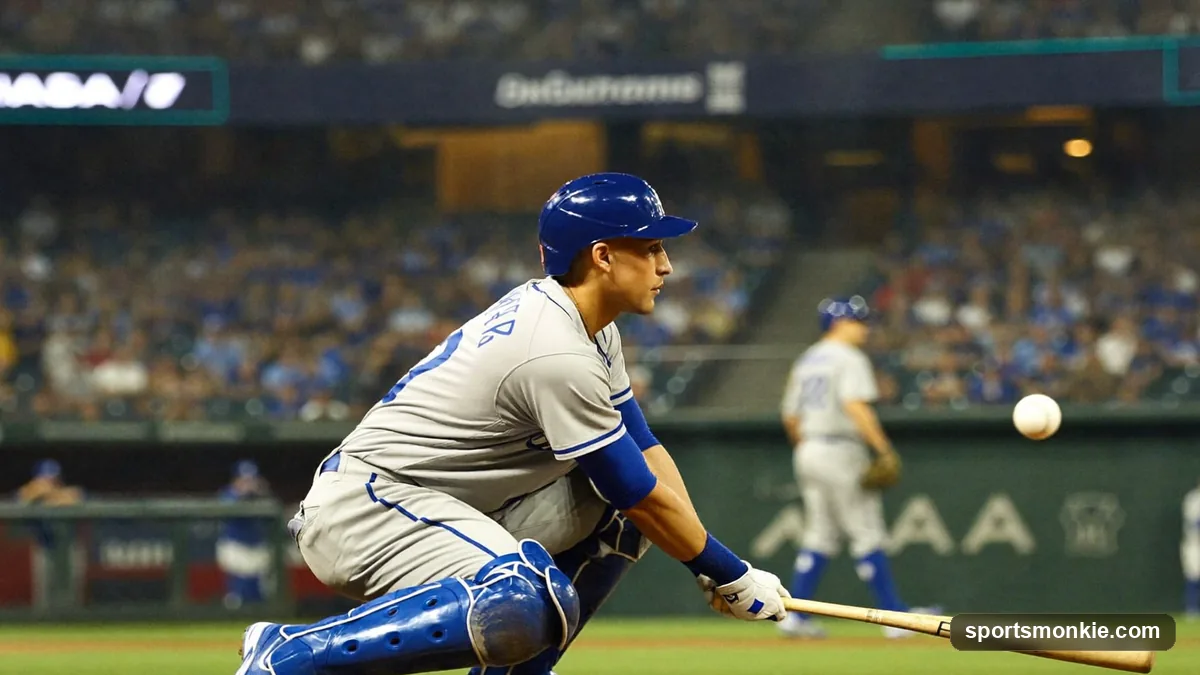
A bunt in baseball is a batted ball not swung at, but intentionally met with the bat and tapped softly so it rolls a short distance within the infield. Rather than take a full swing, the hitter squares around or pivots the bat to deaden the ball off contact, forcing infielders into a rushed, difficult play. Bunting is one of the oldest tactics in baseball, dating back to the 1860s, and it remains a key part of situational hitting and small-ball strategy today.
How a Bunt Works
To bunt, the batter loosens the grip on the bat and holds it out in front of home plate, angling the barrel to guide the pitch rather than drive it. Instead of generating bat speed, the hitter simply “catches” the pitch with the bat, absorbing most of its momentum so the ball dies quickly once it hits the ground. Most bunts are aimed down the first- or third-base line or straight back toward the pitcher, since those areas force the defense’s corner infielders or pitcher to charge, field, and throw in one motion.
Bunting takes real skill. A batter has to read the pitch, square the bat at the right instant, and control where the ball lands — too hard and it turns into an easy out for an infielder standing still; too soft or foul and the at-bat can end badly. That is part of why bunting well is a specialized skill coaches drill separately from regular hitting.
Types of Bunts
There are several distinct bunt tactics, each used in a different game situation.
- Sacrifice bunt — The batter intentionally gives up an out to advance a baserunner, most commonly moving a runner from first base to second base. Because the goal is to advance the runner rather than reach base, a successful sacrifice bunt is scored as a sacrifice hit and does not count as an official at-bat.
- Bunt for a base hit — Also called a drag bunt or push bunt, this is an attempt by the batter to reach base safely. The batter often disguises the bunt until the last possible moment — sometimes waiting until the pitcher has already begun the delivery — to catch the defense out of position.
- Drag bunt — A specific base-hit technique, usually used by left-handed batters, where the hitter starts moving toward first base as the bat makes contact. The head start, combined with the batter’s shorter distance to first, makes this a favorite tool for fast contact hitters.
- Push bunt — A bunt aimed past a charging pitcher or first baseman, “pushed” with a little more pace toward the gap between the mound and first base, used when the defense is crashing in hard to defend a standard sacrifice bunt.
- Squeeze play — A bunt specifically designed to score a runner from third base. See the section below for the two main variations.
The Squeeze Play
The squeeze play is the highest-stakes bunt in baseball because it is built around scoring a run, not just advancing a runner.
| Squeeze type | How it works | Risk level |
|---|---|---|
| Suicide squeeze | The runner on third breaks for home the instant the pitcher starts the delivery, committing before the ball is bunted | High — if the batter misses the bunt, the runner is likely out |
| Safety squeeze | The runner on third waits to see the bunt land safely before breaking for home | Lower — but the defense has more time to react and make a play at the plate |
Because the suicide squeeze commits the runner before contact is made, it is considered one of the most dramatic and high-pressure plays in the sport — a missed bunt can turn a potential run into an easy out at home plate.
Bunting Rules Every Fan Should Know
Bunts follow most of the same rules as a normal batted ball, with a few important exceptions:
- Foul bunt on two strikes is a strikeout. A foul bunt always counts as a strike, and unlike a regular foul ball, a foul bunt with two strikes ends the at-bat as a strikeout rather than simply staying at two strikes.
- A bunt can be caught for an out. If a bunted ball is popped up and caught in the air by an infielder or pitcher before it touches the ground, the batter is out just like on any fly ball or line drive.
- Bunting into a double play is possible. If a bunt is fielded quickly with a force play in order, the defense can turn a bunt into a double play, which is one reason sacrifice bunt attempts sometimes backfire.
- No do-over for a foul-tip on a bunt. If the bat contacts the ball twice — for example, the ball rolls back and strikes the bat again — the ball is dead and ruled foul.
- Sacrifice bunts don’t count as at-bats. A successful sacrifice hit is removed from the batter’s official at-bat total, so it has no negative effect on batting average even though the batter is usually thrown out.
Why Teams Bunt
Bunting is a run-manufacturing tool, most valuable in low-scoring, tight games where a single run matters more than a big-inning approach. Teams bunt to:
- Advance a runner into scoring position ahead of the next hitter
- Score a runner from third with a squeeze play
- Surprise a defense that is playing back, stealing a free base hit
- Move a pitcher (a traditionally weak hitter) out of the way productively in National League–style lineups without a designated hitter
Bunting usage has swung with the eras of the sport — it was common in the low-scoring dead-ball era of the early 1900s and again during the pitching-dominant 1960s, but has declined in the modern power-and-analytics era, where many teams now view giving up an out as too costly compared to swinging away. It still shows up constantly in close games, especially late innings and in situations similar to setting up a sacrifice fly or any small-ball rally that doesn’t rely on a grand slam to change the score.
Bunt vs. Regular Swing: Quick Comparison
| Bunt | Regular Swing | |
|---|---|---|
| Bat motion | Held out, not swung | Full swing |
| Goal | Advance runner, surprise hit, or score from third | Drive the ball for distance/hits |
| Foul with 2 strikes | Strikeout | Stays at 2 strikes |
| Counted as at-bat (if sacrifice) | No | Yes |
| Typical situation | Runner on base, close game | Any count, any situation |
Bottom Line
A bunt trades power for precision — the batter gives up a full swing to place the ball exactly where the defense doesn’t want it. Whether it’s a sacrifice bunt moving a runner into scoring position, a drag bunt stealing a hit, or a suicide squeeze bringing home a run, bunting remains one of the sharpest tools in situational baseball. For more foundational terms like this one, see the full baseball terminology glossary.
Frequently asked questions
What is a bunt in baseball?+
A bunt in baseball is a batted ball not swung at, but intentionally met with the bat and tapped softly, usually so it rolls a short distance within the infield. Instead of taking a full swing, the batter squares around or pivots and holds the bat out to deaden the ball's speed off the contact, making it hard for infielders to field and throw out a runner in time.
What is the difference between a sacrifice bunt and a bunt for a hit?+
A sacrifice bunt is put down with the intention of advancing a baserunner even if the batter is thrown out at first base, and it does not count as an official at-bat. A bunt for a base hit (or drag bunt) is an attempt by the batter to reach base safely, usually by disguising the bunt until the last moment to catch the defense off guard.
What is a squeeze play in baseball?+
A squeeze play is a bunt executed specifically to score a runner from third base. In a suicide squeeze, the runner breaks for home as soon as the pitcher begins the delivery, so the batter must make contact no matter what. In a safety squeeze, the runner waits to see the bunt land before breaking, which is safer but gives the defense more time to react.
Does a foul bunt count as a strike with two strikes?+
Yes. A foul bunt is always ruled a strike, and if the batter already has two strikes, a foul bunt results in a strikeout. This differs from a regular foul ball on two strikes, which does not count as a third strike.
Does a sacrifice bunt hurt a player's batting average?+
No. A successful sacrifice bunt is scored as a sacrifice hit and is not counted as an official at-bat, so it does not lower a batter's batting average, even though the batter is typically thrown out at first base.
What is a drag bunt?+
A drag bunt is a bunt for a base hit, usually executed by a left-handed batter who starts moving toward first base as the bat makes contact with the ball. The head start and the batter's proximity to first base make it a common tactic for fast contact hitters trying to beat out an infield hit.
Why do baseball players bunt?+
Players bunt to manufacture runs in low-scoring situations, advance runners into scoring position, catch a defense playing back with a surprise hit, or score a runner from third with a squeeze play. Bunting trades the batter's own chance of reaching base (or the batter's out) for a tactical advantage elsewhere on the field.
Can a batter bunt with two strikes?+
Yes, a batter can attempt a bunt with two strikes, but the risk is higher because a foul bunt is an automatic strikeout. Many hitters instead pull the bat back and swing away once they reach two strikes, unless the team situation still calls for a bunt attempt.
Sources
Play & tools
Free browser games and tools — no account, no download.
- Play 162-0 — Draft nine and see if your roster can survive a flawless 162-game MLB season.
- Explore all our games →
- Analyze a trade — Compare both sides of a fantasy baseball trade before you accept.
- Run the MLB predictor — Simulate the MLB postseason bracket down to a World Series champion.
- Open the ERA calculator — Work out earned run average from earned runs and innings pitched — handles the .1/.2 thirds convention.
- Explore all our free sports tools →
Related baseball guides
View all →
What Is a Stolen Base in Baseball? Rules and Strategy
A stolen base occurs when a runner advances to the next base without the batter putting the ball in play, usually during the pitcher’s delivery.
What Is a Double Play in Baseball? Rules, Types & Scoring Explained
A double play in baseball is when the defense records two outs on one continuous play. Learn every type, how it's scored, and the slide rule that protects it.
What Is a Balk in Baseball? Rules, Types, and Penalty
A balk is an illegal pitching motion with runners on base, and the penalty advances every runner one base. Here are the common types and the reasons.
Baseball Positions by Number: The Complete 1-9 Guide
Baseball positions by number run 1-9: pitcher, catcher, first base, second, third, shortstop, left, center, right field. Full scorekeeping guide.

How Many Innings Are in a Baseball Game? (9 in MLB)
A baseball game has nine innings in MLB, the minors, and college. High school plays seven and Little League six. Here's every level, plus how long games last.
What Is a Force Out in Baseball? Force Play Rules Explained
A force out in baseball happens when a runner must advance to an open base and is put out there before or without a tag. Full rules and examples.